
Myrrh is one of the oldest perfume ingredients in the world, and also one of the least understood. It appears in ancient Egyptian tombs, in the story of the three wise men, and in the medicine chests of half the ancient world, yet most people who wear perfume today could not tell you what it smells like, or where it comes from.
The confusion is understandable. Myrrh is often lumped together with frankincense, amber and incense as if they were one thing, and many perfumes use it in such small amounts that it is hard to pick out. Once you learn to recognise it, you start noticing it everywhere, holding up ambers, grounding woods and giving incense blends their weight.
This guide explains what a myrrh perfume actually is, where the resin comes from, how it is used, and how to choose one that suits you.
Key takeaways
- Myrrh is the dried resin of Commiphora trees, harvested by tapping the bark, and it has been used in perfume, incense and medicine for thousands of years.
- In perfume, myrrh is usually a heart or base note, giving warmth, depth and staying power rather than brightness or freshness.
- Myrrh smells warm, balsamic and slightly bitter, with a smoky, leathery edge that grows softer and richer as it dries down on skin.
- It pairs best with amber, woods, vanilla, rose and incense, and it suits cooler weather and evening wear more than hot, bright days.
- Myrrh perfumes are almost always unisex, but the resin can smell medicinal to some people, so test before you buy a full bottle.
What myrrh actually is
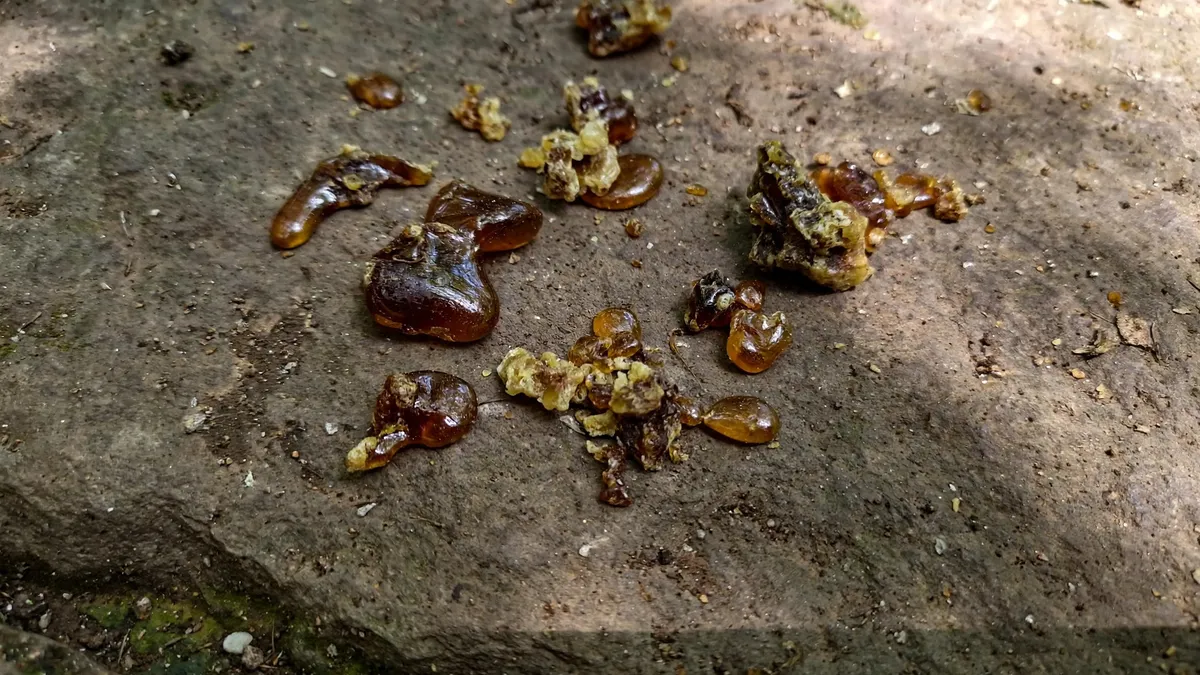
Myrrh is the dried sap of trees in the Commiphora genus, small, thorny trees that grow in the dry regions of the Arabian Peninsula and north-east Africa, particularly Somalia, Ethiopia and Yemen. When the bark is cut, the tree releases a pale, sticky resin that hardens into golden, amber-coloured tears. Those tears are collected, cleaned and distilled or extracted into myrrh oil, which is what perfumers actually use.
The name comes from the Arabic word murr, meaning bitter, and bitterness is the first thing most people notice about myrrh. It is not a sweet note, and it is not a fresh one. It smells warm and balsamic, like old wood and incense, with a dry, slightly medicinal edge and a faint sweetness underneath.
Myrrh has been traded for at least four thousand years. Egyptian embalmers used it, Greek and Roman physicians prescribed it, and it was worth more than its weight in gold in some periods.
How myrrh is made and what to look for
The resin is harvested by hand, usually in the dry season, when the sap flows most freely. Workers make small cuts in the bark, the resin oozes out and hardens, and the tears are collected a few weeks later. The best myrrh comes from older trees, and the quality varies with the region, the season and the rainfall, which means the oil itself varies from batch to batch.

When you are shopping for a myrrh perfume, look first at where myrrh appears in the note list. If it is listed among the heart or base notes, it is doing real work in the composition. Our guide to woody perfumes explains how to read a note list in general, and the same approach works here: the earlier and more prominent the note, the more of it you will actually smell.
Look next at the concentration. Myrrh perfumes are usually eau de parfum or extrait, because the resin needs a strong base to show itself, and they tend to be priced accordingly. Myrrh changes a lot in the first hour on skin, and a perfume that smells too medicinal at first spray can turn warm and beautiful by the time you get home.
9 things to know about myrrh perfume
Myrrh comes from the resin of Commiphora trees
What it shows: Myrrh is a natural plant resin, harvested by tapping the bark of small, thorny Commiphora trees in Arabia and north-east Africa, and the oil is distilled from the hardened tears.
What to consider: The yield is small and the harvest is manual, which is why real myrrh oil is expensive. Best For: Anyone who cares about natural ingredients and traditional perfumery. Material: Commiphora myrrha resin. Price Range: Around £20 to £60 for a small bottle of pure myrrh oil. Standout Feature: One of the oldest perfume materials still in use today.
Knowing where myrrh comes from changes how you smell it. It is not a laboratory invention, it is a tree sap, and that is why it smells earthy, warm and slightly wild rather than clean and polished.
It smells resinous, warm and slightly bitter
What it shows: Myrrh smells warm, balsamic and slightly bitter, with a smoky, leathery edge and a faint sweetness underneath, and it grows softer and richer as it dries down.
What to consider: The bitterness can read as medicinal at first, especially on cold skin. Best For: Lovers of amber, incense and woody scents. Material: Myrrh resin oil. Price Range: Around £90 to £180 for a myrrh perfume. Standout Feature: A distinctive bitter warmth that no other note reproduces.
If you have ever smelled a church, an old library or a market stall selling incense, you have smelled something close to myrrh. It is a scent with a memory attached, which is why it feels familiar even to people trying it for the first time.
It usually sits in the heart or base of a perfume
What it shows: Myrrh is a slow-evaporating resin, so it is used as a heart or base note, where it adds warmth, depth and staying power and helps other notes last longer.
What to consider: It will not be the first thing you smell, so judge it after an hour, not after a minute. Best For: Anyone who values longevity over a loud opening. Material: Myrrh resin oil. Price Range: Around £90 to £200 for a myrrh perfume. Standout Feature: It makes a perfume last eight to twelve hours on skin.
This is the most practical thing to know about myrrh. It is a finishing note, not an opening note, and a myrrh perfume that disappoints at first spray often becomes beautiful by the evening, once the top notes have faded and the resin takes over.
Myrrh and frankincense are cousins, not twins
What it shows: Both are sacred resins from the same region, and they are often used together, but frankincense is brighter, lighter and slightly citrusy, while myrrh is warmer, darker and more balsamic.
What to consider: If you like one, you will probably like the other, but they are not interchangeable. Best For: Anyone exploring resinous perfumes for the first time. Material: Myrrh and frankincense resins. Price Range: Around £110 to £180 for a paired-resin perfume. Standout Feature: The two resins balance each other, frankincense lifting, myrrh grounding.
The easiest way to learn the difference is to smell them side by side. Frankincense goes up, myrrh goes down, and together they make a perfume feel complete in a way neither can manage alone.
It pairs best with woods, amber and citrus
What it shows: Myrrh is at its best alongside amber, sandalwood, cedar, vanilla and rose, which soften its bitterness and give it warmth and sweetness to work against.
What to consider: Myrrh with too many bright, sharp notes can feel muddled, so simpler compositions usually work better. Best For: Anyone building a cold-weather perfume wardrobe. Material: Myrrh resin, amber, woods. Price Range: Around £120 to £250 for a myrrh and amber blend. Standout Feature: Its versatility, it improves almost any warm, woody composition.
Think of myrrh as the bass note in a piece of music. It does not carry the melody, but without it the whole thing sounds thin, and the best myrrh perfumes are the ones where the other notes are chosen to let the resin do its work.
It can smell smoky, sacred or medicinal depending on the blend
What it shows: The same resin can smell sacred in an incense blend, leathery in an amber, and medicinal in a light, simple composition, because the surrounding notes change how the brain reads it.
What to consider: If one myrrh perfume smells too medicinal, another may smell completely different, so do not give up after one try. Best For: Patient shoppers willing to try two or three myrrh perfumes. Material: Myrrh resin, incense, amber. Price Range: Around £90 to £250 depending on the house. Standout Feature: A single note with an unusually wide range of characters.
This variability is the reason sampling matters so much with myrrh. The resin itself is consistent, but the company it keeps changes everything, and the difference between a sacred myrrh and a medicinal one is often just the amber or the vanilla around it.
Real myrrh oil costs more than synthetic copies
What it shows: Natural myrrh oil is harvested by hand in small quantities, so it costs far more than synthetic resinous notes, and perfumes that use the real thing are usually priced accordingly.
What to consider: A very cheap myrrh perfume is unlikely to contain much real myrrh, and it will smell flatter and less complex. Best For: Anyone who wants the real, warm depth of the natural resin. Material: Natural Commiphora myrrha oil. Price Range: Around £20 to £60 for a small bottle of pure myrrh oil. Standout Feature: A depth and warmth that synthetic copies rarely match.
You do not need to buy pure myrrh oil, but knowing the price helps you read a perfume label. If a myrrh perfume costs very little, the myrrh is probably a synthetic approximation, and the difference, while subtle, is real.
Myrrh perfumes are almost always unisex
What it shows: Myrrh is a resin, not a floral or a musk, so it does not lean strongly masculine or feminine, and most myrrh perfumes are sold as unisex or work well on anyone.
What to consider: The surrounding notes matter more than the myrrh itself, so a myrrh and rose blend will feel softer than a myrrh and leather one. Best For: Anyone who prefers unisex perfumes, and couples who share a bottle. Material: Myrrh resin, amber, woods. Price Range: Around £90 to £250 for a unisex myrrh perfume. Standout Feature: A note that belongs to no gender and suits almost everyone.
Myrrh is one of the easiest notes to share, because it does not carry the floral or musky associations that push a perfume towards one gender or the other. It simply smells warm, and warmth suits everyone.
How to test a myrrh perfume before buying
What it shows: Myrrh changes a lot in the first hour, so the right way to test it is on skin, for a full day, with two sprays and no other perfume competing with it.
What to consider: Paper strips are misleading with myrrh, because the resin needs skin warmth to open up. Best For: First-time myrrh buyers and anyone who has been disappointed by a blind buy. Material: Myrrh resin oil. Price Range: Around £5 to £15 for a sample or discovery set. Standout Feature: A full-day skin test reveals the dry-down, which is where myrrh earns its price.
Spray once on your wrist, once on your inner arm, and then leave it alone. Check it after an hour, after four hours, and again in the evening. If it still smells good at the end of the day, it is the right myrrh perfume for you.
Myrrh in the wider perfume world
Myrrh sits in the resinous, oriental family of perfumes, alongside frankincense, amber, benzoin and labdanum. These are the notes that give a perfume its warmth and its staying power, and they are the reason the best cold-weather perfumes feel so different from summer ones. Our roundup of oud perfumes is a good next step if you like myrrh, because oud is another deep, resinous note that works in a similar way, though it is woodier and more animalic.
Myrrh also has a quiet presence in perfumes that do not mention it on the front of the bottle. It is a small note with a large job, and it does that job better than almost anything else in the perfumer’s palette.
The caveats that matter
Myrrh is a natural resin, and natural resins vary. The myrrh in one bottle may smell slightly different from the myrrh in another, even from the same house, because the resin itself changes with the tree, the season and the harvest. A sample worn for a full day tells you more than any review.
| Detail | What is known |
|---|---|
| What myrrh is | A resin from Commiphora trees, used in perfume, incense and medicine for thousands of years |
| Where it sits in a perfume | Usually a heart or base note, giving warmth, depth and staying power |
| How it smells | Warm, balsamic, slightly bitter and smoky, with a faint sweetness underneath |
| Best season | Autumn, winter and spring; it can feel heavy in high summer heat |
| Best occasion | Evening, cooler weather, and quiet indoor occasions rather than bright daytime ones |
| Who should test first | Anyone sensitive to resinous or smoky scents, or who dislikes medicinal notes |
| How long it lasts | Often eight to twelve hours on skin, because myrrh is a slow-evaporating base note |
| What it does not do | It does not project loudly, and it does not smell fresh, light or citrusy on its own |
Two sprays are usually enough, and you should wait a full hour before deciding whether you like it. The opening is not the perfume. With myrrh, the dry-down is the perfume, and it is worth waiting for.
Checklist: choosing a myrrh perfume honestly
Use these checks before you buy, and again after a full day of wearing.
- Check where myrrh sits: heart or base notes mean it is a real part of the perfume, not a trace.
- Check the company it keeps: amber and vanilla make it warm and easy, incense and woods make it smoky and formal.
- Sample first: wear a sample for a full day, because myrrh changes a lot in the first hour.
- Spray lightly: two sprays are enough, and more will make the resin feel medicinal rather than warm.
- Match the season: autumn, winter and spring suit myrrh best, and summer evenings suit it better than summer days.
- Buy the right size: a 50 ml bottle lasts a long time at two sprays a day, so do not pay for a large bottle before you know you love it.
Frequently asked questions
What does myrrh smell like in perfume?
Warm, balsamic and slightly bitter, with a smoky, resinous depth and a faint sweetness underneath.
Is myrrh the same as frankincense?
No, though they are often used together. Frankincense is brighter, lighter and slightly citrusy, while myrrh is warmer, darker and more balsamic.
Are myrrh perfumes unisex?
Almost always. Myrrh is a resin, not a floral or a musk, so it does not lean strongly masculine or feminine. Most myrrh perfumes are sold as unisex, and the rest work well on anyone who likes warm, resinous scents.
How long does a myrrh perfume last?
Usually eight to twelve hours on skin, because myrrh is a slow-evaporating base note.
Can I wear myrrh perfume in summer?
You can, but lightly. Myrrh can feel heavy and a little medicinal in high heat, so one spray in the evening works better than a full application in the afternoon. Cooler weather is where myrrh really shines. Our guide to making perfume last longer has practical tips for getting the best from a resinous perfume in warmer weather.
Is myrrh perfume good for sensitive skin?
Usually yes, but patch-test first. Myrrh is a natural resin, and some people find resinous scents irritating or headache-inducing.
The bottom line
A myrrh perfume is a warm, balsamic, slightly bitter resin from Commiphora trees, used as a heart or base note to give a perfume depth, warmth and staying power. It smells ancient without feeling old-fashioned, and it suits cooler weather, evening wear and anyone who loves amber, incense and woody scents.
If you are curious, start with a sample, wear it for a full day, and judge it on the dry-down, not the opening.