Seamless vs Hinged Nose Hoops 2027: 9 Comparisons That Matter
A nose hoop has only one moving part, and it is the closure. A seamless hoop closes with a tiny join that twists open and shut, while a hinged hoop has a small hinge and a click mechanism that snaps into place. The difference sounds small, and in a photograph the two look almost identical, but on the face they feel different, they behave differently, and they suit different people.
The closure decides how easy the hoop is to put in, how secure it is once it is in, and how comfortable it feels after a full day. A hoop that is hard to close will be fiddled with, one that opens on its own will be lost, and a rough join will irritate the piercing. Choosing the closure is therefore not a detail to leave to chance.
Below are nine comparisons covering the real differences between seamless and hinged nose hoops in 2027, from how they look and feel to how they are fitted and how they last.
Key takeaways
- Seamless hoops have a smooth, continuous circle with a twist join, while hinged hoops have a click closure that snaps shut.
- Hinged hoops are easier to put in and take out, especially for beginners and for people who change jewellery often.
- Seamless hoops look cleaner and have no hinge to catch or wear out, but they need a careful hand to open and close.
- The right gauge and diameter matter as much as the closure, so check the fit before you choose the mechanism.
- No closure suits everyone.
What seamless and hinged nose hoops actually are
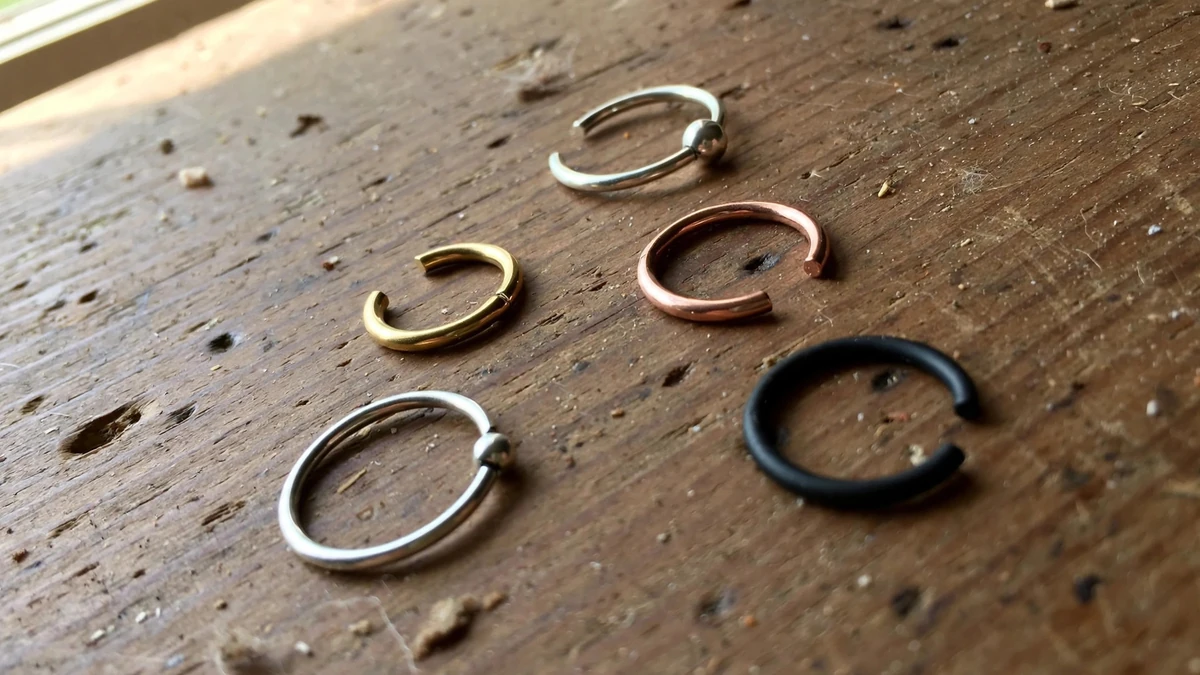
A seamless nose hoop is a single circle of wire with a tiny break in it. To open it, twist the two ends apart sideways, slide the hoop through, and twist the ends back together. When it is closed properly, the circle looks continuous, with no visible clasp, no hinge, and nothing sticking out. The join is the only weak point, and it is also the only part you ever need to touch.
A hinged nose hoop, sometimes called a clicker, has a short straight segment joined to the circle by a tiny hinge on one side and a small catch on the other. Open it by swinging the segment out on its hinge, slide the hoop through, and press the segment shut until it clicks. The click tells you it is closed, and the hinge keeps the segment attached to the hoop so it cannot fall off while you are changing it.
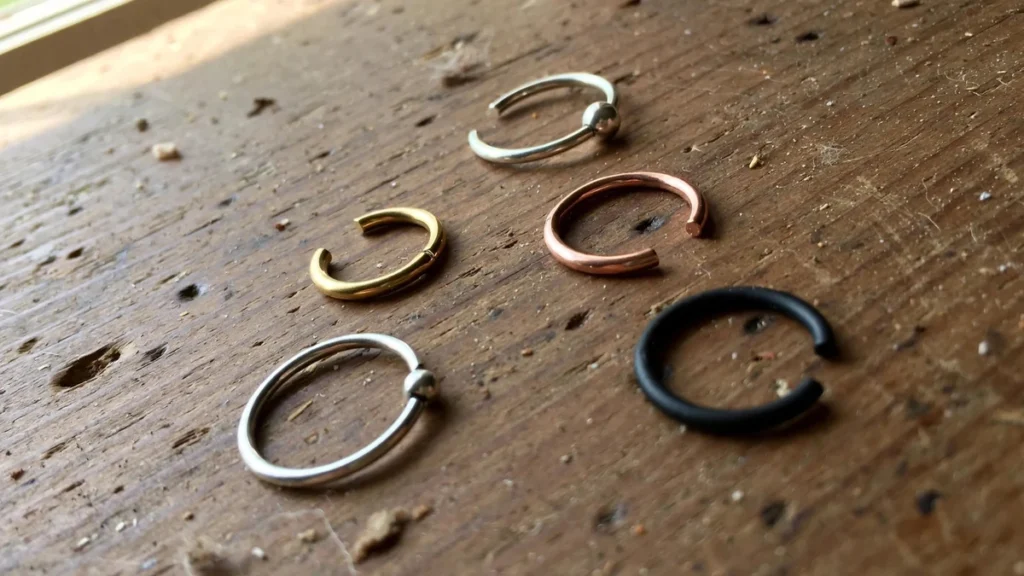
Both types come in gold, silver, and titanium, in the same range of gauges and diameters. The difference is purely in how the hoop opens and closes, but it affects almost everything else about wearing it.
How we chose these comparisons and what to look for
Look first at the join. On a seamless hoop, the two ends should meet exactly, because a gap will catch on the piercing and a step will scratch it. On a hinged hoop, the segment should click shut firmly and sit flush with the circle, with no wobble and no gap at the catch.

Look next at the size. A hoop that is too small will pull at the piercing, and a hoop that is too large will swing and catch on clothing. The gauge, the thickness of the wire, and the diameter, the width of the circle, matter more than the closure for comfort. Most nostril piercings take an 18-gauge or 20-gauge hoop, and the diameter usually sits between 6 and 10 millimetres.
Finally, think about your hands. If you change your jewellery often, or find small clasps fiddly, a hinged hoop is far easier to manage, because the click tells you it is closed. If you rarely change your hoop and you want the cleanest possible look, a seamless hoop rewards the extra care. Our guide to the best necklaces for women makes a similar point about clasps: the best closure is the one you can operate without a mirror and without a struggle, and the same is true on a much smaller scale for a nose hoop.
The 9 comparisons that matter in 2027
First impressions and how they look on the nose
What we like: A seamless hoop looks like a perfect, unbroken circle, the cleanest-looking hoop you can wear. A hinged hoop looks almost as clean when it is closed, and the hinge is usually hidden against the nostril. What to consider: On a very thin hoop the hinge can be visible as a tiny bump, while a seamless hoop with a badly aligned join shows a visible gap. Best for: A minimal, understated look, where seamless wins by a small margin. Material: 14-carat gold or sterling silver. Price range: Around £20 to £100 for seamless, £25 to £120 for hinged. Standout feature: Seamless is the cleanest circle; hinged is nearly as clean with a click.
Comfort and how they feel all day
What we like: A seamless hoop has no hinge and no catch, so there is nothing to press against the skin, and a well-closed one is easy to forget. A hinged hoop is also comfortable once closed, and the segment sits flat against the nostril. What to consider: A hinged hoop that does not click fully shut can have a tiny edge that rubs, and a rough seamless join can scratch the piercing. Best for: All-day wear, where both work well if the join is smooth. Material: 20-gauge gold or silver, 6 to 8 millimetre diameter. Price range: Around £15 to £80 for either type. Standout feature: The smoothness of the join matters more than the type of closure.
Security and what stays put
What we like: A hinged hoop clicks shut and stays shut, and the hinge keeps the segment attached, so it is very hard to lose. A seamless hoop relies on the tension of the wire to stay closed, and a well-made one holds its shape for months. What to consider: A seamless hoop can slowly open if the wire is bent or catches on fabric, and slip out unnoticed. A hinged hoop can also fail, but only if the hinge itself wears out. Best for: Active days, swimming, and travel, where a hinged hoop is the safer choice. Material: 14-carat gold or implant-grade titanium. Price range: Around £30 to £150 for either type. Standout feature: The click of a hinged hoop is a promise that it is shut.
Ease of putting it on and taking it off
What we like: A hinged hoop is the easiest nose hoop to change: open the segment, slide the hoop in, and click it shut, all with one hand. A seamless hoop needs a gentle twist to open and close, which takes practice but becomes quick once you know the movement. What to consider: Twisting a seamless hoop the wrong way can bend the wire out of shape and leave a gap. Best for: Beginners and frequent changers, where hinged wins clearly. Material: Any metal, in 18-gauge or 20-gauge. Price range: Around £20 to £100 for either type. Standout feature: Hinged is the friendliest closure for new hands.
Versatility: dressing it up or down
What we like: Both closures suit every occasion, because the closure is hidden and the visible part is the same. A seamless hoop is the most discreet option for formal settings, while a hinged hoop with a small gem on the segment can add a touch of sparkle. What to consider: A hinged hoop with a decorative segment is a little more visible, which suits a night out but can look busy at work. Best for: Everyday wear, where both work; formal occasions, where a plain seamless hoop is the most understated. Material: Plain gold or silver for formal wear, gem-set hinged hoops for evenings. Price range: Around £20 to £120 for either type. Standout feature: The closure is invisible, so the hoop suits any outfit.
Durability and what can go wrong
What we like: A seamless hoop has no moving parts, so there is nothing to wear out, and it can last for years. A hinged hoop is also durable, and a good hinge will click shut thousands of times. What to consider: The hinge is the weak point of a hinged hoop, and a cheap one can loosen or snap, while a seamless hoop can be ruined by one careless twist. Best for: Long-term wear without changes, where seamless lasts longest; frequent changes, where a good hinged hoop is more practical. Material: 14-carat gold or titanium for durability. Price range: Around £30 to £150 for either type. Standout feature: Seamless has nothing to break; hinged has a hinge that can.
Cost for one hoop and for a set
What we like: Seamless hoops are usually a little cheaper, because they are simpler to make. Hinged hoops cost a little more, because the hinge and the click mechanism take extra work. What to consider: The price difference is small, usually a few pounds, and it is not a good reason to choose one over the other. Best for: A budget buy, where seamless saves a little; a first hoop, where the extra cost of a hinged hoop is worth it for the ease. Material: Sterling silver or 14-carat gold. Price range: Seamless around £15 to £90, hinged around £20 to £120. Standout feature: The closure adds a few pounds, not a fortune.
Matching outfits and other jewellery
What we like: Both closures match any outfit, because the closure is not visible. A seamless hoop suits a minimal, clean look, while a hinged hoop with a gem segment can echo a gemstone ring or a pendant. What to consider: A decorative hinged segment is a design choice, not a closure choice, and it should match the rest of your jewellery rather than clash with it. Best for: A minimal look, where seamless is the purest choice; a coordinated look, where a gem-set hinged hoop can tie in with other pieces. Material: The same metal as your watch or your most-worn ring. Price range: Around £20 to £120 for either type. Standout feature: The closure does not change the outfit; the metal and the size do.
Keeping it afterwards as a keepsake
What we like: A solid gold hoop in either closure is a keepsake, because the metal holds its value. A seamless gold hoop is the simplest keepsake, a single unbroken circle with nothing to wear out. What to consider: A hinged hoop with a worn hinge is harder to repair than a seamless hoop, and a plated hoop in either closure has almost no keepsake value. Best for: A keepsake or a long-term piece, where a solid gold seamless hoop is the clearest choice. Material: 14-carat or 18-carat solid gold. Price range: Around £80 to £250 for a keepsake gold hoop. Standout feature: A seamless gold hoop is the simplest, longest-lasting keepsake.
Which nose hoop is right for you
Start with how often you change your jewellery. If you change your hoop often, or are new to nose hoops, a hinged hoop is the easier choice, because the click tells you it is closed. If you put a hoop in and leave it for months, a seamless hoop is the cleaner and simpler choice, because there is nothing to wear out and nothing to catch.
Then think about your piercing. A fresh or sensitive piercing benefits from a hinged hoop in a thin gauge, fitted by a piercer. A well-healed piercing takes either closure happily, and the choice becomes about looks. Our guide to gold anklets is about a different piece of jewellery, but it makes the same point about closures: the best mechanism is the one you can use confidently without help, and a nose hoop is no different.
The caveats that matter
A nose hoop should only go into a fully healed piercing. Putting a hoop into a fresh piercing can cause irritation, bumps, and slow healing. If your piercing is less than a few months old, or if it is sore, red, or weeping, wait, and ask a professional piercer before you change the jewellery.
| Detail | What is known |
|---|---|
| Look | Seamless is an unbroken circle; hinged is nearly as clean when closed |
| Ease of fitting | Hinged is easier, with a click to confirm it is shut |
| Security | Hinged stays shut and cannot fall apart; seamless can slowly open |
| Comfort | Both are comfortable if the join is smooth and the size is right |
| Durability | Seamless has no moving parts; a hinged hoop can wear at the hinge |
| Cost | Seamless is usually a little cheaper; hinged costs a few pounds more |
| Healing | Only wear a hoop in a fully healed piercing |
| Best for beginners | Hinged, because it is easier to fit and harder to lose |
Cheap hoops are the biggest risk, whatever the closure. A hoop made from an unknown alloy can contain nickel or other metals that irritate the skin, and a poorly finished join or hinge can scratch the inside of the piercing. Buy from a seller who states the metal clearly, and if a hoop causes redness or swelling that does not settle in a day or two, take it out.
Checklist: choosing between seamless and hinged
Use these checks before you buy, and again when the hoop arrives.
- Check how often you change jewellery: frequent changers should choose hinged.
- Check the join: a seamless hoop should meet exactly, with no gap and no step.
- Check the hinge: a hinged hoop should click shut firmly, with no wobble and no gap.
- Check the size: confirm the gauge and diameter against your current jewellery or your piercer’s advice.
- Check the metal: solid gold, sterling silver, or implant-grade titanium, not plated.
- Check the return policy: buy from a seller who accepts returns, so a hoop that is hard to fit can go back.
Frequently asked questions
Which is better, seamless or hinged?
Neither is better in general. Hinged hoops are easier to fit and harder to lose, while seamless hoops look cleaner and have no moving parts. Beginners usually prefer hinged, while people who leave a hoop in for months often prefer seamless.
Can a seamless hoop fall out?
Yes, if the join opens. A seamless hoop stays shut through the tension of the wire, and if the wire is bent or catches on fabric, the hoop can slip out. Check the join now and then.
Do hinged hoops break easily?
A well-made hinged hoop does not break easily, and a good hinge will click shut thousands of times. A cheap hinge can loosen, stick, or snap, so buy from a seller who states the metal and the quality clearly, and avoid the cheapest hinged hoops.
Can I change a nose hoop by myself?
Yes, once the piercing is healed. A hinged hoop is the easiest to change alone, because the click confirms it is shut. A seamless hoop takes a little practice in front of a mirror.
What gauge should I choose?
Most nostril piercings take an 18-gauge or 20-gauge hoop. A 20-gauge hoop is thinner and more delicate, while an 18-gauge hoop is sturdier. Ask your piercer if you are unsure. A luxury watch guide may seem far from nose hoops, but it makes the same point about fit: a small measurement, chosen well, is what makes a piece comfortable to wear every day.
Can I wear a nose hoop every day?
Yes, once the piercing is fully healed. A thin hoop in solid gold, sterling silver, or titanium is comfortable for daily wear, and many people leave the same hoop in for months. Take it out for swimming in chlorinated water if you can, and check the join or the hinge now and then.
The bottom line
Seamless and hinged nose hoops do the same job, and the difference is mostly about fitting, security, and looks. Hinged hoops are easier to put in, harder to lose, and friendlier for beginners. Seamless hoops are cleaner, simpler, and have nothing to wear out. Neither one is wrong, and the hoop that works best is the one that matches your piercing, your hands, and how often you change your jewellery.
Choose the closure first, then the size, then the metal. A single well-made hoop, in the right gauge and the right closure, will look better and last longer than a drawer full of cheap ones, and it will feel like part of your face rather than something you are trying on.