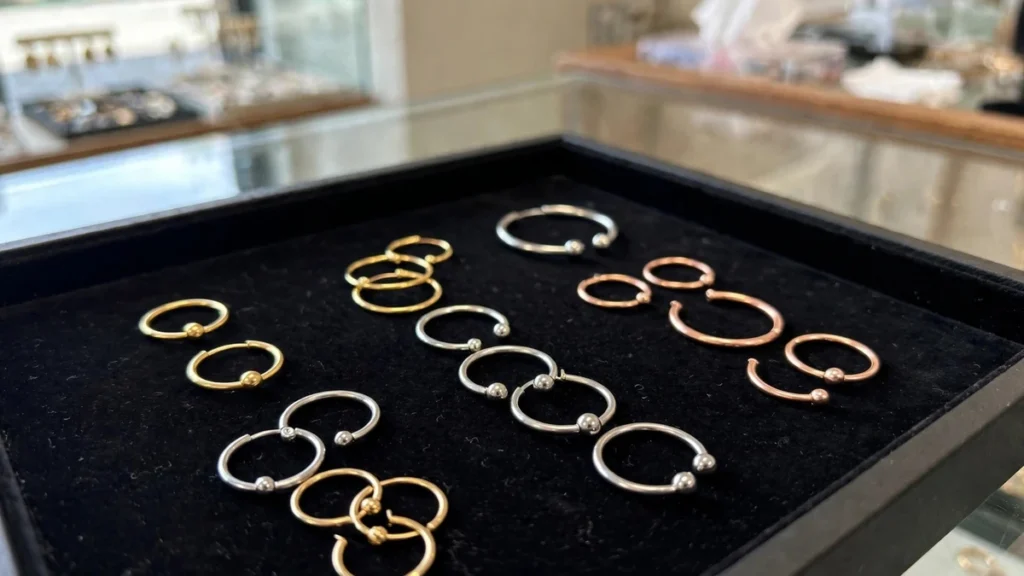
A Guide to Buying a Nose Hoop 2027
Buying a nose hoop looks simple until you start shopping. There are dozens of metals, closures, gauges, and diameters, and the difference between a hoop that feels like nothing and a hoop that irritates your piercing for weeks is often a single detail: the wrong gauge, a plated finish, or a diameter that is a millimetre too small. For a first hoop, getting those details right matters more than the style.
This guide walks through the nine steps to buying a nose hoop in 2027, from checking that the piercing is ready to choosing the metal, measuring the fit, and knowing what to do if the hoop does not feel right. The goal is not to find the most expensive hoop. It is to find the hoop that suits your piercing, your skin, and your daily life, and to avoid the common mistakes that turn a simple purchase into a sore piercing.
Read the steps in order if this is your first hoop, because they build on each other. If you already wear a hoop and want to upgrade, the steps on metal, diameter, and closure are the ones that will help most. Either way, take your time. A nose hoop is worn through living skin, and a few minutes of checking before you buy is worth far more than weeks of dealing with a hoop that does not fit.
Key takeaways
- A piercing must be fully healed before you switch to a hoop, which usually takes three to six months for a nostril.
- Implant-grade titanium and solid 14-carat gold are the safest metals, while unnamed alloys and thin plating are the most likely to irritate.
- Measure the diameter before ordering, because a hoop that is too small pulls and a hoop that is too large snags on clothing and hair.
- Clicker closures are the easiest to change at home, while seamless rings and captive bead rings are better changed by a piercer.
- Check the return policy before you pay, and take the hoop out and ask a piercer if it causes redness, swelling, or soreness.
What buying a nose hoop actually involves
Buying a nose hoop involves four decisions, and they are all worth getting right. The first is timing: whether the piercing is healed enough for a hoop at all. The second is metal: what the hoop is made from, because that decides whether the piercing stays calm. The third is fit: the gauge and the diameter, which decide whether the hoop sits neatly or pulls and snags. The fourth is closure: how the hoop opens and closes, which decides whether you can change it yourself or need a piercer.
Most of these decisions are easier with a piercer’s help. A good piercer will look at the piercing, measure the nostril, and suggest a diameter, usually in a single visit that takes only a few minutes.
Buying online is cheaper and offers more choice, but it asks more of you. You need to know the gauge, the diameter, and the metal, and you need to read the listing carefully, because a hoop described only as gold-toned or fashion metal is a warning sign, not a bargain. The steps below cover each decision in turn, so that whether you buy in a studio or online, you know what to check before you pay.
How we chose these steps and what to look for
Look first at the piercing itself. A hoop is not a starter piece of jewellery. It moves more than a stud, it catches more easily, and it puts more pressure on the piercing, so it only works once the piercing has fully healed. If the piercing is still sore, red, or weeping, it is not ready, and no hoop, however good, will change that. Patience here is not optional. It is the step that makes all the others work.
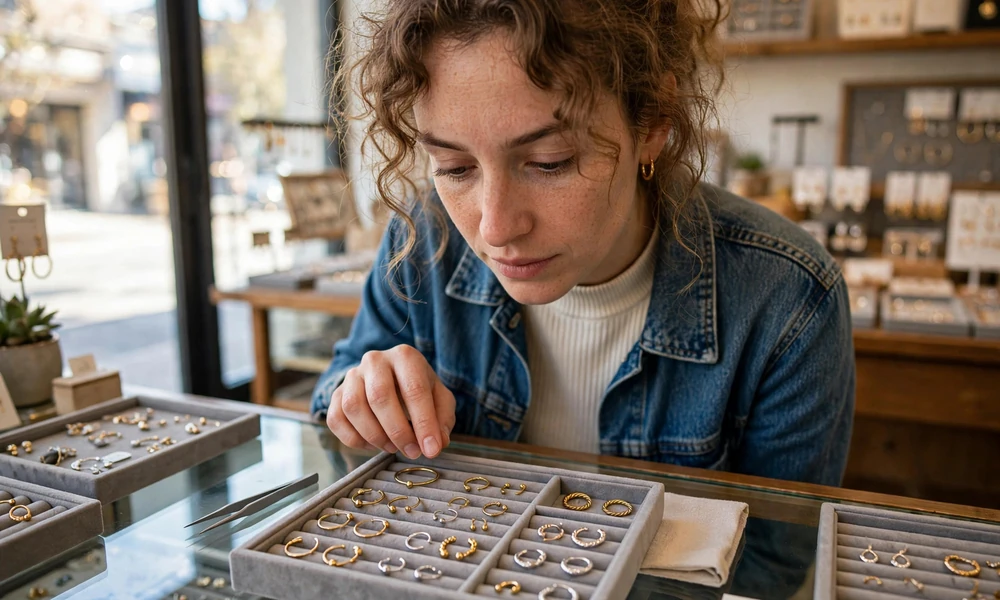
Look next at the listing. A good listing names the metal, the gauge, and the diameter clearly, and says whether the hoop is seamless, a clicker, or a captive bead ring. A vague listing that says only gold or silver, with no gauge and no diameter, is a sign to buy elsewhere. Price is a useful signal too. A solid gold hoop cannot cost five pounds, and a titanium hoop that costs two pounds is unlikely to be implant-grade, whatever the listing claims.
Finally, look at the seller. A piercing studio, a jeweller, or a specialist body jewellery shop is a safer bet than a general marketplace seller with no reviews. A specialist will answer questions about gauge and metal, will accept a return if the size is wrong, and will usually have a piercer on hand. Our guide to nose studs for women covers the stud that most piercings start with, and it is worth reading if you are still deciding whether your piercing is ready to move on from a stud at all.
The 9 steps to buying a nose hoop in 2027
Check your piercing is fully healed
What we like: A healed piercing accepts a hoop calmly, with no soreness, redness, or discharge, and a piercer can confirm it in a minute. What to consider: Healing takes three to six months for most nostrils, and rushing it is the most common cause of a sore piercing. Best for: Anyone buying their first hoop. Cost: Free if you ask at the studio where you were pierced. Time needed: A few minutes.
Choose the right metal for your skin
What we like: Implant-grade titanium is nickel-free, light, and the metal most piercers recommend, while solid 14-carat gold is warm, never tarnishes, and suits sensitive skin too. What to consider: Avoid unnamed alloys and thin plating, because the coating wears away and the metal underneath often causes a reaction. Best for: Sensitive skin and first-time hoop wearers. Cost: About £8 to £120 depending on the metal. Time needed: A few minutes of reading the listing.
Measure the length you need
What we like: A piercer can measure the nostril and suggest a diameter, usually 8 to 10 millimetres, so the hoop sits neatly without pulling. What to consider: A hoop that is too small will pull on the piercing, and one that is too large will swing and catch on hair and clothing. Best for: Anyone buying a hoop online for the first time. Cost: Free at most piercing studios. Time needed: A few minutes.
Pick a closure you can manage
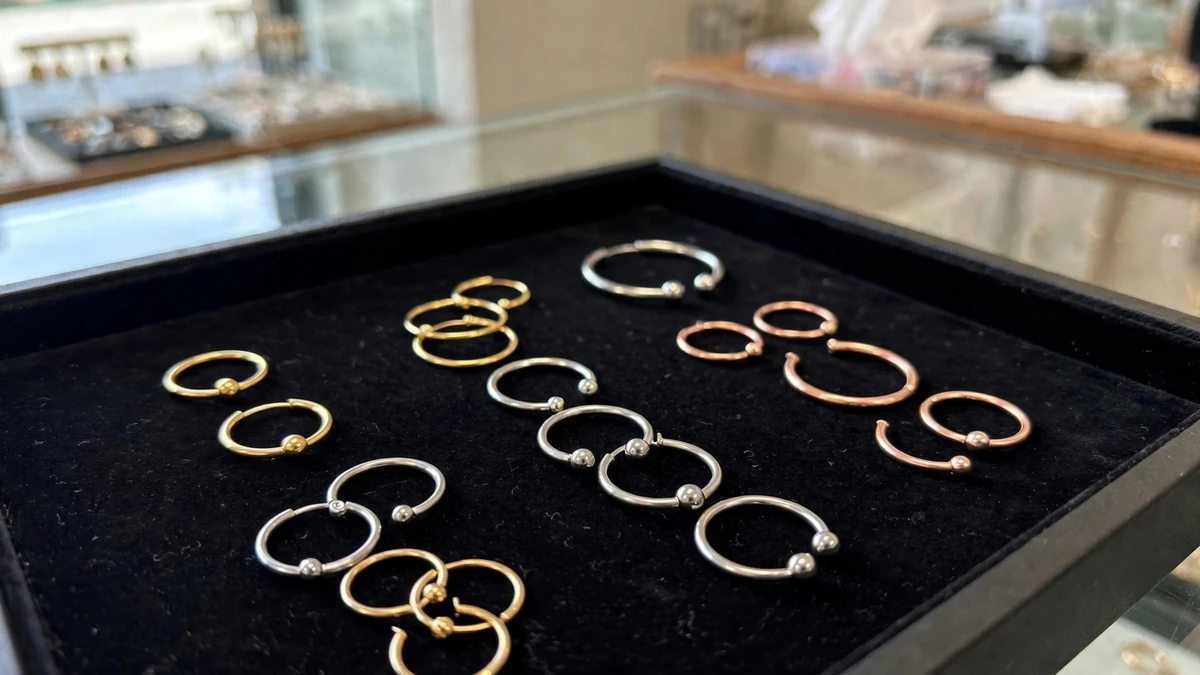
What we like: A clicker hoop has a hinged segment that snaps shut, so it can be changed at home in seconds without tools. What to consider: Seamless rings and captive bead rings need a piercer or pliers to open and close, and forcing them can bend the hoop out of shape. Best for: Teens and anyone who changes jewellery often. Cost: Clicker hoops cost a little more than plain rings. Time needed: A few minutes to practise opening and closing it.
Choose a thickness that suits your piercing
What we like: 18 gauge is the standard thickness for a nostril piercing, sturdy enough to hold its shape and comfortable for daily wear. What to consider: A 20-gauge hoop is finer and more delicate, but it bends more easily and is not the best choice for a piercing that is still settling. Best for: Most nostril piercings, especially a first hoop. Cost: No price difference between gauges. Time needed: A minute to check the listing.
Match the hoop to your other jewellery
What we like: A hoop in the same metal as your earrings and necklace looks considered rather than accidental, and gold or silver tones are easy to match. What to consider: Mixing metals can work, but it looks best when it is deliberate, not when one piece is simply the wrong colour. Best for: Anyone who wears the same jewellery most days. Cost: Nothing extra if you already know your usual metal. Time needed: A few minutes.
Look at what you wear every day. If your earrings are gold, a gold hoop will sit naturally with them. If you wear silver, choose silver. A guide to anklets for women makes the same point about matching metals across pieces, and it applies just as well to a nose hoop.
Check the finish before you wear it
What we like: A well-made hoop is smooth all the way around, with no rough edges, no sharp join, and no ridge where a stone is set. What to consider: A rough spot will rub the piercing every time the hoop moves, which is often, since a hoop shifts when you smile or talk. Best for: Every hoop, every time. Cost: Free to check. Time needed: A minute, running a fingertip around the ring.
Check the return policy before you pay
What we like: A good seller accepts returns on unworn jewellery and exchanges the size if the diameter is wrong. What to consider: Many sellers will not accept a return once a hoop has been worn, for hygiene reasons, so check the size before you put it in. Best for: Online purchases, where you cannot try the hoop first. Cost: Free to check. Time needed: A few minutes.
Try it on at home first
What we like: Wearing the hoop at home for a day shows whether it fits, whether it snags, and whether it feels comfortable before you wear it out. What to consider: If it feels tight, sore, or loose, take it out rather than hoping it will settle, because a hoop that hurts on day one rarely improves. Best for: Every new hoop. Cost: Nothing. Time needed: A day of wear at home.
Which nose hoop is right for you
Start with the piercing. If it is fully healed and calm, you have a free choice. If it is still settling, stay with a stud and wait. Once the piercing is ready, the next question is the metal. Titanium is the safest and lightest choice, and it suits almost everyone. Solid gold is warmer and more expensive, and it is a good choice if you want a hoop you will keep for years. Surgical steel works for many people, but it contains a small amount of nickel, so it is not the best choice for anyone with a sensitivity.
Next, think about the closure. If you want to change the hoop yourself, a clicker is the practical choice, because it opens and closes with a small hinge and needs no tools. If you are happy to visit a piercer for changes, a seamless ring is simpler and often cheaper. If you play sport or have school rules about jewellery, a clicker that can be removed quickly is more useful than a ring that needs a piercer to take out.
Finally, think about the look. A plain hoop is the most versatile, because it works with everything and never looks out of place. A crystal or pearl hoop is better as an occasion piece, because the stone adds weight and needs more care. The same balance between everyday and occasion jewellery applies here too: buy the plain hoop first, and add a special one later if you want it.
The caveats that matter
The most common mistake when buying a nose hoop is buying too early, before the piercing has healed. A hoop moves more than a stud, and a piercing that is still healing will react to that movement with soreness and swelling. The second most common mistake is buying a cheap plated hoop, because the plating wears away within weeks and the metal underneath is often the part that causes a reaction. The third is buying the wrong size, because a hoop that is too small pulls constantly and a hoop that is too large catches on everything.
| Detail | What is known |
|---|---|
| When to buy a hoop | Only after the piercing is fully healed, usually three to six months, confirmed by a piercer |
| Safest metals | Implant-grade titanium and solid 14-carat gold; surgical steel for those without nickel sensitivity |
| Metals to avoid | Unnamed alloys, fashion metal, and thin gold plating over an unknown base metal |
| Standard gauge | 18 gauge for most nostril piercings; 20 gauge is finer and more delicate |
| Typical diameter | 8 to 10 millimetres, measured by a piercer before ordering online |
| Easiest closure | Clicker hoops open and close at home; seamless and captive bead rings need a piercer |
| Returns | Check the policy before paying; most sellers will not accept a worn hoop back |
| What a hoop does not do | It does not heal a piercing, suit every face, or replace a stud for a new piercing |
If you are under 18, a parent or guardian should be part of the decision, both for the piercing itself and for the first hoop. Piercing laws and age rules vary by place, and a reputable piercer will ask for parental consent. A seller who does not ask, or a studio that rushes you, is a reason to walk away.
Checklist: buying a nose hoop honestly
Use these checks before you buy, and again when the hoop arrives.
- Check the piercing is fully healed: no soreness, redness, or discharge for at least a month.
- Check the metal: implant-grade titanium or solid gold, named clearly in the listing.
- Check the gauge and diameter: 18 gauge and 8 to 10 millimetres for most noses, measured by a piercer.
- Check the closure: a clicker you can manage yourself, or a seamless ring a piercer can fit for you.
- Check the finish: run a fingertip around the hoop and reject it if you feel a rough edge or a sharp join.
- Check the returns: read the policy before you pay, and try the hoop at home for a day before wearing it out.
Frequently asked questions
How do I know my piercing is ready for a hoop?
It should be completely calm: no tenderness, no redness, no crust, and no discharge for at least a month, usually three to six months after the piercing was done. If you are unsure, ask the piercer who did it. A quick check costs nothing and is more reliable than guessing.
What size nose hoop should I buy?
Most people suit an 18-gauge hoop with a diameter of 8 to 10 millimetres, but the right size depends on the shape of your nose and where the piercing sits.
Is it better to buy a nose hoop from a piercer or online?
A piercer is the safer choice for a first hoop, because they can measure the fit, check the piercing, and fit the hoop for you. Online is cheaper and offers more choice, but only if you already know your gauge, diameter, and metal, and you buy from a specialist seller with a clear returns policy.
Can I change a nose hoop myself?
Yes, if it is a clicker hoop, which opens and closes with a hinged segment and needs no tools. A seamless ring or a captive bead ring is harder to manage and is better changed by a piercer, because forcing it can bend the hoop or hurt the piercing.
What should I do if the hoop hurts after I put it in?
Take it out, clean the area gently with saline as your piercer advised, and go back to a stud if the piercing is still open. If soreness, swelling, or discharge lasts more than a few days, see your piercer or a clinician rather than waiting for it to settle on its own.
How much should a good nose hoop cost?
A titanium hoop costs about £8 to £25, and a solid gold hoop costs about £40 to £120, depending on the size and the gold. A price far below those ranges usually means plated or unnamed metal, which is a false economy. A guide to luxury watches makes a similar point: with jewellery, the metal is what you are paying for, and a cheap price usually means a cheap metal.
The bottom line
Buying a nose hoop well comes down to four checks: a healed piercing, a named metal, a measured diameter, and a closure you can manage. Get those right and the style almost takes care of itself, because a hoop that fits and is made from the right metal will look good and feel comfortable from the first day.
Take your time, ask a piercer to measure you, and buy from a seller who names the metal and accepts returns.