
The Best Nose Hoops for Teens 2027
A nose hoop is the simplest piece of nose jewellery there is: a thin ring that circles the nostril, catching the light every time you turn your head. For teens it has a particular appeal. It looks effortless, it works with almost any outfit, and unlike a stud it makes a clear statement without being loud. The problem is not finding a nose hoop. It is finding one that is safe for a young piercing, comfortable enough to wear all day at school, and made from a metal that will not irritate skin that is still getting used to jewellery.
That is why this guide is organised by fit and safety first, not just by style. A hoop that is too thin can pull and snag. A hoop that is too large can catch on clothing and hair. A hoop made from cheap mystery metal can turn a healed piercing sore again within a week, while a well-made hoop in implant-grade titanium or solid gold can be worn for months without a second thought.
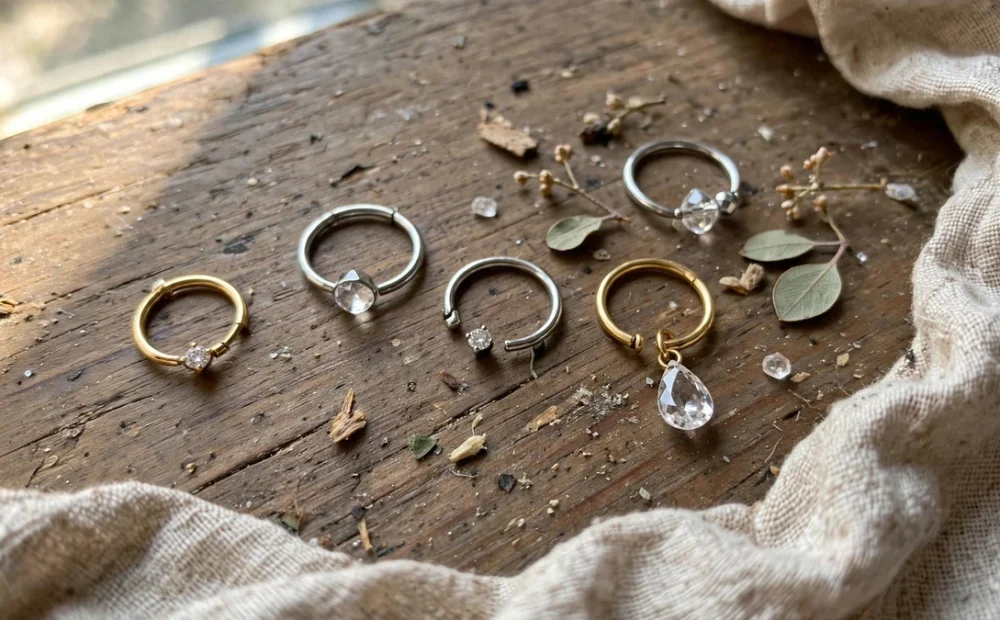
Below are nine nose hoops worth considering in 2027, from a classic seamless ring to a tiny crystal hoop and a gentle magnetic option for teens who are not ready for a piercing. Each one is described by what it is good at, what to watch for, and who it suits best, so you can choose with comfort and safety in mind, not just a photo.
Key takeaways
- A nose hoop should be the right diameter and gauge for the piercing, because a hoop that is too small pulls and a hoop that is too large snags.
- Implant-grade titanium, solid 14-carat gold, and surgical steel are the safest everyday metals for a teen piercing, while plated mystery metals are the most likely to irritate.
- A piercing should be fully healed before switching from a stud to a hoop, which usually takes several months, and a parent or guardian should be part of the decision.
- Seamless and clicker hoops are the easiest to put in and take out, while plain rings that need pliers are better left to a piercer.
- No hoop suits every face or every piercing, and a hoop that causes redness, swelling, or soreness should come out and be checked by a piercer.
What a nose hoop actually is
A nose hoop is a circular ring worn through a nostril piercing. Most hoops are a complete circle with a small opening or a hinge, and the ring passes through the piercing so that the circle sits against the side of the nose. The two numbers that matter most are the gauge, which is the thickness of the wire, and the diameter, which is the size of the circle. A standard nostril piercing is usually 18 gauge, and a hoop diameter of 8 to 10 millimetres suits most teen noses, although a piercer can measure the exact fit.
Hoops come in several closures. A seamless ring is a plain circle with a tiny gap that is twisted open and closed. A clicker hoop has a hinged segment that snaps shut with a small click. A captive bead ring holds a small bead in the opening. A segment ring has a curved piece that pops out. For teens, clicker hoops are usually the easiest to manage, because they open and close without tools and sit flush against the nose, with nothing to snag.
The metal matters as much as the shape. Implant-grade titanium is lightweight, nickel-free, and the metal most piercers recommend for a first hoop. Solid 14-carat gold is also a good choice, although it costs more. Surgical steel works for many people but contains a small amount of nickel, so it is not the best choice for anyone with a nickel sensitivity.
How we chose these nose hoops and what to look for
Look first at the metal and the gauge. For a teen, the safest starting point is implant-grade titanium or solid gold in 18 gauge, which is the standard thickness for a nostril piercing. Avoid hoops described only as alloy, fashion metal, or gold-toned, because those words usually hide a base metal that can irritate a piercing. If the listing does not name the metal clearly, that is a reason to choose a different hoop.

Look next at the closure and the diameter. A clicker or seamless closure is easier to change and less likely to catch on a towel or a jumper than a ring with a bead or a segment that can work loose. The diameter should leave a small, neat gap between the ring and the nostril, not press tight against the skin and not hang so low that it swings. A piercer can measure this in a minute, and that measurement is worth getting before ordering online.
Finally, look at the finish. A hoop should be smooth all the way around, with no rough edges, no sharp join, and no stones glued on in a way that leaves a ridge. Our guide to gold jewellery for everyday wear explains why solid metal beats plating for pieces that are worn every day, and the same logic applies to a nose hoop, which is worn even more closely against the skin.
The 9 best nose hoops for teens in 2027
The Classic Seamless Titanium Hoop
What we like: A plain, smooth ring in implant-grade titanium, light enough to forget about, with no hinge, bead, or stone to catch on anything. What to consider: It needs a piercer or careful hands to open and close, since the gap must be twisted, not pulled. Best for: A first hoop after a piercing has fully healed. Material: Implant-grade titanium. Price range: About £8 to £20. Standout feature: The smoothest, simplest hoop you can buy.
The Gold Clicker Hoop
What we like: A solid 14-carat gold ring with a hinged segment that clicks shut, so it can be changed at home without tools. What to consider: A higher price than titanium, and the hinge should be checked regularly to make sure it still closes firmly. Best for: Teens who want a warm gold look for everyday wear. Material: Solid 14-carat gold. Price range: About £40 to £120. Standout feature: The easiest closure to use confidently.
The Tiny Crystal Hoop
What we like: A slim hoop with a single small crystal set into the front, giving a subtle sparkle without adding weight or bulk. What to consider: The stone setting should be smooth, and the hoop is best for healed piercings only, since a stone can press on a new piercing. Best for: Parties, photos, and special occasions. Material: Titanium with a cubic zirconia stone. Price range: About £12 to £30. Standout feature: One small stone, just enough sparkle.
The Rose Gold Seamless Hoop
What we like: A soft rose gold tone that flatters most skin, in a plain seamless ring that is easy to pair with other jewellery. What to consider: Make sure it is solid rose gold or rose gold over titanium, not a thin plating that will wear away. Best for: Teens who wear rose gold earrings or a rose gold necklace. Material: Solid 14-carat rose gold. Price range: About £40 to £110. Standout feature: A gentle, warm colour that suits almost everyone.
The Silver Clicker Hoop
What we like: A bright silver-toned clicker hoop in implant-grade titanium, with the same easy hinge as the gold version at a lower price. What to consider: Titanium is not actually silver, so if you want real silver, look for sterling silver and accept that it needs more cleaning. Best for: Cool skin tones and everyday school wear. Material: Implant-grade titanium, silver tone. Price range: About £10 to £25. Standout feature: The look of silver with the safety of titanium.
The Thin Everyday Hoop
What we like: A very fine 20-gauge hoop that looks delicate and barely-there, in polished titanium that barely weighs anything. What to consider: A thin hoop is more delicate, so it can bend if it snags, and it is not the best choice for a piercing that is still healing. Best for: A subtle, minimal look for smaller noses. Material: Implant-grade titanium. Price range: About £8 to £18. Standout feature: The lightest, most delicate hoop in this guide.
The Pearl Accent Hoop
What we like: A slim hoop with a single small pearl at the front, giving a soft, classic look that works for formal occasions. What to consider: Pearls are softer than metal or crystal, so the hoop should be stored carefully and kept away from perfume and hairspray. Best for: Weddings, proms, and family occasions. Material: Titanium with a freshwater pearl. Price range: About £15 to £35. Standout feature: A pearl softens the whole look of a hoop.
The Magnetic Nose Hoop
What we like: A hoop that clips on with a small magnet, so it looks like a real piercing without any needle, healing time, or parental permission for a piercing. What to consider: It can slip if it is knocked, and it should not be worn during sport or while sleeping. Best for: Teens who are not ready for a real piercing. Material: Stainless steel with a magnetic closure. Price range: About £5 to £15. Standout feature: The look of a hoop with no piercing at all.
The Double Hoop Set
What we like: Two slim hoops in different metals, gold and silver, that can be worn one at a time or swapped to match an outfit. What to consider: Two hoops mean two chances to lose one, so keep the spare in a small jewellery box rather than a pocket. Best for: Teens who like to change their look often. Material: Implant-grade titanium, gold and silver tones. Price range: About £15 to £30 for the set. Standout feature: Two looks for the price of one set.
Which nose hoop is right for you
Start with the piercing, not the style. If the piercing is less than six months old, or still sore, red, or weepy, it is not ready for a hoop at all, and a stud is the safer choice until a piercer says otherwise. Once the piercing is fully healed, the next question is the diameter. A piercer can measure the nostril and suggest a size, usually 8 or 9 millimetres for a teen.
Next, think about the metal. If you have sensitive skin or a known nickel allergy, implant-grade titanium is the safest choice, and it is also the lightest. If you want a warm colour and are happy to spend more, solid gold is a good long-term investment. If you are still deciding, a titanium hoop in a gold or silver tone gives you the look while you work out what suits you. A guide to nose rings for women covers the wider family of styles, and it is worth a read if you are torn between a hoop, a stud, and a cuff, because each one sits differently on the nose.
Finally, think about your daily life. If you play contact sport, swim, or have a school with strict jewellery rules, a clicker hoop that can be removed quickly is more practical than a seamless ring that needs a piercer to change. The right hoop is the one that fits your piercing, your skin, and your routine, not just the one that looks best in a photo.
The caveats that matter
A nose hoop is a piece of jewellery worn through living skin, so it deserves more care than an earring. The most common problems are easy to avoid. Changing to a hoop too early is the biggest one, because a hoop moves more than a stud and can irritate a piercing that is still healing. Cheap metal is the second, because plating wears away and the metal underneath is often the part that causes a reaction.
| Detail | What is known |
|---|---|
| When to switch to a hoop | Only after the piercing is fully healed, usually after several months, and with a piercer’s advice |
| Safest metals | Implant-grade titanium, solid 14-carat gold, and surgical steel for those without nickel sensitivity |
| Metals to avoid | Unnamed alloys, fashion metal, and thin gold plating over an unknown base metal |
| Standard gauge | 18 gauge for most nostril piercings; 20 gauge is finer and more delicate |
| Typical diameter | 8 to 10 millimetres for most teen noses, measured by a piercer |
| Easiest closures | Clicker and seamless hoops; rings that need pliers are best changed by a piercer |
| When to remove a hoop | If there is redness, swelling, soreness, or discharge, and before contact sport if rules require it |
| What a hoop does not do | It does not suit every piercing or face, and it does not heal a piercing faster |
If you are under 18, a parent or guardian should be involved in the decision to get a piercing and in choosing the first hoop. Piercing laws and age rules vary by place, and a reputable piercer will ask for parental consent for a teen.
Checklist: buying a nose hoop honestly
Use these checks before you buy, and again after a week of wear.
- Check the piercing is fully healed: no soreness, redness, or discharge for at least a month before switching to a hoop.
- Check the metal: implant-grade titanium or solid gold, named clearly in the listing, not just alloy or gold-toned.
- Check the gauge and diameter: 18 gauge and 8 to 10 millimetres for most teens, confirmed by a piercer.
- Check the closure: a clicker or seamless hoop you can manage yourself, with a smooth finish all the way around.
- Check the fit at home: it should sit neatly against the nostril, not press tight and not hang low enough to swing.
- Check after a week: if the piercing is calm and comfortable, the hoop fits; if it is sore or red, take it out and ask a piercer.
Frequently asked questions
How long should I wait before switching from a stud to a hoop?
Wait until the piercing is fully healed, which usually takes three to six months for a nostril, and ask your piercer to confirm.
What size nose hoop should a teen wear?
Most teens suit an 18-gauge hoop with a diameter of 8 to 10 millimetres, but the right size depends on the shape of your nose and where the piercing sits. A piercer can measure it in a minute, and that measurement is more reliable than guessing from a size chart.
Is titanium really better than gold for a nose hoop?
For a first hoop, titanium is usually the safer choice because it is nickel-free, very light, and the metal most piercers recommend. Solid gold is also safe and looks warmer, but it costs more. The metal to avoid is unnamed alloy or thin plating, whatever the colour.
Can I wear a nose hoop at school?
It depends on your school’s rules. Some schools allow a small, discreet hoop, while others ask for jewellery to be removed or covered.
Can I wear a nose hoop while playing sport?
Contact sports and swimming are the two situations where a hoop is most likely to snag or get knocked, so many teens remove it or switch to a retainer for training and matches.
What should I do if my piercing gets sore after changing to a hoop?
Take the hoop out, clean the area gently with saline as your piercer advised, and go back to a stud if the piercing is still open. If soreness, swelling, or discharge lasts more than a few days, see your piercer or a clinician. A guide to pearl necklaces for women may seem unrelated, but it is a useful reminder that the gentlest jewellery is often the kindest to skin, and the same thinking applies to a nose hoop.
The bottom line
The best nose hoop for a teen in 2027 is not the flashiest or the most expensive. It is the one that fits a fully healed piercing, is made from a metal the skin tolerates, and is comfortable enough to forget about during a school day.
Choose one hoop, have the fit checked by a piercer, wear it for a week, and judge it on how the piercing feels, not just how it looks in the mirror. That is the honest way to enjoy a nose hoop without the soreness that makes people give up on one.