Gold vs Silver Nose Hoops 2027: 9 Comparisons That Matter
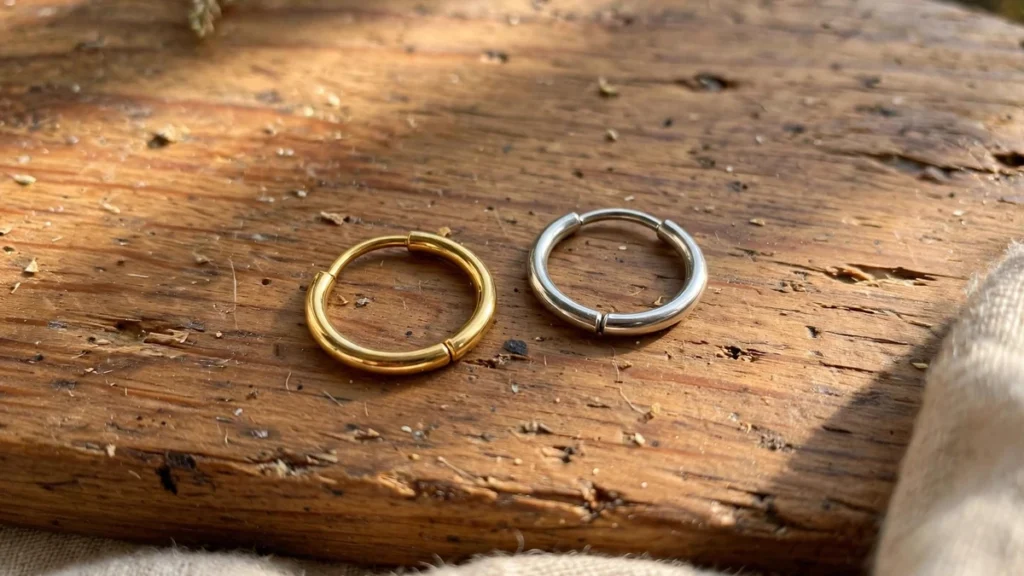
A nose hoop is a small circle with a big decision behind it. Gold and silver are the two metals most people choose, and they do not behave the same way on the face, on the skin, or in the jewellery box. Gold is warm, soft in tone, and forgiving in low light. Silver is bright, cool, and sharp, and it makes a hoop read as a clean line rather than a warm accent.
The choice matters more than it looks, because a nose hoop sits in the middle of the face. It catches light every time you turn your head, it sits close to your skin for hours a day, and it is one of the first things people notice in a photograph. The right metal looks effortless; the wrong one looks like a mistake.
Below are nine comparisons covering the real differences between gold and silver nose hoops in 2027, from how they look and feel to what they cost and how they age.
Key takeaways
- Gold nose hoops are warm and soft in tone, while silver nose hoops are bright and cool, and the right choice depends largely on your skin tone and your other jewellery.
- Gold is usually the safer choice for sensitive skin, while silver needs more care to avoid tarnish and irritation.
- Silver hoops cost less up front, but gold hoops hold their value better and are often cheaper to own over years.
- Gauge, diameter and closure matter as much as metal, so check the fit before you decide on the colour.
- No metal suits everyone, and a hoop that looks perfect in a shop mirror can feel wrong after a full day.
What gold and silver nose hoops actually are
A nose hoop is a thin ring that passes through a healed nostril piercing and closes in a circle. The two metals most commonly used are gold and silver, but those words cover several different materials. A gold nose hoop may be solid gold, gold-filled, or gold-plated over a base metal, and the difference between those three is far bigger than the difference between gold and silver themselves.
Solid gold hoops are made entirely of gold alloy, usually 14-carat or 18-carat, and they keep their colour for years. Gold-filled hoops have a thick layer of gold bonded to a base metal core, and they hold up well for everyday wear. Gold-plated hoops have a thin layer of gold over brass or another base metal, and they are the cheapest option, but the plating can wear thin at the closure and leave the base metal exposed.
Silver hoops are usually sterling silver, which is 92.5 percent silver mixed with other metals for strength, or they are silver-plated over a base metal. Sterling silver is a genuine precious metal that can be polished back to a shine when it dulls. Silver-plated hoops are cheaper but the plating wears in the same way as gold plating, and once it goes, the hoop underneath often darkens quickly and can irritate sensitive skin.
How we chose these comparisons and what to look for
Look first at the metal and how it is made. A solid gold or sterling silver hoop is a different purchase from a plated one, and the price should reflect that. Check for the carat, the gold content, or the sterling stamp, and be wary of any listing that says gold or silver without saying which kind.

Look next at the size. A hoop that is too small pulls at the piercing, while a hoop that is too large swings and catches on clothing. The two numbers that matter are the gauge, which is the thickness of the wire, and the diameter, which is the width of the circle. Most nostril piercings take an 18-gauge or 20-gauge hoop, and the diameter usually sits between 6 and 10 millimetres.
Finally, look at the closure. A seamless hoop has a continuous circle with a tiny join that twists open and shut, while a hinged hoop has a small hinge and a click closure that snaps into place. The closure affects how easy the hoop is to put on and how comfortable it feels, so it is worth understanding before you buy. Our guide to gold jewellery for everyday wear explains how to judge metal quality in small pieces, which is exactly the skill a nose hoop needs, because there is very little metal to hide a flaw behind.
The 9 comparisons that matter in 2027
First impressions and how they look on the face
What we like: Gold reads as warm and soft, and it blends with the skin. Silver reads as bright and defined, and it makes the hoop visible as a clean, deliberate line. What to consider: Gold can disappear on very warm skin in dim light, while silver can look stark against very fair skin in bright light. Best for: Gold suits warm and olive skin tones; silver suits cool and fair skin tones. Material: 14-carat solid gold or sterling silver. Price range: Around £25 to £120 for gold, £15 to £60 for sterling silver. Standout feature: Gold softens the face; silver sharpens it.
Warmth against skin tone
What we like: Gold flatters warm undertones, warm hair colours, and freckles. Silver flatters cool undertones, and it pairs well with ash blonde hair, cool blush, and silver-toned makeup. What to consider: Skin tone is a guide, not a rule, and many people wear the opposite metal well. Best for: Anyone choosing a hoop to wear daily with minimal other jewellery. Material: Yellow gold or white gold, sterling silver or rhodium-plated silver. Price range: Around £20 to £100 for either metal. Standout feature: The right metal makes the hoop look like it belongs on your face.
Everyday wear and durability
What we like: Solid gold is durable for daily wear, does not tarnish, and keeps its colour for years. Sterling silver is strong enough for daily wear too, and it can be polished when it dulls. What to consider: Gold is softer in lower carats, so a thin gold hoop can bend if it catches on fabric, while silver can scratch more easily. Best for: Daily wearers who want a hoop they can leave in. Material: 14-carat gold or sterling silver. Price range: Around £30 to £150 for gold, £20 to £70 for silver. Standout feature: Gold needs almost no maintenance; silver needs a polish now and then.
Tarnish, care and upkeep
What we like: Gold does not tarnish, so a gold hoop looks the same in six months as it did when you bought it. Silver can be cleaned easily with a silver cloth or a gentle wash, and the shine comes back quickly. What to consider: Sterling silver tarnishes in air and in humidity, so a silver hoop left unworn in a bathroom will darken, and a silver hoop worn in a pool or a hot shower will tarnish faster. Best for: Low-maintenance buyers, who should choose gold. Material: Solid gold or rhodium-plated sterling silver, which tarnishes more slowly. Price range: Around £25 to £90 for either metal. Standout feature: Gold is the set-and-forget metal; silver rewards a little care.
Comfort and weight on the face
What we like: Both metals are light in a thin hoop, and a well-made hoop should be easy to forget once it is in. Gold is slightly denser, so a gold hoop feels a touch more substantial, which some people find reassuring. What to consider: A thick or heavy hoop in either metal can pull on a fresh or sensitive piercing, and a hoop that is too tight will press on the nostril all day. Best for: Sensitive piercings, where a thin 20-gauge hoop in either metal is the comfortable choice. Material: 20-gauge gold or silver, 6 to 8 millimetre diameter. Price range: Around £15 to £60 for either metal. Standout feature: The right gauge matters more than the metal for comfort.
Cost for one hoop and for a collection
What we like: Silver is the cheaper way to try different sizes, and a small collection costs less than one solid gold hoop. Gold costs more, but one good gold hoop can replace several cheaper ones. What to consider: Gold-plated hoops look like solid gold at first, but they wear out faster and cost more in the long run. Best for: Experimenting with size and style, where silver wins; buying once and wearing for years, where gold wins. Material: Sterling silver or 14-carat solid gold. Price range: Silver hoops around £15 to £60; solid gold hoops around £60 to £200. Standout feature: Silver is cheap to try; gold is cheap to keep.
Matching outfits and other jewellery
What we like: Gold pairs with warm metals, brown leather, and earthy colours, while silver pairs with cool metals, black, grey, and denim. What to consider: Mixing metals is normal in 2027, and a gold hoop with silver earrings is not a mistake, but a hoop that clashes with your everyday watch, rings, or necklace will look accidental rather than deliberate. Best for: People who already wear one metal every day and want the hoop to match. Material: The same metal as your watch or your most-worn ring. Price range: Around £20 to £100 for either metal. Standout feature: Matching your everyday metal makes the hoop look intentional.
Occasion and dress code
What we like: A thin gold hoop reads as warm and polished, and it suits formal settings and weddings. A thin silver hoop reads as clean and understated, and it suits the same settings with a cooler, more minimal feel. What to consider: A large or ornate hoop in either metal draws attention and can look out of place in a conservative setting, while a small, plain hoop is usually fine. Best for: Formal occasions, where a small hoop in either metal works well. Material: Plain 14-carat gold or sterling silver, 6 to 8 millimetres. Price range: Around £25 to £120 for gold, £15 to £60 for silver. Standout feature: A small plain hoop is the most versatile choice for any occasion.
Keeping it afterwards: resale and keepsake value
What we like: Solid gold holds its value, and a good gold hoop can be resold or passed on. Sterling silver also has metal value, but it is far lower, so a silver hoop is rarely worth reselling. What to consider: Gold-plated and silver-plated hoops have almost no resale value, because the plating is thin and the base metal is worth little. Best for: A keepsake or a long-term piece, where solid gold is the clear choice. Material: 14-carat or 18-carat solid gold. Price range: Around £80 to £250 for a keepsake gold hoop. Standout feature: Gold is the only nose hoop metal that is also an asset.
Which nose hoop is right for you
Start with your skin and your other jewellery. If your skin has warm undertones and you wear gold rings, a gold watch, or warm-toned earrings most days, a gold hoop will look like it belongs. If your skin has cool undertones and you wear silver or white gold most days, a silver hoop will sit more naturally. If you mix metals already, choose the metal you reach for most often, because the hoop will be on your face every day.
Then think about how you will wear it. If you want a hoop you can put in and forget about for months, solid gold is the easier metal, because it does not tarnish and it is gentle on sensitive skin. If you like changing your jewellery often, trying new sizes, or building a small collection on a budget, sterling silver gives you more options for the same money. Our guide to the best nose rings for women covers hoop sizes and gauges in more detail, which is worth reading before you order, because the right diameter matters as much as the right metal.
The caveats that matter
A nose hoop should only go into a fully healed piercing. Putting a hoop into a fresh piercing can cause irritation, bumps, and slow healing. If your piercing is less than a few months old, or if it is sore, red, or weeping, wait, and ask a professional piercer before you change the jewellery.
| Detail | What is known |
|---|---|
| Warmth | Gold is warm and soft; silver is bright and cool |
| Best skin tone | Gold suits warm undertones; silver suits cool undertones |
| Tarnish | Gold does not tarnish; sterling silver tarnishes and needs polishing |
| Sensitive skin | Solid gold is usually the gentler choice; nickel in cheap silver can irritate |
| Cost | Silver hoops cost less up front; gold hoops hold value better |
| Everyday wear | Both suit daily wear; gold needs less care |
| Healing | Only wear a hoop in a fully healed piercing |
| Resale value | Solid gold keeps value; plated hoops have almost none |
Cheap hoops are the biggest risk. A hoop made from an unknown alloy can contain nickel or other metals that irritate the skin, and a poorly finished join can scratch the inside of the piercing. Buy from a seller who states the metal clearly, and if a hoop causes redness or swelling that does not settle in a day or two, take it out.
Checklist: choosing between gold and silver
Use these checks before you buy, and again when the hoop arrives.
- Check your skin tone: warm undertones usually suit gold, cool undertones usually suit silver.
- Check your other jewellery: match the metal you already wear every day.
- Check the metal: solid gold or sterling silver, not just gold-plated or silver-plated.
- Check the size: confirm the gauge and diameter against your current jewellery or your piercer’s advice.
- Check the closure: seamless or hinged, and make sure you can open and close it comfortably.
- Check the return policy: buy from a seller who accepts returns, so a hoop that looks wrong in daylight can go back.
Frequently asked questions
Is gold or silver better for a nose hoop?
Neither is better in general. Gold is warmer, does not tarnish, and is usually gentler on sensitive skin, while silver is brighter, cooler, and cheaper. Choose the metal that suits your skin tone and your other jewellery.
Can I wear a gold nose hoop with silver earrings?
Yes. Mixing metals is common and looks deliberate when done on purpose, so keep the mix balanced.
Does sterling silver tarnish in a nose piercing?
It can. Sterling silver tarnishes in air and humidity, and a hoop in a piercing is exposed to both, plus skin oils. A silver cloth restores the shine, and rhodium-plated silver tarnishes more slowly.
Is gold better for sensitive skin?
Usually, yes. Solid gold, especially 14-carat and above, is well tolerated by most people, while cheap silver-plated hoops can contain nickel in the base metal, which is a common cause of irritation. If your skin is sensitive, choose solid gold or implant-grade titanium instead.
How much should a good nose hoop cost?
A sterling silver hoop usually costs around £15 to £60, and a solid gold hoop around £60 to £200. A hoop that costs a few pounds is almost certainly plated, and the plating will wear away. A pearl necklace guide may seem unrelated, but it makes the same point: with small pieces of jewellery, the metal quality is what you are paying for.
Can I wear a nose hoop every day?
Yes, once the piercing is fully healed. A thin hoop in solid gold or sterling silver is comfortable for daily wear, and many people leave the same hoop in for months. Take it out for swimming in chlorinated water if you can, and clean it now and then with a soft cloth.
The bottom line
Gold and silver nose hoops are both good choices, and the difference between them is mostly about warmth, care, and cost. Gold is warm, low-maintenance, and kind to sensitive skin, and it holds its value. Silver is bright, cool, and affordable, and it gives you more room to experiment with size and style. Neither one is wrong, and the hoop that looks best is the one that matches your skin, your other jewellery, and the way you actually live.
Choose the metal first, then the size, then the closure, and buy the best quality you can afford. A single solid gold or sterling silver hoop, in the right size, will look better and last longer than a drawer full of plated hoops, and it will feel like part of your face rather than something you are trying on.