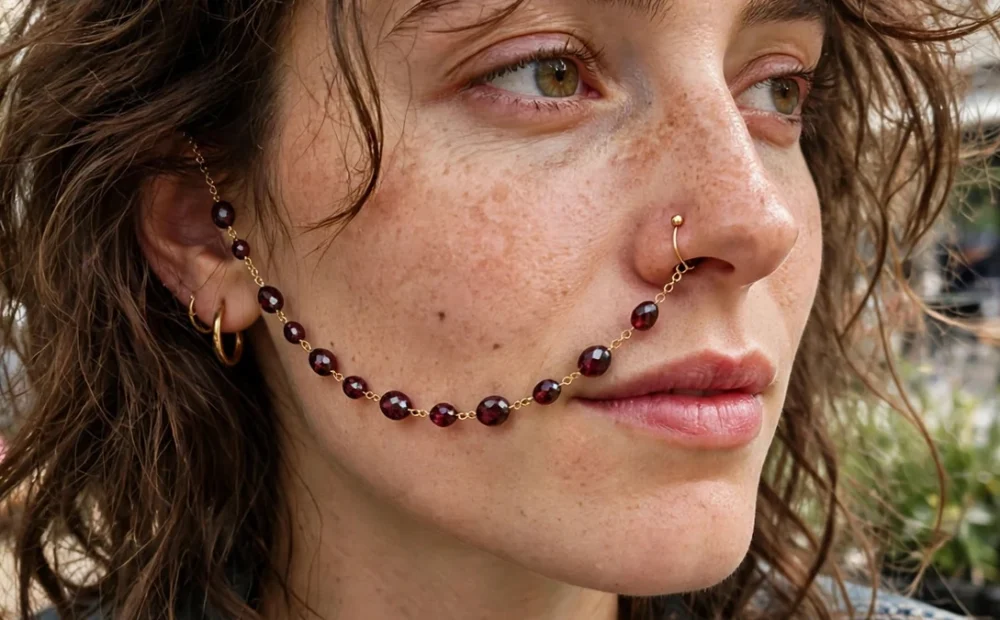

Best Garnet Nose Pins 2027
A garnet nose pin is a small piece of jewellery with an outsized effect. The deep red stone catches the light every time you turn your head, and because the pin itself is so small, the colour does the talking. Garnet has been worn for centuries, and it suits almost every skin tone, from fair to deep, which is part of why it keeps coming back as a favourite for nose jewellery.
The problem is that not every garnet nose pin is worth buying. Some use glass instead of real garnet. Some set the stone so shallowly that it falls out within weeks. And some are made from metals that irritate a fresh or sensitive piercing. A nose pin sits in delicate skin, so the metal matters as much as the stone, and the setting matters as much as the sparkle.
Below are nine garnet nose pins worth considering in 2027, from a classic gold pin to a tiny everyday stud and a vintage-inspired design. Each one is described by what it does well, what to watch for, and who it suits best, so you can choose with your piercing in mind, not just a photograph.
Key takeaways
- Garnet is a deep red stone that suits most skin tones and works for both everyday wear and evening looks.
- Choose implant-grade titanium, 14k or 18k gold, or solid sterling silver for the post, and avoid unknown base metals if your piercing is sensitive.
- A bezel or prong setting holds the stone more securely than a glued setting, and a flat back is more comfortable for sleeping.
- Real garnet has depth and slight colour variation, while glass imitations often look flat and unnaturally uniform.
- No nose pin suits a piercing that is still healing, and a pin that keeps falling out or irritating the skin should be replaced, not forced.
What garnet nose pins actually are
A nose pin is a straight post with a decorative stone on one end and a small bend, ball, or flat disc on the other that keeps it in place inside the nostril. Unlike a hoop, it sits close to the skin and does not move around much, which makes it a good choice for people who want something subtle, or for a piercing that is still settling. The garnet is usually a small round, oval, or cushion-cut stone, set in gold, silver, or titanium.
Garnet itself is a family of stones rather than a single one. The red variety most often used in nose pins is almandine or pyrope garnet, a deep wine-red stone that looks almost black in low light and glows red in sunlight. It is hard enough for daily wear, at 6.5 to 7.5 on the Mohs scale, which means it resists scratching from everyday contact, though it is softer than sapphire or diamond and should not be knocked against hard surfaces.
What makes garnet different from a red crystal or a glass stone is its depth. A real garnet has tiny internal variations, a warmth to its colour, and a way of holding light rather than just reflecting it. Glass imitations tend to look brighter and flatter, and they often have small bubbles if you look closely. That depth is also why garnet pairs so well with both warm gold and cool silver, it is a stone that adapts to the metal around it.
How we chose these garnet nose pins and what to look for
Look first at the metal of the post, because that is the part that touches your skin all day. Implant-grade titanium is the safest choice for sensitive or newly healed piercings. Solid 14k or 18k gold is a good everyday option, and sterling silver works well for many people, though it can tarnish and is not ideal for a piercing that is still healing. Avoid pins made from unknown alloys or coated base metals, especially if your skin reacts easily.
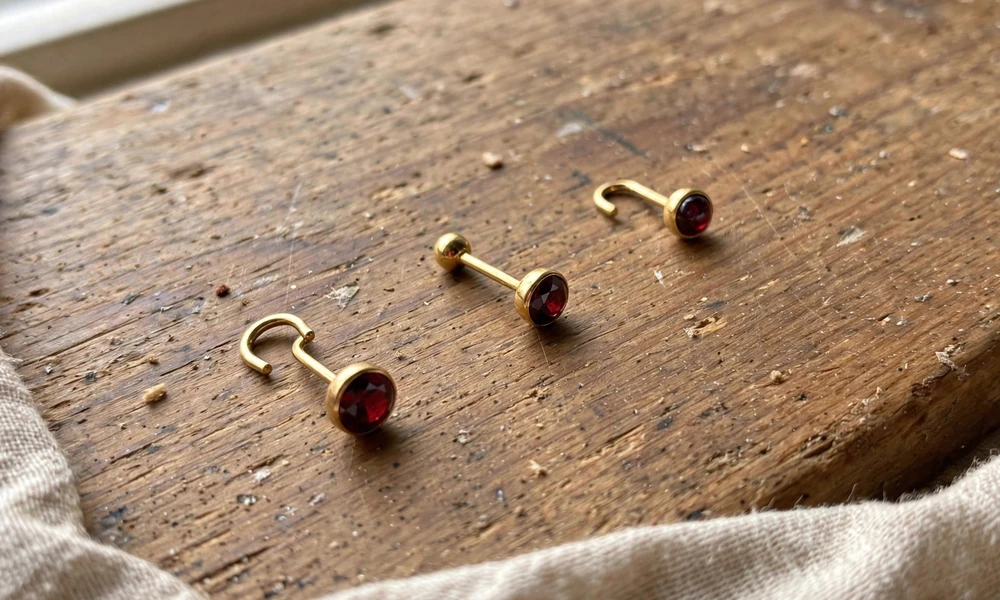
Look next at the setting. A bezel setting wraps a rim of metal around the stone and holds it firmly, which is the most secure choice for daily wear. A prong setting shows more of the stone and lets more light in, but the prongs need to be checked now and then, because a bent prong can let a small stone slip out. A glued setting is the weakest, and is best avoided for a stone you want to keep. Our guide to gold jewellery for everyday wear explains why solid gold settings last longer than plated ones, and the same logic applies here.
Finally, look at the size and the back. A stone of 2 to 3 millimetres is a good everyday size, visible without being heavy. A 4 millimetre stone makes more of a statement but can feel bulky in a small nostril. A flat back sits comfortably against the inside of the nose and is easier to sleep in, while a ball end is simple and secure. Try the pin for a full day before deciding, because comfort matters as much as appearance.
The 9 best garnet nose pins of 2027
The Classic Gold Garnet Pin
What we like: A deep red garnet set in warm 14k gold, with a simple prong setting that lets the stone catch the light. What to consider: The prongs need an occasional check, and the gold adds to the price. Best for: Everyday wear and warm skin tones. Material: 14k gold, natural garnet. Price range: Mid-range. Standout feature: The warm gold makes the red stone look richer.
A reliable all-rounder in solid gold that will not flake or fade.
The Deep Red Garnet Pin
What we like: A darker, wine-red garnet with real depth of colour, set low so it sits close to the skin. What to consider: The dark stone can look almost black indoors, so it suits people who like a subtle effect. Best for: Evening wear and deeper skin tones. Material: Sterling silver, almandine garnet. Price range: Affordable. Standout feature: The colour shifts from near-black to deep red in sunlight.
Quiet indoors, vivid in daylight — it feels like two pieces in one.
The Silver Garnet Pin
What we like: A bright garnet in a polished sterling silver setting, clean and simple, with a flat back for comfort. What to consider: Silver tarnishes, so it needs an occasional polish, and it is not the best choice for a fresh piercing. Best for: Cool skin tones and minimal looks. Material: Sterling silver, natural garnet. Price range: Affordable. Standout feature: The cool silver makes the red stone look brighter and sharper.
A simple, comfortable classic that is easy to wear every day.
The Vintage-Style Garnet Pin
What we like: A cushion-cut garnet in a milgrain-edged setting with a slightly antique feel, like a piece passed down rather than bought new. What to consider: The vintage detailing can trap makeup and needs gentle cleaning. Best for: Romantic and vintage-inspired looks. Material: 14k gold, cushion-cut garnet. Price range: Mid-range to premium. Standout feature: The milgrain edge gives it an old-jewellery character.
A softer cushion cut with the charm of old jewellery.
The Tiny Garnet Pin
What we like: A very small 2 millimetre garnet on a fine titanium post, barely there but still clearly red. What to consider: The stone is small enough that it can be hard to see from a distance. Best for: First nose pins, workplaces, and subtle everyday wear. Material: Implant-grade titanium, natural garnet. Price range: Affordable. Standout feature: The titanium post is kind to sensitive piercings.
The safest first pin, and the kindest to sensitive skin.
The Garnet and Diamond Accent Pin
What we like: A central garnet with a small diamond accent, the sparkle of the diamond making the red stone look deeper by contrast. What to consider: The most expensive pin on this list, and the accent stone needs care. Best for: Special occasions and gifts. Material: 18k gold, garnet, small diamond. Price range: Premium. Standout feature: The diamond accent adds light without overpowering the garnet.
The dressiest pin here, with a diamond that flatters the garnet.
The Rose Gold Garnet Pin
What we like: A garnet set in rose gold, the pinkish metal softening the red stone into something warm and romantic. What to consider: Rose gold contains copper, so it is not ideal for very sensitive skin. Best for: Warm and neutral skin tones, and soft, feminine looks. Material: 14k rose gold, natural garnet. Price range: Mid-range. Standout feature: The rose gold and red garnet blend into one warm glow.
A warm, romantic pairing that flatters warm skin tones.
The Garnet Bezel Pin
What we like: A round garnet held in a smooth bezel setting, the most secure option on this list, with no prongs to catch or bend. What to consider: The bezel hides the edges of the stone, so it looks slightly smaller than a prong-set stone of the same size. Best for: Active days, sports, and anyone who has lost a stone before. Material: 14k gold, bezel-set garnet. Price range: Mid-range. Standout feature: The smooth bezel will not snag on clothing or towels.
The most secure choice if you have ever lost a stone.
The Oval Garnet Pin
What we like: An oval garnet set lengthways, a slightly unusual shape that makes the pin look longer and more elegant. What to consider: The oval shape suits longer noses best and can look wide on a very small nostril. Best for: Making a quiet statement. Material: Sterling silver, oval garnet. Price range: Affordable. Standout feature: The oval cut is less common than round, so it stands out.
A small change that makes the pin feel designed, not ordinary.
Which garnet nose pin is right for you
Start with your piercing. If it is fully healed and your skin is not sensitive, any of these pins will work, and the choice is purely about style. If your piercing is recently healed or your skin reacts easily, choose the titanium tiny pin or a solid gold pin, and avoid silver and rose gold until you know how your skin responds. A nose pin for women in a skin-friendly metal is a better starting point than a beautiful pin that irritates you.
Then think about your skin tone and your wardrobe. Warm gold and rose gold flatter warm skin and look best with earthy, autumnal colours. Silver and white gold suit cool skin and sharper, brighter outfits. Garnet itself is versatile enough to work with both, so the metal is the real decision. If you wear mostly gold jewellery, a gold garnet pin will sit naturally with your other pieces.
Finally, think about size. A 2 millimetre stone is right for a first pin, for work, or for a small nostril. A 3 millimetre stone is the everyday sweet spot, visible but not heavy. A 4 millimetre stone or an accent design is for evenings and occasions. Buy the size you will actually wear every day, not the size that looks best in a photograph.
The caveats that matter
Garnet is a real stone, but not every red stone sold as garnet is one. Glass imitations are common at very low prices, and they look convincing in a photograph. Buy from a seller who names the stone, the metal, and the setting, and be wary of a pin that is far cheaper than similar ones. A real garnet will feel cool to the touch and will have slight variations in colour when you turn it in the light.
| Detail | What is known |
|---|---|
| Best metal for sensitive skin | Implant-grade titanium, then solid 14k or 18k gold |
| Most secure setting | Bezel, followed by prong; glued settings are the weakest |
| Everyday stone size | 2 to 3 millimetres; 4 millimetres for a statement look |
| Garnet hardness | 6.5 to 7.5 on the Mohs scale, hard enough for daily wear |
| Who should avoid silver | Fresh or easily irritated piercings, until fully healed |
| How to spot glass | Glass looks flat and uniform, often with tiny bubbles; real garnet has depth and variation |
| Cleaning | Warm water and mild soap, soft cloth; avoid harsh chemicals |
| What it does not do | It does not suit a healing piercing, and it will not stay put if the setting is weak |
If your piercing is still healing, wait. A new pin, however beautiful, can delay healing and increase the risk of irritation or infection. Change jewellery only when the piercing is fully healed, wash your hands first, and if the area becomes red, swollen, or painful, remove the pin and speak to your piercer.
Checklist: buying a garnet nose pin honestly
Use these checks before you buy, and again when the pin arrives.
- Check the metal: implant-grade titanium or solid 14k or 18k gold for sensitive skin, and avoid unknown alloys.
- Check the setting: bezel or prong, not glued, and make sure the stone sits firmly with no wobble.
- Check the size: 2 to 3 millimetres for everyday wear, and try it for a full day before deciding.
- Check the stone: look for depth and slight colour variation, not a flat, uniform red.
- Check the back: a flat back is more comfortable for sleeping, and a ball end should feel secure.
- Check the seller: the listing should name the stone, the metal, and the setting, and offer a return if the pin does not suit you.
Frequently asked questions
Can I wear a garnet nose pin every day?
Yes, garnet is hard enough for daily wear, and a well-set pin in a skin-friendly metal is comfortable all day. Take it out for cleaning once a week, and check the setting now and then to make sure the stone is still secure.
Is garnet safe for a sensitive piercing?
The stone itself is safe, but the metal matters more. Choose implant-grade titanium or solid gold for a sensitive piercing, and avoid silver, rose gold, or unknown alloys until your skin has settled. If irritation appears, change the metal first.
How do I tell real garnet from glass?
Real garnet feels cool, has depth and slight colour variation, and looks different as you turn it in the light. Glass often looks flat and unnaturally even, and may have tiny bubbles. A very low price is also a warning sign. Buying from a seller who names the stone and the metal is the simplest protection.
What size garnet nose pin should I choose?
For everyday wear, 2 to 3 millimetres is the most comfortable and versatile size. A 4 millimetre stone makes more of a statement but can feel heavy in a small nostril. If you are unsure, start small, because a pin you wear daily is worth more than a larger one you leave in a drawer.
Can I wear a garnet nose pin with other jewellery?
Yes, garnet works well with both gold and silver, and it sits happily alongside earrings and necklaces in either metal. Our guide to garnet nose rings shows how the same stone looks in a hoop, if you want to mix a pin with a ring on the other side.
How do I clean a garnet nose pin?
Soak it in warm water with a drop of mild soap, then rinse and dry it with a soft cloth. Avoid ultrasonic cleaners and harsh chemicals, which can loosen the setting, and do not use a hard brush on the stone.
The bottom line
The best garnet nose pin in 2027 is the one that suits your piercing, your skin, and your daily life. For most people, that means a 2 to 3 millimetre stone in a bezel or prong setting, on a titanium or solid gold post. The classic gold pin is the safest all-round choice, the tiny titanium pin is the kindest to sensitive skin, and the bezel pin is the most secure for active days.
Choose the pin you will actually wear, check the metal and the setting before you buy, and give a new pin a full day before you decide. A small red stone, well made and well chosen, is one of the easiest ways to add colour to your face, and garnet does it better than almost any other stone.