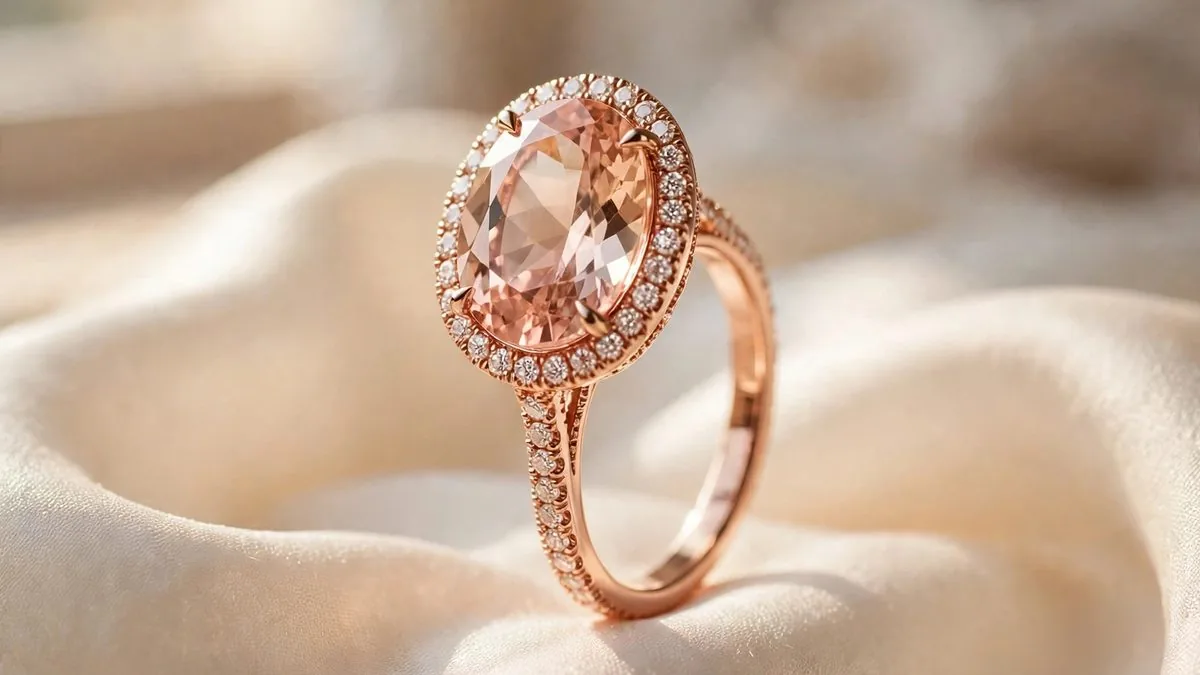

A morganite ring is one of the most romantic buys in fine jewellery, and one of the easiest to get wrong. In a jeweller’s window, almost every morganite looks like the same soft, blushing pink stone. In daylight, on your hand, the differences appear at once: one glows warm and peachy, another looks washed out, and a third carries a muddy brown undertone no rose gold can rescue.
Morganite is the pink to peach variety of beryl, the same mineral family as emerald and aquamarine. Its colour comes from traces of manganese, and it grows in large, clean crystals, so a two or three carat morganite costs a fraction of what a sapphire or ruby of the same size would. That affordability is also the trap.
This guide covers what matters most before you buy: the peachy-pink colour that decides almost everything, clarity and cut, the treatments you must ask about, durability and protective settings, fair prices, and the paperwork that protects you. Here is what to check before you pay.
Key takeaways
- Colour decides value: a clear, medium-toned peachy pink with no brown or grey undertone, checked in daylight.
- Buy colour, not carat weight. A huge pale stone is no bargain; a smaller, stronger pink is the better ring.
- Most morganite is heat-treated, which is standard and stable, but ask in writing whether it was irradiated, as irradiated colour can fade.
- Morganite is 7.5 to 8 on the Mohs scale and usually eye-clean, but a halo or bezel protects its edges better than tall prongs.
- Get the treatment and the stone’s identity in writing, and ask for a lab report on any expensive ring.
What morganite actually is
Morganite is pink beryl, coloured by manganese. Its siblings are emerald, the green beryl, and aquamarine, the blue beryl, and it shares their hardness of 7.5 to 8 on the Mohs scale. Unlike emerald, which is famously included and almost always oiled, morganite usually grows clean, so a good stone looks crystal clear to the naked eye. It has no cleavage plane like topaz, though it can still chip at a facet edge.
Named after the financier and collector J. P. Morgan, it became a favourite for engagement rings when rose gold came back into fashion. Morganite is not an official birthstone for any month. Origin moves the price far less than with ruby or emerald, so never pay a premium for a country name.
Colour comes first, and it is worth slowing down for
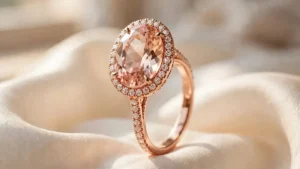
Colour decides beauty and price more than anything else. Jewellers describe it in three parts: hue, the colour family; tone, how light or dark it looks; and saturation, how strong the colour is. The most prized morganite is a pure, medium-toned pink with a warm peachy overtone, saturated enough that the colour is obvious in ordinary light.
The shades run from barely-there blush through soft pink to peach, salmon pink and, at the rich end, a vivid pink with almost no orange left in it. The trap is the pale stone: below about one carat, a pale morganite can look almost colourless on the hand. If you want a small ring, choose a deeper pink than you think you need. Check the colour in daylight, compare two or three stones side by side, and avoid muddy brown undertones or grey casts.
Clarity and cut: what clean really means for morganite
Morganite is one of the cleanest coloured stones you can buy. Most gem-quality material is eye-clean, meaning no inclusions are visible to the naked eye, and many stones are clean even under a loupe. Unlike emerald, where inclusions are expected, a cloudy or heavily included morganite is a poor buy at any price. Look for a stone that is bright and transparent, with no visible cracks, cloudy patches or dark specks.
Cut matters more than most buyers realise. A well-cut stone returns light evenly and looks lively when you move it. The most common fault in a pale stone is windowing, where the centre goes see-through like a window and the colour drains away. Hold the ring at arm’s length and tilt it: if the middle turns pale while the edges hold the pink, the cut is too shallow. Never let a big carat weight distract you from a weak colour.
Treatments: heat, irradiation and the fading question
Almost every morganite has been treated, and you need to know which treatment it received. Most rough morganite has a strong orange or yellow component, and gentle heating removes the yellow and pushes the colour towards a purer pink. This heat treatment is routine, permanent, widely accepted, and usually stable in everyday wear.
Irradiation is the treatment to ask about directly. Some pale material is irradiated to deepen its pink, and irradiated colour is less stable: it can fade with prolonged sunlight or with the heat of a jeweller’s torch during repairs. Ask in writing whether the stone was irradiated and whether the colour is stable to light and heat. Also ask whether the stone is coated or foil-backed, which can fake a deeper pink, and whether it is natural or lab-grown pink beryl, which must be sold as lab-grown at a lower price.
Morganite at a glance
| Factor | What to look for |
|---|---|
| Colour | Medium-toned peachy pink, even across the stone, no brown or grey undertone |
| Clarity | Eye-clean; no visible cracks, cloudiness or dark specks |
| Cut | Well proportioned oval, cushion, emerald or pear; no window in the centre |
| Hardness | 7.5 to 8 on the Mohs scale; hard, but brittle at the edges |
| Treatment | Heat is standard and stable; ask in writing about irradiation and coatings |
| Best setting | Halo or bezel in rose gold; protective prongs, low profile for daily wear |
| Loose stone price | About $50 to $300 per carat for good quality; $300 to $600+ for top stones |
| Finished ring price | About $500 to $2,000 in 14K gold; $1,500 to $5,000+ in 18K gold with fine morganite |
Durability: is morganite tough enough for every day?
At 7.5 to 8 on the Mohs scale, morganite resists everyday scratching better than most coloured gems. It is harder than amethyst and safer for daily wear than emerald, opal or pearl. But hardness only measures scratch resistance, not toughness: a hard knock against a door frame or a gym weight can chip a facet edge or a corner, particularly on a large stone held by tall prongs.
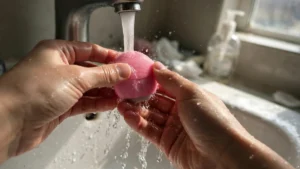
None of that makes morganite a bad engagement stone; it makes it a stone that rewards a protective setting and a little care. Take the ring off for the gym, gardening and sport, and put it on after perfume and hand cream. Clean it often with warm water, mild soap and a soft brush, then dry it with a soft cloth. Avoid steam cleaners, be cautious with ultrasonic cleaners if the stone has inclusions.
Settings and metals: how to frame a pale pink stone
The setting is not decoration on a morganite ring; it is half the purchase. A halo of small diamonds protects the centre stone’s edges from knocks and makes the pink look stronger by contrast, . If you prefer a solitaire, choose a low profile with six prongs rather than four, and keep the stone sitting close to the band.

Rose gold is morganite’s natural partner: the warm pink metal deepens the stone’s peachy tones and hides a slightly pale colour, while yellow gold can pull out the orange side and white gold or platinum can make a pale stone look colder and washed out. For the band, 14K gold is the practical choice for daily wear, while 18K suits a fine stone worn more gently. For a fuller sense of how rings compare, our guide to the best engagement rings of 2027 puts morganite alongside the other stones buyers are choosing now.
How much should you pay for a morganite ring?
Start with the loose stone, because the ring’s price should follow it. A good-quality morganite of a clear medium pink, eye-clean and well cut, typically costs about $50 to $300 per carat. Size adds far less to the price than with sapphire or ruby, so a two carat stone should not cost twice as much per carat as a one carat stone of the same colour.
For a finished ring, a simple solitaire in silver or gold-filled metal can cost $100 to $400, a sterling silver halo ring $200 to $600, a 14K gold ring with a good centre stone $500 to $2,000, and an 18K gold ring with fine-quality morganite $1,500 to $5,000 or more. If you are weighing morganite against other non-diamond stones, our guide to the best non-diamond engagement rings shows how it compares on price, hardness and everyday wear. If resale value matters, our comparison of diamond versus moissanite engagement rings explains which stones keep their value best.
Your morganite ring checklist
- See the stone in daylight and compare it with at least two others.
- Choose a medium-toned peachy pink with even colour and no brown, grey or muddy undertone.
- Check the stone is eye-clean and tilt it to check for a pale window.
- Ask in writing whether the stone was heat-treated, irradiated, coated or lab-grown.
- Pick a protective setting, a halo or bezel in rose gold, with a low profile and sturdy prongs.
- Confirm the returns policy and whether a lab report is included.
Frequently asked questions
Is morganite good for an engagement ring?
Yes, with sensible care. At 7.5 to 8 on the Mohs scale it resists everyday scratches well, and it is usually eye-clean and affordable in large sizes. Choose a halo or bezel setting and take it off for rough work and sport.
Does morganite fade in sunlight?
Heat-treated morganite is generally stable and will not fade in daylight. Irradiated morganite can slowly fade with prolonged sunlight or repair heat, so ask the seller in writing whether the stone was irradiated.
How much does a morganite ring cost?
A good-quality loose morganite costs about $50 to $300 per carat, with fine stones reaching $300 to $600. A finished 14K gold ring typically costs $500 to $2,000, and an 18K gold ring $1,500 to $5,000 or more.
What colour morganite is best?
A medium-toned peachy pink with strong saturation and no brown or grey undertone is the most prized. Pale blush pink can look almost colourless below one carat, so for a small ring choose a deeper pink.
Is morganite a real gemstone?
Yes. Morganite is a natural variety of beryl, the same mineral as emerald and aquamarine, coloured pink by manganese. Most of it is heat-treated, which is standard practice and does not make it fake.
How do I clean a morganite ring?
Clean it with warm water, mild soap and a soft brush, then dry it with a soft cloth. Avoid steam cleaners, be cautious with ultrasonic cleaners, and store it in its own soft pouch away from harder gems.
The bottom line
A morganite ring rewards the buyer who shops with their eyes open. Choose the colour first, in daylight, and pay for a stronger pink rather than a bigger pale stone. Accept heat treatment, question irradiation, and get every answer in writing. Do those things and you get one of the best value rings in fine jewellery. Skip them, and you get the ring most buyers regret: a huge pale stone that looks colourless by the second summer.
Note: Prices are typical retail ranges and vary by seller, stone quality and metal. Morganite is a value purchase, not an investment, and this guide is general information, not professional gemmological advice. For a costly ring, ask for an independent laboratory report.