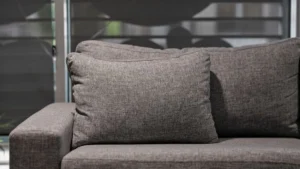
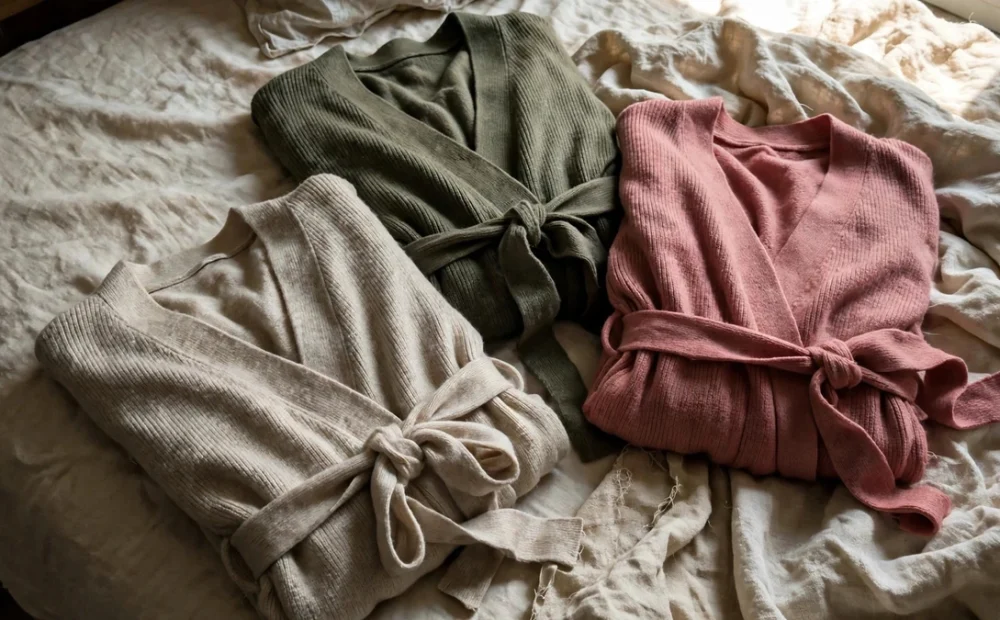
A cashmere cushion is a cushion whose cover is made from cashmere, the fine, soft undercoat of the cashmere goat, sewn around a filling that is almost never cashmere itself. It is the softest thing most people will ever lean against on a sofa, and also one of the most misunderstood objects in the room. Shoppers expect a cushion that feels like a favourite jumper, then wonder why it pills and why an identical-looking one costs five times as much.
The confusion starts with the label. Shops use cashmere loosely, and a cushion sold as cashmere can be a blend with only a small share of the fibre. The filling adds a second misunderstanding: feather, down, hollowfibre or foam sits inside, and none of it is cashmere, so the softness you feel is the cover alone.
This guide explains what a cashmere cushion actually is: where the fibre comes from, what the grades mean for a cushion in daily use, how the cover is woven and filled, and how it differs from velvet, linen and wool cushions. No product picks, just the facts.
Key takeaways
- A cashmere cushion is a cushion with a cashmere cover; the filling inside is usually feather, down, hollowfibre or foam.
- Cashmere is the fine undercoat cashmere goats grow against freezing winters, combed out by hand each spring, then cleaned and de-haired.
- Grade A cashmere is around 14 to 15.5 microns wide and 34 to 36 millimetres long; finer, longer fibres feel silkier and pill less.
- Most cashmere cushion covers are woven and two-ply; knitted covers feel softer but stretch, snag and pill more easily.
- Labels are loosely policed, and no cashmere cushion is washable, fade-proof or pill-proof by default: the care label decides what it can take.
What a cashmere cushion actually is
A cushion is a soft bag of filling with a cover, made to be leaned on or arranged for comfort and appearance. A cashmere cushion keeps that shape and makes the cover from cashmere cloth. The parts are simple: the cover, a filling inside it, and a closing, usually a hidden zip along one edge. Some are sold as covers only, with no insert included, so the label is worth reading.
The cover is where most of the cost and most of the difference between one cashmere cushion and another sits. A well-made cover is cut so the weave runs the same way on every panel, and the seams are usually piped. Cheaper covers often skip the piping, and the difference shows within weeks as the cushion slumps.
The filling is the part nobody sees and everybody feels. A feather and down filling can be plumped back into shape with a shake, while a hollowfibre pad keeps its shape with less attention but goes flat sooner, and foam holds a firm shape but feels harder to lean on. The same construction appears under other fabrics too: our guide to what a velvet cushion is describes the same cover, filling and zip.
The fibre: where cashmere comes from and what the grades mean

Cashmere comes from the undercoat of cashmere goats, which live in high, cold places, mostly Mongolia and Inner Mongolia. In winter they grow a dense, fine layer of down beneath coarse outer guard hairs, and in spring that undercoat is combed away by hand, then cleaned and de-haired. Each goat yields only a small amount of that fine undercoat in a year.
The second reason is grading. The finest cashmere, usually called Grade A, has fibres around 14 to 15.5 microns in diameter and roughly 34 to 36 millimetres long, which lie smoothly, feel silky and resist pilling. Grade B has thicker fibres of around 19 microns, so it feels less soft and pills more. The lowest grade, around 30 microns, is barely finer than ordinary wool, and a cushion made from it feels much like a wool cushion at a cashmere price.
Length matters even more on a cushion than on a throw, because a cushion is rubbed every day. Short fibres under about 25 millimetres pill aggressively, because their ends work loose where the fabric is pressed, while longer fibres from around 30 millimetres stay locked into the yarn. Grade A, de-haired or long-staple are useful signals on a label; vague claims such as premium cashmere tell you little. The same fibre at a larger scale is covered in our guide to what a cashmere throw is.
How a cashmere cushion is made: weave, ply and filling
Once the fibre is spun into yarn, a cashmere cushion cover is made in one of two ways: woven or knitted. A woven cover is made on a loom, with yarns crossing at right angles: flat, structured and smooth, it holds its shape well, and classic weaves are fine herringbone, twill or a small diamond pattern. A knitted cover is made from loops of yarn, like a very large, flat jumper: softer and stretchier, though it snags more easily and stretches out of shape.
Ply describes how many strands of yarn are twisted together. A single-ply cover uses one strand, so it is light and delicate but less resilient under daily use. Two-ply yarn twists two strands together, making the cloth stronger and better at holding its shape: the minimum for a cushion used every day. Three-ply and higher yarns are thicker and warmer, though heavier.
The filling is chosen separately, and it decides how the cushion behaves day to day. Feather and down are the softest and the most shapeable, but they need shaking and turning, and they are the wrong choice for anyone with a feather allergy. Hollowfibre is hypoallergenic and holds its shape with little attention, but it flattens with use and cannot be revived by plumping. Foam holds a firm, tailored shape but feels harder to lean on. A cover-only cushion needs an insert bought to match, usually a little larger than the cover.
Cushion sizes, shapes and where they sit
The most familiar shape is the square. A square of around 45 to 50 centimetres is standard for a three-seat sofa, and squares of around 40 centimetres suit armchairs and smaller sofas. Larger squares, around 60 centimetres, fill the corner of a sofa but overwhelm a small chair. The rectangle is the second shape: a lumbar cushion of around 50 by 30 centimetres, made to sit at the small of the back.
A longer bolster, a cylinder rather than a flat rectangle, is rarer in living rooms and more common on beds. On a bed, a cashmere cushion is decoration rather than support: it is propped in front of sleeping pillows during the day and moved aside at night, which is one reason bed cushions stay in better condition than sofa cushions.
Cashmere cushion vs the lookalikes
A cashmere cushion and a velvet cushion are the same object in different cloth, and the difference is in the hand. Velvet has a short, dense pile that catches the light and changes colour as you move; cashmere is flat, matte and hazy, with no pile to crush. Velvet is usually cheaper and easier to clean, while cashmere is softer and more delicate.
Linen is the opposite temperament: cool to the touch, crisp, slubbed and hard-wearing. A linen cushion suits a warm room and a household that washes covers at home, while a cashmere cushion suits a cool room and a household willing to dry-clean. Wool sits between the two: warmer than linen, hardier than cashmere, and far cheaper, though even fine merino has a faint prickle.
Cotton is the practical comparison. A cotton cover can be washed, dried and replaced cheaply, and it takes bright colour better than cashmere, which dyes softly and is usually sold in quiet neutrals. What cotton cannot do is feel like cashmere: no cotton, however fine, has the same silky hand. If the softness is what you want at a larger scale, our roundup of the best cashmere blankets for winter covers the same fibre.
The caveats that matter
Cashmere is a luxury fibre, not a hardy one, and a cushion puts it through the hardest daily use of any cashmere object in the house. The caveats below decide whether one is a pleasure or a regret, and most are visible on the label before buying.
| Detail | What is known |
|---|---|
| Pilling | Normal in the first weeks, worst where elbows rub; longer fibres and two-ply yarn pill less, and a fabric comb removes pills. |
| Washing | Most cashmere cushion covers are dry-clean only; hand-washing can shrink a cover and change the hand of the cloth. |
| Fading | Cashmere dyes softly and fades in strong sunlight, so a cushion on a sunny windowsill loses colour fast. |
| Moths | Clothes moths eat cashmere, so a cushion stored for summer needs a sealed bag with cedar or lavender. |
| Water marks | A splash can leave a ring as it dries, so drinks and a cashmere cushion are a poor combination. |
| Feather filling | A feather or down insert can trigger allergies and shed fine quills through a loosely woven cover. |
| Blends | A cover sold as cashmere can be mostly wool or viscose; the composition label matters more than the name. |
| Price | Genuine cashmere costs far more than wool or cotton, so a suspiciously cheap cashmere cushion is almost always a blend. |
Checklist: before you call it a cashmere cushion
- Read the composition label: it should give an exact cashmere percentage, not just the word cashmere on the front.
- Check the grade signals: Grade A, de-haired or long-staple mean something, while premium cashmere means very little.
- Feel it against your wrist: real cashmere feels silky with no prickle at all.
- Look for two-ply yarn and a piped seam, the marks of a cover built for daily use.
- Read the care label before buying: dry-clean only is normal for cashmere.
- Ask whether an insert is included, and buy it a little larger than the cover so the corners fill out.
Frequently asked questions
What is a cashmere cushion made of?
A cashmere cushion is a cushion with a cover made from cashmere cloth, the fine undercoat of cashmere goats, sewn around a filling. The filling is usually feather, down, hollowfibre or foam, not cashmere.
Is a cashmere cushion warm?
Yes, relative to its weight. Cashmere fibres are hollow and very fine, so they trap a great deal of still air, and a cashmere cushion feels warm against the skin. It is not a source of heat, though: it insulates the warmth you already have.
Does a cashmere cushion pill?
Yes, almost all of them do at first, especially where the fabric is rubbed. Pilling is normal for cashmere, because fine fibres work loose where the fabric rubs, and longer fibres and two-ply yarn pill less. A fabric comb removes pills.
Can you wash a cashmere cushion?
Usually not at home. Most cashmere cushion covers are dry-clean only, and hand-washing can shrink the cover. If the cover has a zip, remove it from the insert and follow the care label exactly.
How long does a cashmere cushion last?
A well-made cashmere cushion, dry-cleaned when needed, can last a decade or more. One used daily by children or pets, or washed at home against the care label, can look tired within a season.
What is the difference between a cashmere cushion and a cashmere throw pillow?
Nothing, in most listings: a throw pillow is the American name for the same decorative cushion. The difference that matters is between a cushion and a throw: a throw is a small blanket for one person, while a cushion is a filled pad for leaning on.
The bottom line
A cashmere cushion is a cushion with a cashmere cover: the fine undercoat of cashmere goats, combed out once a year in spring, graded by fineness and length, then woven or knitted into a cloth that is light, warm and silky. Its fibre sets it apart from a wool or cotton cushion, and its weave and filling decide how it wears and should be cared for.
Start with the label, not the name on the front. Check the cashmere percentage, the grade signals and the care instructions, and feel it against your wrist. Bought with those checks in mind, it is the softest seat in the room.
Note: Fibre grades, sizes and prices are general guidance, not a guarantee for any one product, and care varies by maker. Check the label before buying.
Meet our experts
Our home and lifestyle editors cover bedding, textiles and interiors, and check compositions, sizes and prices against brand listings.
Why trust BrassSmile
We recommend only products with a published composition, size and price, and say plainly where a brand does not publish a figure. We do not invent test results.
Sources
Cashmere fibre and care guidance from the International Wool Textile Organisation and the Woolmark Company, and published retail coverage from Better Homes & Gardens and The Spruce.