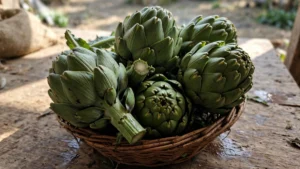
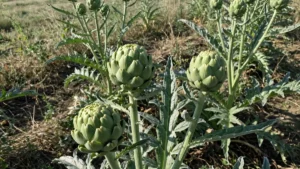
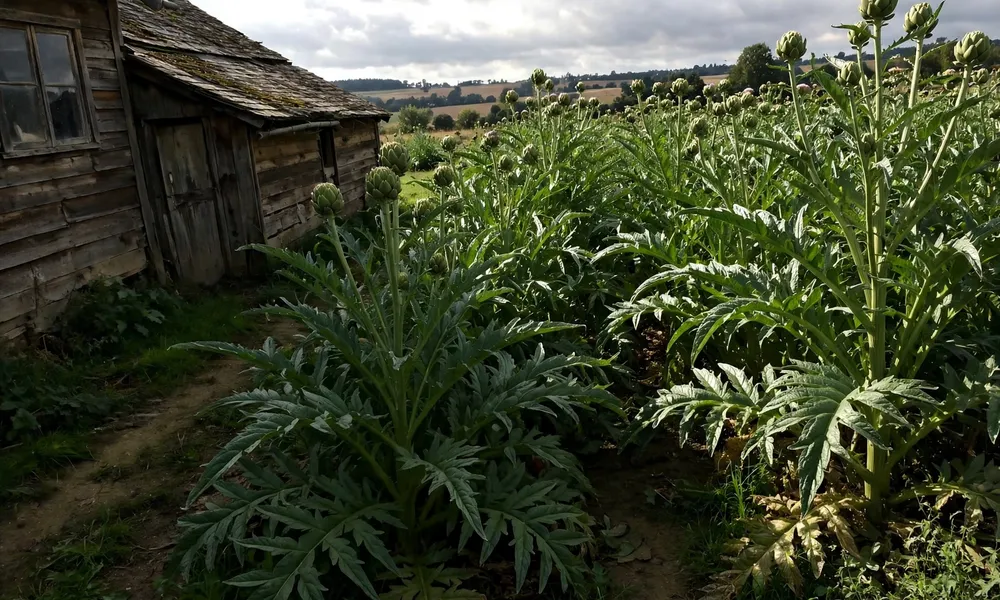
The artichoke is a thistle that never gets to flower. The globe artichoke grows tall on grey-green stems, and the part we eat is the bud, cut while it is still tight and heavy, before it opens into a purple flower. Leave it a week too long and the bud loosens, the leaves turn tough, and the heart inside goes woody. Cut it at the right hour and the leaves pull away one by one, each one scraped clean with the teeth, until the heart sits bare on the plate.
An artichoke farm retreat is a few nights on a working farm in the budding weeks, when the rows are at their busiest and the kitchen is trimming what the fields gave that morning. You sleep in a farmhouse room, eat buds steamed whole with aioli, grilled over charcoal, or stuffed with crumbs and cheese, walk the rows while the dew is still on the leaves, and watch the cutters take each bud with a length of stem. The farms stretch from the Californian coast to the Chilean desert and the Australian flats, and the tight bud ties them together.
Here are nine artichoke farm retreats to weigh for 2027, from the cheapest Castroville stay to the dearest Koo Wee Rup farm, covering steamed buds, grilled hearts and stuffed artichokes, so the decision turns on the way you travel rather than the place on the map.
Key takeaways
- The globe artichoke is a thistle, and the part you eat is the unopened bud, cut while it is tight and heavy, before it blooms into a purple flower.
- Artichokes are perennials: a plant gives buds for several years, and the main crop comes in spring, with a second crop in autumn where the winters stay mild.
- The budding window lasts a few weeks, and the farm names its week, not a month, so book the window before the flights.
- Artichoke farms run small, with a handful of rooms and meals shared at one table, so expect plain comfort and gloves for the spiny leaves.
- Artichokes carry no gluten, but the bread and pastry served beside them are usually wheat, so settle the kitchen and the calendar before you pay.
What an artichoke farm retreat actually is
An artichoke farm retreat means three to five nights on a working farm that grows globe artichokes, with the budding weeks as the reason for the trip. Guests sleep in a farmhouse room or a converted barn, eat what the farm kitchen cooks, and join the harvest, walking the rows to see the buds cut with a length of stem, the leaves trimmed back, and the hearts set down for supper.
Artichokes have been grown around the Mediterranean since Roman times, and the great artichoke regions took shape around the dishes they served. Italy stuffed them with crumbs and cheese, Spain grilled them with ham and olive oil, France served them steamed with vinaigrette, and California turned them into a roadside feast with aioli. The bud is the same everywhere; the kitchen is what changes.
Days on these farms follow the bud’s timetable rather than a hotel’s, with supper served at one shared table and genuine work offered to guests who ask for it.
How we picked these stays, and what to ask first
We began with where artichokes truly grow, not where they sell best. A genuine artichoke farm offers rows to walk through, buds to stand among at cutting time, and a kitchen working with its own artichokes. A farm that buys its buds in is not an artichoke farm, whatever the website says.
The best farms keep guest numbers small, so the cutting stays real work rather than a show put on for visitors. They also set out in the first email what the nightly rate covers, with supper, the lift in from the nearest town and walks among the rows counted in the price rather than charged when you arrive. Plain talk about buds, cutting and cooking is usually a sign the farm looks after its guests well too.
The 9 best luxury artichoke farm retreats of 2027
Castroville, California, USA — Artichokes in the Artichoke Capital
What we like: Artichokes in Castroville grow in the cool fog belt of the Salinas Valley, and the farm steams whole buds for the table with aioli. The town calls itself the artichoke capital, the farm stands are generous, and the kitchen serves steamed buds, grilled hearts, artichoke soup and warm bread.
What to consider: The fog is thick in the morning, and the budding week moves with the coastal cool, so confirm the dates before you book.
Style: Californian coastal farm stay. Best for: Travellers who want artichokes where America celebrates them. Price range: $65–$95 per night. Standout feature: Whole buds steamed that morning and served with aioli.
Baja California, Mexico — Artichokes in the San Quintín Valley
What we like: Artichokes in Baja California grow in the cool coastal valley of San Quintín, and the farm grills hearts over charcoal for supper. The valley is dry, the ocean fog keeps the buds tender, and the kitchen serves grilled hearts, artichoke soup and warm tortillas.
What to consider: The farm sits a long drive from the border towns, and the valley wind is sharp at dawn, so travel in the cool of the morning.
Style: Mexican coastal valley farm stay. Best for: Travellers who want artichokes from the Pacific coast. Price range: $100–$130 per night. Standout feature: Hearts grilled over charcoal the same evening.
La Rioja, Spain — Artichokes Along the Ebro
What we like: Artichokes in La Rioja grow in the Ebro valley around Calahorra, and the farm grills them with ham and olive oil. The river plain is wide, the vineyards run beside the rows, and the kitchen serves grilled artichokes, artichokes with ham, artichoke soup and warm bread.
What to consider: The Ebro heat arrives early, and the farm books its budding weeks ahead, so write well in advance.
Style: Spanish river valley farm stay. Best for: Travellers who want artichokes the Riojan way. Price range: $135–$165 per night. Standout feature: Artichokes grilled with ham from the valley beds.
Calabria, Italy — Artichokes on the Southern Coast
What we like: Artichokes in Calabria grow on the warm southern coast, and the farm stuffs them with crumbs, pecorino and herbs. The coast is rugged, the sea glints beyond the rows, and the kitchen serves stuffed artichokes, artichoke pasta and warm bread.
What to consider: The coast road is slow and winding, and the farm sits above the shore, so the walk back is steep.
Style: Italian southern coast farm stay. Best for: Travellers who want artichokes stuffed the Calabrian way. Price range: $170–$200 per night. Standout feature: Stuffed artichokes from the coastal rows.
Antalya, Turkey — Artichokes on the Mediterranean Shore
What we like: Artichokes in Antalya grow on the warm Mediterranean shore, and the farm braises them in olive oil with peas and lemon. The shore is mild, the Taurus mountains rise behind the fields, and the kitchen serves braised artichokes, artichoke salad and warm bread.
What to consider: The spring sun is strong by midday, and the farm is a drive from the city, so plan the journey before the budding week.
Style: Turkish Mediterranean farm stay. Best for: Travellers who want artichokes braised in olive oil. Price range: $205–$235 per night. Standout feature: Artichokes braised in olive oil with lemon.
Cyprus — Artichokes on the Mesaoria Plain
What we like: Artichokes in Cyprus grow on the wide Mesaoria plain, and the farm cooks them with broad beans, lemon and herbs. The plain is open, the villages keep their stone ovens, and the kitchen serves artichokes with beans, village stews and warm bread.
What to consider: The plain heat is fierce by noon, and the farm sits far from the coast, so carry water on the walks.
Style: Cypriot plain farm stay. Best for: Travellers who want artichokes with broad beans the village way. Price range: $240–$270 per night. Standout feature: Artichokes cooked with broad beans and lemon.
Malta — Artichokes on the Island Terraces
What we like: Artichokes in Malta grow on dry stone terraces, and the farm stuffs them with tuna, capers and crumbs. The island is small, the sea is never far, and the kitchen serves stuffed artichokes, artichoke stews and warm bread.
What to consider: The terraces are narrow and the sun is strong, so wear a hat and mind your footing on the stone steps.
Style: Maltese island farm stay. Best for: Travellers who want artichokes stuffed the Maltese way. Price range: $275–$305 per night. Standout feature: Stuffed artichokes from the island terraces.
Coquimbo, Chile — Artichokes on the Dry Coast
What we like: Artichokes in Coquimbo grow on the dry coast north of Santiago, and the farm grills hearts with pebre for supper. The coast is bright, the desert valleys run inland, and the kitchen serves grilled hearts, artichoke salads and fresh seafood beside the plate.
What to consider: The southern harvest falls in the opposite season to the northern farms, and the farm is a drive from Santiago, so allow a day for the journey.
Style: Chilean dry coast farm stay. Best for: Travellers who want artichokes from the southern spring. Price range: $310–$340 per night. Standout feature: Grilled hearts with pebre from the dry coast.
Koo Wee Rup, Victoria, Australia — Artichokes on the Drained Flats
What we like: Artichokes at Koo Wee Rup grow in the rich dark soil of the drained flats south-east of Melbourne, and the farm barbecues whole buds for the table. The flats are wide, the soil is deep, and the kitchen serves barbecued buds, artichoke dips and farm breakfasts.
What to consider: This is the priciest stay of the nine, and the southern harvest runs counter to the northern season, so book a year ahead.
Style: Australian flats farm stay. Best for: Travellers who want artichokes from the deep black soil. Price range: $345–$380 per night. Standout feature: Whole buds barbecued from the drained flats.
Which artichoke region fits your trip
If you want artichokes where the bud is treated as a feast, start with Castroville or La Rioja, where the buds are cut, trimmed and served the same day they were picked. Both are gentle on a first-timer, with short walks and long meals at the farm’s own table.
If you want scenery with your artichokes, Koo Wee Rup puts the beds on wide flats, Calabria on a rugged coast, and Antalya with mountains behind the shore.
If you want the vegetable that grows beside the artichoke, our guide to the asparagus farm retreats covers a spring crop altogether, with green spears and butter instead of tight buds and aioli, and the tomato farm retreats offer a summer crop for the months after the buds are gone, with sun-ripened fruit and sauce pots instead of steamed buds and hollandaise.
The caveats that matter
Artichoke farming answers to the weather: farms give a best guess, never a promise, and a trip pinned to one budding day gambles on rain. The real warning is the bud itself, easy to miss when the stay is sold as gentle country.
| Detail | What is known |
|---|---|
| Best time to visit | Spring in the north for tight buds, with the southern season running the other way round |
| What the work involves | Walking the rows, watching the buds cut with a length of stem, and seeing them trimmed and cooked in the farm kitchen |
| How long a stay runs | Three to five nights, set around the budding weeks |
| Who should take care | Guests sensitive to the daisy family, and anyone unused to fierce sun, loose soil or spiny leaves |
| What the kitchen serves | Steamed whole buds with aioli, grilled hearts, stuffed artichokes and artichoke soup, with fresh bread and farm butter beside the plate |
| Gluten note | Artichokes carry no gluten, but the bread and pastry served beside them are usually wheat, so ask the kitchen what it can safely serve |
| What to pack | Closed walking shoes, gloves for the spiny leaves, a broad sun hat, a warm layer for chilly nights, and clothes that wash easily by hand |
| What it does not do | No promised budding day, no fixed menu, and no hotel-style service on a working farm |
Anyone with a strict gluten-free diet should ring the farm before booking. A single question about the kitchen and the artichokes can save you a difficult stay, and a farm that answers honestly is usually worth the visit. The same warning holds in our radish farm retreats, where the loaves on those tables are wheat too.
Checklist: booking an artichoke farm stay honestly
Work through this list before you pay, and go over it again in the week before you travel.
- Get the budding window in writing, and ask what happens if the buds are still small when you arrive.
- Confirm the nightly rate covers supper, the lift in from the nearest town and the walks among the rows.
- Ask whether the cutting and cooking happen on the farm, and whether the kitchen can serve a meal without artichokes.
- Before you pay, go and see the room for yourself, and run the taps, sit on the bed and try the heater, because farm rooms are plain.
- Pack for sun and spiny ground: sturdy shoes, gloves for the leaves, a hat, a warm layer for cold evenings, and clothes you can wash in a basin.
- Leave a day free for the nearest town, so a budding week that shifts still leaves you a good trip.
Frequently asked questions
What is the difference between a globe artichoke and a Jerusalem artichoke?
They are different plants altogether. The globe artichoke is a thistle, and you eat its unopened flower bud, while the Jerusalem artichoke is a sunflower cousin grown for its knobbly underground tuber. One gives you leaves to pull and a heart to eat, the other gives you a root to roast, and the two never meet on the same farm.
When is artichoke season in the northern hemisphere?
Buds ripen through spring, from March into June, with the precise week shifting with the warmth and the rain, so ask the farm for its budding window instead of a single date, and hold off booking flights until that window is fixed. Mild places sometimes cut a second crop in autumn.
What does a ripe artichoke bud look like?
A ripe bud stands tight and heavy, with leaves closed hard against each other and a stem that cuts cleanly. Squeeze one and it should squeak, the leaves firm and green, and the head should feel heavy for its size, with no brown tips and no sign of the purple flower pushing through.
Do guests get to cut buds and cook with them?
Most farms let guests walk the rows, join the cutting and sit at the kitchen table, and some invite you to trim buds with the cook. Cutting is light work, so ask the farm what guests are allowed to do before you book, and expect soil on your hands either way.
Where should a first-timer start?
Castroville is the easiest first trip: the artichoke beds are widest there, the farms are used to guests, and the steamed buds with aioli best show what the vegetable can do. If you want the story as well as the plate, La Rioja is the valley town where artichokes have been grown for generations.
What should a gluten-free traveller ask before booking?
Ask what the kitchen can make without wheat for a gluten-free guest, since the bread and pastry beside the artichokes are usually wheat. The fields, the cutting and the harvest are worth the trip alone, and artichokes carry no gluten, but settle the menu and the budding week before you pay.
The bottom line
An artichoke farm retreat suits travellers who prefer tight buds, farm kitchens and artichokes cooked the farm’s own way to a hotel. The buds come fresh and heavy, the hearts grill over charcoal, and the finest stays feed you from ground they worked themselves.
Settle the budding week before the travel dates, and leave a spare day at the end. When the artichokes ripen on time you will eat buds cut that morning, and when they do not, the hills, the valleys and the old towns will still carry the trip.