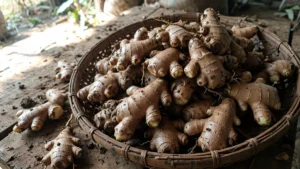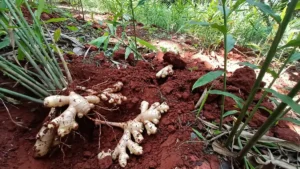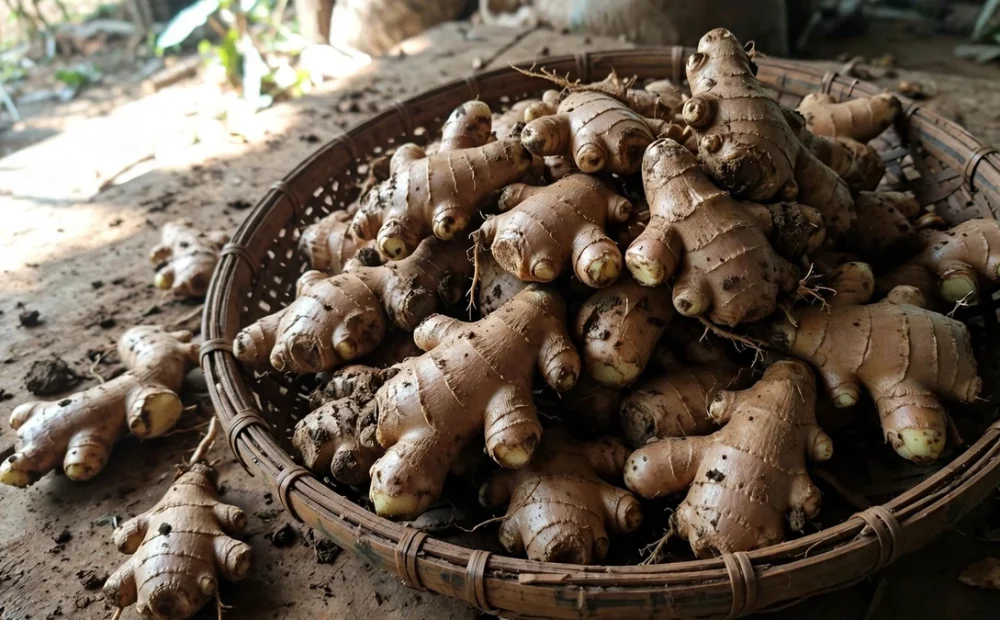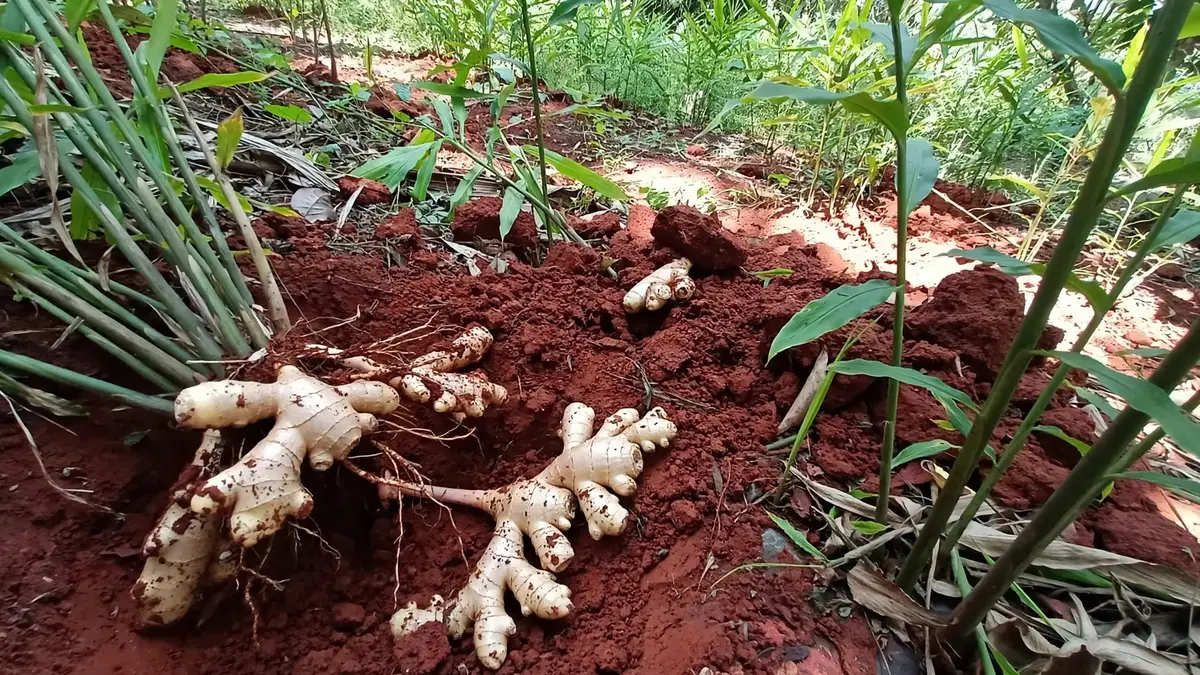

Ginger is the warmest crop a farm digs, and the most patient. A piece of rhizome planted in rich, damp soil needs eight to ten months before it is ready to lift, and the harvest is done by hand, forkful by forkful, so the knotted stems come up whole. Dig too early and the ginger is thin and pale; dig too late and the skin turns thick and the flesh turns fierce.
A ginger farm retreat is a few nights on a working farm in the digging weeks, when the beds are at their fullest and the kitchen is cooking with what the fields gave that morning. You sleep in a farmhouse room, drink ginger tea, eat ginger folded into curries, soups and stir-fries, walk the beds while the leaves are still green, and watch the rhizomes lifted, washed and laid out to dry. The farms stretch from the high ranges of Kerala to the valleys of Fiji, and the warm rhizome ties them together.
Here are nine ginger farm retreats to weigh for 2027, from the cheapest Idukki stay to the dearest Sigatoka farm, covering young ginger, mature ginger and the red ginger of Java, so the decision turns on the way you travel rather than the place on the map.
Key takeaways
- Ginger is a rhizome, not a root: it grows sideways under the soil, and the harvest means digging it up whole with a fork.
- Young ginger is thin-skinned, pale and mild, while mature ginger is fibrous, hot and thick-skinned, and the two cook differently.
- The growing season lasts eight to ten months, and the farm names its digging week, not a month, so book the week before the flights.
- Ginger farms run small, with a handful of rooms and meals shared at one table, so expect plain comfort and mud on your boots.
- Ginger carries no gluten, but the bread and pastry served beside it are usually wheat, so settle the kitchen and the calendar before you pay.
What a ginger farm retreat actually is
A ginger farm retreat means three to five nights on a working farm that grows ginger, with the digging weeks as the reason for the trip. Guests sleep in a farmhouse room or a converted barn, eat what the farm kitchen cooks, and join the harvest, walking the beds to see the leaves cut back, the rhizomes lifted from the damp earth, and the fresh hands washed, peeled and grated for the table.
Ginger has been grown in warm Asia for thousands of years, and the great ginger regions took shape around the dishes they served. Kerala turned its ginger into curries and teas, Jamaica dried its rhizomes for the spice trade, China candied its ginger for the table, and Fiji kept its young ginger for pickling. The crop needs heat, rain and shade, so the farms sit in the wet tropics, where the soil stays dark and the air stays warm.
Days on these farms follow the rhizome’s timetable rather than a hotel’s, with supper served at one shared table and genuine work offered to guests who ask for it.
How we picked these stays, and what to ask first
We began with where ginger truly grows, not where it sells best. A genuine ginger farm offers beds to walk through, leaves to stand among at digging time, and a kitchen working with its own ginger. A farm that buys its rhizomes in is not a ginger farm, whatever the website says.
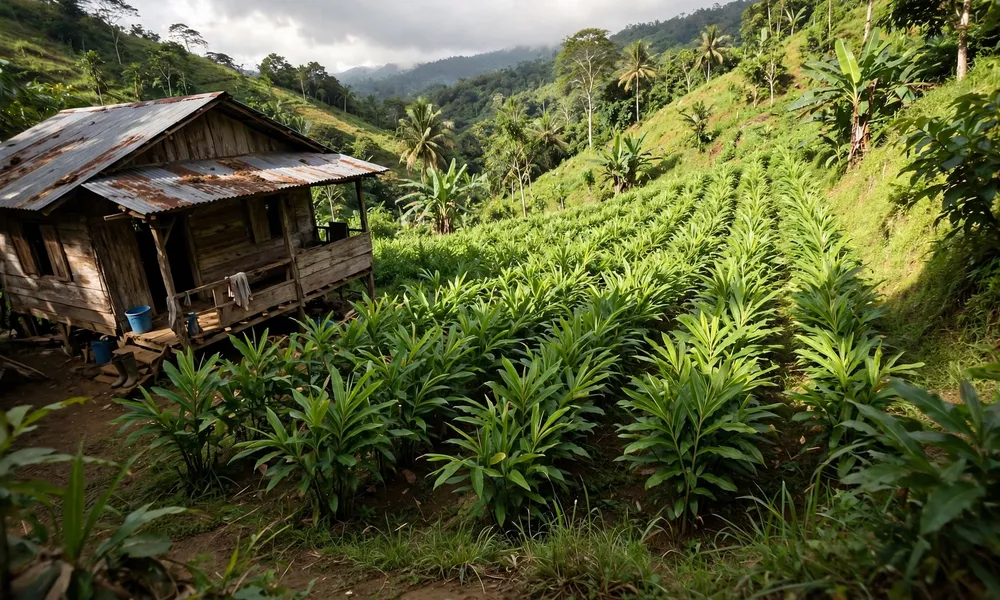
The finest farms take only a handful of guests at a time, so the digging remains honest labour instead of a performance for visitors. They also set out in the first email what the nightly rate covers, with supper, the drive in from the nearest town and walks among the beds counted in the price rather than billed on arrival. Plain talk about rhizomes, digging and cooking is usually a sign the farm looks after its guests well too.
The 9 best luxury ginger farm retreats of 2027
Idukki, Kerala, India — Ginger in the High Ranges
What we like: Ginger in Idukki grows in the cool high ranges of Kerala, and the farm folds it into curries, teas and pickles with coconut and green chilli. The hills are green, the cardamom grows beside the ginger, and the kitchen serves ginger tea, rhizome curries and warm rice.
What to consider: The monsoon rain is heavy at digging time, and the farm sits far up the hills, so the drive in is long and slow.
Style: Keralan high-range farm stay. Best for: Travellers who want ginger where India grows it best. Price range: $65–$95 per night. Standout feature: Fresh rhizomes dug from the hill beds that morning.
Kafanchan, Nigeria — Ginger on the Southern Kaduna Plains
What we like: Ginger in Kafanchan grows on the warm plains of southern Kaduna, and the farm dries its rhizomes in the sun for the spice trade. The plains are wide, the markets are loud, and the kitchen serves ginger tea, pepper soup and pounded yam.
What to consider: The harmattan dust blows in the dry season, and the farm is a long drive from the nearest city, so travel early in the day.
Style: Nigerian plains farm stay. Best for: Travellers who want ginger from West Africa’s spice belt. Price range: $100–$130 per night. Standout feature: Sun-dried rhizomes from the plains beds.
Laiwu, Shandong, China — Ginger in the Sandy Loam
What we like: Ginger in Laiwu grows in the sandy loam of the north China plain, and the farm candies its rhizomes for the table. The plain is flat, the villages keep their old wells, and the kitchen serves candied ginger, ginger pork and warm steamed buns.
What to consider: The autumn wind is sharp at digging time, and the farm sits far from the railway, so arrange the lift in advance.
Style: Chinese plain farm stay. Best for: Travellers who want ginger from China’s oldest ginger ground. Price range: $135–$165 per night. Standout feature: Candied ginger from the plain’s sandy beds.
Yogyakarta, Java, Indonesia — Red Ginger Below the Volcanoes
What we like: Ginger in Yogyakarta grows in the volcanic lowlands of central Java, and the farm brews its red ginger into wedang jahe, the hot spiced drink of the hills. The volcanoes stand beyond the fields, the temples rise nearby, and the kitchen serves red ginger tea, fried rice and warm soto.
What to consider: The lowland rain falls hard at digging time, and the farm sits outside the city, so the walk back is muddy.
Style: Javanese lowland farm stay. Best for: Travellers who want red ginger the Javanese way. Price range: $170–$200 per night. Standout feature: Red ginger brewed into wedang jahe at dawn.
Chanchamayo, Peru — Ginger in the Andean Foothills
What we like: Ginger in Chanchamayo grows in the green foothills below the Andes, and the farm grates its young rhizomes into ceviche and teas. The hills are steep, the coffee grows beside the ginger, and the kitchen serves ginger ceviche, chicken soup and warm bread.
What to consider: The foothill rain is sudden at digging time, and the farm sits high above the valley road, so the walk down is steep.
Style: Peruvian foothill farm stay. Best for: Travellers who want young ginger from the Andes. Price range: $205–$235 per night. Standout feature: Young rhizomes grated into ceviche the same day.
Hilo, Hawaii, USA — Ginger on the Wet Side of the Island
What we like: Ginger in Hilo grows in the wet volcanic soil on the rainy side of the island, and the farm pickles its young rhizomes for the table. The rain falls often, the orchids grow beside the beds, and the kitchen serves pickled ginger, poke and warm rice.
What to consider: The rain is near-daily at digging time, and the farm is a drive from the dry side towns, so pack for wet weather.
Style: Hawaiian wet-side farm stay. Best for: Travellers who want young ginger from volcanic soil. Price range: $240–$270 per night. Standout feature: Young ginger pickled the morning it was dug.
Christiana, Jamaica — Ginger in the Manchester Hills
What we like: Ginger in Christiana grows in the cool Manchester hills of Jamaica, and the farm dries its rhizomes for ginger beer and spice. The hills are green, the coffee grows nearby, and the kitchen serves ginger tea, jerk chicken and warm festival bread.
What to consider: The hill roads are narrow at digging time, and the farm books its rooms early, so write well ahead.
Style: Jamaican hill farm stay. Best for: Travellers who want ginger from the Caribbean hills. Price range: $275–$305 per night. Standout feature: Dried rhizomes from the cool hill beds.
Gympie, Queensland, Australia — Ginger in the Mary Valley
What we like: Ginger in Gympie grows in the warm Mary Valley of Queensland, and the farm brews its rhizomes into ginger beer for the table. The valley is wide, the river runs beside the beds, and the kitchen serves ginger beer, grilled fish and warm damper.
What to consider: The summer heat is strong by midday, and the farm is a drive from the coast towns, so travel in the cool of the morning.
Style: Queensland valley farm stay. Best for: Travellers who want ginger from Australia’s warm north. Price range: $310–$340 per night. Standout feature: Ginger beer brewed from the valley beds.
Sigatoka, Fiji — Ginger in the Salad Bowl Valley
What we like: Ginger in Sigatoka grows in the river valley the Fijians call their salad bowl, and the farm pickles its young rhizomes with lime and chilli. The valley is lush, the river runs wide beside the beds, and the kitchen serves pickled ginger, kokoda and warm roti.
What to consider: The farm is the dearest stay here, and the tropical rain falls hardest at digging time, so plan a year ahead.
Style: Fijian river valley farm stay. Best for: Travellers who want young ginger by a Pacific river. Price range: $345–$380 per night. Standout feature: Young ginger pickled with lime from the valley beds.
Which ginger region fits your trip
If you want ginger where the rhizome is treated as a feast, start with Idukki or Laiwu, where the ginger is dug, peeled and served the same day it was lifted. Both welcome a first-timer, with short walks and long meals at the farm table.
If you want scenery with your ginger, Sigatoka puts the beds beside a river, Chanchamayo in Andean foothills, and Gympie in a wide Queensland valley.
If you want the crop that grows beside the ginger, our guide to the pumpkin farm retreats covers an autumn crop altogether, with roast squash and seed oil instead of warm rhizomes and tea, and the leek farm retreats offer a stalk for the cold months, with soups and braises instead of grated ginger and pickles.
The caveats that matter
Ginger farming answers to the weather: farms give a best guess, never a promise, and a trip pinned to one digging day gambles on rain. The real warning is the rhizome itself, easy to miss when the stay is sold as gentle country.
| Detail | What is known |
|---|---|
| Best time to visit | Eight to ten months after planting, when the leaves yellow and the rhizomes are ready to lift, with the season shifting by region |
| What the work involves | Walking the beds, watching the leaves cut back and the rhizomes lifted with a fork, and seeing the ginger washed, peeled and cooked in the farm kitchen |
| How long a stay runs | Three to five nights, set around the digging weeks |
| Who should take care | Guests with a strong sensitivity to ginger, and anyone unused to fierce sun, heavy rain or steep muddy paths |
| What the kitchen serves | Ginger tea, pickled young ginger, rhizome curries and ginger beer, with fresh bread and farm butter beside the plate |
| Gluten note | Ginger carries no gluten, but the bread and pastry served beside it are usually wheat, so ask the kitchen what it can safely serve |
| What to pack | Closed walking shoes, a broad sun hat, a rain layer for sudden showers, and clothes that wash easily by hand |
| What it does not do | No promised digging day, no fixed menu, and no hotel-style service on a working farm |
Anyone with a strict gluten-free diet should ring the farm before booking. A single question about the kitchen and the ginger can save you a difficult stay, and a farm that answers honestly is usually worth the visit. The same caution appears in our asparagus farm retreats, where the loaves on those tables are wheat as well.
Checklist: booking a ginger farm stay honestly
Work through this list before you pay, and go over it again in the week before you travel.
- Get the digging window in writing, and ask what happens if the rhizomes are still small when you arrive.
- Confirm the nightly rate covers supper, the drive in from the nearest town and the walks among the beds.
- Ask whether the digging and cooking happen on the farm, and whether the kitchen can serve a meal without ginger.
- Before you pay, go and look at the room itself, and run the taps, try the bed and switch the heater on, because farm rooms are plain.
- Pack for rain and rich ground: sturdy shoes, a hat, a rain layer for sudden showers, and clothes you can wash in a basin.
- Leave a day free for the nearest town, so a digging week that shifts still leaves you a good trip.
Frequently asked questions
How is young ginger different from mature ginger?
Young ginger is dug early, with thin pale skin, soft flesh and a mild warmth, while mature ginger is dug late, with thick brown skin, stringy flesh and a fierce heat. Young ginger is pickled and sliced raw, mature ginger is grated, dried and ground, and both come from the same rhizome.
When do the farms lift their ginger?
Ginger is harvested eight to ten months after planting, when the leaves yellow and fall, with the precise week shifting with the rain and the warmth, so ask the farm for its digging window instead of a single date, and hold off booking flights until that window is fixed.
Is ginger a root or a rhizome?
Ginger is a rhizome, an underground stem that grows sideways and sends up leafy shoots, not a root. A root takes in water and food for the plant, while a rhizome stores the plant’s strength and can sprout again, which is why a piece of dug ginger can be planted to grow a new crop.
Can guests help with the digging?
Most farms let guests walk the beds, join the digging and sit at the kitchen table, and some invite you to peel and grate the rhizomes with the cook. Digging is steady work, so ask the farm what guests may do before you book, and expect earth on your hands either way.
Which ginger farm region should a first-timer pick?
Idukki is the easiest first trip: the ginger beds are widest there, the farms are used to guests, and the rhizome curries best show what the crop can do. If you want the story as well as the plate, Laiwu is the plain town where ginger has been grown for generations.
Can you eat well gluten-free on a ginger farm?
Mostly. The fields, the digging and the harvest are worth the trip alone, and ginger carries no gluten, but the bread and pastry served beside it are usually wheat. Ask the farm what it can make without wheat for a gluten-free guest, and settle on the digging week before any week the kitchen bakes bread.
The bottom line
A ginger farm retreat suits travellers who prefer warm rhizomes, farm kitchens and ginger cooked the farm’s own way to a hotel. The young ginger comes fresh and mild, the mature ginger grates into curries and teas, and the finest stays feed you from ground they worked themselves.
Settle the digging week before the travel dates, and leave a spare day at the end. When the ginger lifts on time you will eat rhizomes dug that morning, and when it does not, the hills, the valleys and the old towns will still carry the trip.