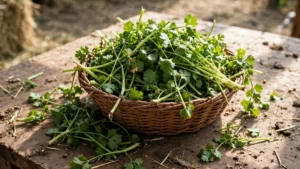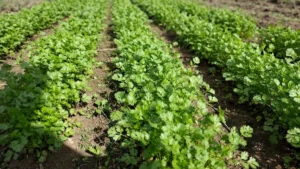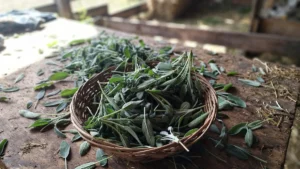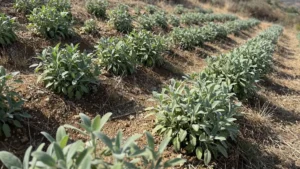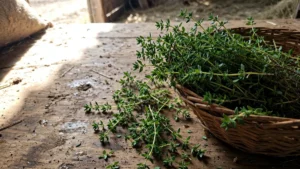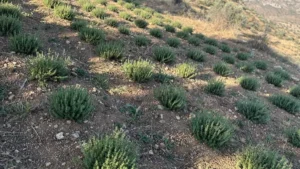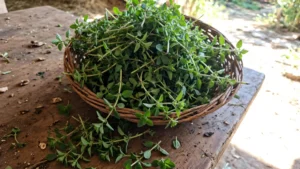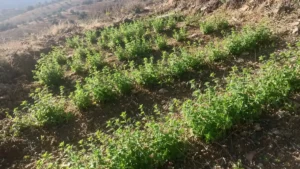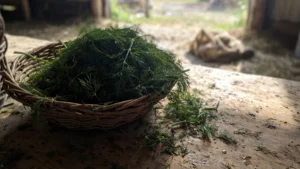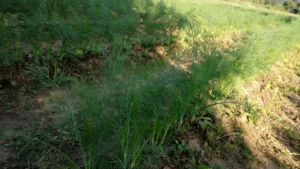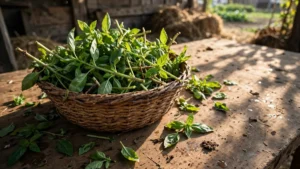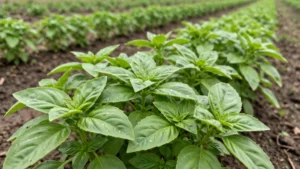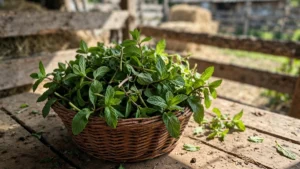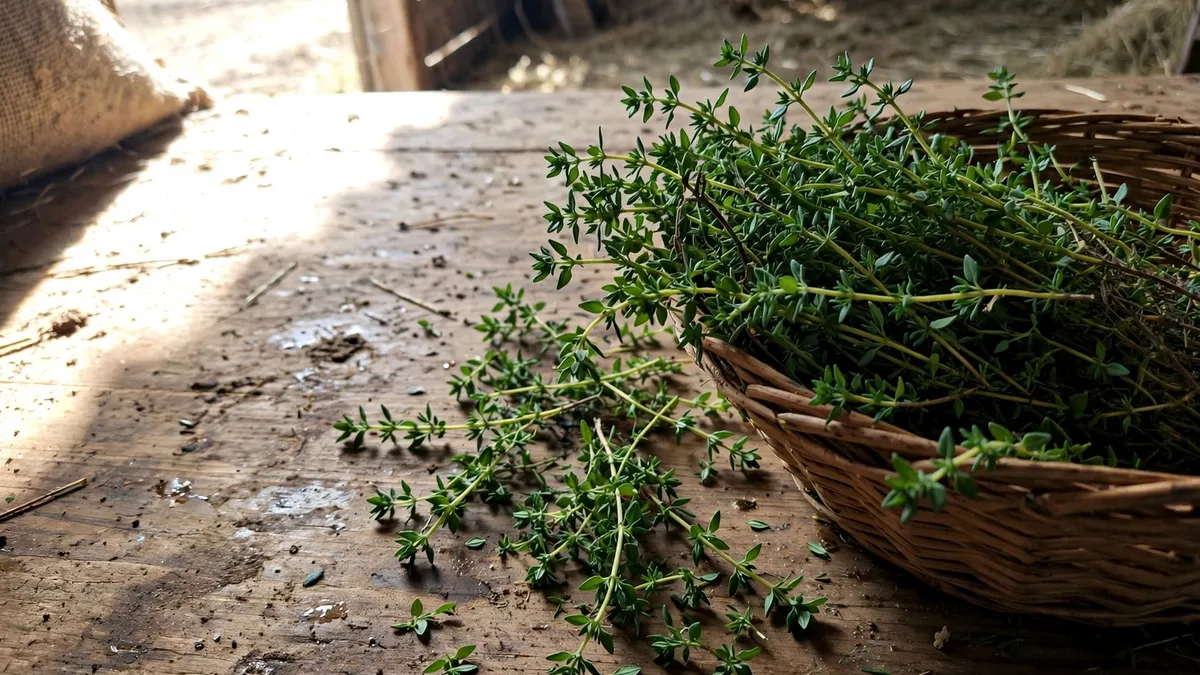
A thyme farm escape is a working holiday built around a small, tough herb. You stay on a farm where thyme is the main crop, cut it in the morning with the growers, and eat food cooked with what you picked. It is a few days of early mornings, dry sunny slopes, and a kitchen that smells of thyme from breakfast to dinner, and it suits travellers who like to learn by doing.
Planning one well takes a little care. The cutting window is short, usually two to three weeks, and it moves with the weather. The farms are small, often fewer than a dozen guests, and the best weeks sell out early. The islands in this series are reached by ferry or small flights, and the terraces can be steep. A good plan starts with the thyme you cook with, then the farm, then the flights — in that order — and it leaves room for the harvest to move by a week.
Thyme itself makes the planning easier than most herbs. It is frost-hardy, so a cold snap does not end the season the way it ends a basil crop. It grows on poor, dry soil, so the farms are on sunny slopes rather than in green valleys, and the work is light: shears, a basket, and a couple of hours before the sun gets high. What you need most is the right week, the right shoes, and a farm that lets you cut.
Key takeaways
- Choose the thyme variety first, then the farm, then the flights: common thyme and lemon thyme point to different farms and different kitchens.
- Book the cutting week the farm names, not the week you guessed, and get the dates and the cancellation rule in writing.
- Cut thyme in the morning after the dew lifts, before the sun gets high, when the oil in the leaves is strongest.
- Dried thyme keeps its flavour for months and travels safely, while fresh sprigs wilt in a day, so bring the dried harvest home.
- No farm can promise the same cutting dates two years running, and steep terraces, shared kitchens and ferry timetables all need checking before you pay.
What a thyme farm escape involves
A thyme farm escape involves staying on a working herb farm for three to seven nights and joining the harvest. The day starts early, usually before eight, with a walk to the beds and an hour or two of cutting with shears. The bundles go into baskets, then into the drying room, where they are hung in small bunches. After lunch the afternoon is free: a walk, a swim, a village visit, or a rest. The evening is built around the kitchen, where thyme goes into bread, roast vegetables, grilled fish or lamb, and tea.
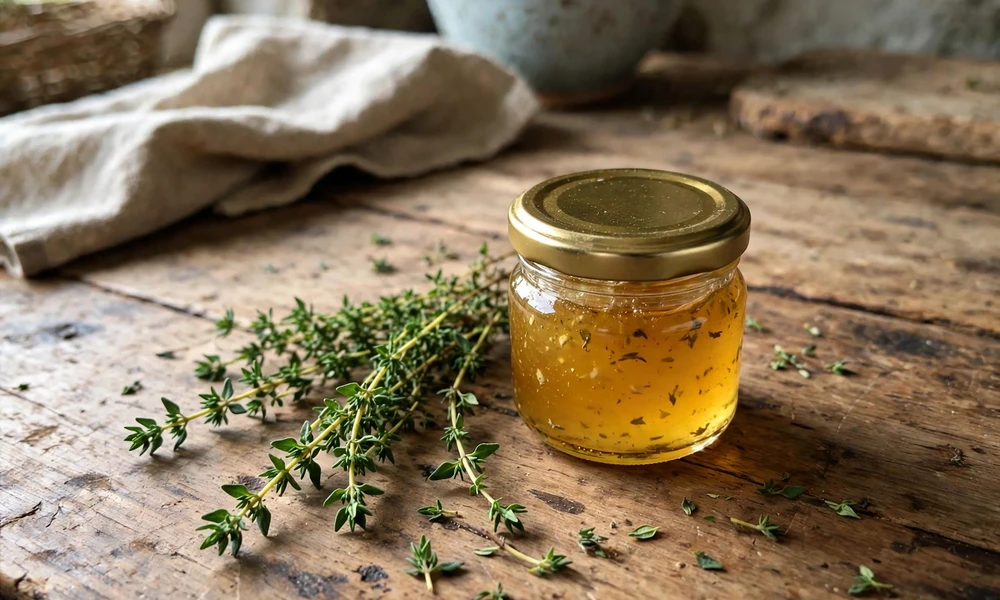
Most farms also keep bees, and many sell thyme honey in small jars. The honey is the souvenir worth buying, because it keeps well and travels safely, and because bees working thyme make a dark, herbal honey that tastes of the place. Ask about it when you book, because the honey sells out in the cutting weeks.
The work itself is light but real. Cutting thyme means bending, reaching and walking on dry, uneven ground, and the sun is strong by mid-morning. You will need light shoes with grip, a hat, and water. The farms provide shears and baskets, and the growers show you where to cut: above a leaf joint, so the plant branches again, and never down to the woody stem. Our guide to planning a basil farm escape follows the same shape, and the contrast is useful: basil wants heat and shelter, thyme wants sun and poor soil.
How to plan it, and what to ask first
Start by deciding which thyme you cook with. Common thyme is the warm, earthy herb for roasts, soups and stews. Lemon thyme is a separate plant with a citrus note for fish, tea and desserts. If you are not sure, buy both at home and cook with them for a week before you book. The variety you reach for most is the one to plan around, and it will point you to the right farm: common thyme to Lesbos or the Drôme, lemon thyme to Capri or Corfu.
Then ask the farm three questions before you pay. Which varieties does it grow, and which one is cut in your week? How many guests stay at once, and do guests cut alongside the growers? What happens if the cutting week moves — do they shift your dates or keep your deposit? A farm that answers clearly is a farm that runs a good trip.
The 9 steps to plan a thyme farm escape
Let the thyme you cook with pick the farm
Common thyme and lemon thyme are different plants with different flavours, and each one points to a different farm. Common thyme points to Lesbos or the Drôme. Lemon thyme points to Capri or Corfu.
What to do: Buy both thymes at home, cook with each for a week, and pick the one you reach for most. What to avoid: Booking a farm because the island is pretty, then finding it grows a variety you never cook with. Best for: Travellers who want one clear goal for the week. Time needed: A week of cooking and reading. Standout tip: If you cannot find lemon thyme at home, start with common thyme.
Book the cutting week, not the calendar week
The thyme cutting window is two to three weeks, and it moves with the spring. A dry April brings it forward, a wet June pushes it back, and a farm that guessed its dates in January may be wrong by a fortnight.
What to do: Email the farm, ask for the cutting week by name, and confirm it in writing before you book flights. What to avoid: Booking flights first and hoping the harvest lines up with your holiday. Best for: Travellers with fixed leave. Time needed: A few emails over a week. Standout tip: Ask what happens to your deposit if the week moves.
Cut in the morning after the dew lifts
Thyme holds its oil best in the cool of the morning, after the dew has lifted and before the sun gets high. The leaves are full and fragrant then, and by midday the heat has thinned the scent.
What to do: Be at the beds by eight, cut with shears above a leaf joint, and stop when the sun gets high. What to avoid: Cutting at midday, when the leaves are hot and the scent is thin, or cutting down to the woody stem. Best for: Early risers. Time needed: Two hours each morning. Standout tip: Taste a leaf before you cut the plant, so you know what the oil should smell like.
Try the honey in the honey house first
Thyme honey is the souvenir worth buying, but not every jar is equal. Bees that work thyme make a dark, herbal honey, while bees that work mixed flowers make something lighter and less distinct.
What to do: Ask for a honey tasting in the honey house, and buy the jar from the hives that worked the thyme. What to avoid: Buying honey from a shop in the port without knowing which flowers the bees worked. Best for: Anyone who wants a souvenir that keeps. Time needed: Half an hour in the honey house. Standout tip: Thyme honey keeps well and travels safely, so buy two jars if you cook with it.
Hang one bunch to dry with the growers
Drying thyme is simple, and doing it once on the farm teaches you more than reading about it. Tie a small bunch with string, hang it upside down in a shaded, airy room, and leave it for a week.
What to do: Tie a small bunch, hang it in the drying room, and ask the growers how long it needs. What to avoid: Drying thyme in direct sun, which bleaches the leaves and thins the flavour. Best for: Cooks who want to use the harvest at home. Time needed: Ten minutes to tie and hang a bunch. Standout tip: Rub the dried leaves off the stems over a bowl, and store them in a sealed jar away from light.
Pack light shoes for dry rocky paths
Thyme grows on dry, rocky slopes, and the paths to the beds are uneven. The farms on Pantelleria, Capri and Chalkidiki are the steepest, and even the gentler farms have rough ground.
What to do: Pack light walking shoes with grip, a hat, and a water bottle. What to avoid: Sandals or smooth-soled shoes on dry stone terraces. Best for: Anyone who plans to cut every morning. Time needed: An evening of packing. Standout tip: Break the shoes in at home, because new shoes on steep terraces will blister.
Find out how little water the thyme gets
Thyme wants poor, dry soil, and too much water makes it weak and less fragrant. A good farm waters sparingly or not at all, and the growers can tell you how they manage it.
What to do: Ask the growers how they water, and look at the beds: dry, stony soil and compact plants are good signs. What to avoid: Assuming lush, soft growth means good thyme; it usually means too much water. Best for: Gardeners and cooks who want to learn. Time needed: A ten-minute talk in the beds. Standout tip: If you grow thyme at home, copy the farm’s watering, not its feeding.
Cut the green tops and spare the roots
Thyme is a perennial, and a healthy plant can be cut for years if the roots are left alone. Take cuttings from the soft green growth above a leaf joint, and never pull a plant up by the roots.
What to do: Cut soft growth above a leaf joint, and leave the woody base and the roots untouched. What to avoid: Pulling plants up, cutting into old wood, or stripping a single plant bare. Best for: Anyone cutting for the first time. Time needed: A few minutes of instruction in the beds. Standout tip: If a plant looks weak, skip it and move to the next one.
Save the dried leaves for the winter kitchen
Fresh thyme wilts in a day, and a bunch cut on your last morning will be limp by the time you land. Dried thyme keeps its flavour for months, packs flat, and passes through customs without trouble in most countries.
What to do: Dry your bunches on the farm, rub the leaves into a sealed jar, and pack the jar in your case. What to avoid: Packing fresh sprigs or live plants, which wilt, leak, or get stopped at customs. Best for: Cooks who want the harvest to last. Time needed: Half an hour on the last day. Standout tip: Label the jar with the farm and the variety, so you remember which thyme it is.
Picking the right season and region
Thyme is a dry-sun herb, so the season follows the Mediterranean sun. In the Greek islands the cutting window usually falls in late May to mid-June, when the plants are full and the buds are still shut. In southern France and Spain it runs into late June, and on the Adriatic islands it can stretch to early July. The islands are warmest in July and August, but by then the thyme has flowered and the leaves have turned woody, so the best cutting is earlier than the best beach weather.
Pick the variety first, then the dates. If you want common thyme and honey, go to Lesbos in late May or Kvarner in late June. If you want lemon thyme, go to Capri in early June or Corfu in early June. If you want thyme with a beach nearby, go to Chalkidiki in mid-June. The mint farm escape we covered follows the same logic, but mint wants water and shade where thyme wants sun and poor soil.
Look at the forecast a few days before you travel, and be ready to shift the cutting day. A dry spring brings the cutting forward, a wet June pushes it back, and a heatwave can send a Mediterranean crop into flower a week early. A farm that shifts your dates fairly is worth more than a farm with a prettier website.
The caveats that matter
| Detail | What is known |
|---|---|
| Best cutting time | Early morning, after the dew lifts and before the sun gets high |
| Once thyme flowers | Leaves turn woody and less fragrant once the buds open and the plant seeds |
| Cold weather | Thyme survives frost in the ground, so winter rarely ends a crop |
| Mint family note | Thyme shares a family with mint and oregano; ask first if you react to either |
| Shared kitchens | Farm kitchens bake bread in the same space, so raise gluten-free needs early |
| Midday heat | Cutting stops by late morning; the drying room does the afternoon work |
| How many guests | Small groups cut together; ask how many beds the farm fills at once |
| What a farm cannot promise | No farm can fix next year’s cutting dates, and weather moves them every season |
Checklist: before you book a thyme farm escape
Run through these checks before you book, and once more before you travel.
- Name the variety before you book: common thyme, lemon thyme, or both, and which one is cut in your week.
- Get the cutting dates in writing, with the rule for a weather move.
- Ask how many guests cut together, so you know whether you will work or watch.
- Tell the kitchen about gluten-free needs before you arrive, not at the table.
- Ask about the walk to the beds: how steep, how long, and where the shade is.
- Find out whether the bees worked thyme, and whether honey jars are sold on site.
Frequently asked questions
Does a thyme farm suit a gluten-free traveller?
Most of the time, yes, if you warn the farm ahead. Thyme carries no gluten, and kitchens can usually cook around it with notice. The catch is the shared oven and the bread baked beside your meal, so speak up before you arrive.
How early should I book a thyme farm stay?
As early as you can, once the farm has named its cutting week. The best weeks on small farms sell out months ahead, and the cutting window is only two to three weeks.
What should I pack for a week among the thyme beds?
Light walking shoes with grip, a hat, sunscreen, a water bottle, and a small bag for cuttings.
Are children welcome on thyme farms?
On most of the small farms, yes, if they are old enough to walk the terraces and handle shears safely. Ask the farm directly, because some stays take adults only during the cutting week, when the work starts early and the days are long.
Can I carry thyme cuttings home through customs?
Fresh cuttings and live plants are often stopped, so do not pack them. Dried thyme in a sealed jar is fine in most countries, and it keeps its flavour for months, which is why the farms recommend taking the dried harvest home.
Is thyme honey worth the price?
If the bees worked thyme, yes. Real thyme honey is dark, herbal and distinct, and a small jar lasts a long time because a little goes a long way. Taste it in the honey house first, and buy from the hives that worked the thyme. Our rosemary farm escape covers a similar honey question, and the answer is the same: taste before you buy.
The bottom line
A good thyme farm escape starts with the variety you cook with, then the farm that grows it, then the cutting week the farm names. Lesbos is the best first trip for its honey, Corfu is the easiest on the legs, and Pantelleria is the most distinctive thyme you will taste.
Cut in the morning after the dew lifts, taste the honey before you buy a jar, and bring the dried harvest home in a sealed jar. That is the honest way to enjoy a thyme farm, and the dried thyme will still be flavouring your cooking months after the trip is over.