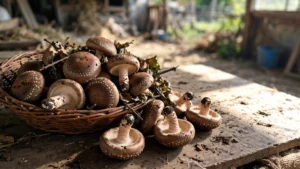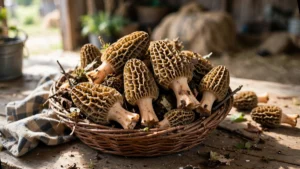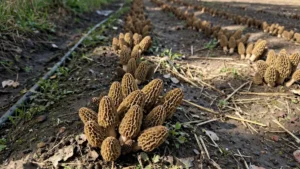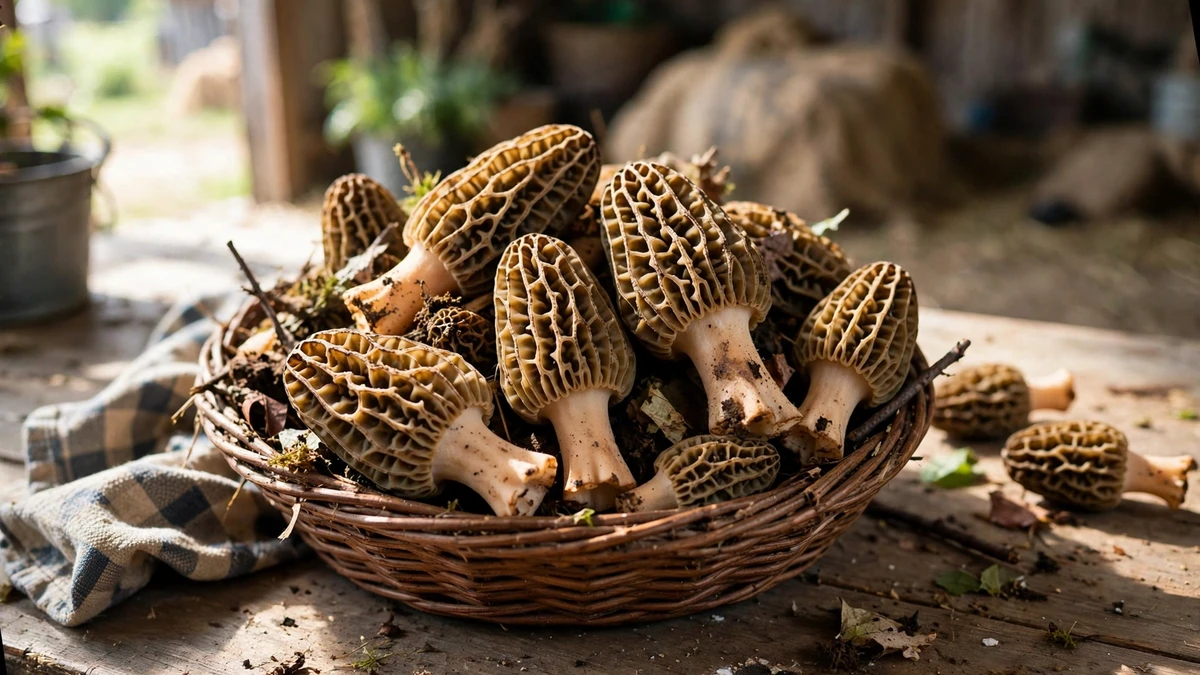
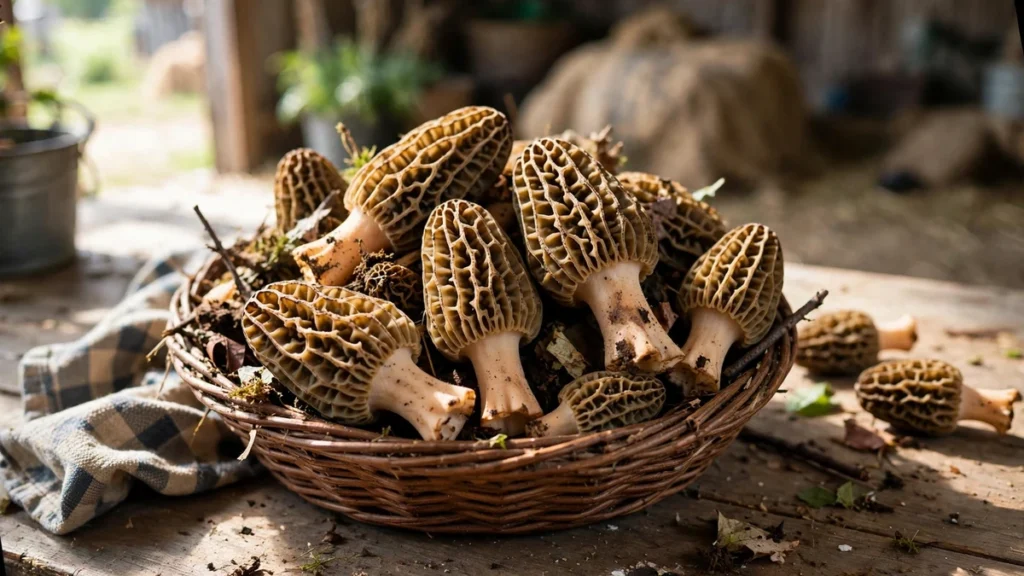
A morel farm escape is a spring trip built around a mushroom that fruits for only a few weeks a year. Morchella esculenta, the yellow morel, grows in woodland edges, old orchards and shaded farm beds across Europe, appearing when the soil warms and the rain comes. The cap is a honeycomb of pits and ridges, the stem is hollow, and the flavour is earthy and nutty. A farm stay lets you pick it with a guide, learn how to tell it from a false morel, and eat it that evening in butter or cream.
Planning matters more for morels than for most crops, because the season is short and it moves with the weather. A farm that is picking in late April one year may not start until mid-May the next, and a dry spring can cut the season to a fortnight. The best trips are booked around the fruiting, not around a fixed holiday date, and the best farms will tell you honestly when the beds are likely to be ready.
This guide sets out nine steps for planning a morel farm escape in 2027, from choosing a region to bringing dried morels home. Follow them in order and you will arrive at the right time, with the right kit, and with a kitchen that knows what you can and cannot eat. Our guide to planning a scorzonera farm escape covers another short-season spring crop, and it is a useful comparison if you are choosing between the two.
Key takeaways
- Morels are Morchella esculenta, spring mushrooms with honeycomb caps, different from porcini and from shiitake.
- Book around the fruiting window, usually April to June, and get the picking weeks confirmed in writing.
- Morels must always be cooked thoroughly; never eat them raw, and only eat mushrooms your guide has confirmed.
- Most farms are small and the picking weeks fill quickly, so start the conversation months ahead.
- Morels carry no gluten on their own, but sauces, pasta and shared pans can introduce it, so ask the kitchen before you eat.
What a morel farm escape is
A morel farm escape is a short stay on a farm that grows or manages morels, with the picking and the cooking built into the price. Some farms grow morels in shaded beds of wood chip and compost, where the crop can be watched and picked at its best. Others look after stretches of woodland and orchard, sending guests out with a guide who knows which slopes fruit earliest after rain.
The stay is usually two or three nights. Mornings are spent in the beds or the woods, cutting morels at the stem and brushing them clean. Midday is for the kitchen, where the mushrooms are halved, checked and cooked. Evenings are family-style meals, with the farmer talking about the season.
It is not a wild foraging holiday, and that is the point. You are on managed ground with a guide who has walked it all season, and you only eat what has been checked. False morels can fool an untrained eye, so a farm escape gives you the experience without the risk of picking alone.
How to plan a morel farm escape
Start with the season, not the destination. Morels fruit in spring, usually from April to June, and the window lasts three to five weeks in any one place. The farms in this guide publish their picking weeks; ask for the dates in writing, and ask what happens if the season shifts.
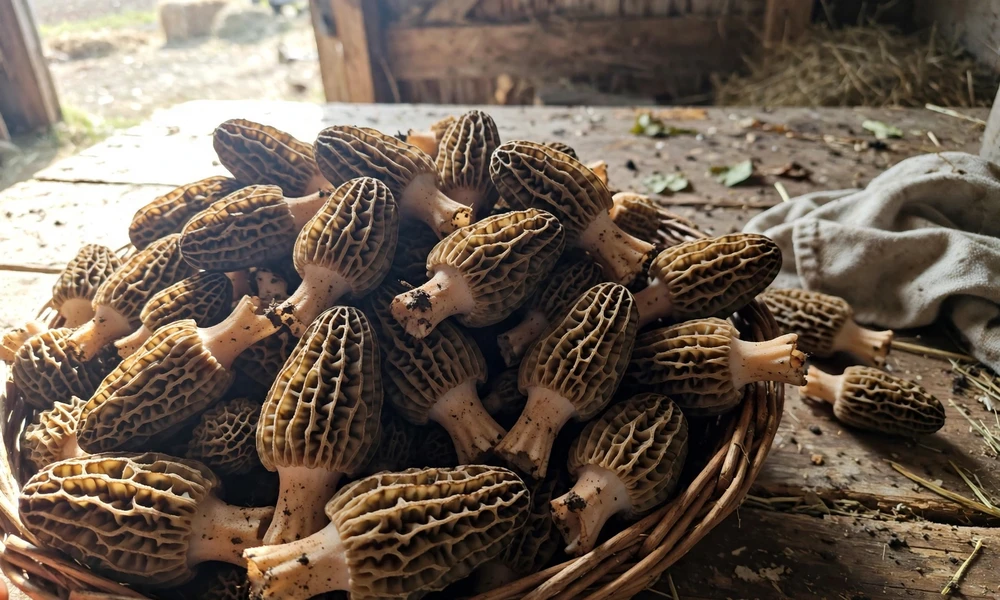
Then match the farm to how you like to travel. Some stays are quiet woodland lodges with a few guests at a time; others are lively farmhouses with shared tables and late evenings. Both can be good, but they suit different people, so ask about noise, room size and how far the beds are from the house.
Finally, sort the practical details early: transfers, kit, allergies and what the price includes. Morel farms are often rural with limited public transport, and the picking weeks are the busiest of the year. A farm that answers quickly before you book will look after you well on arrival.
The 9 steps to planning your escape
Start with the kitchen, not the map
Choose the region by the cooking you want to learn. In France morels go into cream sauces, in Italy into risotto and pasta, and in Central Europe they arrive with dumplings or polenta. Pick the dish first and the farm follows.
What to do: Read the farm’s menu or meal plan before you choose, and pick the cooking style that excites you most. What to avoid: Do not pick a farm only because it is near an airport if the kitchen does not cook the way you like. Best For: Cooks who want to learn one dish properly. Time Needed: One evening of reading menus and messages. Standout Tip: Ask which morel dish the farm is proudest of, and let that answer choose the region.
Ask for the picking window in writing
The fruiting window is the whole trip. A farm picking in late April one year may not start until mid-May the next, and a dry spring can shorten the season sharply. Get the weeks in writing, and ask how the farm handles a late or early season.
What to do: Ask for the picking weeks by email, and ask whether the farm will move your dates if the season shifts. What to avoid: Do not book fixed flights before the farm has confirmed the picking weeks. Best For: Visitors whose dates can move. Time Needed: A few days of back-and-forth with the farm. Standout Tip: Book the nights in the middle of the stated window, not at its edges.
Make sure a guide walks the woods with you
Morels must be identified by someone who knows them, every time. A true morel has a honeycomb cap and a hollow stem; a false one has a folded, brain-like cap and is not safe. A good guide shows you both in the field, so the difference becomes obvious.
What to do: Confirm that a guide goes out with every picking group, and that every mushroom is checked before it reaches the kitchen. What to avoid: Do not pick on your own in the woods around the farm, however confident you feel. Best For: First-time pickers and nervous eaters. Time Needed: One message to the farm before you book. Standout Tip: Ask the guide to cut a morel open at the stem so you can see the hollow inside.
Plan the journey to the farm before the flights
Morel farms are often rural with limited public transport, and the picking weeks are the busiest of the year. A farm two hours from the nearest station needs a transfer plan, settled before you pay for flights.
What to do: Ask the farm about transfers, taxis and the nearest station, and book the transfer at the same time as the room. What to avoid: Do not assume a rural farm has a taxi rank or a bus stop nearby. Best For: Guests who arrive without a car. Time Needed: An afternoon of checking routes and times. Standout Tip: Ask the farm to arrange the transfer; they know the local drivers.
Send your allergy notes with the booking
Morels are a mushroom, and mushroom allergies are real. The kitchen also needs to know about gluten, because sauces, pasta and shared pans can carry it even when the mushroom is gluten-free. Send these details with the booking, not at the dinner table.
What to do: Put allergies and gluten needs in the booking email, and ask the farm to confirm what it will cook for you. What to avoid: Do not mention an allergy for the first time at dinner, when the kitchen has already started cooking. Best For: Anyone with a food allergy or a gluten need. Time Needed: Ten minutes with the booking form. Standout Tip: Ask the farm to confirm the alternative dish by name, not just in general terms.
Pack boots, layers and a rain jacket
Spring mornings in the woods are cool and damp, and the beds are often muddy after rain. Sturdy boots, warm layers and a rain jacket turn a miserable morning into a pleasant one.
What to do: Pack waterproof boots, a warm layer, a rain jacket and a small basket or cloth bag for the picking. What to avoid: Do not wear trainers or light shoes into wet woodland, and do not bring a hard suitcase for a muddy farm track. Best For: Walkers and early risers. Time Needed: One evening of packing before you leave. Standout Tip: Bring a spare pair of socks; the beds are wetter than they look.
Watch one morel cooked before you eat a plateful
Morels must always be cooked thoroughly, and the cooking is part of the lesson. Watch the guide halve one, check it is hollow and clean inside, and cook it in butter until done. Once seen, you will know a properly cooked morel.
What to do: Join the cooking session on the first day, and watch the halving and the cooking before you eat. What to avoid: Do not taste a morel raw, and do not eat a mushroom that has not been halved and checked. Best For: Cautious eaters and home cooks. Time Needed: One morning in the farm kitchen. Standout Tip: Ask the cook how long the morels need in the pan, and time it yourself.
Save a morning for the market stalls
The market is where the crop meets the rest of the local kitchen, and the best place to see how morels are sold and cooked by people who eat them every spring. It also shows what else is in season, from asparagus to the first soft cheeses.
What to do: Keep one morning free, and ask the farm which market is worth visiting and when it opens. What to avoid: Do not buy morels from a stall without asking where they were picked and whether they are true morels. Best For: Market lovers and keen cooks. Time Needed: Half a morning, including the walk there. Standout Tip: Buy dried morels at the market; they travel better than fresh ones. A similar market morning is worth keeping free on other harvest trips too, including our celeriac farm escape guide, where the market stalls are half the lesson.
Bring dried morels home and label the bag
Fresh morels do not travel well, but dried ones keep for months and come back after a short soak. Buy them from the farm or the market, label the bag with the farm and the date, and store it somewhere cool and dry.
What to do: Buy dried morels from the farm shop, label the bag, and pack it in your checked luggage. What to avoid: Do not pack fresh morels in a suitcase, and do not carry mushrooms across a border without checking the rules first. Best For: Travellers who want to cook the dish again at home. Time Needed: Thirty minutes in the farm shop before you leave. Standout Tip: Soak dried morels for twenty minutes, and keep the soaking water for the sauce.
When to go, and how long to stay
Spring is the season, and the exact weeks depend on the region. Western France and northern Italy often start in April, while Central Europe and the hills further east may not fruit until May. Book in the middle of the stated window, where a late or early season still leaves picking to join.
Two or three nights is about right for most visitors. A single night means one picking session, while two or three nights leave room to pick, cook and visit a market without haste. Longer stays suit travellers who want to learn the cooking properly, or who want to see how the season changes across a week.
Visits outside the fruiting window are green and pleasant, but there is no picking to join. If you can only travel in summer, choose a farm with a full kitchen programme rather than a picking one, or save the morel trip for spring. Our kohlrabi farm escape guide covers a summer harvest that pairs well with a morel trip in the spring.
The caveats that matter
Morels are safe and widely eaten when they are picked correctly and cooked right through, but a farm stay brings a few things to watch. Raw morels can unsettle the stomach, so thorough cooking is essential. False morels can fool an untrained eye, so eat only what your guide has passed. The season is brief, too, so a farm that shows rooms online may already be out of picking weeks, so get the dates confirmed in writing first.
| Detail | What is known |
|---|---|
| Scientific name | Morchella esculenta (yellow morel) and Morchella elata (black morel) |
| What it is | A spring mushroom with a honeycomb cap and a hollow stem |
| Best season to visit | Spring, April to June, lasting three to five weeks |
| How it is eaten | Cooked through every time: butter sauté, cream sauce, risotto or pasta |
| Safety warning | Never eat raw; only eat mushrooms an expert has confirmed |
| Not the same as | Gyromitra false morels, porcini, or shiitake |
| Gluten | Gluten-free on its own; sauces, pasta and shared pans can add gluten |
| Who should check first | Anyone with a mushroom allergy should ask the farm first |
If you have a mushroom allergy, or you are unsure about eating morels at all, tell the farm before you arrive. Most farms will prepare a separate dish and keep the morels out of your bowl, provided they know in advance.
Checklist: planning a morel farm escape honestly
Use these checks before you book, and again when the farm confirms your stay.
- Get the picking weeks confirmed in writing: ask the farm which weeks it is really out in the beds.
- Check the guide: confirm a guide walks with every picking group and checks every mushroom.
- Ask what the price covers: meals, picking, the cooking class and transfers are not always bundled together.
- Send allergy and gluten details with the booking, rather than mentioning them at dinner.
- Pack for mud and spring rain: waterproof boots, layers, and a rain jacket.
- Arrange the nights around the picking, not the reverse, so the harvest sits at the centre of the trip.
Frequently asked questions
How far ahead should I book a morel farm stay?
As early as you can, ideally two or three months ahead. The picking weeks are short and the farms are small, so the best weeks fill quickly.
Do I need experience to join the picking?
No. The guide walks with every group, shows you what to look for, and checks every mushroom before it reaches the kitchen. You need sturdy boots and a willingness to walk in the woods, not prior knowledge.
Can I eat morels if I have never tried them?
Yes, as long as they are cooked thoroughly and you have no mushroom allergy. Try a small amount on the first evening, and tell the farm if you feel unwell.
Are morels safe for children?
Yes, when an expert has identified them and they are cooked thoroughly. Children should not pick alone, and should only eat what the guide has checked.
What should I do if a morel makes me feel unwell?
Tell the farm straight away and stop eating. Raw or undercooked morels can upset the stomach, and a few people react even to cooked ones. The farm will know the nearest doctor, so seek medical advice if symptoms linger.
Can I take morels home on a flight?
Dried morels travel well and keep for months, so buy those from the farm shop and label the bag. Fresh ones may not be allowed across a border, so check the rules first.
The bottom line
A morel farm escape is a spring trip that repays careful planning. The strongest stays are those where the picking is genuine, the guide inspects each mushroom, and the cooking is taught well. Piedmont Woods and Zagreb Hills suit cooks best, while Seine Valley and Ljubljana Forest give the best value for travellers who want the work itself.
Choose dates around the fruiting, tell the farm about allergies and gluten needs before you travel, and eat only what the guide has passed. Follow that, and a morel farm stay becomes one of the most rewarding food trips in Europe: quiet, hands-on, and full of a flavour found nowhere else.