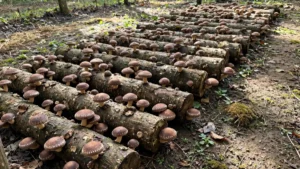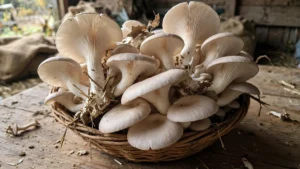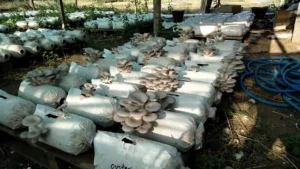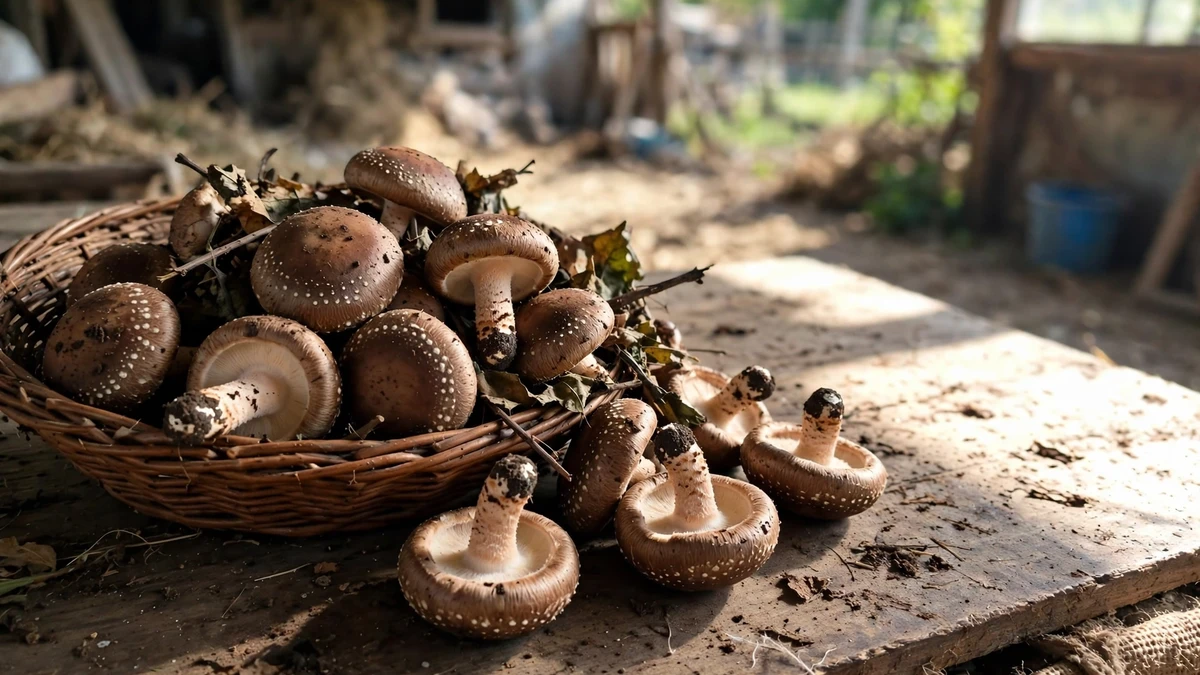
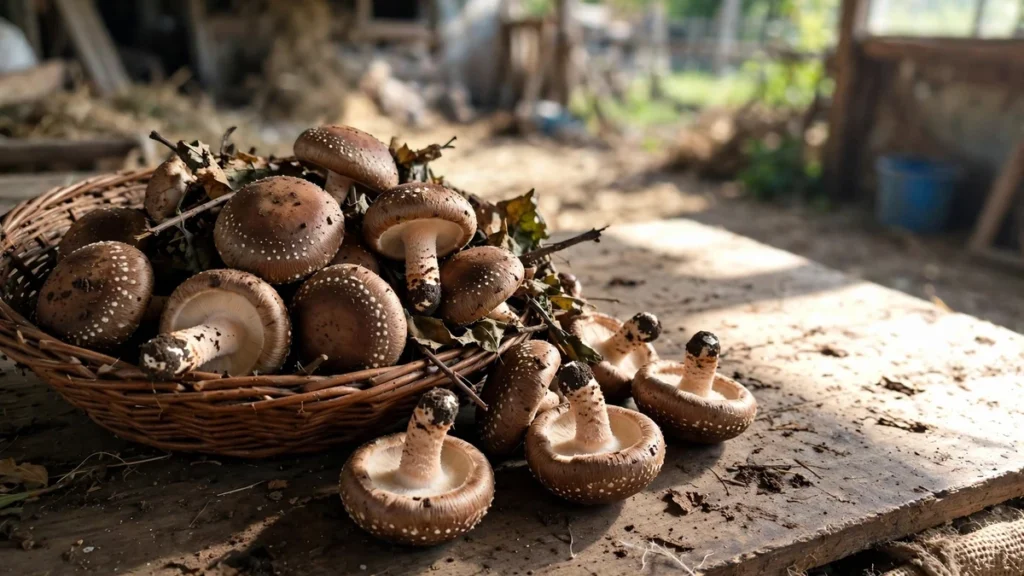
A shiitake farm escape starts with a log, not a hotel. The grower drills oak, packs it with spawn, seals it with wax, and waits months while the fungus threads through the wood. When the log is ready, cold water wakes it, and brown caps appear within days.
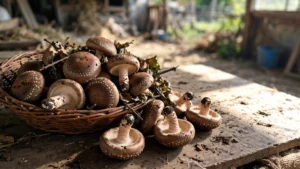
A shiitake farm escape is three to five nights on a working shiitake farm, timed to a flush. You sleep in a farmhouse room, eat caps cut from logs that morning, and spend the days among the log yards, watching the caps open in the shade and carrying the basket back to the kitchen.
This guide walks through the nine steps that make the trip work, from fixing the flush month to paying the bill, so the choice turns on the farm rather than the brochure.
Key takeaways
- Book the flush, not the month: shiitake fruit on oak logs in cool damp waves in spring and autumn, so fix the fruiting window before you fix the flights.
- Fresh and dried shiitake are two different ingredients — fresh caps are thick and meaty, while dried caps are soaked back to life and taste deeper and smokier in broth and rice.
- Cut the stems away: they stay tough no matter how long they cook, while the caps slice cleanly for the broth, the grill and the stir-fry.
- Expect a small stay in the hills: a handful of rooms, one shared table, and a lift from the nearest town that the farm should arrange.
- Raw or barely cooked shiitake can raise an itchy rash, and the soy sauce, broths and dumplings on the farm table may carry gluten, so settle both with the kitchen before you pay.
What a shiitake farm escape actually is
A shiitake farm escape is three to five nights on a working farm that grows shiitake, with a flush as the reason for the trip. Guests sleep in a farmhouse room, eat what the farm kitchen cooks, and join the harvest, walking the log yards to see brown caps cut from oak with a short knife.
The crop answers to damp air, not to a calendar. A log that fruited in early October last year may fruit in late October this year, and the farm will not promise a date. That is why the escape is planned around a window, with the flights booked only once the farm names its flush.
Drying is half the craft. The thickest caps are laid in the sun until they shrink and darken, and the white cracks that spread across the cap are the mark buyers look for. A farm that dries its own caps will show you the racks without being asked, and the kitchen will soak a handful for supper so you can taste the difference between fresh and dried in the same meal.
The days are simple: mornings in the log yards, afternoons resting or walking to the nearest town, and supper at one shared table. A farm that lets you cut your own supper and dry your own caps trusts its mushrooms — and its guests.
How we chose these stays, and what to ask first
Start with where shiitake truly grow, not where they sell best. A real shiitake farm lets you walk its log yards, stand among the caps at picking time, and eat from a kitchen that cooks its own mushrooms. A farm that buys its caps in from a market is selling a mushroom menu, not a shiitake stay.
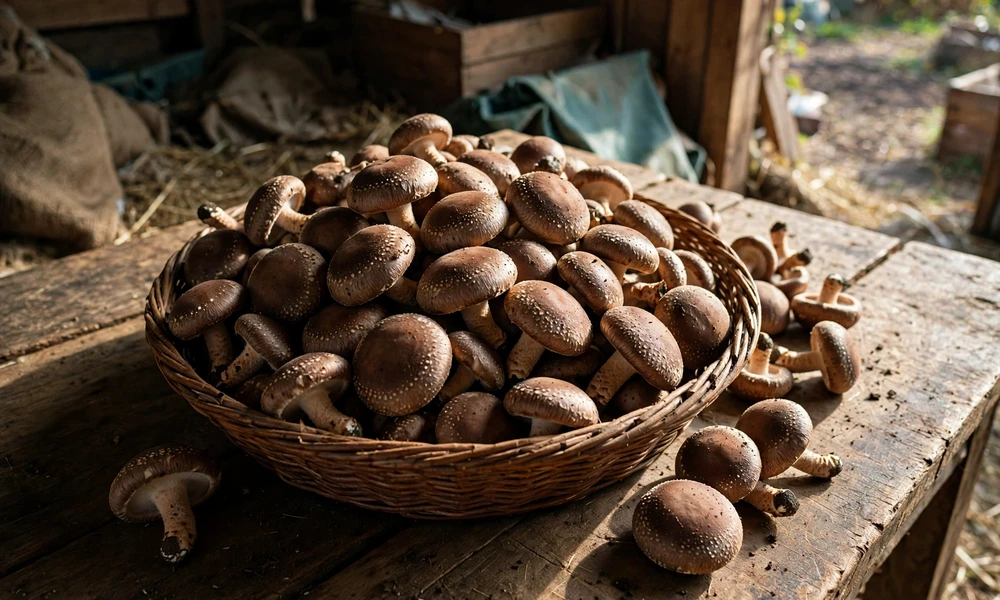
Small is a good sign: a farm that takes a handful of guests keeps the picking honest, and a grower who answers plainly about logs, flushes and drying usually looks after guests well too. Settle what the nightly rate covers in the first message, so supper, the lift and the walks are part of the price rather than extras at checkout.
Ask about the drying shed in the first message too. A farm that dries its own caps will have racks to show you, and the dried caps you carry home will taste of the yard you stood in. A farm with no drying shed buys its dried caps elsewhere, and the price will tell you.
The 9 steps to plan a shiitake farm escape in 2027
Pick the flush window before you pick the farm
What to do: Write to the farm and ask which weeks the logs are expected to fruit, then hold the flights until the farm names a window. Spring and autumn are the usual seasons, and a farm that names a fortnight is more honest than one that promises a date.
What to avoid: Do not book flights around a single picking day, since a warm week can push the flush late and a cold snap can bring it early.
Best for: Travellers with a week of slack in their calendar. Time needed: One evening to read the farm replies and compare the windows. Standout tip: Ask which week the caps are fattest, not just when the season starts.
Ask which wood the logs are, and how long they have fruited
What to do: Ask whether the logs are oak, how many seasons they have fruited, and whether the farm inoculates its own logs. Oak logs fruit for years, and a farm that drills its own spawn knows its wood.
What to avoid: Do not accept a farm that cannot say what its logs are made of, since sawdust blocks and bought-in logs tell you little about the crop.
Best for: Travellers who want to see the growing, not just the eating. Time needed: One message sent before you book. Standout tip: Old oak logs give the thickest caps, so ask the age of the yard.
Settle the full price in one early message
What to do: Ask for one figure that covers the room, supper, the lift from town and the walks among the logs, and get it in writing before you pay anything. A farm that lists every charge in the first reply is usually straight about the rest too.
What to avoid: Do not pay a deposit before the price is fixed in writing, since extras added at checkout are the commonest complaint on farm stays.
Best for: Travellers who hate surprise charges. Time needed: One message and one reply. Standout tip: Ask what happens to the deposit if the flush comes late.
Choose a room for the yard’s hours, not for its view
What to do: Pick a room close to the log yards and the kitchen, with a good heater and hot water, since the mornings start early and the yards are cool. A plain room near the work beats a pretty room a long walk away.
What to avoid: Do not choose the room with the best view if it sits far from the yards, since you will cross the farm in the dark and the damp.
Best for: Early risers who want to be first at the logs. Time needed: One look at the farm map before you book. Standout tip: Ask for the room nearest the drying shed, where the air stays warmest.
Let the growers show you the picking cut on day one
What to do: On your first morning, ask a grower to show you the cut — a short knife at the base of the stem, caps taken young while the edges still curl under. Pick into a basket, not a bag, so the caps stay whole.
What to avoid: Do not pull caps off the log by hand, since tearing wounds the wood and spoils the next flush.
Best for: Guests who like to earn their supper. Time needed: A morning with the growers. Standout tip: Cut in the cool of the morning, when the caps are firmest.
Visit the drying racks before you carry dried caps home
What to do: Walk the drying shed and look at the racks — thick caps dried in the sun keep for months and taste deeper than thin ones dried in a hurry. Buy the caps the farm dried itself, and ask how long they were in the sun.
What to avoid: Do not buy dried caps from a market stall on the way home, since you cannot tell how they were dried or how long they have sat.
Best for: Cooks who want the winter table covered. Time needed: An hour in the drying shed. Standout tip: Sun-dried caps with cracked white patterns on top are the prized ones.
Take supper at the farm table on every night you stay
What to do: Eat at the farm table every night, since the kitchen cooks the morning’s cut and the menu follows the flush. Tell the cook about allergies and gluten in the first message, so the table can be set safely.
What to avoid: Do not eat out in town every night, since you will miss the dishes the farm cooks best and the stories the growers tell at the table.
Best for: Travellers who came for the cooking as much as the crop. Time needed: Every evening you are there. Standout tip: Ask the cook to show you the stem cut, so you can cook shiitake at home.
Save one morning for the nearest market town
What to do: Leave one morning free to wander the nearest market, where the farm sells its dried caps and the town sells everything else. Buy the extras — soy, rice, tea — that the farm kitchen uses, and ask the sellers where their mushrooms come from.
What to avoid: Do not fill every morning with farm work, since a tired traveller picks badly and enjoys the table less.
Best for: Travellers who like a market as much as a log yard. Time needed: A morning before you leave. Standout tip: Market mornings are best before the sun is high, when the stalls are fullest.
Close the account the evening before you travel home
What to do: Settle the bill the night before you leave, while the grower is still at the table and the numbers are fresh. Check the room, the suppers and the lifts against the price you agreed in writing, and pay before the morning rush.
What to avoid: Do not leave payment to the morning of departure, since the grower may be in the yards and the maths gets hurried.
Best for: Travellers who want a clean goodbye. Time needed: Twenty minutes after supper. Standout tip: Ask for a paper receipt, and keep it with the dried caps you carry home.
When to go, and which region fits your trip
If this is your first shiitake trip, start with Kyoto or Osaka, where the log yards are widest and the farms are used to guests. The walks are short, the kitchens are generous, and the flush weeks are the most reliable.
For hills with your harvest, the highlands above Hanoi, the lake hills of Hangzhou and the mountains over Taipei all put the yards beside towns with markets of their own, so a rest day still tastes of mushrooms.
For a different kind of harvest, our celeriac farm escape covers a root crop dug from the ground, and the kohlrabi farm escape covers a crisp stem vegetable for slaws and roasts — both a change from caps and broth.
The caveats that matter
The flush is the risk: a farm can name a window but never a day, and a warm week can push the caps late. The sharper warning is the mushroom itself.
| Detail | What is known |
|---|---|
| Best time to go | Spring and autumn, when cool damp air wakes the logs; ask for the flush window, not a single date |
| What the days involve | Mornings cutting caps in the log yards, afternoons resting or walking to town, supper at one shared table |
| How long to stay | Three to five nights around the flush, with a spare day at the end |
| Who should take care | Anyone with a mushroom allergy, and travellers unused to wet ground, cold mornings or hill paths |
| What the kitchen cooks | Caps simmered in broth, steamed with rice, grilled over charcoal and stir-fried with greens, with pickles and warm tea |
| Raw mushroom warning | Never eat shiitake raw or barely cooked — undercooked caps can raise an itchy rash that lasts days |
| What to pack | Strong walking shoes, a warm layer for the shade, a rain jacket, and clothes you can wash in a basin |
| What it does not do | No promised picking day, no fixed menu, and no hotel service on a working farm |
Ring the farm about allergies before you book: one question about spores in the yards and mushrooms in the kitchen can save a difficult stay. The same care applies at our Chinese yam farm escape, where the kitchen likewise cooks what the farm grew.
Checklist: planning a shiitake farm escape honestly
Run through this list before you pay, and check it again in the week before you travel.
- Get the flush window in writing, and ask what the farm does if the caps arrive late.
- Make sure the nightly price takes in supper, the lift from town and the walks in the yards.
- Ask whether guests can cut caps and see the drying racks, and whether the kitchen can cook without mushrooms.
- Before you pay, ask for a photo of the room and check the bed, the heater and the hot water — farm rooms are plain.
- Pack for damp ground and cool shade: sturdy shoes, a warm layer, a rain jacket, and clothes that wash in a basin.
- Keep a day free for the nearest town, so a flush that moves still leaves you a fine trip.
Frequently asked questions
Do I need experience to pick shiitake on a farm stay?
No. The growers show you the cut on your first morning — a short knife at the base of the stem, caps taken young — and picking is light work. You need steady hands and sturdy shoes, not experience, and the farm will not let you near a log until you have watched once.
Which months suit a shiitake farm visit best?
Spring and autumn are the seasons, when cool damp air wakes the logs and the caps push out in flushes. Summer is too warm for most log yards and winter is slow, so ask the farm for its flush window rather than a single date, and wait to book flights until that window is fixed.
Do guests get to cut their own shiitake?
Yes, on most farms. Guests walk the log yards, cut caps by hand and carry the basket to the kitchen, with a grower beside them on the first morning. Picking is light work, but do not gather wild mushrooms alone, even on a farm walk, unless the farmer walks beside you.
Must shiitake always be cooked before eating?
No — cook them through. Raw or barely cooked shiitake can raise an itchy rash that lasts days, so the farm kitchen simmers, grills or stir-fries every cap. Some mushrooms are eaten raw in salads in some kitchens, but shiitake is not one of them.
Where should a first-time shiitake traveller start?
Kyoto is the easiest first trip: wide log yards, farms used to guests, and dashi-simmered caps that show the crop at its best. Hanoi suits a second trip, with highland yards and a longer history.
Can a shiitake farm host a guest with allergies?
Mostly, but say so in the first email. Spores float in the log yards, so a guest with a strong allergy may struggle outdoors even without eating a cap. The farm can usually plan walks away from the yards and a kitchen that cooks without mushrooms, but settle the allergy and the flush week before you pay.
The bottom line
A shiitake farm escape suits travellers who would rather cut their supper from a log than order it from a menu. The caps are fresh and meaty, the broth is deep, and the best stays feed you from wood they drilled themselves.
Book the flush window first and the flights second, and leave a spare day at the end. When the caps come on time you eat mushrooms cut that morning; when they do not, the hills, the markets and the old towns still make the trip.