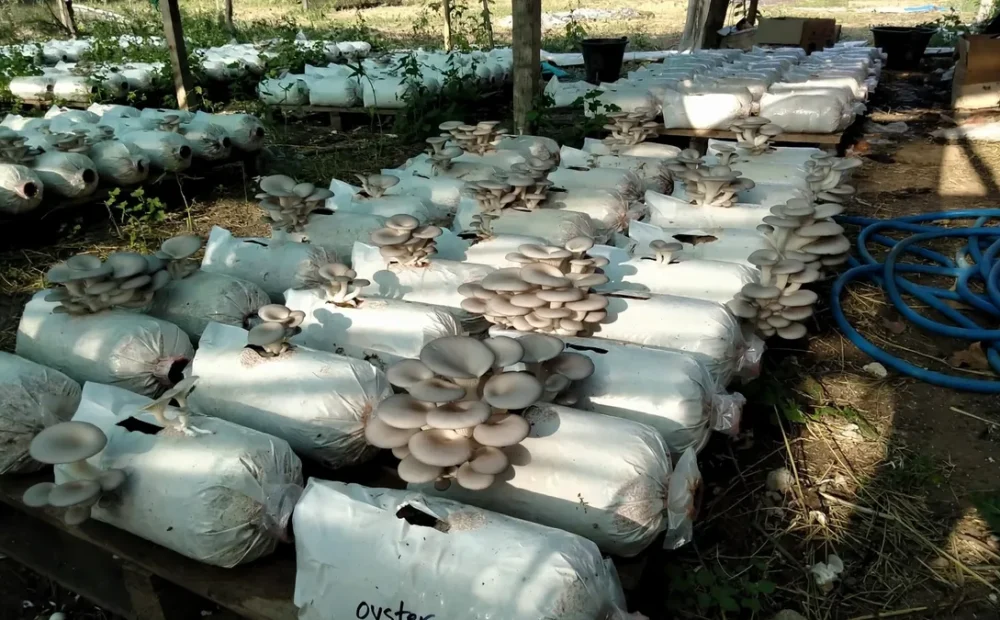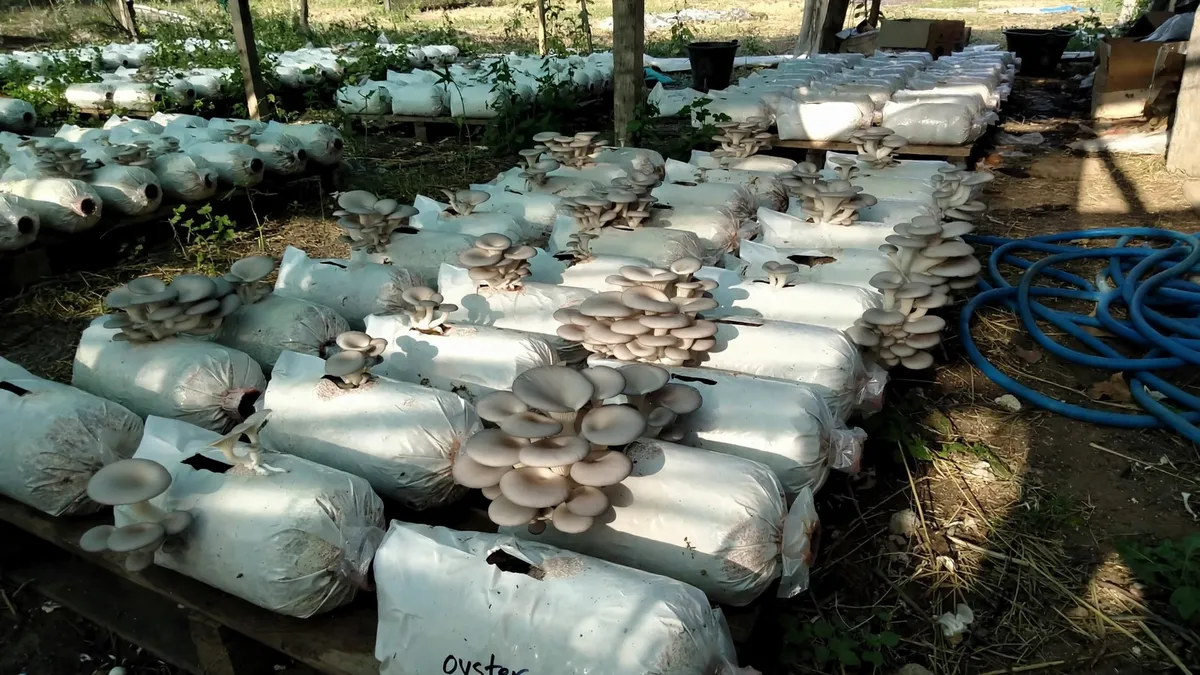
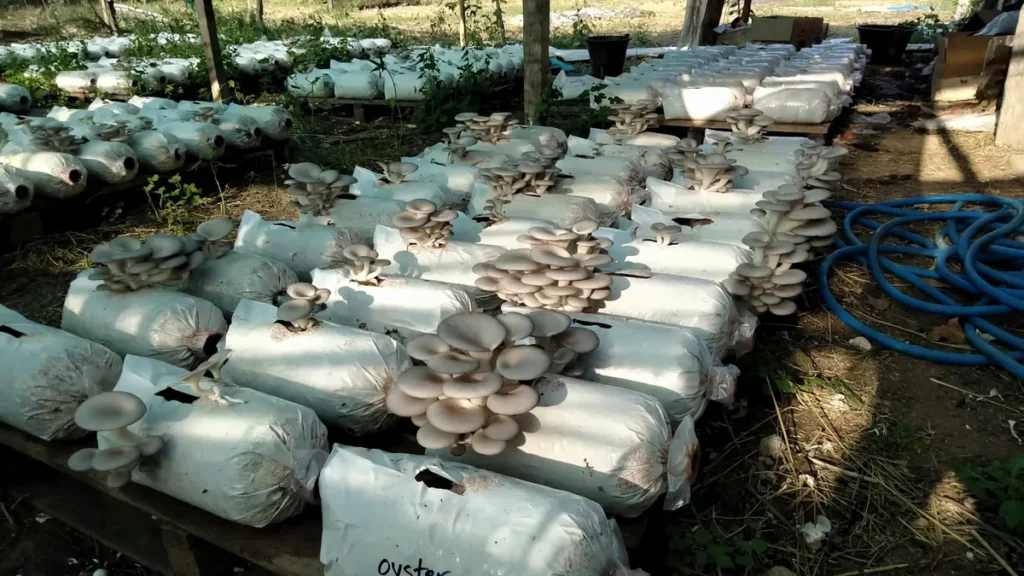
Oyster mushrooms grow fast, fruit in flushes, and taste mild enough to carry butter, garlic, or a smoky grill without losing their own character. That speed is what makes a farm stay around them feel different from a slow orchard visit. You arrive while bags are fruiting, you watch a new flush push out overnight, and by the next morning the same mushrooms are in the pan at breakfast. The whole cycle fits inside a weekend, which is rare for a farm holiday.
A good oyster mushroom retreat is not a restaurant with a field attached. It is a working grow room, a damp cellar or a converted barn where straw bags hang in rows, humidity hangs in the air, and someone who tends the crop every day walks you through it. The best stays keep the groups small, the picking hands-on, and the cooking honest, so you leave knowing how to spot a fresh cluster, how to store it, and how to cook it without turning it rubbery.
Below are nine farm stays worth considering in 2027, from a Loire straw-bale barn to a canal-side grow house in Amsterdam.
Key takeaways
- Oyster mushrooms fruit in flushes over a few days, so a two- or three-night stay usually catches a harvest and a cooking session.
- Look for stays that grow on straw or hardwood, keep the grow room cool and humid, and let guests pick with the growers, not just watch.
- Fresh oyster mushrooms should feel firm and dry, with pale, unbroken caps; avoid clusters that are slimy, dark-spotted, or smelling sour.
- Book the kitchen session as well as the room, because the cooking is where the difference between a good cluster and a great one shows.
- Gluten is not in the mushroom itself, but shared farm kitchens, sauces, and battered dishes can carry it, so ask about cross-contact before you eat.
What an oyster mushroom retreat actually is
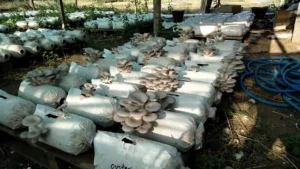
An oyster mushroom farm is built around bags or logs, not fields. Pasteurised straw, packed into bags and inoculated with spawn, hangs in a dark, humid room until white mycelium threads through it. Then the bags are moved to a fruiting room, slits are cut, and pale, fan-shaped caps push out in clusters over several days. A grower checks temperature, fresh air, and moisture several times a day, because a few dry hours can stall a flush.
On a retreat, you stay on or beside that farm for two or three nights. Mornings usually start in the fruiting room, learning to twist a cluster free without tearing the bag, and afternoons move to the kitchen, where the morning’s pick becomes soup, a stir-fry, or a grilled plate. Evenings are quieter, often a walk, a shared table, and a talk about how the farm manages its straw, its spent bags, and its compost.
The stays in this list all grow Pleurotus ostreatus, the pale oyster mushroom, and most also grow a second variety, such as the pink or the king oyster, for contrast. They keep it distinct from shiitake, which grows on logs and tastes woodier, and from porcini, which is foraged rather than farmed and rarely appears on a grow farm at all. If a stay cannot tell you which species it grows, that is a sign to look elsewhere, and our guide to salsify farm retreats shows the same habit of naming the crop plainly before anything else.
How we picked these nine stays
We looked first at the growing. A serious oyster mushroom farm keeps its fruiting room between about 15 and 20 degrees, holds humidity high without soaking the floor, and harvests daily so caps never go limp. We favoured farms that grow on straw or hardwood, that compost their spent bags, and that can say how many flushes each bag gives, usually two or three, before it is retired.
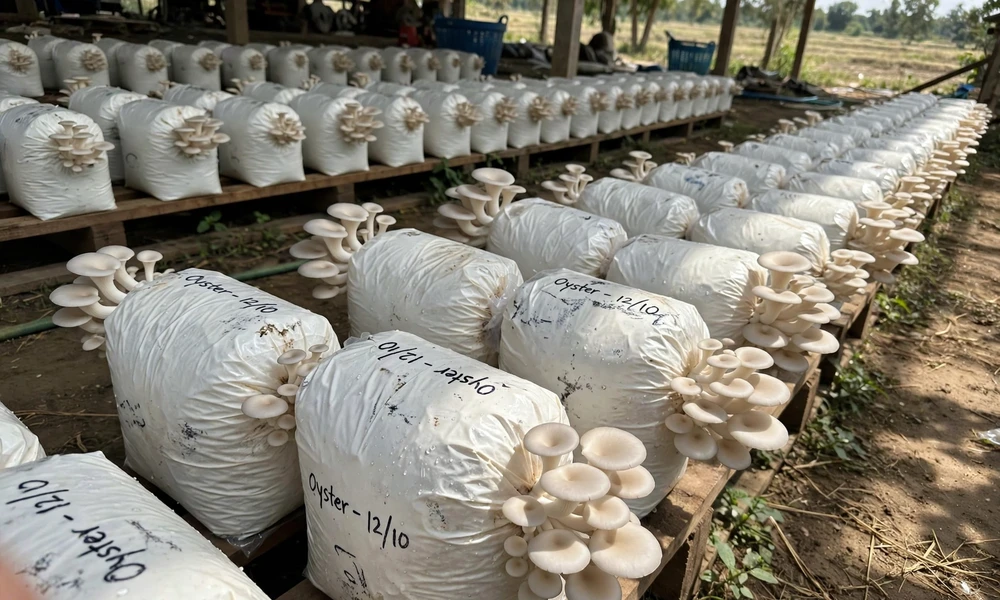
We looked next at the stay itself. Rooms should be clean, warm, and quiet, with a real bed and a window that opens, and the kitchen should cook what the farm grows, not buy it in. Price matters, but only after those two are settled. A cheap room next to a neglected grow room is not a bargain, and a grand room with a tired kitchen is not a retreat. Every stay below was weighed on growing, kitchen, and rooms, in that order.
The 9 best oyster mushroom farm retreats of 2027
Straw Bale Rooms on the Loire, Paris
What we like: A converted barn outside Paris where straw bags hang in long, tidy rows, the fruiting room stays cool and damp, and the morning picking session is led by the grower herself. What to consider: The barn is a twenty-minute walk from the nearest village, and the rooms are simple, with shared bathrooms on the upper floor. Best For: First-time pickers who want a gentle introduction. Style: Rustic barn rooms with wood beams and linen bedding. Price Range: $72–$108 per night. Standout Feature: A dawn flush walk, where you watch new caps open before breakfast.
Canal Grow House, Amsterdam
What we like: A canal-side grow house that fruits oyster mushrooms on coffee grounds and straw, with a bright, modern kitchen and a chef who builds the whole evening menu around the day’s pick. What to consider: The grow rooms are compact, so picking sessions run in small groups and book out early. Best For: Food lovers who want the cooking as much as the growing. Style: Light, modern rooms above the grow house, with canal views. Price Range: $118–$176 per night. Standout Feature: A tasting menu that pairs each flush with a different cooking method.
Cellar Rooms in the Rhône Hills, Lyon
What we like: A stone cellar farm in the Rhône hills where the fruiting room holds a steady, cool temperature all year, and the rooms are quiet, stone-walled, and warm in winter. What to consider: The cellar stairs are steep, and the farm is a drive from Lyon, not a walk. Best For: Travellers who want a slow, cool-climate stay. Style: Stone cellar rooms with thick walls and soft lighting. Price Range: $86–$129 per night. Standout Feature: Year-round fruiting, so winter visits still catch a harvest.
Glasshouse Beds by the Spree, Berlin
What we like: A glasshouse farm on the edge of Berlin where oyster mushrooms grow on straw beds in neat rows, with a light, airy guesthouse and a communal kitchen that runs a daily mushroom lunch. What to consider: The glasshouse warms up in summer, so flushes can be smaller in July and August. Best For: Summer visitors who like bright, open spaces. Style: Airy glasshouse rooms with plants and pale wood. Price Range: $79–$117 per night. Standout Feature: A shared lunch table where guests and growers eat the same dish.
Danube Straw Barns, Vienna
What we like: A Danube-side barn farm with a long history of straw-bag growing, generous rooms, and a kitchen that roasts oyster mushrooms with root vegetables from its own garden. What to consider: The farm is popular with school groups in spring, so weekends can be busy. Best For: Parents and children travelling together for a weekend. Style: Wide, calm rooms with garden views and a large dining hall. Price Range: $94–$141 per night. Standout Feature: A garden roast dinner built around the farm’s own vegetables and mushrooms.
Brabant Grow Rooms, Brussels
What we like: A Brabant grow farm with a tidy, well-run fruiting hall, a small library of mushroom books, and a host who gives a clear, patient tour of the whole process from spawn to compost. What to consider: The rooms are compact, and the farm sits on a busy road, so light sleepers should ask for a back room. Best For: Curious beginners who like to ask questions. Style: Compact, tidy rooms with a shared reading room. Price Range: $68–$102 per night. Standout Feature: A slow, full tour that follows one bag from spawn to spent compost.
Polder Mushroom House, Amsterdam
What we like: A polder farmhouse where oyster mushrooms fruit in a converted dairy, the rooms are warm and simple, and the kitchen serves a mushroom soup that regulars come back for. What to consider: The polder is flat and windy, and the farm is best reached by bike or car. Best For: Cyclists and quiet-seekers. Style: Simple farmhouse rooms with a wood stove and a shared kitchen. Price Range: $74–$111 per night. Standout Feature: A slow-cooked mushroom soup made from the morning’s pick.
Kent Chalk Cellars, London
What we like: A Kent chalk cellar farm within reach of London, with a cool, even fruiting room, comfortable rooms, and a kitchen that pickles and ferments surplus mushrooms alongside the fresh dishes. What to consider: The cellar is cool year-round, so bring a layer even in summer. Best For: Weekend visitors from London who want a short trip. Style: Comfortable country rooms with a chalk-cellar tasting area. Price Range: $103–$158 per night. Standout Feature: A pickling and fermenting session using the farm’s surplus flushes.
Lothian Straw Lofts, Edinburgh
What we like: A Lothian straw-loft farm where oyster mushrooms grow in a draughty old barn that the growers have tuned with fans and misters, and the rooms are warm, high-ceilinged, and quiet. What to consider: The barn is draughty, so the fruiting room is cooler than most, and flushes can be slower in winter. Best For: Travellers who enjoy old buildings and slow mornings. Style: High-ceilinged loft rooms with wool blankets and a shared hearth. Price Range: $128–$192 per night. Standout Feature: A misting demonstration that shows how humidity shapes a flush.
Oyster mushrooms, plainly explained
The oyster mushroom, Pleurotus ostreatus, is a pale, fan-shaped mushroom that grows in overlapping clusters. It is named for its shell-like shape, not for any taste of the sea. Its flavour is mild and slightly sweet, its texture is soft when cooked gently and firm when grilled, and it takes on the flavour of whatever it is cooked with, which is why it appears in so many stir-fries, soups, and roasts.
It grows on straw, hardwood, or coffee grounds, and it fruits in flushes. The first flush is usually the biggest, the second smaller, and the third smaller still, and then the bag is spent. A grower cuts slits in the bag, keeps the room humid, and harvests each cluster by twisting it free at the base. The whole cycle, from inoculated bag to spent compost, takes a few weeks, which is why a farm can show you every stage in a single visit.
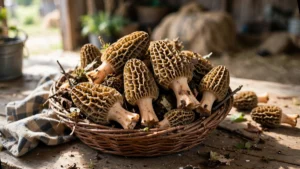
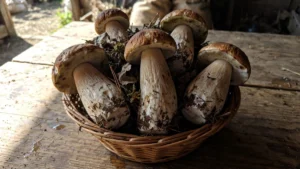
It is easy to confuse oyster mushrooms with other fungi, so keep the distinctions clear. Shiitake grows on logs, has a thicker cap and a woodier, more savoury taste, and takes months to fruit. Porcini is a wild, foraged mushroom with a thick stem and a nutty taste, and it is not farmed in bags. Oyster mushrooms are the fast, forgiving crop, and that is exactly why they suit a farm stay. Our roundup of scorzonera farm retreats follows the same approach of naming the crop and its lookalikes before recommending a stay.
The caveats that matter
Oyster mushrooms are a safe, everyday food when they are fresh and cooked, but a few cautions still matter. Never eat wild mushrooms unless an expert has identified them, because many pale fungi look alike and some are poisonous. On a farm, eat only what the growers pick with you, and ask how the crop was grown if you have any doubt. People with a mushroom allergy should avoid the picking room as well as the plate, because spores in the air can trigger a reaction.
| Detail | What is known |
|---|---|
| Species on these farms | Pleurotus ostreatus, pale oyster mushroom, grown on straw or hardwood |
| How it fruits | In flushes over several days; first flush is usually the largest |
| Best time to visit | Year-round in cellars; spring and autumn are strongest in glasshouses |
| How to spot a fresh cluster | Firm, dry caps with pale, unbroken edges and a mild, fresh smell |
| What to avoid | Slimy, dark-spotted, or sour-smelling clusters, and any wild mushroom you cannot name |
| How to cook it | Dry pan first, then butter and garlic; avoid crowding the pan or it steams |
| Who should take care | Anyone with a mushroom allergy, and anyone eating wild fungi without an expert |
| Gluten note | The mushroom is naturally gluten-free; shared kitchens, sauces, and batters can carry gluten |
Cooking matters as much as picking. Oyster mushrooms release water as they cook, so a crowded pan turns them soggy. A hot, dry pan, a single layer, and a little patience give you browned edges and a firm bite.
Checklist: booking an oyster mushroom stay honestly
Use these checks before you book, and again when you arrive.
- Ask which species the farm grows, and whether the picking session is with the growers or just a viewing.
- Check the fruiting room: it should be cool, humid, and clean, with bags at different stages of growth.
- Confirm the kitchen cooks the farm’s own mushrooms, and ask about gluten cross-contact if it matters to you.
- Look at the room: a real bed, a window that opens, and quiet after dark matter more than decoration.
- Ask what happens if a flush is small on your dates, and whether the kitchen has a backup plan.
- Pack a layer for cellar farms, and a small bag for any mushrooms you are allowed to take home.
Frequently asked questions
When is the best time to visit an oyster mushroom farm?
Cellar farms fruit all year, so any month works. Glasshouse farms are strongest in spring and autumn, when the temperature is naturally cool, and slower in high summer. Ask the farm what is fruiting on your dates before you book, because a flush is a matter of days, not weeks.
Can beginners pick oyster mushrooms themselves?
Yes, and that is the point of most of these stays. A grower shows you how to twist a cluster free at the base without tearing the bag, and you pick alongside them. You do not need any experience, only clean hands and a willingness to follow the grower’s lead.
How do I tell a fresh oyster mushroom from a tired one?
Fresh caps feel firm and dry, with pale, unbroken edges and a mild, fresh smell. Tired clusters feel slimy, show dark spots, or smell sour, and should be left on the bag. If you are unsure, ask the grower, because a fresh cluster is obvious once you have held one.
Are oyster mushrooms the same as shiitake?
No. Oyster mushrooms are pale, fan-shaped, fast-growing, and mild, while shiitake grows on logs, has a thicker cap, and tastes woodier and more savoury. They are different species, grown differently, and cooked differently, so a farm that grows one is not automatically a farm that grows the other.
Can I eat oyster mushrooms raw?
It is better to cook them. Raw oyster mushrooms are tough and can upset the stomach, while a short cook in a hot pan makes them tender and brings out their flavour. Every kitchen on this list cooks the morning’s pick, so you will not need to eat them raw.
What should I ask about gluten at a farm kitchen?
Ask whether the kitchen uses shared pans, shared fryers, or battered dishes, and whether sauces are made with soy sauce or flour. The mushroom itself has no gluten, but a shared farm kitchen can carry it, so a direct question before the meal is the safest approach. Our guide to celeriac farm retreats covers the same question for root vegetables, and the answer is the same: ask early, ask plainly.
The bottom line
The best oyster mushroom farm retreat in 2027 is the one where the growing is real, the kitchen cooks what was picked that morning, and the rooms let you sleep well after a day in a humid grow room. The Loire barn is the gentlest start, the Amsterdam grow house is the strongest kitchen, and the Kent cellar is the easiest weekend trip, but any of the nine will teach you how a mushroom goes from a straw bag to a plate.
Book two or three nights, ask which species the farm grows, and judge the stay on its picking and its cooking, not on its decoration. If the caps are firm, the pan is hot, and the grower is happy to answer questions, you have found the right farm.