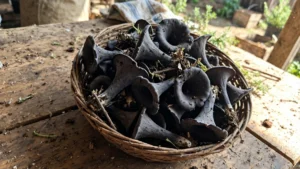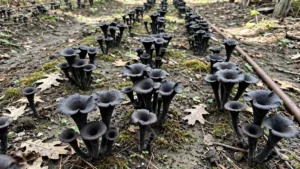
A black trumpet farm escape is a slow kind of holiday: no single moment to chase, no dawn flush to beat, no basket that fills in an hour. The mushroom hides in the leaf litter, dark against dark, and a morning in the woods can pass with only a handful of trumpets in the basket. That slowness is the point. You walk, you look down, you learn the shape of the funnel and the smooth grey underside, and by the third morning you are spotting them before the guide does.
Planning one takes more care than booking a hotel, because a black trumpet farm is a working place, not a resort. The woods fruit in waves through the autumn, the rooms are few, and the drying room runs on the same days the guide is out walking. A stay booked without checking the fruiting weeks can leave you in a pretty farmhouse with nothing to hunt, which is why the nine steps below start with the woods, not the room.
This guide walks through the nine steps that matter, from choosing the season to packing a bag of dried trumpet for home. Follow them in order, and the trip will fit together: the woods, the drying, the cooking and the journey home.
Key takeaways
- A black trumpet farm escape is a short stay on a farm with managed beech and oak woods, where you hunt Craterellus cornucopioides with a guide and dry what you find.
- It differs from a shiitake stay or a cordyceps visit. Shiitake grows on logs in rows, and cordyceps grows on grain trays indoors, while black trumpet only fruits wild in the woods.
- An escape suits travellers who like quiet mornings, muddy walks and long lunches, not anyone looking for nightlife, a pool or a spa.
- Start with the season, then the farm, then the journey. Autumn woods fruit best in September to November, when the air is damp and the leaf litter is deep.
- Black trumpet itself is naturally gluten-free, but farm kitchens cook with bread, pasta and sauces, so tell the farm about your diet at booking.
What a black trumpet farm escape actually is
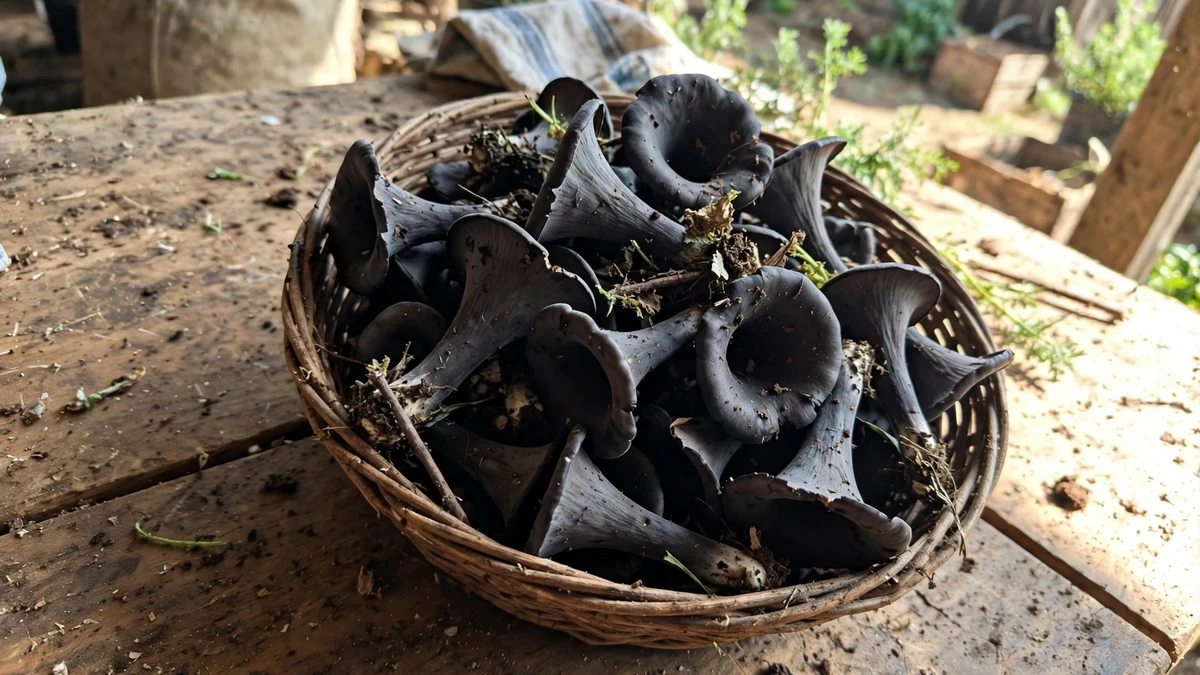
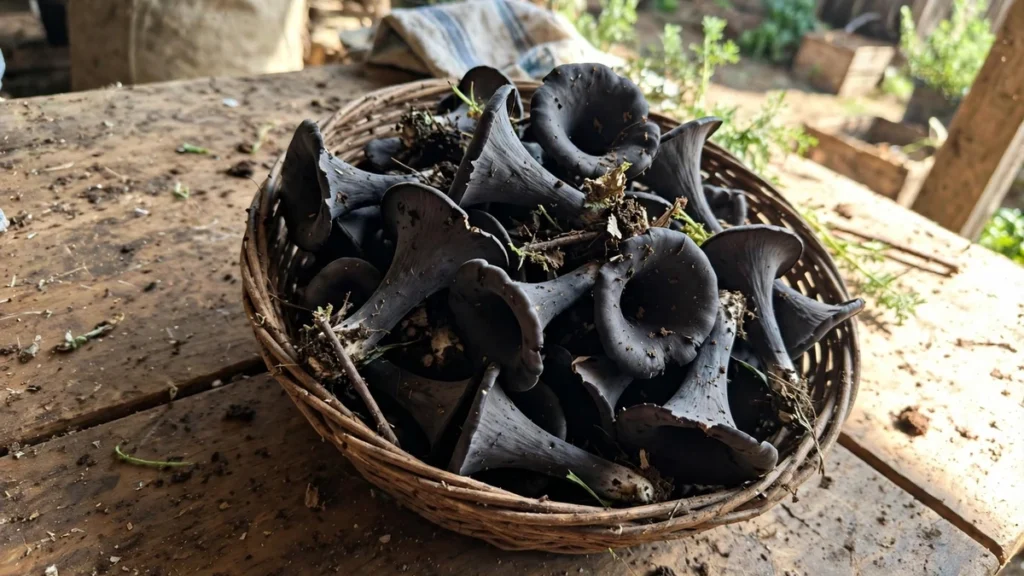
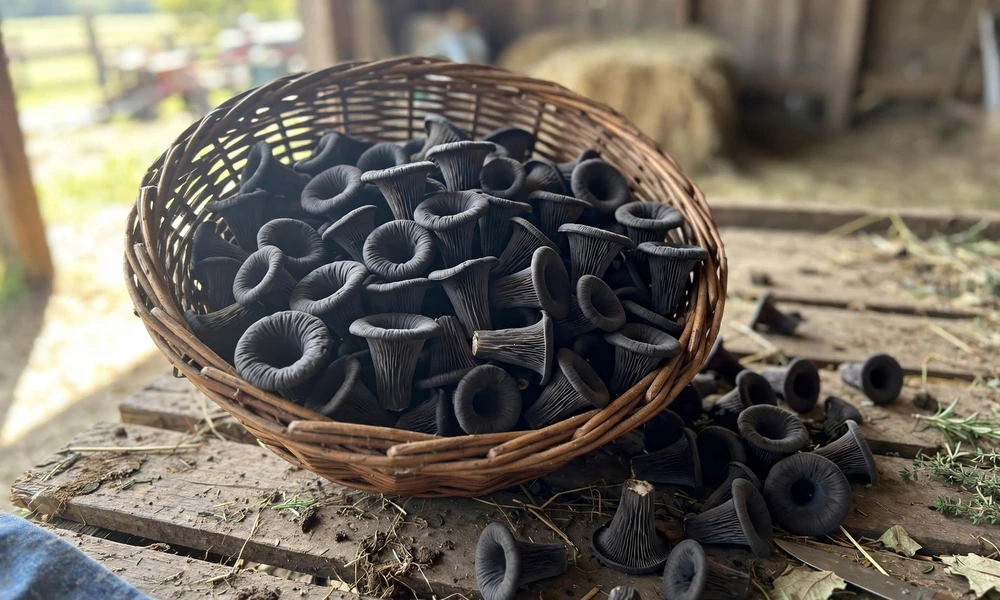
A black trumpet farm escape is a short stay on a farm with managed beech and oak woods, where the mushroom is hunted rather than harvested. Craterellus cornucopioides, dark grey-black and funnel-shaped, grows wild on the woodland floor in the autumn, and it cannot be grown in rows or bags. The farm keeps the woods, thins the trees, and walks them with guests, and the hunt is the centre of the stay.
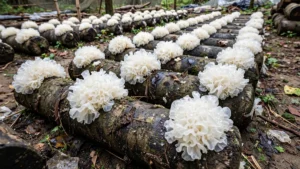
It differs from a shiitake stay or a cordyceps visit. Shiitake is a brown-capped mushroom with gills, grown on oak logs in neat rows, and cordyceps is an orange finger grown on grain trays in a dark room. Black trumpet has no gills, no stem worth slicing, and no farm building at all: it fruits where it wants, in the leaf litter, and the guide’s knowledge is what finds it. The stay is quieter and muddier than either, and the reward is a sauce, not a stir-fry.
A typical escape runs two or three nights. The first morning is a guided walk through the woods, the afternoon is the drying room, and the evening is the kitchen, where the day’s pick is simmered into a dark sauce for pasta or risotto. Our guide to planning a cordyceps farm escape follows a different rhythm, built around trays in a warm growing room, but the black trumpet trip is outdoors from start to finish, and the woods set the pace.
How to plan your black trumpet escape in nine steps
Plan in the order the steps run: season first, then the farm, then the journey, then the packing. Each step below has one thing to do and one thing to avoid.
The steps are written for a first visit. If you have hunted wild mushrooms before, you will know some of this already, but the farm’s woods and its drying room still have their own rules, and the guide is the person who knows them. Our turkey tail escape guide uses the same nine-step shape, and the same advice holds here: ask the farm, not the internet, when the woods are fruiting.
The 9 steps to a black trumpet farm escape
Step 1: Ask which woods are fruiting before you choose dates
What to do: Email the farm and ask which weeks the woods are fruiting, and whether the beech or the oak stands are stronger that year. What to avoid: Booking a date first and hoping the woods cooperate. Best For: Travellers booking more than a month ahead. Time Needed: One email, and a day for the reply. Standout Tip: Fruiting runs in waves, so a week either side can change the whole trip.
The season decides what you will find: a wood in the right week is full of dark funnels in the leaf litter, while a week later it can be bare. Black trumpet fruits after rain, in the damp weeks of autumn, and a dry spell can pause it entirely. The farm knows its woods, so let its answer set your dates.
Step 2: Choose a farm that walks its woods with a guide
What to do: Choose a farm that walks its own woods with a guide, and ask how long the morning walk lasts. What to avoid: A stay that serves black trumpet sauce but has no woods of its own. Best For: First-time hunters and anyone who wants to learn the identification. Time Needed: An hour of comparing farms. Standout Tip: The guide is the trip: a good one teaches you to spot a trumpet in the litter.
The two settings feel very different: a managed wood is quiet, damp and shaded, while a hotel dining room is not a farm at all. A farm that buys dried trumpet in and only cooks with it is a restaurant, not a retreat, and the walk is the part you will remember.
Step 3: Ask the farm to confirm the full price in writing
What to do: Email the farm: is the guided walk included, and does the meal use the day’s pick? What to avoid: Assuming the hunt, the drying and the cooking are all in the room price. Best For: Anyone on a fixed budget. Time Needed: One email, and a day for the reply. Standout Tip: The walk is the heart of the stay: it is where you learn the funnel, the smooth underside and the smell.
Some farms charge the walk separately, and some include it with the room. The price on the website is usually the room with breakfast, and the guided walk, the drying session and the cooking afternoon can be extras. Get the full figure in writing, so the trip costs what you expect it to cost.
Step 4: Stay three nights so the hunt and the cooking both fit
What to do: Book three nights, with the walk on the first full day and the cooking on the second. What to avoid: Trying to hunt, dry and cook in a single day. Best For: Travellers who want the full arc of the trip. Time Needed: Three nights, two full days. Standout Tip: The second day is when the drying pays off, and the sauce tastes of your own morning.
One night gives you a walk and a meal; three nights give you the woods, the drying room and the kitchen, with a morning to spare for the market town.
Step 5: Sort your travel before the autumn weekends fill
What to do: Check bus times, taxi cost and check-in hour for the last stretch. What to avoid: Booking a late flight into a station with no evening bus. Best For: Travellers with no car of their own. Time Needed: An afternoon of checking times. Standout Tip: Autumn weekends fill first, so book the train as soon as the farm confirms.
Many black trumpet farms sit at the end of a winding road, a bus ride and a walk from the nearest station, and a late arrival can cost you the first morning’s walk, which is often the best one.
Step 6: Pack boots, a warm layer and a basket for the woods
What to do: Pack sturdy boots, a rain jacket, and layers for cold mornings. What to avoid: Wearing smooth-soled shoes or white trainers into the woods. Best For: Anyone walking damp leaf litter. Time Needed: An evening of packing. Standout Tip: A shallow basket carries trumpets better than a bag, which crushes them.
The woods are muddy after rain and damp even when it has not rained; the leaf litter is kept moist on purpose. Boots with grip matter more than a good coat, and a basket keeps the funnels whole until they reach the drying racks.
Step 7: Find your first trumpet with the guide beside you
What to do: Walk slowly, look down, and let the guide point out the first few. What to avoid: Picking anything the guide has not checked. Best For: First-time hunters. Time Needed: A morning in the woods. Standout Tip: Once you have seen one trumpet in the litter, you will start seeing them everywhere.
Black trumpet hides in plain sight, dark against dark, and the eye needs training. The guide will show you the funnel shape, the smooth grey underside and the hollow stem, and then step back and let you find the next one. Never eat a wild mushroom without expert identification, and never pick without the guide beside you.
Step 8: Dry your pick, then cook it into a sauce
What to do: Take your basket to the drying room, then join the cooking session in the evening. What to avoid: Eating your pick raw or cooking it without the farm’s kitchen. Best For: Travellers who like to cook what they find. Time Needed: An afternoon for drying, an evening for cooking. Standout Tip: Dried trumpet keeps its smoky flavour for months, so the sauce is only the start.
The drying room is where the day’s pick turns into something that keeps. The trumpets are laid on racks or in a low drying room, and by evening some are simmered into a dark sauce for pasta or risotto. That sauce, made from mushrooms you found yourself, is the meal the trip is built around.
Step 9: Taste the sauce, then pack dried trumpet for home
What to do: Buy a bag of dried black trumpet from the farm shop or market, and pack it in checked luggage in a sealed bag. What to avoid: Packing fresh trumpets, which bruise and spoil on the journey. Best For: Anyone who wants to cook the trip again at home. Time Needed: Thirty minutes in the farm shop. Standout Tip: A small bag of dried trumpet makes a dozen sauces once soaked.
Dried black trumpet travels well: light, keeps for months, and a bag makes a dozen meals. The farm shop sells its own dried stock. Pack it sealed, and it will pass through customs as a dried food item.
When to go and where to start
Autumn is the best season for a black trumpet escape: damp air, regular rain, and woods fruiting in waves from September to November. The leaf litter is deep, the funnels are dark against it, and the farms run their walks most days. Spring can work in some woods, but the crop is thinner, so ask the farm first.
Three nights suits most travellers. One full day covers the hunt, the drying and the cooking, and a second leaves time for the market town and a slower walk. Book at least a month ahead for autumn, since small farms have few rooms and fruiting weeks fill early. Woodland farms in other parts of the series run the same way: our wood ear escape guide also starts with the season, and the advice holds here too.
The caveats that matter
Black trumpet is a safe and rewarding mushroom, but it has rules worth knowing before you eat a large amount. It is a wild fungus, so identification matters, and it must be cooked properly. Fresh trumpets need the guide’s check, and dried ones need a good soak before they go into a sauce. If you take blood-thinning medicine or have a mushroom allergy, ask your clinician before eating a large amount, and tell the farm when you book.
| Detail | What is known |
|---|---|
| What it is | Craterellus cornucopioides, a dark grey-black funnel-shaped mushroom with a smooth underside and no gills |
| Where it grows | Wild in autumn beech, oak and hornbeam woods, in managed woodland walked with a guide |
| Can it be eaten raw | No, black trumpet should always be cooked, and wild mushrooms need expert identification |
| Best-known uses | Dried black trumpet sauce, black trumpet risotto, black trumpet ground into powder for soups |
| Who should ask first | Anyone with a mushroom allergy, and anyone avoiding gluten |
| What to pack | A warm layer for the cool woods, closed shoes for damp ground, a basket or bag |
| How far ahead to book | Three to five weeks for the autumn season, two weeks outside it |
| What it is not | Not chanterelle, not porcini, not a farmed mushroom of any kind |
One more practical note: farm stays in this series are small, and autumn weekends fill first. If your dates cannot move, book early and ask which weeks the woods are fruiting, not just which rooms are free.
Checklist: before you book a black trumpet farm escape
Run through these checks before you book, and again before you pay in full.
- Check the farm keeps its own managed woodland and walks it with a guide.
- Check the guided walk, the drying session and the cooking are included in the price.
- Ask which weeks the woods are fruiting before you fix your dates.
- Ask whether the kitchen can cook gluten-free, and what it serves alongside the sauce.
- Pack sturdy boots, a rain jacket, layers for cold mornings, and a basket for your pick.
- Book three nights, so the hunt, the drying and the cooking all fit the trip.
Frequently asked questions
Do I need mushroom experience to visit a black trumpet farm?
No. The guide shows you how to spot a trumpet in the leaf litter, check the smooth underside, and pick it cleanly at the base. The work is gentle, and the guide stays beside you. You only need to walk slowly and look down.
Is the black trumpet sauce I cook safe to eat?
Yes, when the farm has identified the mushrooms and cooked them properly. Black trumpet is always cooked, never eaten raw, and the farm dries and simmers its own harvest. Never eat a wild mushroom you picked yourself without expert identification.
What sets black trumpet apart from chanterelle?
Chanterelle is golden, with blunt forked ridges under the cap and an apricot scent, and it is eaten fresh. Black trumpet is dark grey-black and funnel-shaped, with a smooth underside and no gills, and it is at its best dried and simmered into a sauce.
When is the best month for a black trumpet farm escape?
Autumn is the strongest season, roughly September to November, when the woods are damp and the trumpets are fruiting in waves. The woods fruit after rain, so ask which weeks are strongest before you book, and be ready to move your dates by a week.
Can children join a black trumpet farm escape?
Mostly yes, for older children. The woods are muddy and the hunt needs patience, but the search is usually what children enjoy most, because spotting a dark trumpet in the leaf litter feels like finding something hidden.
Does black trumpet contain gluten?
The mushroom itself contains no gluten. The risk sits in the kitchen: bread, pasta, dumplings and sauces may contain gluten, so ask what the farm can serve a gluten-free guest before you book.
The bottom line
A black trumpet farm escape is worth planning properly, and the plan is simple: pick the season, choose a wooded farm with a guide, and give the trip three nights. The woods do the rest, in the damp weeks of autumn, when the leaf litter is deep and the funnels are waiting to be found.
Do those nine steps, pack boots that can handle mud, and you will come home knowing how to spot a trumpet in the leaf litter, dry it, and cook it into a sauce. That is the honest reward of the trip, and it lasts longer than the weekend itself.