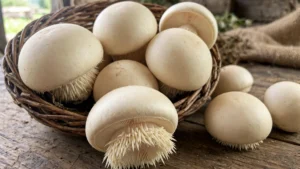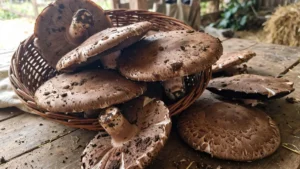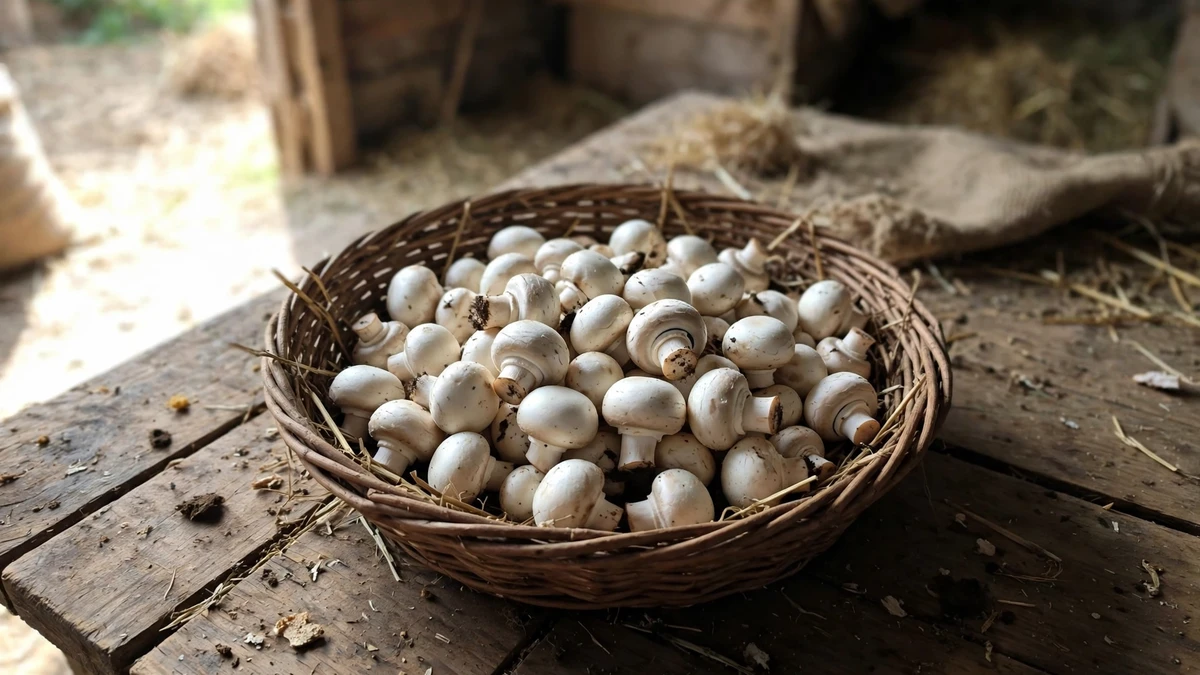
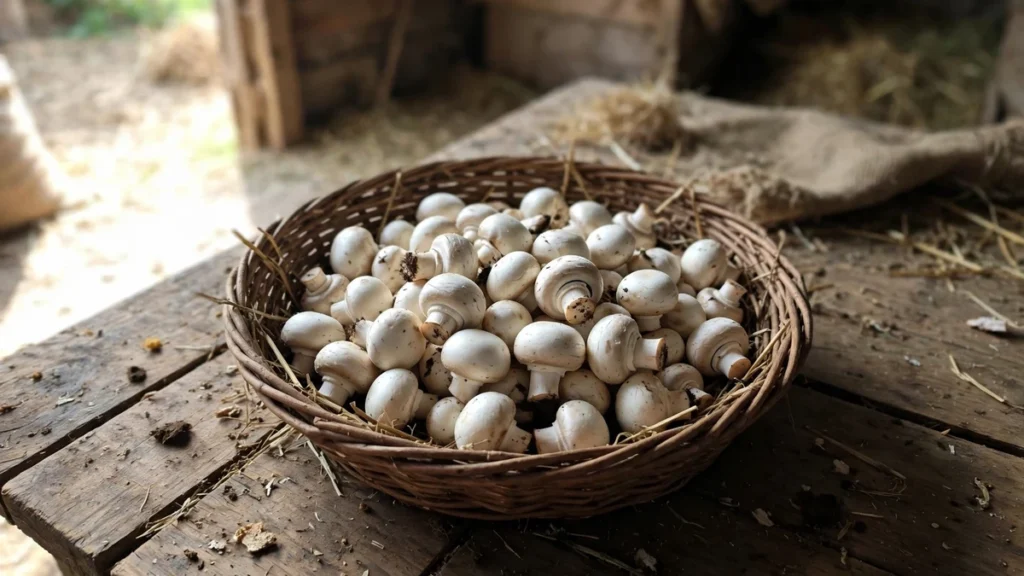
A white button farm escape is a slow kind of holiday: no single moment to chase, no dawn flush to beat, no basket that fills in an hour. The mushroom grows in the dark, in long compost beds, and the work is steady rather than dramatic. You walk a cool room, twist white caps free from the compost, trim the stems, and fill a basket one cap at a time. It is quiet, it is damp, and it is oddly satisfying.
Planning one takes more care than booking a hotel, because a white button farm is a working place, not a resort. The compost beds run in rows, the rooms are kept dark and cool, and the picking happens when the flush is ready, not when you arrive. A good stay puts you in the room with the grower, teaches you how to pick without damaging the bed, and cooks what you picked for lunch.
This guide walks through the nine steps that matter, from choosing the flush to packing a bag of dried white button for home. Follow them in order, and the trip will run itself.
Key takeaways
- A white button farm escape is a short stay on a farm growing white button, Agaricus bisporus, a small white mushroom grown on compost beds in dark rooms.
- It differs from a shiitake stay or a reishi visit. Shiitake is a brown-capped mushroom with gills grown on logs, and reishi is a woody fan dried for tea, while white button is a mild table mushroom picked from compost.
- An escape suits travellers who like quiet mornings, hands-on work and long lunches, not anyone looking for nightlife, a spa or a pool.
- Start with the flush, then the farm, then the journey. Indoor rooms fruit all year, when the air is damp and the beds are watered.
- White button itself is naturally gluten-free, but farm kitchens cook with bread, pasta and sauces, so tell the farm about your diet at booking.
What a white button farm escape actually is
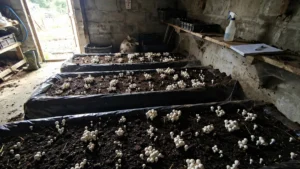
A white button farm escape is a stay of two or three nights on a farm that grows Agaricus bisporus in dark rooms on compost beds. You sleep in a farmhouse room, eat at the farm table, and spend your mornings in the grow rooms, picking white caps from long beds of pasteurised compost. The afternoons are for cooking, drying and walking the lanes. It is a working farm holiday, not a hotel break.
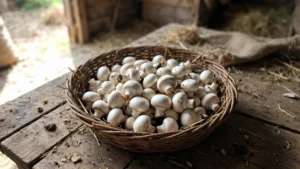
The mushroom itself is the everyday one: small, white, mild, with a closed cap and a short stem. It grows in flushes, a wave of caps every week or so, and the grower knows to the day when each bed will be ready. On a farm visit, you learn to spot a ripe cap, twist it free without tearing the bed, and trim the stem with a small knife. The work is gentle and the rooms are cool, so it suits most people, including older travellers and children.
What makes the escape different from a normal farm stay is the rhythm. The picking happens in the morning, when the rooms are coolest. The cooking happens at lunch, when the caps are still firm. The drying happens in the afternoon, when the kitchen is quiet. Our guide to planning a reishi farm escape follows a slower rhythm, because reishi is dried for tea, while white button is cooked fresh, and the day on a white button farm moves faster. By lunch the morning pick is already in the pan, which is the fastest reward of any farm crop in this series.
How to plan your white button escape in nine steps
Nine steps cover the whole trip, and none of them is hard. The order matters: the flush decides the dates, the farm decides the price, and the journey decides how much time you need. Get those three right and the rest is packing and cooking. The mushroom does the rest: it fruits when it fruits, and your job is to be there when it does.
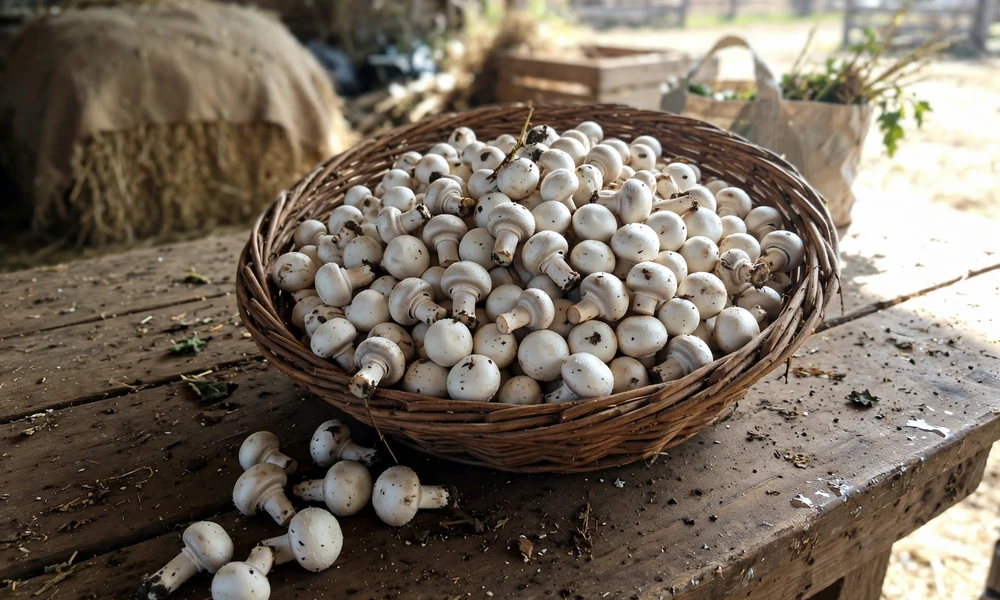
The steps below assume a stay of two nights, which is the right length for most people. One night is too short: the flush may not fall on your day, and the cooking session takes an afternoon. Three nights suits anyone who wants a market morning as well. Our cordyceps farm escape guide uses the same two-night shape, and it works because the mushroom, not the hotel, sets the pace.
The 9 steps to a white button farm escape
Step 1: Find out which weeks the flushes are running
What to do: Email the farm and ask which beds are flushing in your week, and whether guests can pick from them. What to avoid: Booking a date and assuming the beds will be ready. Best For: Anyone who wants to pick, not just watch. Time Needed: One email, a day or two before you book. Standout Tip: A flush runs for a few days, so a flexible date doubles your chances.
The flush decides what you will see: a bed in full flush is covered in white caps, while a bed between flushes is bare compost. Ask the farm to name the week, not just the month, and book inside it.
Step 2: Pick a farm that lets guests walk the beds
What to do: Pick a farm with beds you can walk between, and a grower who takes guests into the room. What to avoid: A farm that shows the mushroom only at the table. Best For: Travellers who want to understand the growing. Time Needed: Half an hour of reading farm pages. Standout Tip: Look for photos of the beds, not just the dining room.
The two settings feel very different: a compost-bed room is dark, cool and quiet, while a dining room tells you nothing about the crop. Choose the farm that opens the grow room door.
Step 3: Agree the full price before you send a deposit
What to do: Ask for the full price in writing: room, breakfast, picking session and cooking session, with no extras. What to avoid: Paying a deposit on a nightly rate that excludes the sessions. Best For: Anyone booking a small farm with few rooms. Time Needed: One email exchange. Standout Tip: A farm that lists the sessions in the price is a farm that runs them properly.
The price is the part most people get wrong: a cheap room with paid sessions costs more than a dearer room with everything included. Get it in writing before you pay.
Step 4: Book two nights so the picking and the cooking both fit
What to do: Book two nights, so the picking and the cooking both fit. What to avoid: Squeezing the trip into a single night. Best For: First-time farm visitors. Time Needed: No extra time, just a longer booking. Standout Tip: Two nights also covers a slow flush, which one night cannot.
Two nights suits most travellers. One full day covers the picking, the trimming and the cooking, and a second leaves time for a market morning or a walk.
Step 5: Plan the last stretch before the rooms fill
What to do: Check bus times, taxi cost and check-in hour for the last stretch. What to avoid: Booking a late flight into a farm an hour from the station. Best For: Anyone arriving without a car. Time Needed: Half an hour of timetable checking. Standout Tip: Ask the farm whether it collects guests from the station.
The last stretch is the slowest part of the trip: a farm an hour from the station can take three by bus. Sort it before you book the flights, not after.
Step 6: Dress for a cool, damp grow room and muddy lanes
What to do: Pack sturdy boots, a rain jacket, and layers for cold mornings. What to avoid: Wearing smooth-soled shoes or light clothes into a damp room. Best For: Anyone who will spend a morning in the grow rooms. Time Needed: Ten minutes of packing. Standout Tip: A thin waterproof layer matters more than a thick coat.
The room is cool and damp even when it has not rained, and the lanes are muddy after rain. Boots and a jacket make the morning comfortable instead of cold.
Step 7: Pick your first tray beside the grower
What to do: Pick beside the grower, twist each cap free gently, and trim the stem at the base. What to avoid: Pulling caps hard or cutting into the compost bed. Best For: First-time pickers. Time Needed: A morning, about two hours. Standout Tip: A gentle twist leaves the bed ready for the next flush.
The session is the heart of the stay: it is where you learn the twist, the trim, and the difference between a ripe cap and one that needs another day.
Step 8: Turn the afternoon into a cooking session
What to do: Take a small pan first, taste the butter, the garlic and the mushroom, then decide how much. What to avoid: Filling the pan before you know how the caps cook. Best For: Anyone who wants to cook what they picked. Time Needed: An afternoon, about three hours. Standout Tip: White button cooks fast, so keep the pan hot and the caps moving.
Butter and garlic is the dish most farms serve first, and its mild flavour stands out against warm bread and a green salad. Learn it once and you will cook it at home.
Step 9: Finish with a meal from your own basket, then pack the dried rest
What to do: Eat the meal you cooked, then buy a bag of dried white button from the farm shop and pack it in checked luggage in a sealed bag. What to avoid: Carrying fresh caps home in hand luggage. Best For: Anyone who wants to cook the mushroom again at home. Time Needed: An evening meal and ten minutes of packing. Standout Tip: Dried white button keeps for months and rehydrates in warm water.
Dried white button travels well: light, keeps for months, and a small bag makes a dozen meals once soaked. Fresh caps do not travel well, so eat them at the farm.
When to go and where to start
White button fruits all year indoors, so the month matters less than for a woodland mushroom. Spring and autumn give the best walk between farmhouse and grow room: damp air, regular rain, and lanes that are muddy but not frozen. Summer is warm in the rooms, and winter is cold on the lanes, but the beds keep flushing either way.
For a first trip, start near Paris or Lyon. The farms lie near cities with quick trains, the stays are short, and the food is easy. With only two nights and no wish for a long journey, France is the place to start. Our guide to planning a nameko farm escape starts in the same place, because the train network, not the mushroom, decides the easiest first trip.
Book at least a month ahead for spring and autumn weekends, since small farms have few rooms and flush weeks fill early. Grow rooms fruit all year, but the rooms still fill, so an early booking is worth more than a clever one.
The caveats that matter
White button is a safe and forgiving crop, but it has rules worth knowing before you eat a large amount. Fresh caps need proper cooking, and raw white button in large amounts is hard to digest. The farm will cook it for you, and the kitchen knows the mushroom well. If you take blood-thinning medicine or have a mushroom allergy, ask your clinician before eating a large amount of white button, and tell the farm when you book.
| Detail | What is known |
|---|---|
| What it is | Agaricus bisporus, a small white mushroom with a closed cap, a short stem and pink-brown gills |
| Where it grows | In dark rooms on pasteurised compost beds, under a casing layer of damp peat or chalky soil |
| Can it be eaten raw | Not in large amounts, white button must be cooked through, and only after a guide has checked the pick |
| Best-known dishes | White button fried in butter and garlic, white button pizza, white button pasta, white button soup |
| Who should ask first | Anyone with a mushroom allergy, and anyone avoiding gluten |
| What to pack | Sturdy boots, a rain jacket, layers for cold mornings, and a basket for your pick |
| How far ahead to book | A month ahead for spring and autumn weekends, two weeks outside them |
| What it is not | Not shiitake, not oyster mushroom, not the large brown cap sold as a portobello |
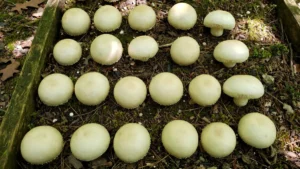
One more practical note: a wild mushroom that looks like a white button is not a white button. Never eat a wild mushroom without expert identification, and never pick from the woods around the farm unless the grower is beside you and has checked it.
Checklist: before you book a white button farm escape
Run through these checks before you book, and again before you pay in full.
- Check the farm grows white button on site, in compost beds, and lets guests walk the grow room.
- Check the flush weeks, not just room availability, before you set the dates.
- Agree the full price in writing, with picking and cooking sessions included, before you pay a deposit.
- Tell the farm about gluten and allergies, and ask what the kitchen serves with the mushroom.
- Pack sturdy boots, a rain jacket and layers, and a basket for your pick.
- Book two nights, so picking and cooking both fit in the trip.
Frequently asked questions
Do I need mushroom experience to visit a white button farm?
No. The grower shows you how to spot a ripe cap, twist it free and trim the stem. The work is gentle, the rooms are cool, and most guests have never picked a mushroom before.
Is the white button I pick safe to eat?
Yes, and a farm stay is a fine place to try it, because the kitchen cooks it well and the grower answers questions. The farm grows the mushroom on compost beds, not in the wild, and every cap is checked before it is cooked.
What sets white button apart from a portobello?
They are the same species at different ages. White button is picked young, with a closed pale cap, and is sliced into salads, pasta and pizza. Portobello is the same mushroom grown on into a large open brown cap, and is usually grilled whole. On a farm, the difference is the picking day.
When is the best month for a white button farm escape?
Every month works, because the grow rooms are indoors and the flushes keep coming all year. Spring and autumn are the pleasantest for the walk between the farmhouse and the grow rooms, so ask the farm which weeks are strongest before you book.
Can children join a white button farm escape?
Mostly yes, for older children. The grow room is dark and the floors are damp, and the knife work needs an adult beside them, but the picking session is simple and children usually enjoy twisting the white caps free.
Does white button contain gluten?
The mushroom itself contains no gluten. The risk is in the kitchen: bread, pasta and sauces may contain gluten, so ask the farm what it can serve a gluten-free guest before you book.
The bottom line
A white button farm escape is worth planning properly, and the plan is simple: pick the flush, choose a farm with beds you can walk between, and book two nights. The mushroom is the most ordinary one there is, and that is the point: you learn how the everyday mushroom is grown, picked and cooked, in a dark room full of white caps.
Do those nine steps, pack boots that can handle mud, and you will come home knowing how to pick, trim and cook white button, and how to spot the difference between a ripe cap and one that needs another day. That is a small, useful thing to bring home from a farm.