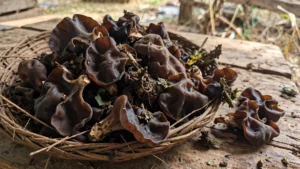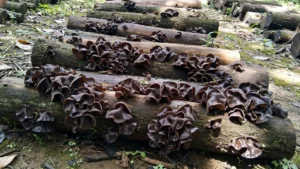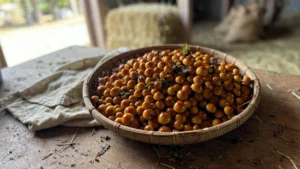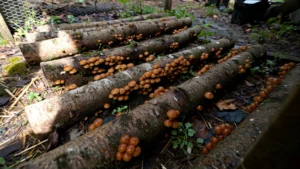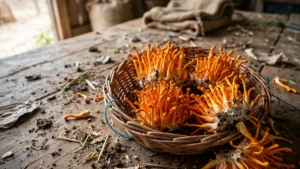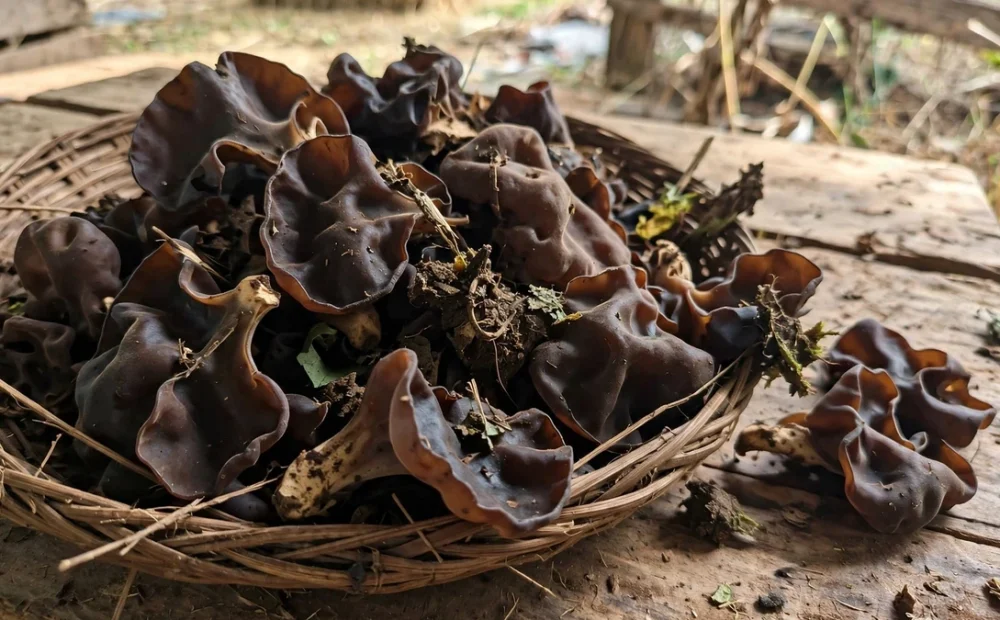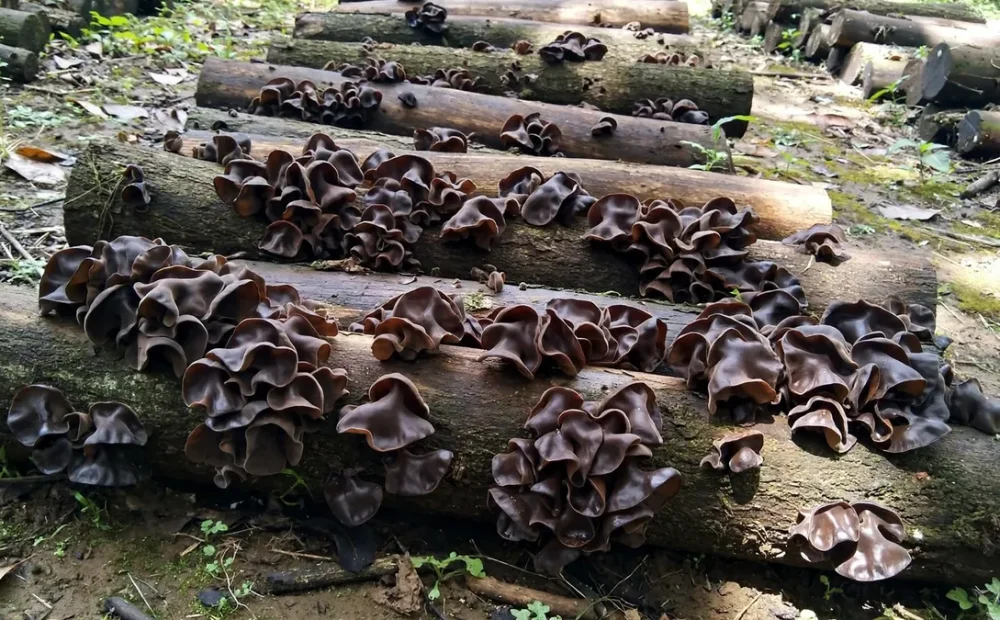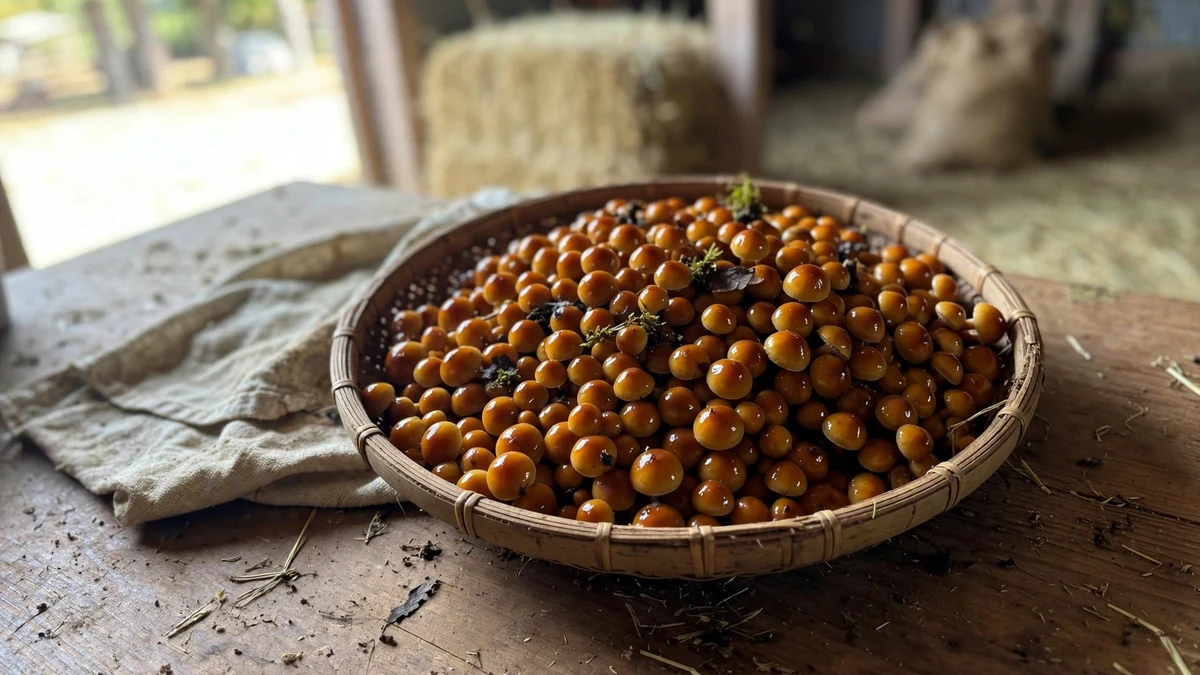
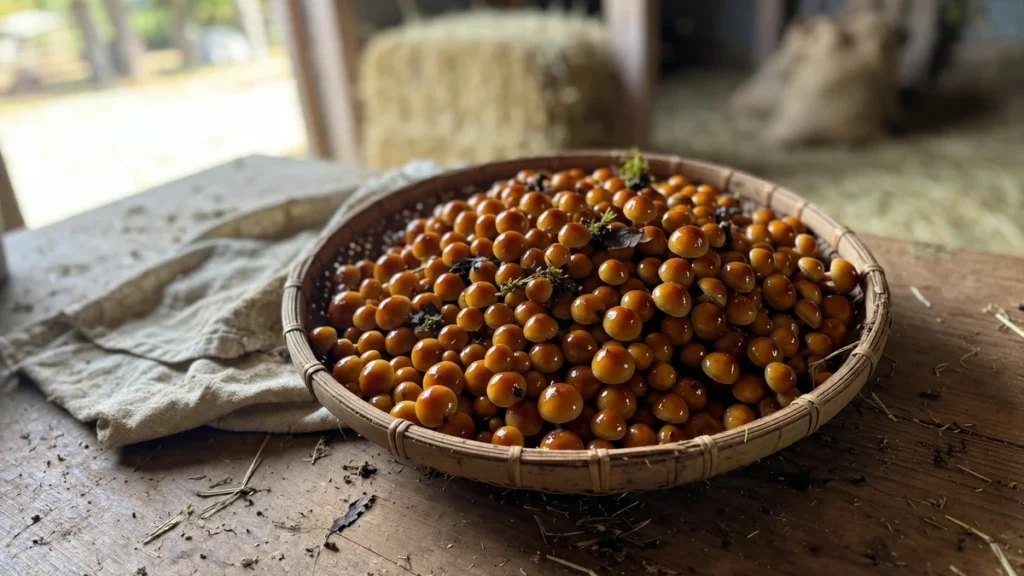
A nameko farm escape is a short, slow trip built around a small, slippery mushroom. You travel to a log farm in the cool of autumn, walk the shaded sheds where hardwood logs are stacked in rows, cut glossy amber clusters with a small knife, and eat them in miso soup the same evening. It is not a tour with a timetable. It is a farm that lets you stand beside the grower, learn what a ready flush looks like, and carry your own picking back to the kitchen.
The reason to plan it as an escape, rather than a day trip, is timing. Nameko fruits in flushes, and a flush lasts only a few days. Arrive too early and the caps are still buttons. Arrive too late and the jelly coat has dried and the caps have opened flat. Two or three nights gives you a margin: if the first morning is quiet, the second may bring a flush, and the farm can usually tell you which day to aim for if you ask early enough.
This guide walks through the nine steps that make the trip work, from finding the fruiting weeks to carrying your dried clusters home. It is written for a first visit, with no mushroom knowledge assumed.
Key takeaways
- A nameko farm escape is a two- or three-night stay at a log farm, built around picking the mushroom and cooking it the same day.
- Autumn is the season, and the flush lasts only a few days, so the fruiting week matters more than the room.
- Pick a farm that grows nameko on its own logs, lets guests into the sheds, and simmers the harvest fresh.
- Pack for cool, damp sheds: a warm layer, closed shoes, and a basket for your clusters.
- Nameko itself has no gluten, but miso soup often comes with noodles and soy sauce, so ask about gluten before you book.
What a nameko farm escape actually is
A nameko farm escape is a stay at a small farm that grows nameko mushrooms on hardwood logs. The farms are usually family-run, with a handful of guest rooms, a kitchen, and log sheds set back from the house. Guests are not spectators. You walk the sheds with the grower, learn how the logs are soaked and shaded, and cut the clusters yourself when a flush is ready. The harvest goes straight to the kitchen, where it is simmered into miso soup or a hot pot for supper.
The mushroom sets the pace of the trip. Nameko is Pholiota microspora, a small amber-brown fungus with a slippery jelly coat, grown in clusters on beech and oak logs. The logs are inoculated in spring, colonised over summer, and fruited in autumn, when cool air and a good soaking bring on the flush.
An escape usually runs two or three nights. One night is rarely enough, because a flush can shift by a day or two, and a single morning in the sheds may not line up with a fresh picking. Three nights gives you a second morning, a cooking session, and a slow afternoon to dry or pack what you gathered. Our guide to planning a maitake farm escape runs on the same logic, and it is the one that separates a real mushroom trip from a weekend in the country with a mushroom on the menu.
How to plan your nameko escape in nine steps
The nine steps below are the whole plan, in the order that works best. Start with the fruiting weeks, not the rooms: a free room in a quiet week is no use if the logs are not fruiting. Then choose the farm, fix the price in writing, and sort the journey while the season is still open. The steps after that are about packing, picking, cooking and carrying the harvest home.
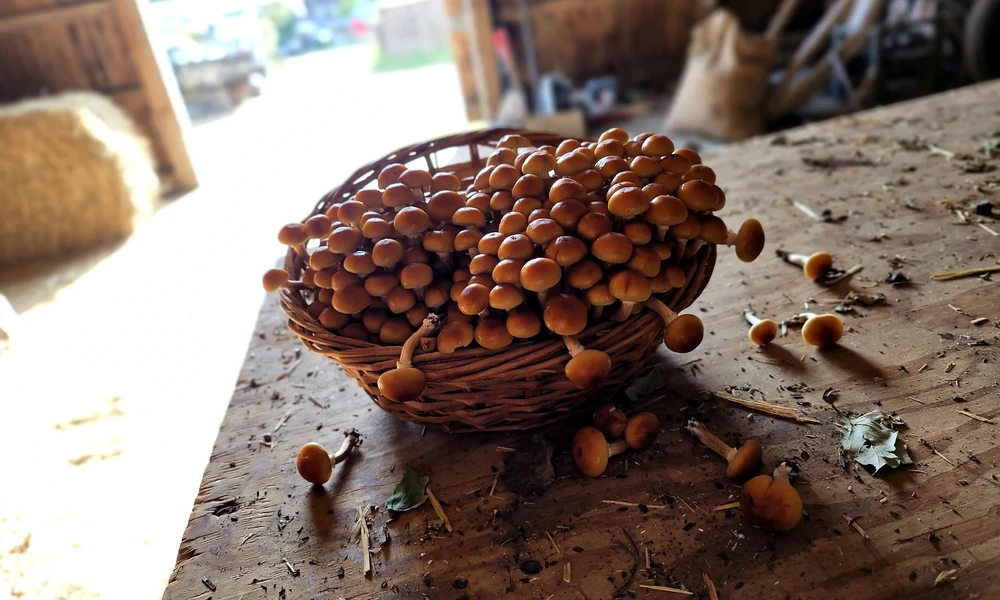
Ask which weeks the nameko is fruiting, what the kitchen cooks, and what the price covers. A farm that answers plainly is usually a farm that runs plainly, and that is what you want. Our enoki farm escape guide makes the same point: the messages before you book tell you more about a farm than its photographs do.
The 9 steps to a nameko farm escape
Step 1: Ask which weeks the amber clusters are fruiting
What to do: Write to two or three farms and ask which weeks the nameko is fruiting, not just which weeks rooms are free. Ask how the log sheds have been running, whether the early flush has started, and whether the farm expects a second flush. What to avoid: Do not fix a week in September and hope the season comes early; nameko fruits best when the sheds are cool, and a warm autumn means a late season. Best For: Travellers whose calendar has room to move. Time Needed: A week of messages exchanged with the farm before you book. Standout Tip: Ask which week gave the farm its glossiest baskets last year, not just when the season opens.
Step 2: Pick a farm whose logs you can walk between
What to do: Choose a farm that grows nameko on its own hardwood logs and lets guests walk the sheds with the grower. Ask whether guests can enter the sheds, and whether the picking is guided or left to you. What to avoid: Do not book a stay that buys its nameko in and only cooks it; the picking is the trip, and a farm without logs has no trip to offer. Best For: Travellers who want to learn the growing, not just eat the soup. Time Needed: An afternoon of reading farm pages and sending questions. Standout Tip: A farm that names its log wood, beech or oak, is usually a farm that tends its logs properly.
Step 3: Agree the full price in writing before paying a deposit
What to do: Ask for the full price in writing: the room, breakfast, the picking session, the cooking session, and any farm shop extras. Check whether the price is per person or per room, and whether the picking is included or charged by the basket. What to avoid: Do not pay a deposit on a price given only by phone, with no written breakdown; a clear farm puts the numbers in a message. Best For: Travellers booking their first farm stay. Time Needed: One message, answered within a few days. Standout Tip: Ask what a basket of picked nameko costs if you want to take extra home.
Step 4: Give the trip three nights, not one
What to do: Book two or three nights, with the middle night as your main picking day. That way a slow first morning still leaves a second morning, and the cooking session has room to breathe. What to avoid: Do not try to squeeze picking, cooking and travel into a single night; a flush that shifts by a day will leave you with nothing to cut. Best For: Travellers coming from far away. Time Needed: The booking itself takes minutes; the decision takes a little longer. Standout Tip: Ask the farm which night is best for the cooking session, and build your stay around it.
Step 5: Arrange the journey while the season is still open
What to do: Sort trains, buses and the last stretch to the farm before the autumn weekends fill. Ask whether the farm collects guests from the nearest station, and when the last bus runs. What to avoid: Do not leave the journey until the week of travel; rural buses thin out in autumn, and a missed connection can cost you the picking morning. Best For: Travellers without a car. Time Needed: An evening of timetables and one message to the farm. Standout Tip: Travel the day before your picking morning, so a late train cannot steal it.
Step 6: Pack for cool sheds, wet floors and a basket
What to do: Pack a warm layer for the log sheds, closed shoes with grip for damp floors, and a basket or sturdy bag for your clusters. Bring a small knife if the farm asks you to. What to avoid: Do not pack sandals or smooth soles; the shed floors are wet, and a slip in a log shed is a long way from help. Best For: Travellers who pack light but pack properly. Time Needed: Half an hour the night before you leave. Standout Tip: A spare cloth bag weighs nothing and saves a basket of caps from being crushed.
Step 7: Cut your first cluster with the grower at your side
What to do: Let the grower show you which clusters are ready: caps still rounded, jelly coat still glossy, stems still short. Cut at the base with a small knife, and leave the youngest buttons to grow. What to avoid: Do not pull clusters off the log by hand; pulling tears the bark and spoils the next flush. Best For: First-time pickers who want to learn properly. Time Needed: A morning in the sheds, unhurried. Standout Tip: Watch how the grower holds the knife, not just where they cut; the grip is the skill.
Step 8: Spend the afternoon simmering, drying and sampling
What to do: Take your clusters to the kitchen, simmer them briefly in miso soup or a hot pot, and taste them while they are fresh. If the farm dries mushrooms, spend an hour in the drying loft and learn how the caps are stored. What to avoid: Do not leave your picking in a warm room while you wander off; nameko softens fast, and a basket left in the sun is a basket wasted. Best For: Travellers who like to cook what they gather. Time Needed: An afternoon, soup to drying loft. Standout Tip: Taste the soup before the cook adds anything else, so you learn what nameko itself tastes like.
Step 9: Eat your harvest, then pack the rest for the journey home
What to do: Eat the evening meal the farm cooks from your morning picking, and pack what is left for the journey: dried nameko travels well, fresh clusters need a cool bag and a short trip. What to avoid: Do not carry fresh nameko for a long, hot journey home; it will soften and spoil, and the farm shop dried packs are the better souvenir. Best For: Travellers who want the trip to last past the last supper. Time Needed: The last evening and the morning after. Standout Tip: Buy the farm’s dried nameko for soup at home, and save the fresh clusters for the first night back.
When to go and where to start
Autumn is the season, roughly October to November, when the log sheds are cool and the flushes come regularly. Some farms fruit into early winter, and a few run indoor sheds year-round, but the autumn flush is the one worth travelling for: the caps are glossy, the clusters are full, and the kitchens are cooking with the harvest every day. Book three to five weeks ahead for October weekends, and two weeks ahead outside the peak.
For a first trip, start in Kyoto or Osaka. The farms lie close to cities with good trains, the stays are short, and the food is familiar. If you want a longer, quieter trip, Taipei and Hangzhou offer forested valleys and long walks, while Seoul and Busan suit travellers who like ridge farms and coastal air. Our guide to planning a king oyster farm escape uses the same regional logic: start where the journey is easy, and save the remote farms for a second trip.
The caveats that matter
Nameko is a mild, familiar edible mushroom, yet it is still a mushroom, so a few cautions apply. Never eat a wild mushroom without an expert checking it first, and never eat nameko raw. Farm-grown clusters are safe to eat once cooked, but raw nameko is slick and hard to digest, and the farm will cook it for you. If you have a mushroom allergy, tell the farm before you book, and ask what goes into its broths. Some farms also grow other fungi in the same sheds, so ask about cross-contact.
| Detail | What is known |
|---|---|
| What it is | Pholiota microspora, a small amber-brown mushroom with a slippery jelly coat, grown in clusters on logs |
| Where it grows | On hardwood logs, usually beech and oak, in shaded sheds and damp woodland clearings |
| Can it be eaten raw | No, nameko must be simmered or cooked through, and only after a guide has checked the pick |
| Best-known dishes | Miso soup with nameko, nameko hot pot, nameko soba, nameko with rice and herbs |
| Who should ask first | Anyone with a mushroom allergy, and anyone avoiding gluten |
| What to pack | A warm layer for the cool log shed, closed shoes for damp floors, a basket or bag |
| How far ahead to book | Three to five weeks for the autumn season, two weeks outside it |
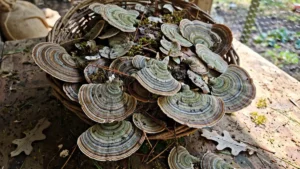
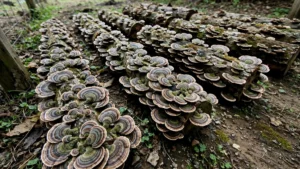
| What it is not | Not shiitake, not enoki, not oyster mushroom, despite the shared kitchen |
One more practical note: a flush can shift by a day or two with the weather. If your dates cannot move, ask the farm which week is most reliable, and be ready to swap a picking morning for a morning in the drying loft.
Checklist: before you book a nameko farm escape
Use these checks before you book, and again the week before you travel.
- Check the farm grows nameko on its own logs, and lets guests walk between the sheds.
- Check the kitchen simmers the harvest the day it is cut, not from frozen stock.
- Check which weeks the logs are fruiting, not just which rooms are free, before you settle on dates.
- Ask about gluten and allergies, and what the kitchen puts in its soups.
- Pack a warm layer for the log shed, closed shoes for wet floors, and a basket for your clusters.
- Book two or three nights, so a late flush and a cooking session both fit the trip.
Frequently asked questions
Do I need mushroom experience to visit a nameko farm?
No. The grower walks the sheds with you, shows you which clusters are ready, and teaches you how to cut them. Most guests on a nameko farm have never picked a mushroom before, and the farms are used to first-timers.
Is the nameko I pick safe to eat?
Yes, once the farm has checked it and cooked it. Nameko grown on the farm’s logs is a known edible mushroom, and the kitchen simmers it the same day. Never eat a wild mushroom you picked yourself without an expert checking it first.
What sets nameko apart from a shiitake mushroom?
Shiitake has a brown cap, a stem and gills, and a deep, savoury flavour, and it is usually fried or grilled. Nameko is smaller, amber-brown, coated in slippery jelly, and simmered briefly in soup, where it thickens the broth and tastes mild and nutty.
When is the best month for a nameko farm escape?
October to November, when the log sheds are cool and the flushes are regular. A few farms fruit into early winter, so ask the farm which weeks are strongest before you book.
Can children join a nameko farm escape?
Most farms welcome children, as long as they can walk the log sheds quietly and stay clear of the damp floors and the equipment. The picking session is usually the part children enjoy most, because the glossy caps are odd and fun to hold.
Does nameko contain gluten?
The mushroom itself contains no gluten. The risk sits in the kitchen: miso soup often comes with noodles, and soy sauce may contain wheat, so ask the farm what it can serve a gluten-free guest before you book.
The bottom line
The best nameko farm escape in 2027 is not the grandest or the most expensive. It is the one where the mushroom is grown on the farm, cut in the morning and simmered the same evening, with a clean room and a short walk between the two. For a first trip, a Kyoto or Osaka farm is the easiest to reach. For a longer stay, a Taipei or Hangzhou farm gives you the forest as well as the soup.
Plan two or three nights, ask about the fruiting weeks before you ask about the rooms, and judge the trip on the morning you cut your own glossy clusters and the evening you eat them in soup. That is the honest way to meet a mushroom that feels like nothing else, without turning the trip into a hotel stay that happens to serve mushrooms.