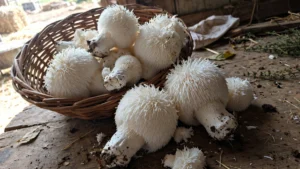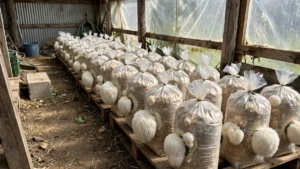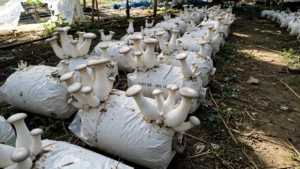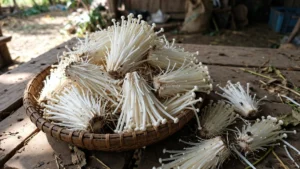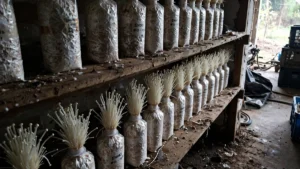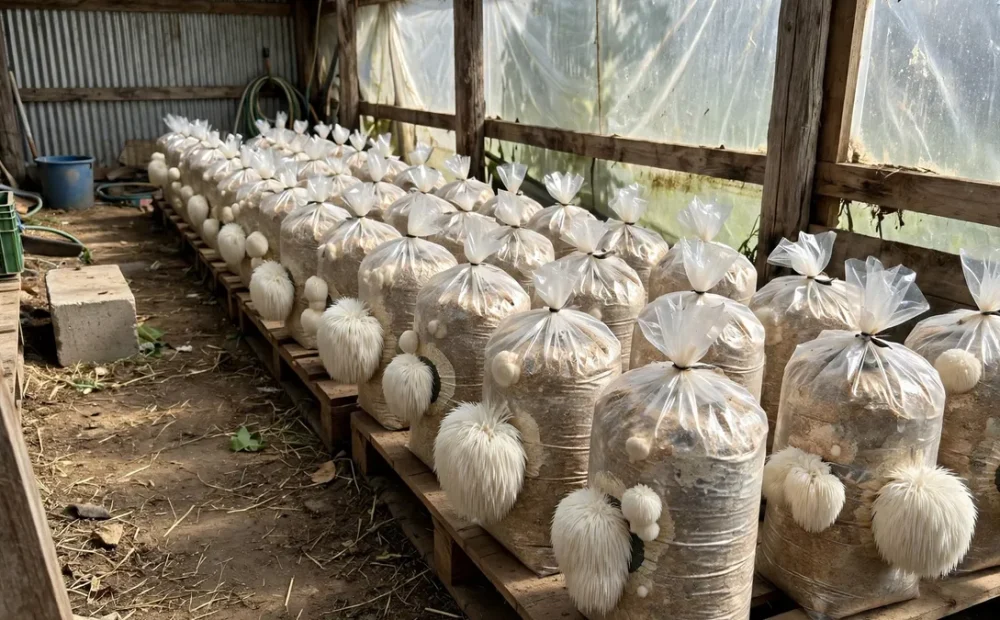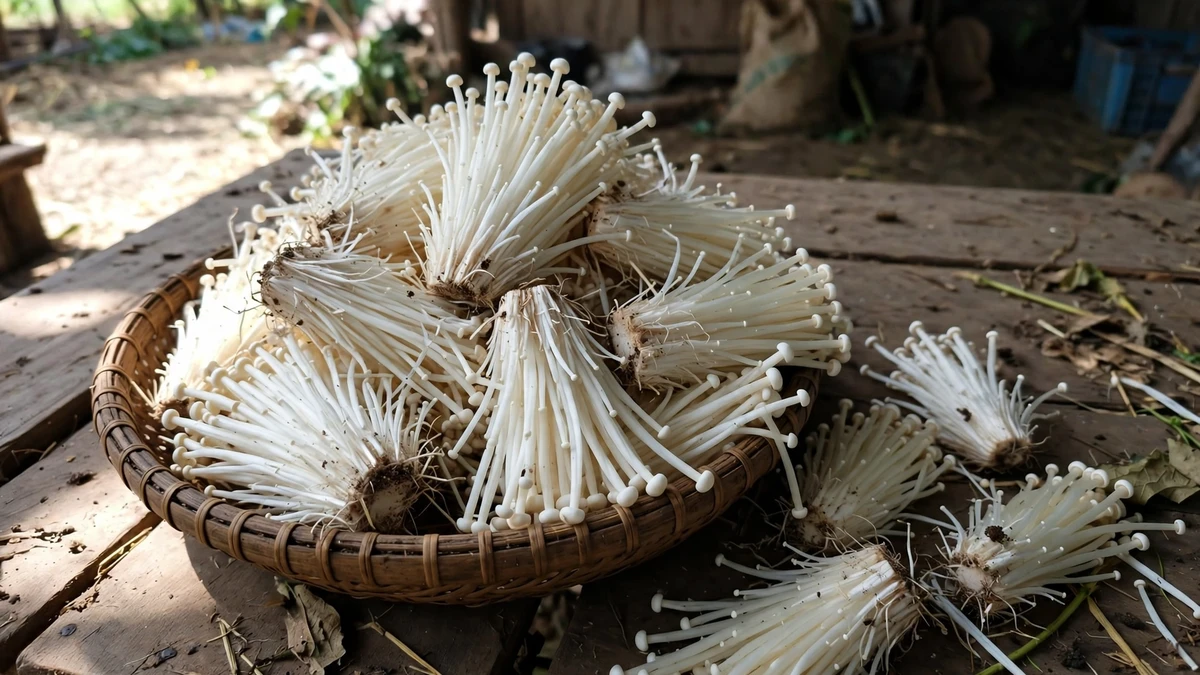
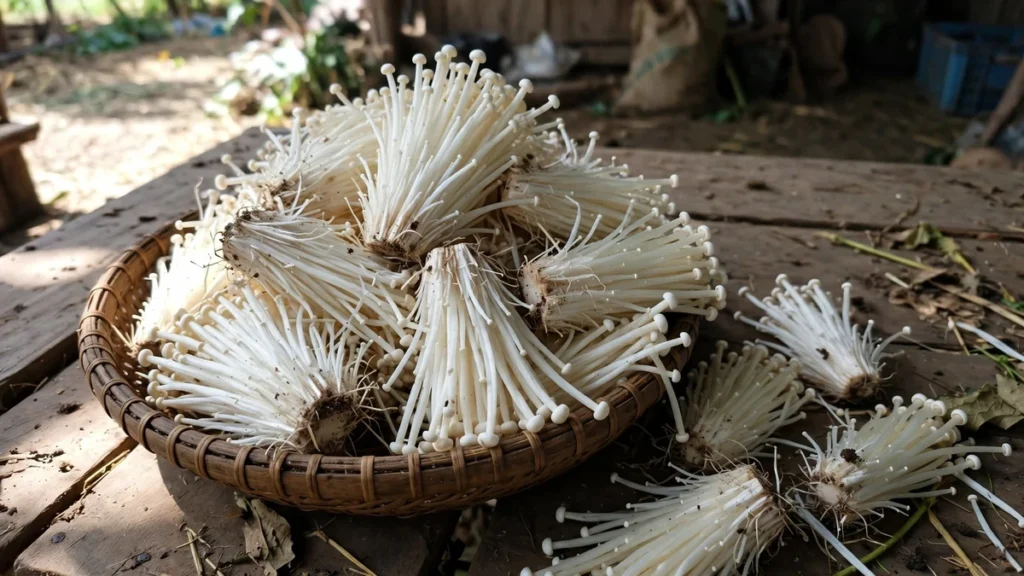
Enoki grow in the dark, and planning a trip around them means planning around the bottle room, not the weather. A bottle seeded in spring can fruit for months, and the stems push up in clusters whenever the room stays cool and damp. The grower does nothing to rush them; the bottles are stacked in the dark, misted when the air dries, and left to the season. That patience is the point of the escape.
An enoki farm escape is a stay of three to five nights on a working farm that grows enoki in bottles, timed to a harvest. You sleep in a farmhouse room, eat long white stems cut that morning, and walk the growing rooms where the clusters rise in neat rows under low light. The farms stretch from the temple hills of Kyoto to the old streets of Hanoi, and the harvest ties them together.
This guide walks through the nine steps that turn that idea into a booked trip — the harvest window, the bottle room, the price, the room, the picking cut, the kitchen and the journey home — so the booking follows the farm’s calendar.
Key takeaways
- Enoki grow indoors in bottles in dark cool rooms, fruiting all year, so the escape follows the harvest calendar, not the seasons.
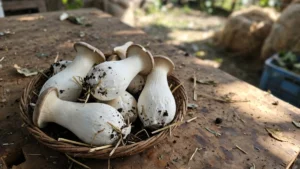
- Fresh stems are long, thin and white with tiny caps, mild and crisp; they go into soups, hot pots and noodles, and must always be cooked through.
- The cluster is cut at the base in one piece, then the brown root end is trimmed away in the kitchen — ask the grower to show you the cut on day one.
- The growing rooms are cool, dim and quiet, so stays are small and calm, a drive from the nearest town, with supper at one shared table.
- Never eat enoki raw — wash them well and cook them through — and soy sauce, broths and dumplings on the farm table may carry gluten, so settle the kitchen before you pay.
What an enoki farm escape actually is
An enoki farm escape is a stay of three to five nights on a working farm that grows enoki in bottles, timed to a harvest. You sleep in a farmhouse room, eat stems cut from the bottle that morning, and spend the days among the growing rooms, watching white clusters rise in rows under low light and carrying the basket to the kitchen.
The work begins weeks before the harvest. Each bottle is packed with sawdust and bran, steamed clean and seeded with spawn, then kept in the dark while the mycelium threads through the mix. Once the bottle is ready, the grower moves it to a cool bright room, and the stems push up in a tight cluster, long and pale, ready to cut.
The farms are small, with a handful of rooms and one shared table, and the kitchen cooks with what the growing room gave that morning. Fresh stems go into broth, noodles and hot pots, while the longest clusters are dried or pickled for the winter table. A farm that grows its own enoki is usually worth an extra night.
How we chose these stays, and what to ask first
We started from the bottle rooms themselves, not from the prettiest listing. A real enoki farm lets you walk the growing rooms, stand among the clusters at harvest, and eat in a kitchen that cooks its own mushrooms. A farm that buys its stems from a wholesaler is a guesthouse with a mushroom menu, not a real enoki farm.
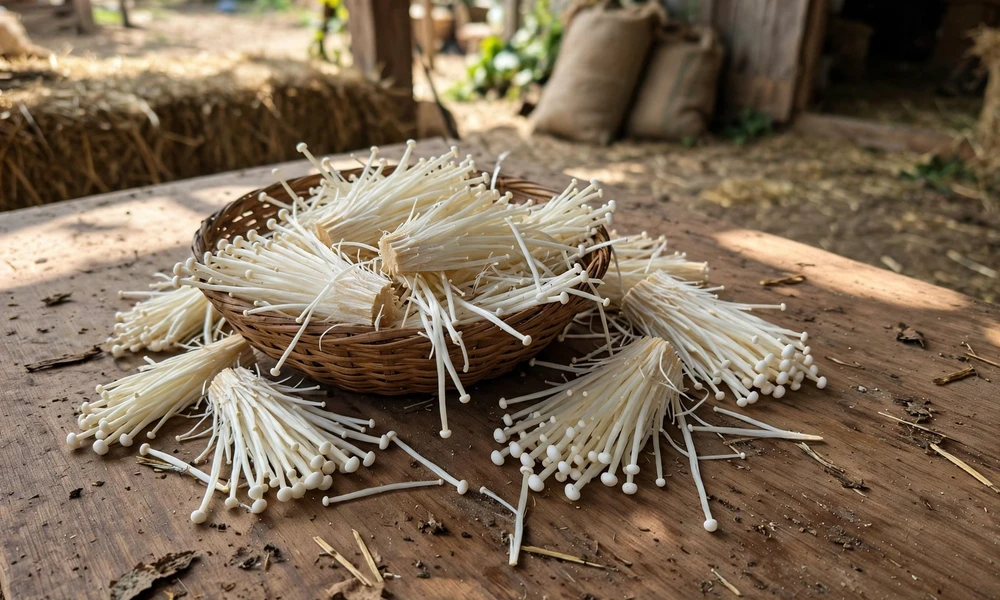
The strongest farms keep their guest list short, so the harvest stays honest work, not a show staged for visitors. Ask in your first message what the nightly rate covers — supper, the lift from the nearest town and the walks among the bottles belong in the price, not as extras at checkout. A grower who speaks plainly about bottles, spawn and harvest usually looks after guests well too.
The 9 steps to plan an enoki farm escape in 2027
Fix the harvest window before you pick the farm
What to do: Write to the farm and ask which weeks the bottles are expected to fruit, then hold the flights until the farm names a window. The rooms fruit all year, and a farm that names a fortnight is more honest than one that promises a date.
What to avoid: Do not book flights around a single cutting day, since a warm week can push the harvest late and a cold snap can bring it early.
Best for: Travellers with a week of slack in the calendar. Time needed: One evening reading the farm replies and comparing the windows. Standout tip: Ask which week the clusters are longest, not just when the season starts.
Ask what fills the bottles, and how long they have fruited
What to do: Ask what the bottles are filled with, how many harvests they have given, and whether the farm seeds its own bottles. Sawdust and bran bottles fruit for months, and a farm that packs its own mix knows its crop.
What to avoid: Do not accept a farm that cannot say what its bottles hold, since bought-in bottles and wholesaler stems tell you little about the crop.
Best for: Travellers who want to watch the growing, not just the eating. Time needed: One note sent before you book. Standout tip: Ask how old the bottle room is, since a settled room fruits best.
Fix the whole price in one early message
What to do: Ask for one figure that covers the room, supper, the lift from town and the walks among the bottles, and get it in writing before you pay anything. A farm that lists every charge in its first reply is usually straight about the rest too.
What to avoid: Do not pay a deposit before the price is set in writing, since extras added at checkout are the commonest complaint on farm stays.
Best for: Travellers who dislike surprise charges. Time needed: One message and one reply. Standout tip: Ask what happens to the deposit if the harvest comes late.
Choose a room for the growing rooms’ hours, not for its view
What to do: Pick a room close to the growing rooms and the kitchen, with a good heater and hot water, since the mornings start early and the rooms are cool. A plain room near the work beats a pretty room a long walk off.
What to avoid: Do not choose the room with the best view if it sits far from the growing rooms, since you will cross the farm in the dark and the damp.
Best for: Early risers who want to be first at the bottles. Time needed: A single look at the farm map before you book. Standout tip: Ask for the room nearest the kitchen, where the air stays warmest.
Let the growers show you the cluster cut on day one
What to do: On your first morning, ask a grower to show you the cut — a short knife at the base of the cluster, stems taken young while the caps are still tiny. Cut into a basket, not a bag, so the stems stay whole.
What to avoid: Do not pull clusters out of the bottle by hand, since tearing wounds the mix and spoils the next harvest.
Best for: Guests who enjoy earning their supper. Time needed: A morning spent with the growers. Standout tip: Cut in the cool of the morning, when the stems are crispest.
Visit the packing room before you carry enoki home
What to do: Walk the packing room and look at the clusters — long stems with tiny caps, trimmed at the base, keep best for the journey home. Buy the enoki the farm packed itself, and ask how long they were in the bottle.
What to avoid: Do not buy enoki from a market stall on the way home, since you cannot tell how they were grown or how long they have sat.
Best for: Cooks who want the winter table sorted. Time needed: An hour in the packing room. Standout tip: Clusters with even white stems and tight caps are the prized ones.
Eat at the farm table on every night you stay
What to do: Eat at the farm table every night, since the kitchen cooks the morning’s cut and the menu follows the harvest. Tell the cook about allergies and gluten in your first message, so the table can be set safely.
What to avoid: Do not eat out in town every night, since you will miss the dishes the farm cooks best and the tales the growers tell at the table.
Best for: Travellers who came for the cooking as much as for the crop. Time needed: Each evening you are there. Standout tip: Ask the cook to show you the root-end trim, so you can cook enoki at home.
Keep one morning free for the nearest market town
What to do: Leave one morning free to wander the nearest market, where the farm sells its fresh clusters and the town sells everything else. Buy the extras — soy, rice, tea — that the farm kitchen uses, and ask the sellers where their mushrooms are from.
What to avoid: Do not fill every morning with farm work, since a tired traveller cuts badly and enjoys the table less.
Best for: Travellers who like a market as much as a bottle room. Time needed: A morning ahead of leaving. Standout tip: Market mornings work best before the sun climbs, when the stalls are fullest.
Settle the bill the evening before you travel home
What to do: Settle the bill the night before you leave, while the grower is still at the table and the numbers are fresh. Check the room, the suppers and the lifts against the price you agreed in writing, and pay ahead of the morning rush.
What to avoid: Do not leave payment to the morning of departure, since the grower may be in the growing rooms and the maths gets hurried.
Best for: Travellers who prefer a clean goodbye. Time needed: Twenty minutes following supper. Standout tip: Ask for a paper receipt, and keep it with the enoki you carry home.
When to go, and which region fits your trip
If you want enoki where the crop is treated as a trade, start with Kyoto or Osaka, where the bottle rooms are widest and the farms are used to guests.
If scenery matters as much as the enoki, Hanoi puts the bottle rooms in the highlands, Hangzhou beside the lake, and Taipei in the mountains above the capital. Each of the three sits near a town with a market of its own, so a day off still tastes of the region.
If the bottle rooms leave you hungry for a different harvest, our guide to planning a shiitake farm escape covers a log-grown mushroom instead, cut from oak in shaded yards, and our guide to planning a rutabaga farm escape offers a root crop instead, dug from the ground rather than cut from a bottle.
The caveats that matter
Enoki farming answers to the harvest: farms offer a best guess, never a promise, and a trip pinned to one cutting day gambles on cool dark rooms. The real warning is the mushroom itself.
| Detail | What is known |
|---|---|
| Best time to visit | All year, since bottle rooms fruit indoors; spring and autumn see the busiest harvests |
| What the work involves | Walking the cool dark growing rooms, watching clusters cut by hand from bottles, and seeing the farm kitchen cook them |
| How long a stay runs | Three to five nights, set around a harvest |
| Who should take care | Guests with a mushroom allergy, and anyone unused to cool dark rooms or damp yards |
| What the kitchen serves | Enoki simmered in broth, dropped into hot pots, tossed with noodles and steamed with ginger, with pickles and warm tea on the side |
| Raw mushroom warning | Never eat enoki raw — wash them well and cook them through, since raw stems can carry germs; the farm kitchen always cooks them through |
| What to pack | Closed walking shoes, a warm layer for cool growing rooms, a rain jacket, and clothes that rinse easily by hand |
| What it does not do | No promised harvest, no fixed menu, and no hotel-style service on a working farm |
Anyone with a mushroom allergy should ring the farm before booking. One question about the kitchen and the mushrooms before you book can spare you an awkward stay, and a farm that replies plainly is usually worth the visit. The same care applies at our guide to planning a porcini farm escape, where the farm kitchen also cooks the crop it grew that day.
Checklist: planning an enoki farm escape honestly
Work through this list before you pay, and go over it again in the week before you travel.
- Ask for the harvest dates in writing, and find out what the farm offers if the clusters run late.
- Check that the nightly price covers supper, the lift from the nearest town and the walks among the bottles.
- Ask whether guests may cut clusters and watch the bottling, and whether the kitchen can cook a meal without mushrooms.
- Ask for a photo of the room before you pay, and check the bed, the heater and the hot water, since farm rooms stay plain and small.
- Pack for cool rooms and damp yards: strong shoes, a warm layer, a rain jacket, and clothes you can rinse in a basin.
- Hold a spare day for the nearest town, so a harvest that moves still leaves you a fine trip.
Frequently asked questions
Do I need experience to pick enoki on a farm stay?
No. Cutting enoki is light work — a short knife at the base of the cluster — and the grower shows you the cut on your first morning. The bottles sit at waist height, so the work is gentle, though the rooms are cool and dim, so wear closed shoes and a warm layer.
Which months suit an enoki farm visit best?
Every month suits a visit, since the bottles fruit indoors all year. Spring and autumn are the busiest harvest months, so ask the farm for its harvest window rather than one date, and wait to book flights until that window is fixed.
Do guests get to cut their own enoki?
Most farms let guests walk the growing rooms, cut clusters by hand and carry the basket back to the kitchen. The cut is simple — one slice at the base — so ask the farm what guests may do before you book, and expect cool hands and sawdust on your shoes. Never pick wild mushrooms alone, even on a farm walk, unless the farmer walks beside you.
Must enoki always be cooked before eating?
Yes. Enoki must be washed well and cooked through, since raw stems can carry germs that heat kills. The farm kitchen always simmers, steams or stir-fries them — never eat a cluster straight from the bottle, and follow what the farm cook does.
Where should a first-time enoki traveller start?
Kyoto is the simplest first trip: the bottle rooms are widest there, the farms welcome guests easily, and enoki in clear dashi show the crop at its finest. For the history as well as the meal, Hanoi is the highland farm where mushrooms have been grown for generations.
Can an enoki farm host a guest with allergies?
Mostly, but say so in the first email. Mushroom spores drift in the growing rooms, so a guest with a strong allergy may struggle indoors even if they never eat a stem. The farm can usually arrange walks away from the rooms and a kitchen that cooks without mushrooms, but settle the allergy and the harvest week ahead of paying.
The bottom line
An enoki farm escape suits travellers who prefer cool dark growing rooms, farm kitchens and mushrooms cooked the farm’s own way to a hotel. The stems arrive fresh and crisp, the broth simmers with ginger, and the finest stays feed you from bottles they seeded themselves.
Fix the harvest week first, then the travel dates, and hold a spare day at the end. If the bottles fruit on time you will eat stems cut that morning; if they do not, the hills, the lake towns and the old markets will still carry the week.