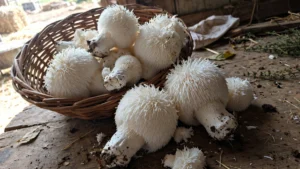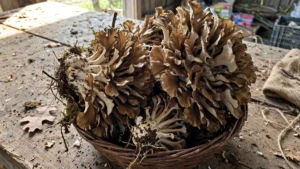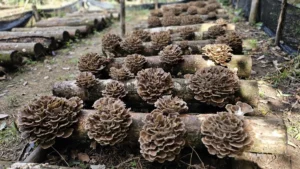
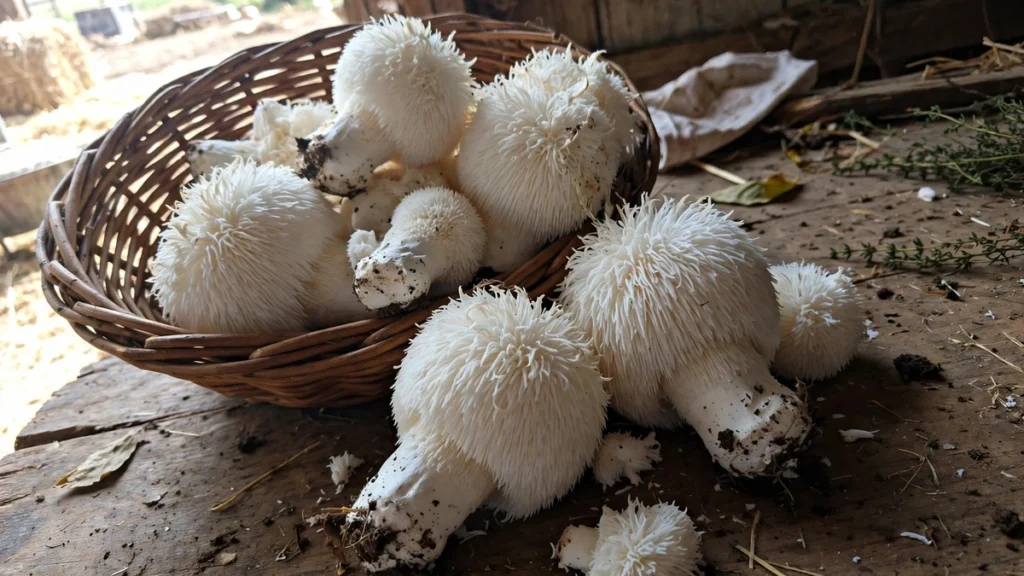
A lion’s mane farm escape is a short stay on a farm that grows Hericium erinaceus, the white, shaggy mushroom that looks like a pom-pom and tastes faintly of crab when it is fried. You sleep in a farmhouse room or a converted barn, you walk through a cool, damp grow room in the morning, you cut your own clusters from hardwood bags, and you eat them the same evening, sliced thick and fried in butter. The whole trip is built around that short arc, from bag to pan to plate.
It is a quieter trip than a wine tour or a city break. The farms are small, the days are slow, and the best part is usually the least planned: standing in a misty grow room with a basket, choosing which white pom-pom to cut, while the grower tells you which bag fruited first and which one needs another day. The mushroom sets the pace, and the farm works around it.
This guide walks through the nine steps that make the trip work, from asking the farm which weeks the clusters are fruiting to packing the dried mushrooms you carry home. Follow them in order, and the rest is the farm’s job.
Key takeaways
- A lion’s mane escape is a farm stay built around cutting and cooking Hericium erinaceus, a white shaggy mushroom grown on hardwood bags.
- The fruiting season runs from late summer into autumn, and the best weeks shift with the weather, so ask the farm before you fix dates.
- Two or three nights is the right length: one night rarely lines up with a fresh flush and a cooking session.
- Pack for cool, damp grow rooms and muddy lanes, not for a hotel, and bring a basket for your pick.
- Lion’s mane itself contains no gluten, but farm kitchens also serve bread, pasta and sauces, so ask about gluten before you book.
What a lion’s mane farm escape actually is
A lion’s mane farm escape is a stay of two or three nights on a working mushroom farm, where the mushroom is grown on site and the guest takes part in the harvest. Nights pass in a farmhouse room or a converted barn, meals come from the farm kitchen, and the days belong to the grow room, where white pom-poms are cut from hardwood bags, sliced, and cooked. It is not a hotel that happens to serve a mushroom dish. The farm is the point.
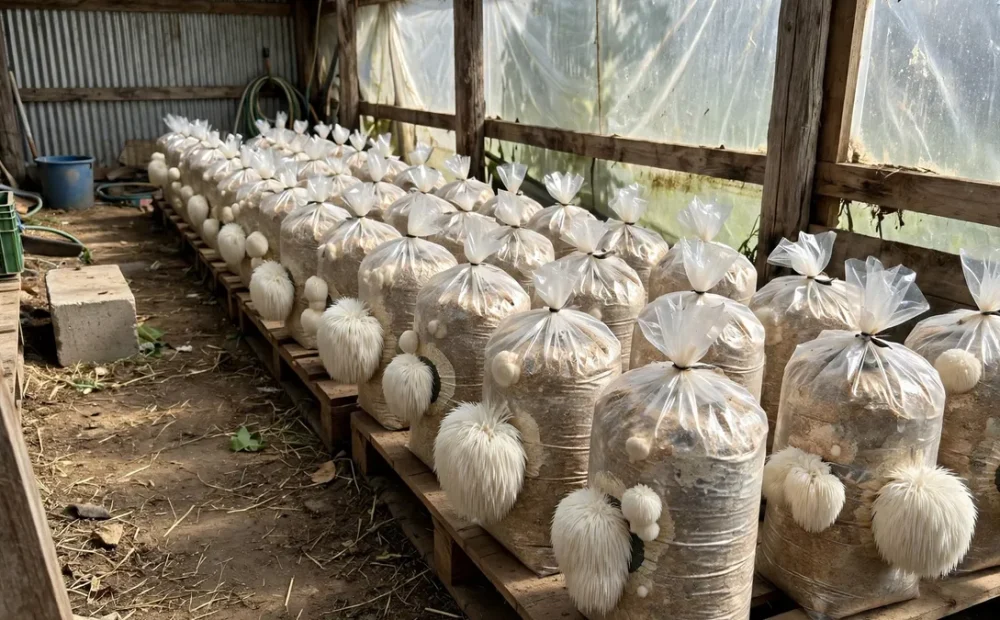
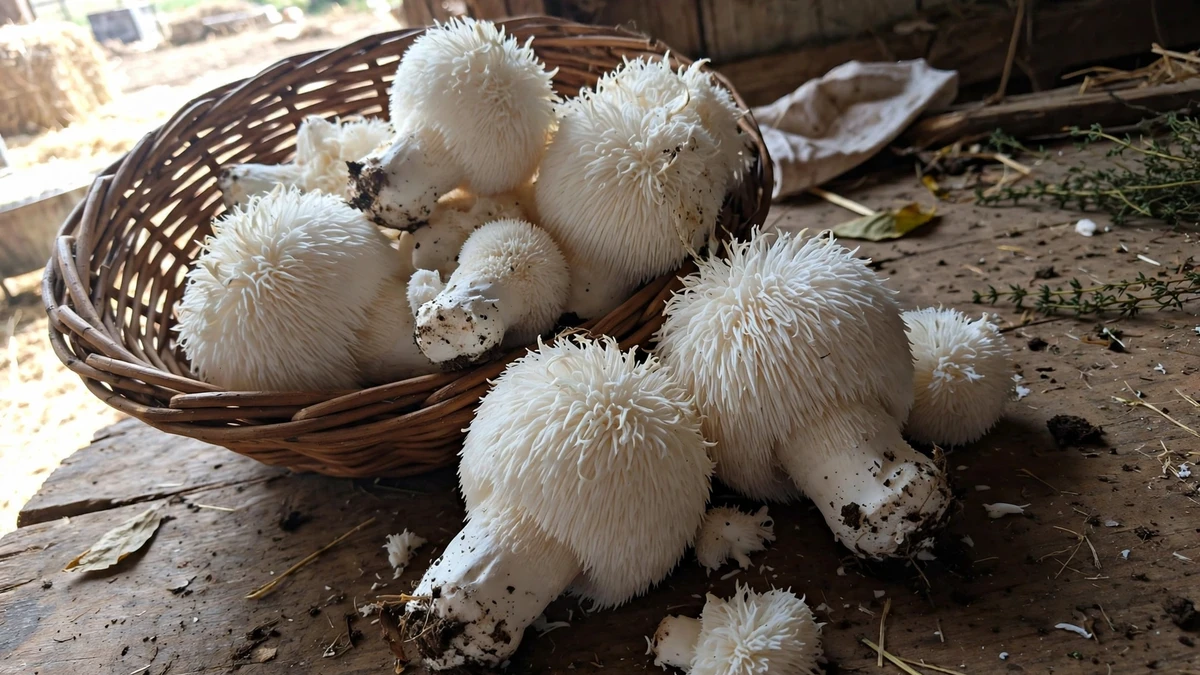
The mushroom itself is Hericium erinaceus, a white ball of soft, tooth-like spines that grows on oak and beech. On a farm it fruits from bags of hardwood sawdust, kept damp and cool, and a cluster can appear in under a week once the conditions are right. The grower will show you the difference on your first morning, and after that you will spot it yourself. Our guide to planning an oyster mushroom farm escape follows the same shape, but lion’s mane is slower, stranger and quieter, and the farms that grow it tend to be smaller.
Most escapes run the same way. You arrive in the afternoon, eat supper at the farm table, and walk the grow room the next morning. You cut your clusters, watch them go into a pan, and eat them that evening. On the second day you might walk the woods or spend the afternoon slicing and drying what you picked.
How to plan your lion’s mane escape in nine steps
Planning is mostly a matter of timing. Lion’s mane fruits when the grow room is cool and damp, and the best weeks shift from year to year, so the first job is to ask the farm, not to book the room. The steps below run in the order that works: ask about fruiting first, fix the farm second, and sort the travel last, when you know the week is right.
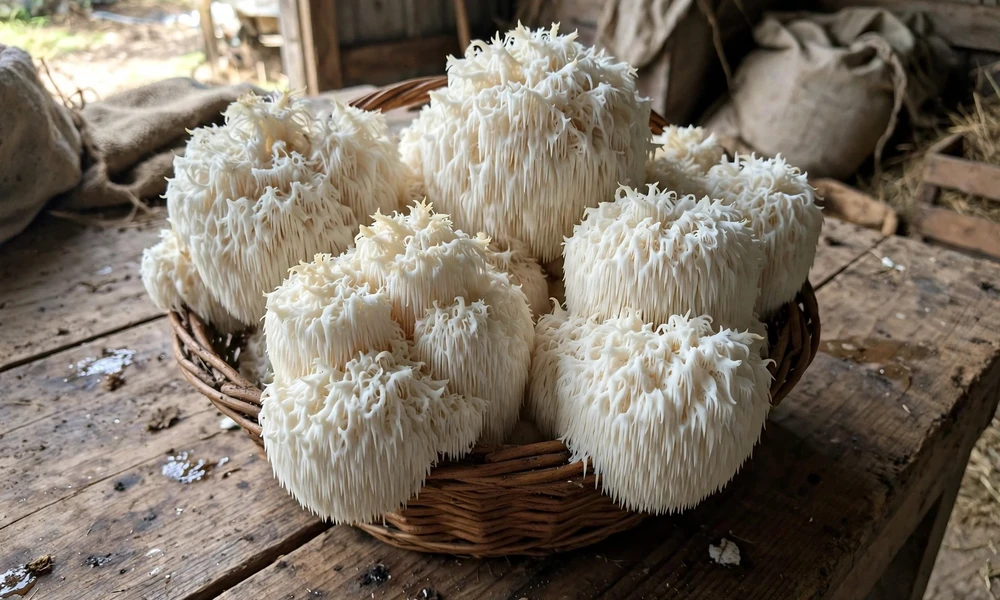
The other thing to plan is the length. One night is almost never enough, because a fresh flush and a cooking session rarely fall on the same day. Two nights gives you a cutting morning and a cooking evening. Three nights gives you a market visit and a drying afternoon as well. Our shiitake farm escape guide makes the same point, and it holds here too: the mushroom sets the schedule, so give the trip room to breathe.
The 9 steps to a lion’s mane farm escape
Step 1: Find out which weeks the pom-poms are fruiting
What to do: Write to two or three farms and ask which weeks the lion’s mane is fruiting, not just which weeks rooms are free. Ask how the grow room has been running, whether the early flush has started, and whether the farm expects a second flush. What to avoid: Do not book a fixed week in July and hope the season comes early; lion’s mane fruits best when the rooms are cool, and a hot summer means a late season. Best For: Travellers who can slide their dates by a week or two. Time Needed: A week of messages exchanged before you book. Standout Tip: Ask which week gave the farm its best baskets last year, not just when the season opens.
Step 2: Choose a farm with hardwood bags you can see from the door
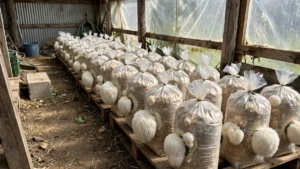
What to do: Pick a farm with a grow room on its own land, within a short walk of your room, and ask whether guests can walk through it. Look for hardwood bags in neat rows, white clusters at different stages, and a grower who is happy to explain. What to avoid: Do not choose a farm that keeps its grow room closed to guests, or one that buys its lion’s mane in from elsewhere. Best For: Travellers who want to see the growing, not just eat the result. Time Needed: An evening reading the farm’s own pages. Standout Tip: A grow room you can walk through tells you more about the farm than its whole website.
The grow room is the heart of the trip.
Step 3: Fix the price in writing before you pay a deposit
What to do: Ask for the full price in writing, including breakfast, the cutting session and the cooking session, before you pay anything. Ask what happens if the flush is late, and whether the farm moves your dates without a fee. What to avoid: Do not pay a deposit on a price given only by phone, and do not assume the cooking session is included. Best For: Anyone booking a month or more ahead. Time Needed: One message, then a wait while the farm confirms its rates. Standout Tip: A farm that puts its price in writing is a farm that honours it.
Step 4: Stay two or three nights, not one
What to do: Book two nights at least, and three if you can, so a cutting morning, a cooking evening and a market visit all fit. Arrive in the afternoon, not late at night, so supper is unhurried. What to avoid: Do not try to cut, cook and travel home in a single day; the mushroom deserves a slower pace, and the farm kitchen does too. Best For: First-time visitors and anyone travelling far. Time Needed: A single meal at the farm table on arrival night. Standout Tip: Two nights is the minimum that lets the trip breathe.
Step 5: Sort the journey before the season fills
What to do: Book trains or a car once the farm confirms your week, and check the last leg carefully, because farm lanes are often served by one bus a day. Ask the farm about pickup from the nearest station. What to avoid: Do not leave the journey to the last week; autumn trains fill fast, and a missed connection can cost you the cutting morning. Best For: Travellers without a car. Time Needed: An evening with the timetable open. Standout Tip: Ask the farm how its last guests arrived, not just how far the station is.
Step 6: Pack for cool rooms, damp air and a basket
What to do: Pack a warm layer for the grow room, closed shoes for damp floors, a waterproof coat for the lanes, and a basket or sturdy bag for your pick. Bring clothes that wash by hand. What to avoid: Do not pack light shoes or a single thin jacket; the grow room is cool, the lanes are muddy, and the weather turns fast. Best For: Anyone who has never walked a damp farm before. Time Needed: An evening spent with the suitcase open. Standout Tip: A warm layer in the grow room is worth more than a second coat.
Step 7: Cut your first cluster with the grower beside you
What to do: Go to the grow room with the grower on your first morning, and learn how to cut a cluster cleanly at the base, which ones are ready, and which need another day. Carry your own basket and take only what you will cook. What to avoid: Do not pull clusters off the bag, and do not cut a yellow or brown one; it is past its best and the grower will tell you so. Best For: First-time pickers and keen cooks. Time Needed: A morning out with the farm. Standout Tip: Cut cleanly at the base, and the bag will fruit again.
Cutting takes ten minutes to learn, and the grower will check your first few picks before letting you loose on the rows.
Step 8: Spend the afternoon slicing, drying and cooking
What to do: Slice your clusters thick, fry a few in butter for supper, and dry the rest on racks or in the farm’s dryer. Ask the cook how long to dry them and how to store them at home. What to avoid: Do not slice them thin like an oyster mushroom; lion’s mane needs thick slices to hold its texture, and thin slices go limp. Best For: Cooks who want to take the trip home with them. Time Needed: An afternoon in the farm kitchen. Standout Tip: Slice thick, fry hot, and dry the rest slowly.
Step 9: Taste what you gathered, then carry the rest home
What to do: Eat the lion’s mane at the farm table on your last evening, pack the dried slices in a sealed bag, and take a few fresh clusters home in your basket if the farm allows it. Ask how long the dried slices keep. What to avoid: Do not pack fresh clusters loose in a suitcase; they bruise easily and will stain everything they touch. Best For: Anyone who wants the trip to last past the journey home. Time Needed: Ten minutes at the table before you leave. Standout Tip: A bag of dried lion’s mane turns a kitchen at home into a small piece of the trip.
Supper on the last night is the moment the trip adds up, with the mushroom you cut in the morning on the plate and the dried slices in your bag.
When to go and where to start
Late summer into autumn is the best window, roughly September to November, when the grow rooms are cool and the flushes are regular. If your dates can slide, ask the farm which week was best last year and aim for that one.
Start in France if it is your first trip. The Île-de-France stay is an easy train ride from Paris, and the Rhône Hills retreat is a short journey from Lyon. If you want a longer stay, add Brussels or Amsterdam, where the farms are flat, the cycling is easy and the kitchens are gentle. Vienna and Prague suit a food-led trip. Our guide to planning a rutabaga farm escape uses the same regional logic, and it holds here too: pick the region that matches your pace, and the mushroom will follow.
The caveats that matter
Lion’s mane is a mild, well-known edible mushroom, but a few cautions apply. Never eat a wild mushroom no expert has checked, and never eat lion’s mane raw. Farm-grown clusters are safe to eat once cooked, but raw lion’s mane is tough and hard to digest. If you have a mushroom allergy, warn the farm before you book, and ask what goes into its sauces. Some farms also grow other fungi in the same rooms, so ask about cross-contact.
| Detail | What is known |
|---|---|
| What it is | Hericium erinaceus, a white shaggy mushroom with hanging spines, no gills and no cap |
| Where it grows | On hardwood, usually oak and beech, in cool damp rooms on sawdust bags |
| Can it be eaten raw | No, cook lion’s mane through, and only after the grower has checked the pick |
| Best-known dishes | Pan-fried lion’s mane, lion’s mane fried with butter and sage, lion’s mane soup, dried lion’s mane stock |
| Who should ask first | Anyone with a mushroom allergy, and anyone who avoids gluten |
| What to pack | A warm layer for the cool grow room, closed shoes for the damp floors, a basket or a bag |
| How far ahead to book | Three to five weeks ahead for the autumn season, two weeks outside it |
| What it is not | Not oyster mushroom, not shiitake and not porcini, despite the shared kitchen |
One more practical note: these farm stays are small, and autumn weekends fill first. If your dates are fixed, book early and ask the farm which weeks the clusters are fruiting, not just which weeks rooms are free.
Checklist: before you book a lion’s mane farm escape
Use these checks before you book, and again the week before you travel.
- Check the fruiting weeks with the farm, not just the room availability, before you fix your dates.
- Check that the farm grows lion’s mane on its own land, in hardwood bags, and opens the grow room to guests.
- Check the price in writing, including the cutting session, the cooking session and breakfast.
- Ask about gluten and allergies, and what the kitchen puts on the plate beside the mushroom.
- Pack a warm layer for the grow room, closed shoes for the damp floors, and a basket for your pick.
- Book two or three nights, so a cutting morning, a cooking evening and a market visit all fit.
Frequently asked questions
Do I need mushroom experience to visit a lion’s mane farm?
No. The grower teaches you how to cut on your first morning, and the cutting takes ten minutes to learn. You do not need to know mushrooms to enjoy the trip, only to be willing to walk a damp grow room and listen.
Is the lion’s mane I pick safe to eat?
Yes, if they are farm-grown lion’s mane, checked by the grower and cooked through. Never eat a wild mushroom without expert identification, and never eat lion’s mane raw.
What sets lion’s mane apart from an oyster mushroom?
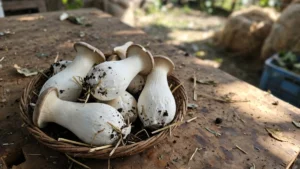
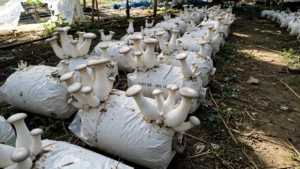
Lion’s mane is a white, shaggy ball with hanging spines and no gills, while an oyster mushroom grows in pale, fan-shaped clusters with clear gills. Lion’s mane tastes mild and faintly crab-like; oyster mushroom is softer and more delicate.
When is the best month for a lion’s mane farm escape?
Late summer into autumn, roughly September to November, when the grow rooms stay cool and the flushes come regularly. Some farms fruit all year indoors, so ask the farm which weeks are strongest before you book.
Can children join a lion’s mane farm escape?
Most farms welcome children, as long as they can walk the grow room quietly and stay clear of the damp floors and the equipment. The cutting session is usually the part children enjoy most.
Does lion’s mane contain gluten?
The mushroom itself contains no gluten. The risk sits in the kitchen: bread, pasta, dumplings and sauces may contain gluten, so ask the farm what it can serve a gluten-free guest before you book.
The bottom line
A lion’s mane farm escape works when the timing is right, the farm grows the mushroom on site, and you give the trip two or three nights. Ask about fruiting first, fix the price in writing, pack for cool rooms and muddy lanes, and let the mushroom set the pace. The rest of the trip, the cutting, the cooking and the supper, will follow on its own.
Choose one farm, book the week the clusters are fruiting, and judge the trip on the morning you cut your own pom-pom and the evening you eat it. That is the honest way to meet a mushroom that looks like nothing else, without turning the trip into a hotel stay that happens to serve a mushroom.