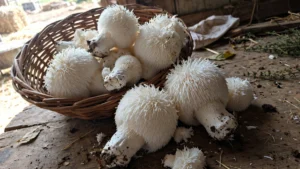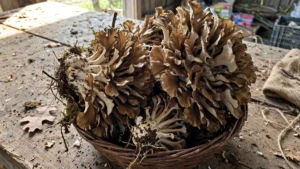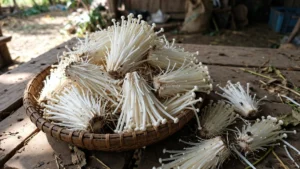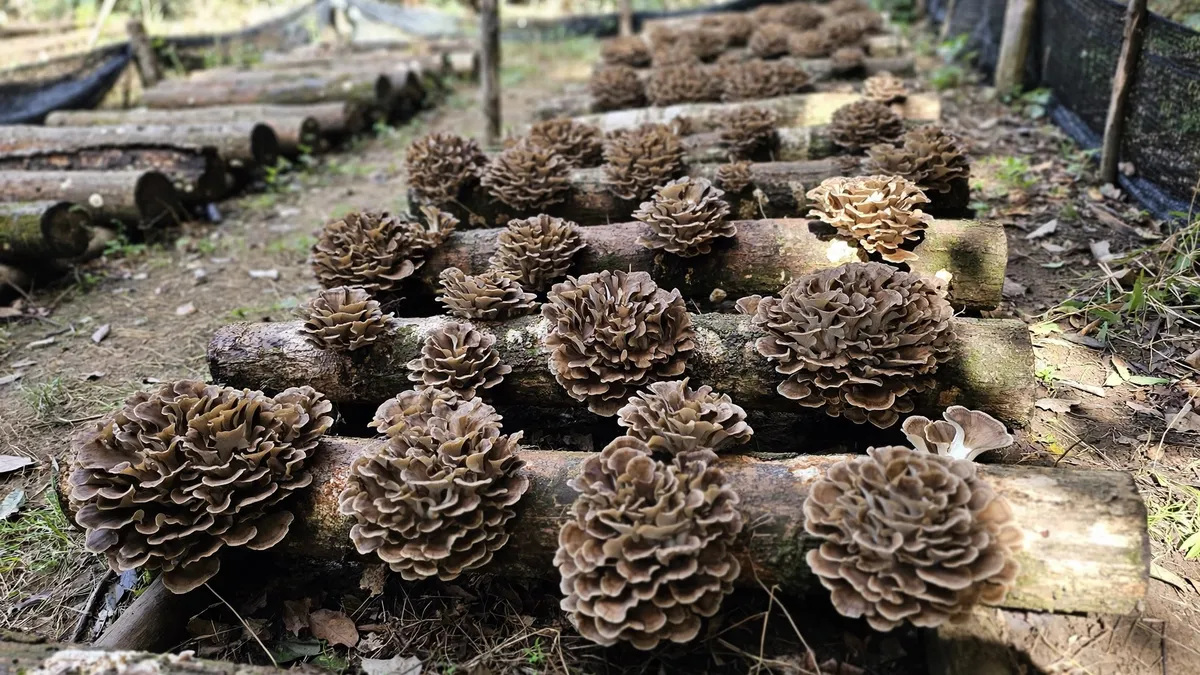

Maitake is the mushroom that grows like a ruffle. Its clusters fan out from the base of an oak in overlapping brown-grey fronds, soft at the edges and firm at the stem, and a single clump can weigh as much as a small melon. Chefs prize it for a flavour that sits somewhere between roasted nuts and good stock, and cooks who have only ever met it dried or sliced in a supermarket punnet are often surprised by how much character the fresh mushroom carries.
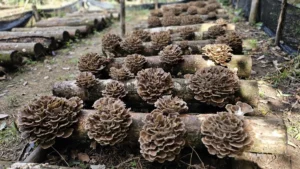
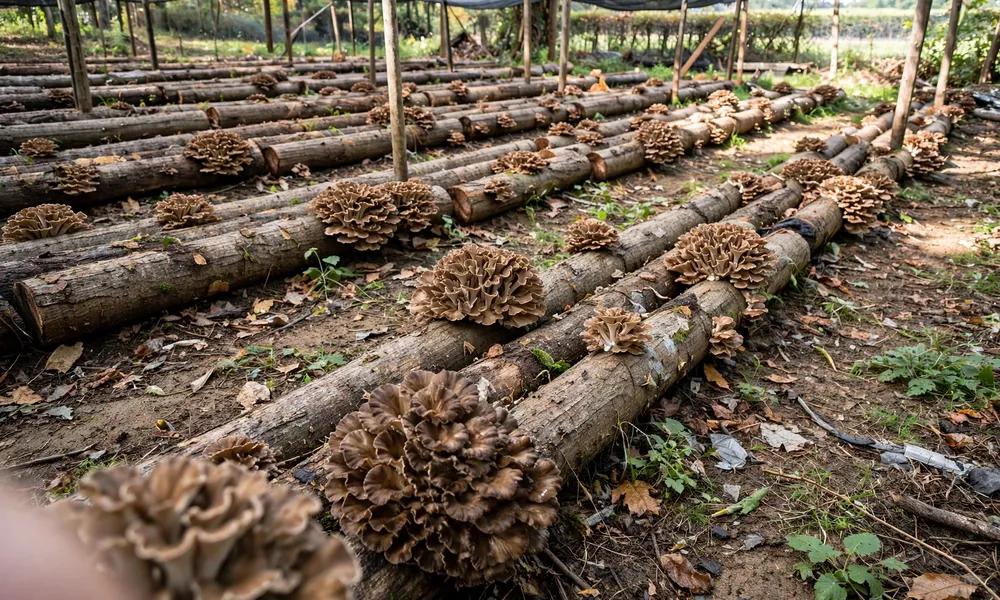
A maitake farm is a quieter kind of food trip. The work happens in shaded log yards and cool growing rooms, where oak logs are stacked in rows and checked daily for the first fronds. Guests walk the rows at first light, watch a cluster being cut at the base, and then eat it the same day, usually grilled, roasted or folded into soup. There is no rush and no spectacle, just a slow morning that ends at a table.
Below are nine maitake farm retreats worth considering in 2027, from a bamboo-grove lodge outside Chengdu to a lakeside farm near Hangzhou and a mountain stay outside Hanoi. For each of the nine below, you will find what it does well, what to watch for, and the traveller it suits best.
Key takeaways
- Maitake, also called hen of the woods, grows in frilly brown clusters on oak logs and is prized for a nutty, savoury flavour that holds up to roasting and grilling.
- The best farm stays pair a morning walk through the log rows with a cooked lunch the same day, so you taste the mushroom hours after it was cut.
- Autumn is the main season for outdoor log-grown maitake, while indoor growing rooms run through most of the year.
- Book the picking session and the kitchen session separately if you can, because the two are often run by different people on different timetables.
- Maitake itself contains no gluten, but farm kitchens often use soy sauce and shared grills, so tell the farm about a gluten-free diet before you book and ask what it can cook without wheat-based sauces.
What a maitake is, and why a farm stay suits it
Maitake is Grifola frondosa, a fungus that grows at the foot of old oaks and other hardwoods. The name means dancing mushroom in Japanese, and hen of the woods is the English nickname, after the ruffled, feathered look of a mature cluster. Wild maitake is scarce and hard to find, which is why most of the mushroom eaten today is farmed on oak logs or sawdust blocks.
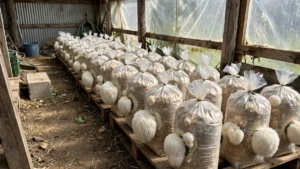
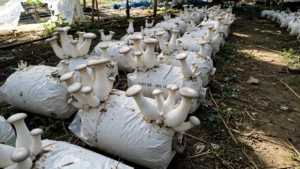
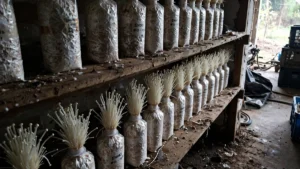
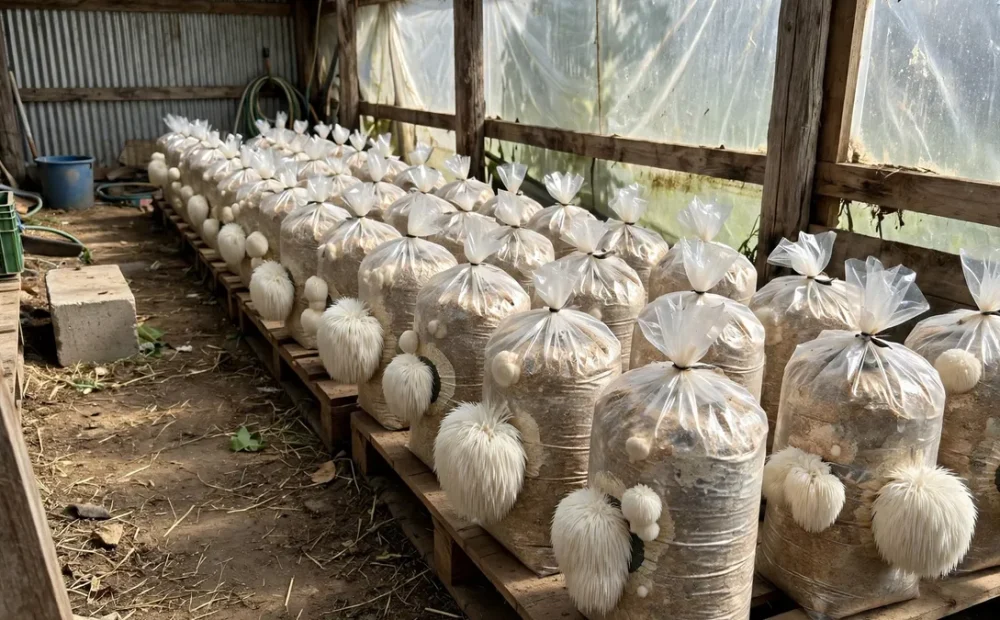
On a farm, the mushroom is grown in conditions that copy the forest floor. Oak logs are drilled, plugged with spawn and stacked in shaded rows, then left to colonise for months before the first fronds appear. Indoor rooms do the same work faster, with sawdust blocks kept warm and humid until the clusters push out. Either way, the harvest is done by hand, with a knife at the base of the cluster, and the mushroom is at its best within a day of being cut.
That short window is the reason a farm stay works so well. A mushroom bought in a shop may be days old and a little tired at the edges. A mushroom cut on the farm in the morning and grilled for lunch keeps its texture and its aroma, and the farm kitchen knows how to cook it without drowning it in oil or sauce. You also learn what to look for in a good cluster, which is useful if you buy maitake again at home.
How we chose these retreats
We looked for farms that grow their own maitake on site, welcome guests into the growing areas, and cook what they harvest in their own kitchens. A farm that only sells dried maitake, or that buys its mushrooms in from elsewhere, did not make the list. Each retreat below runs a picking or cutting session, a meal that features maitake, and at least one night in a room on or near the farm.
We also checked the practical details that decide whether a stay is comfortable: clear directions, a kitchen that can handle dietary notes, and a price that covers the room, the farm sessions and the meals, without a long list of extras. The nine retreats below cover a spread of budgets and styles, from a simple mountain farmstay to a lakeside garden farm, and each one keeps its focus on the mushroom rather than on spa extras.
The 9 best maitake farm retreats of 2027
Arashiyama Oak Log Maitake Farm, Kyoto
What we like: Shaded oak-log rows a short walk from the river, a calm cedar cabin to sleep in, and a kitchen that grills maitake over charcoal with nothing more than salt and a little citrus.
What to consider: The farm books up early in autumn, the cabins are simple, and the nearest shops are a bus ride away. Best For: First-time mushroom travellers. Style: Riverside log yard with cedar cabins. Price Range: $88–$132 per night. Standout Feature: Oak-log rows you can walk between at dawn.
Arashiyama is the gentle introduction to the list. The morning session starts before the day warms up, the farm hands show you how to cut a cluster without tearing the log, and lunch is a small set of dishes that let the mushroom speak for itself. It is a good first farm if you have never picked a mushroom before.
Osaka Bay Maitake Retreat, Osaka
What we like: A modern farmhouse with a proper teaching kitchen, an evening hotpot class built around fresh maitake, and easy train access from the city.
What to consider: The growing rooms are indoors rather than in the open air, and weekend dates sell out quickly. Best For: Food lovers who want a cooking class. Style: Modern farmhouse near the bay. Price Range: $96–$148 per night. Standout Feature: Evening maitake hotpot class.
Bukhansan Maitake Farm, Seoul
What we like: A mountain-edge lodge with marked trails above the log yard, a hearty farm lunch, and a host who knows the oak woods around the farm by heart.
What to consider: The paths are steep in places, and the lodge has only a handful of rooms. Best For: Hikers pairing a mountain morning with a farm lunch. Style: Mountain-edge lodge. Price Range: $74–$118 per night. Standout Feature: Guided oak-wood walk above the log rows.
Bukhansan suits travellers who like a walk before lunch. The morning trail climbs through oak woods where wild maitake sometimes appears in season, the guide points out the trees that host it, and the farm lunch back at the lodge is built around the clusters cut that day. Our roundup of morel farm retreats covers a similar mountain style for spring, if you are planning a second mushroom trip.
Geumjeong Maitake Lodge, Busan
What we like: A hillside guesthouse with a family picking session, a basket for each child, and a kitchen that serves maitake pancakes alongside the usual farm dishes.
What to consider: The rooms are small, and the farm is a bus ride from the nearest metro stop. Best For: Families with children. Style: Hillside guesthouse. Price Range: $68–$104 per night. Standout Feature: Family picking session with a basket per child.
Yangmingshan Maitake Farm, Taipei
What we like: A volcanic hillside farm with a hot-spring bathhouse next door, cool misty mornings, and a kitchen that pairs roasted maitake with local greens.
What to consider: The weather turns quickly on the mountain, and the farm is busiest on public holidays. Best For: Hot-spring fans. Style: Volcanic hillside farm. Price Range: $104–$162 per night. Standout Feature: Maitake grown beside a hot-spring bathhouse.
Yangmingshan pairs two pleasures that suit each other well. The morning is spent in the log rows, the afternoon in the bathhouse, and dinner is a quiet meal of roasted maitake and mountain vegetables. It is the most restful retreat on the list, and the one most likely to leave you wanting a second night.
Qingcheng Maitake Retreat, Chengdu
What we like: A bamboo-grove lodge with a tea house, slow mornings, and a kitchen that serves maitake with noodles, greens and a light chilli oil.
What to consider: The lodge is a drive from the city, and English is limited, so bring a translation app. Best For: Slow travellers. Style: Bamboo grove lodge. Price Range: $82–$126 per night. Standout Feature: Tea-house tastings with grilled maitake.
West Lake Maitake Farm, Hangzhou
What we like: A lakeside garden farm with sunrise picking, a breakfast of maitake and rice porridge, and rooms that look out over the water.
What to consider: It is the dearest stay on this list, and the lakeside rooms go first. Best For: Couples. Style: Lakeside garden farm. Price Range: $118–$178 per night. Standout Feature: Sunrise picking followed by lakeside breakfast.
West Lake is the most romantic of the nine. The picking session starts at sunrise, the mist sits low over the water, and breakfast is served on a terrace with the lake in front of you. It is a good choice for a short break, and the farm is an easy train ride from Shanghai if you are already in the region.
New Territories Maitake Lodge, Hong Kong
What we like: A village farmhouse about an hour from Central, indoor growing rooms that run all year, and a kitchen that roasts maitake with garlic and spring onion.
What to consider: The farm is smaller than the others here, and the village is quiet at night. Best For: City escapers. Style: Village farmhouse an hour from Central. Price Range: $92–$140 per night. Standout Feature: Same-day escape from the city.
Ba Vi Maitake Farm, Hanoi
What we like: A mountain farmstay with the lowest prices on this list, a full farm lunch included in the rate, and a host family that cooks with the guests.
What to consider: The road up the mountain is winding, and the farm has a handful of rooms, so book early. Best For: Budget-conscious travellers. Style: Mountain farmstay. Price Range: $62–$98 per night. Standout Feature: Lowest prices in the set, with a full farm lunch included.
Ba Vi is the best value on the list and the most hands-on. Guests help with the harvest, sit with the host family for lunch, and learn how maitake is used in Vietnamese cooking, usually in soups and stir-fries with herbs. It is a simple stay, and that is exactly the point.
What a day on a maitake farm looks like
The day starts early, while the log yard is still cool. The farm hands walk the rows with baskets and knives, checking each log for clusters that have opened enough to cut. Guests join in, learn to cut at the base without damaging the bark, and carry their baskets back to a shaded table where the harvest is weighed, trimmed and sorted.
By late morning the kitchen takes over. The fresh clusters are brushed clean, never soaked, then torn into pieces by hand. Some go into a pan with oil and garlic, some into soup, and some onto a grill with salt. Lunch is usually served family style, with rice, greens and the maitake dishes in the middle of the table, and the farm staff eat alongside the guests.
Afternoons are slower. Some farms run a second session on drying or making stock, others leave the afternoon free for a walk or a rest, and the best days end with a short walk back through the log rows at dusk.
The caveats that matter
Maitake is a safe and widely eaten mushroom, but a farm stay still needs a little care. The mushroom must always be cooked, never eaten raw, and anyone with a mushroom allergy should tell the farm before booking, not at the table. Wild mushrooms should never be picked or eaten without an expert beside you, even on a farm, because a lookalike can grow nearby.
| Detail | What is known |
|---|---|
| Best season outdoors | Autumn, when log-grown clusters fruit; indoor rooms run most of the year |
| How it grows | Frilly brown clusters on oak logs or sawdust blocks, harvested by hand |
| Flavour | Nutty and savoury, with a firm texture that suits roasting and grilling |
| Always cook it | Maitake should be cooked before eating, never eaten raw |
| Allergy note | Tell the farm about a mushroom allergy before booking, not at the table |
| Gluten note | Maitake has no gluten, but soy sauce and shared grills can add it, so ask first |
| Wild picking | Never eat a wild mushroom without an expert beside you |
| What it is not | It is not shiitake, which grows on logs too but tastes and looks different |
Prices also deserve a second look. The rates above cover the room and the main farm sessions, but some farms charge separately for the cooking class, the market trip or the transfer from the station. Ask for the full list of what is included before you pay, and get it in writing. A shiitake farm retreat can be a useful comparison, since shiitake farms use the same oak-log method and similar pricing, and our guide to oyster mushroom farm retreats covers another indoor-grown mushroom for a quick city break.
Checklist: choosing a maitake farm retreat honestly
Use these checks before you book, and again before you travel.
- Check the farm grows its own maitake on site, on logs or in growing rooms you can visit.
- Check the picking session and the cooking session are both included, and who runs each one.
- Check the kitchen can cook for your diet, including gluten-free dishes made without soy sauce.
- Check the season: autumn for outdoor logs, any time for indoor growing rooms.
- Check the full price, including transfers, cooking classes and any extras.
- Check the room: look at photos, ask about heating and hot water, and read the cancellation terms.
Frequently asked questions
When is the best time to visit a maitake farm?
Autumn is the main season for outdoor log-grown maitake, when the clusters fruit after a cool, damp spell. Indoor growing rooms fruit through most of the year, so a farm with indoor rooms is worth visiting in any season, but autumn still gives you the widest choice.
Is maitake the same as shiitake?
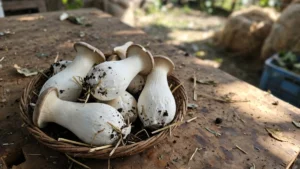
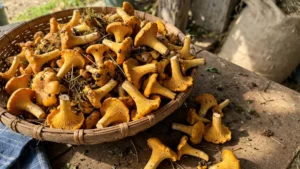
No. Maitake grows in frilly brown clusters at the base of oaks, while shiitake grows as single brown-capped mushrooms on logs. Maitake is softer and more ruffled, with a nutty flavour, while shiitake is firmer and more deeply savoury. The two are often grown on the same kind of farm, but they are different species.
Can I eat maitake raw?
No. Maitake should always be cooked before eating. Raw maitake is hard to digest and can upset the stomach, so every farm on this list cooks what it harvests, usually by roasting, grilling or simmering in soup.
How do I tell maitake from other wild mushrooms?
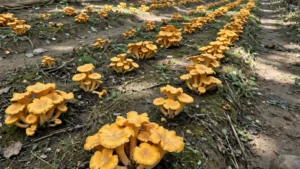
Do not try on your own. Maitake has overlapping frilly fronds and grows at the base of oaks, but several other fungi grow in similar places. On a farm, a guide does the identifying, and you should never pick or eat a wild mushroom without an expert beside you.
How long should I stay at a maitake farm?
Two nights is the sweet spot. One night gives you a single picking session and one lunch, while two nights let you join a second session, try the cooking class, and see the farm at a slower pace. Three nights suits a slow traveller who wants to explore the area as well.
Is maitake gluten-free?
Maitake itself is naturally gluten-free. The risk comes from the kitchen, where soy sauce, shared grills and flour-dusted surfaces can add gluten. Tell the farm before you book, ask how it cooks for gluten-free guests, and check the sauces on the day.
The bottom line
The best maitake farm retreat in 2027 is the one that lets you walk the log rows in the morning and eat what you cut at lunch. Arashiyama suits a first visit, West Lake suits a couple looking for a quiet break, and Ba Vi suits a traveller who wants the most farm for the least money. Pick the farm that matches how you like to spend a day, not the one with the longest list of extras.
Book the picking session and the kitchen session, tell the farm about any allergies or a gluten-free diet before you pay, and go in autumn if you can. Maitake is a modest mushroom that rewards a slow morning, and a farm stay is the best way to meet it fresh.