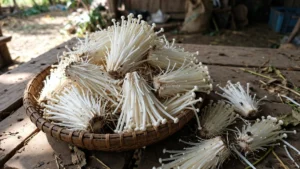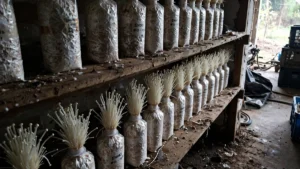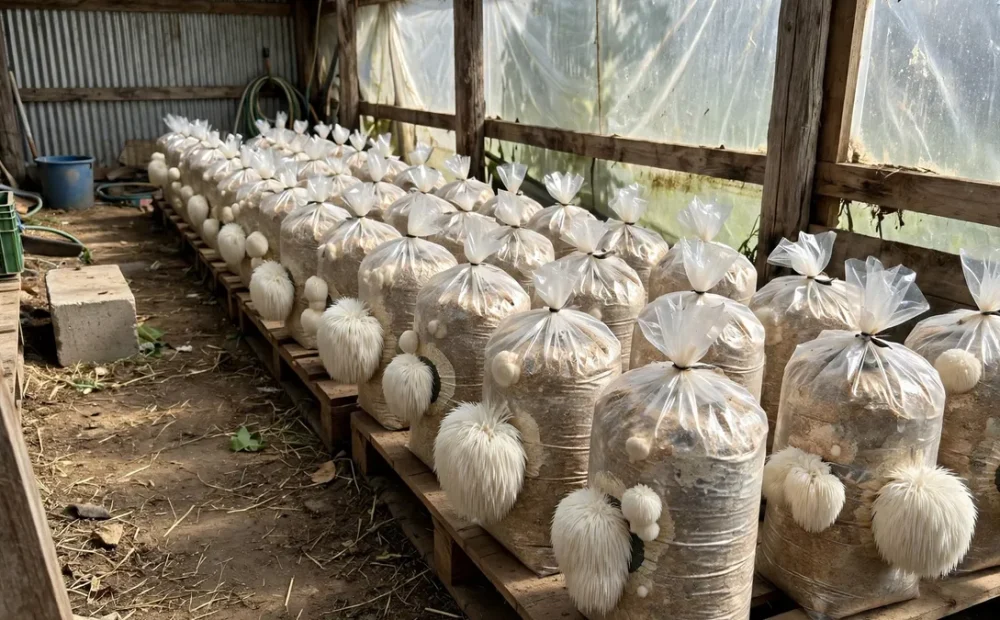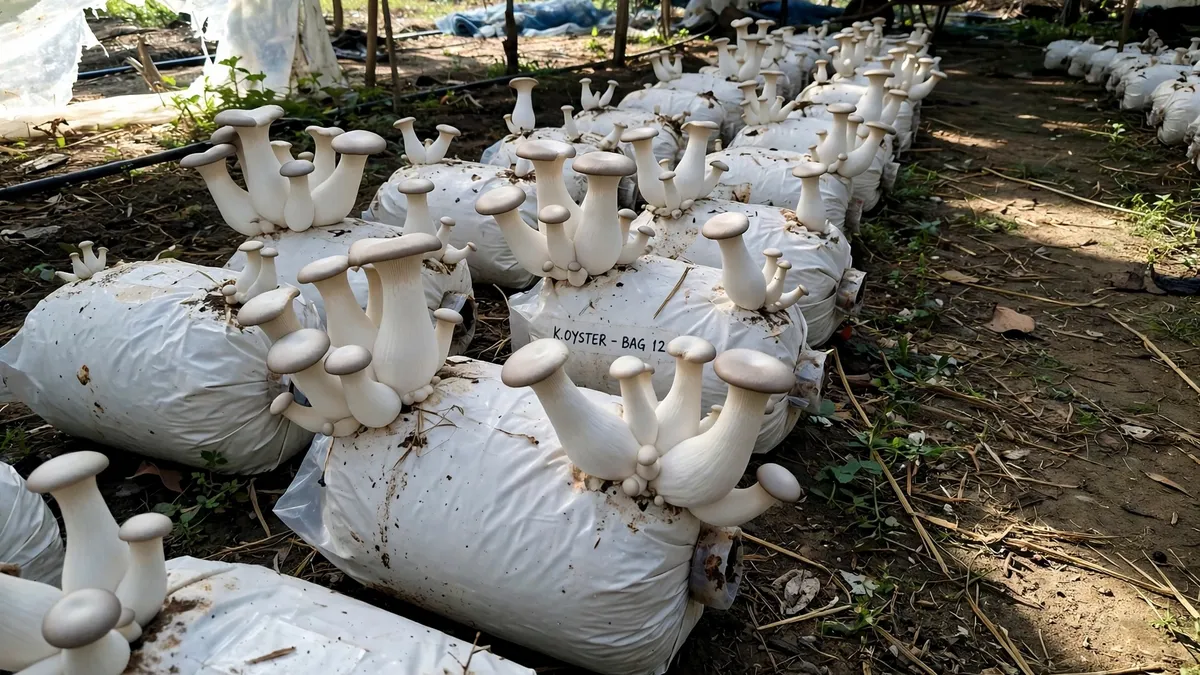
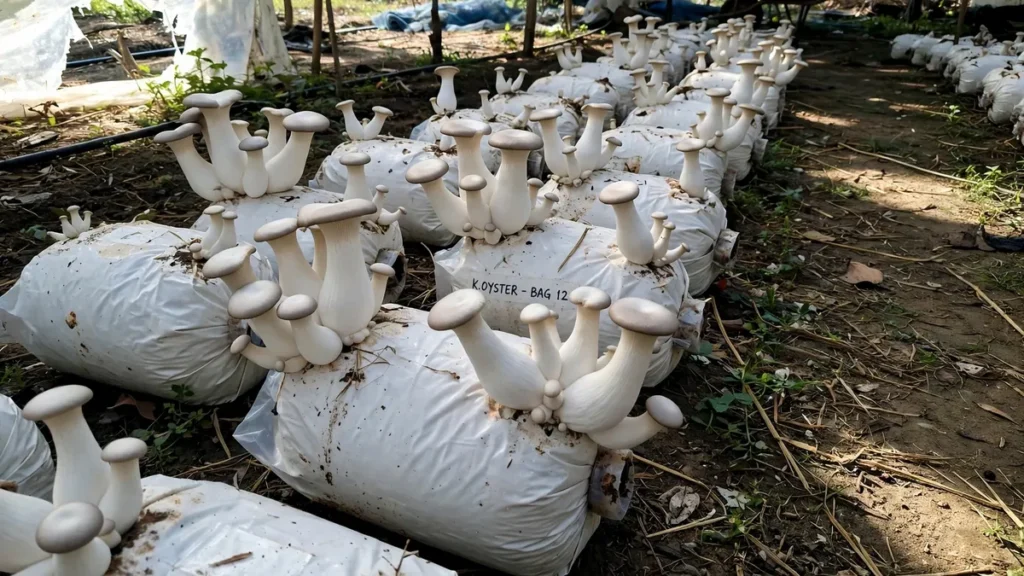
Cut a king oyster stem across, and the round you get looks like a scallop: pale, thick, and firm enough to brown in a pan without falling apart. That single quality is what makes the mushroom worth a trip. Where a pale oyster collapses into soft ribbons, a king oyster holds its shape, takes a sear, and comes off the grill with a mild, nutty flavour that suits butter, thyme, or smoke. It is the mushroom for people who like their food to have some bite.
The farms that grow it are quiet, cool halls full of substrate bags, each one sprouting a handful of thick white stems. A stay built around one of those halls is a working visit: you learn to cut a stem at the base, you watch the grower judge which stems are ready, and by evening the morning’s cut is on the grill. Nothing about it is staged. The growing is the holiday, and the meal is the proof that it worked.
Here are nine stays where that works well in 2027, from a Loire barn with a terrace grill to a canal-side grow hall in Amsterdam.
Key takeaways
- King oysters fruit as single thick stems from substrate bags, and two or three nights is usually enough to catch a cutting and a grill session.
- Choose a stay that grows on straw or sawdust, keeps its fruiting hall cool and damp, and lets guests cut stems beside the growers.
- A good stem feels firm and dry, with a smooth pale surface, a small dry cap, and no slime or dark patches anywhere on it.
- Reserve the grill session when you book the room, because that is where a thick stem earns its keep.
- Gluten never comes from the mushroom, but farm kitchens, sauces, and battered plates can carry it, so check cross-contact before eating.
What a king oyster mushroom retreat actually is
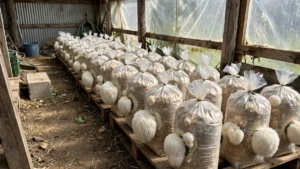
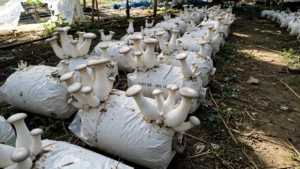
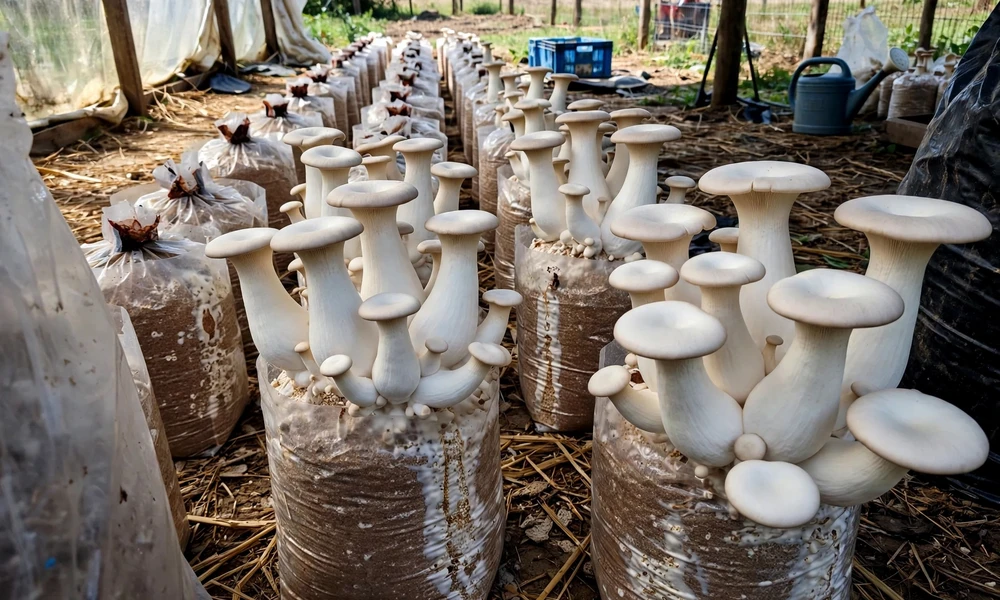
Start with the bag. Straw and sawdust are packed into a plastic sack, inoculated with spawn, and left in the dark while white mycelium threads through the whole mix. Once the bag is fully colonised it moves into the fruiting hall, slits are cut in the sides, and thick stems push out one by one over the next few days. The grower walks the rows several times a day, checking the air, the damp, and the temperature, because a hall that dries out stalls the stems and a hall that stays wet spoils them.
A retreat is two or three nights built around that rhythm. Mornings belong to the hall, where you learn to cut a stem cleanly at the base and leave the bag intact for the next ones. Afternoons belong to the kitchen, where the morning’s cut becomes thick grilled rounds, a stir-fry, or a slow braise. Evenings are unhurried: a walk, a shared table, and a grower explaining what happens to spent bags and how the farm composts them.
Every stay below grows Pleurotus eryngii, the king oyster, and several grow a second variety too, so you can taste the difference side by side. Keep the distinctions straight: shiitake grows on logs and tastes woodier, porcini is a wild mushroom that is foraged, never farmed, and the pale oyster grows in thin fan-shaped clusters rather than thick single stems. A stay that cannot name its species is a stay to skip, and our roundup of rutabaga farm retreats makes the same demand of root-vegetable farms before it recommends one.
How we picked these nine stays
Our first test was the fruiting hall itself. A farm worth visiting holds its hall somewhere around 14 to 18 degrees, keeps the air damp without wetting the floor, and cuts stems every day so nothing goes limp or slimy on the bag. We gave extra credit to farms that grow on straw or sawdust, compost their spent bags, and could tell us how long a bag keeps fruiting before it is retired.
Then we weighed the stay. A room needs to be clean, warm, and quiet, with a proper bed and a window that opens, and the kitchen needs to cook the farm’s own crop rather than buying mushrooms in. We put price last on purpose. A cheap bed beside a neglected hall is not good value, and a grand bedroom above a tired kitchen is not a retreat. Growing, kitchen, and rooms, in that order, decided every place on this list.
The 9 best king oyster mushroom farm retreats of 2027
Trumpet Stem Rooms on the Loire, Paris
What we like: A barn once used as a wine storehouse outside Paris, where substrate bags stand in long rows in the old cellar, the grower leads the morning cutting herself, and the terrace grill runs at dusk. What to consider: Terrace dinners depend on the weather, and the rooms above the hall can carry a faint substrate smell in warm weeks. Best For: Couples on a first mushroom trip who want it quiet. Style: Whitewashed stone rooms with oak beams and plain linen. Price Range: $78–$116 per night. Standout Feature: A dusk grill class where the chef scores thick slices before they hit the heat.
Stone Cellar Stems in the Rhône Hills, Lyon
What we like: A stone cellar farm in the Rhône hills with a steady cool temperature all year, warm rooms, and a kitchen that braises stems slowly in red wine. What to consider: The cellar doorways are low, and mobile signal is weak downstairs. Best For: Travellers who enjoy long lunches and slow afternoons. Style: Stone rooms with wool throws and candlelit dining. Price Range: $90–$135 per night. Standout Feature: Braised stems cooked with the farm’s own wine.
Brabant Substrate Hall, Brussels
What we like: A family-run Brabant farm with a tidy fruiting hall, a small shelf of mushroom books, and a host who walks guests through the whole bag cycle from spawn to compost. What to consider: The front rooms face a busy road, so ask for a garden room if you sleep lightly. Best For: Curious first-timers who like to ask questions. Style: Tidy, bright rooms with a shared reading corner. Price Range: $72–$108 per night. Standout Feature: A hands-on bag-filling workshop where guests pack their own substrate.
Canal-Side Grow Hall, Amsterdam
What we like: A canal-side grow hall fruiting king oysters on straw and sawdust, with a bright modern kitchen and a chef who builds the evening menu around the day’s cut. What to consider: The stairs are steep, and cutting groups are small, so sessions sell out early. Best For: Food lovers who came for the grill as much as the growing. Style: Light modern rooms above the grow hall, with canal views. Price Range: $124–$186 per night. Standout Feature: A five-course stem tasting menu that changes with each fruiting.
Stem Beds in a Berlin Glasshouse
What we like: A glasshouse farm on the edge of Berlin where king oysters grow on substrate beds in neat rows, the guesthouse is light and airy, and the communal kitchen runs a daily grill lunch. What to consider: Summer heat can shrink the stems in July and August. Best For: Summer visitors who enjoy bright, open rooms. Style: Airy glasshouse rooms with plants and pale timber. Price Range: $84–$126 per night. Standout Feature: A communal grill lunch where guests and growers share the same table.
Danube Grow Hall, Vienna
What we like: A Danube-side barn farm with years of bag-growing behind it, generous rooms, and a kitchen that grills king oyster slices beside root vegetables from its own garden. What to consider: School groups book the farm in spring, so weekends can be lively. Best For: Families travelling together for a weekend. Style: Wide, calm rooms with garden views and a big dining hall. Price Range: $98–$146 per night. Standout Feature: A garden grill dinner built around the farm’s vegetables and mushrooms.
Vltava Grow Rooms, Prague
What we like: A riverside farm outside Prague where king oysters fruit in a converted dairy, the rooms are warm and plain, and the kitchen serves a slow-braised stem dish that regulars return for. What to consider: The lanes are narrow after dark, and a car makes the trip much easier. Best For: Quiet-seekers who like slow mornings. Style: Plain farmhouse rooms with a wood stove and a shared kitchen. Price Range: $76–$113 per night. Standout Feature: A slow-braised king oyster dish made from the morning’s cut.
Kent Chalk Grow Rooms, London
What we like: A Kent chalk cellar farm within easy reach of London, with a cool even fruiting room, comfortable bedrooms, and a kitchen that pickles and ferments surplus stems next to the fresh dishes. What to consider: The cellar stays cool all year, so pack a layer even in summer. Best For: Weekend visitors from London after a short escape. Style: Comfortable country rooms beside a chalk-cellar tasting area. Price Range: $110–$164 per night. Standout Feature: A pickling session that turns surplus stems into jars to take home.
High Lofts Above the Lothian Barns, Edinburgh
What we like: A Lothian loft farm where king oysters grow in a draughty old barn the growers have tuned with fans and misters, and the bedrooms are warm, high-ceilinged, and quiet. What to consider: The hall runs cooler than most, so stems can be slower in winter. Best For: Travellers who enjoy old buildings and unhurried mornings. Style: High-ceilinged loft rooms with wool throws and a shared hearth. Price Range: $132–$198 per night. Standout Feature: A misting demonstration showing how humidity shapes a stem.
King oyster mushrooms, plainly explained
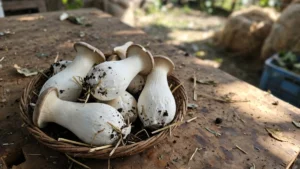
Pleurotus eryngii, the king oyster, is a thick white stem with a small tan cap, also sold as the king trumpet or French horn mushroom. Its flavour is mild and slightly nutty, its flesh is firm and meaty, and it picks up butter, garlic, or smoke easily, which is why it suits thick slices on a grill or rounds seared like scallops.
It fruits from bags of straw or sawdust substrate, one stem at a time, never in clusters. The grower cuts slits in the bag, keeps the hall cool and damp, and cuts each stem free at the base when it is ready. From inoculated bag to spent compost the cycle runs a few weeks, so a single visit can show you every stage, from white mycelium to the compost heap.
Keep the lookalikes straight before you book. The pale oyster grows in thin fan-shaped clusters with delicate flesh, while the king oyster grows as single thick stems made for slicing. Shiitake grows on logs, carries a broader cap, and tastes woodier and more savoury, and it takes months to fruit. Porcini is a wild foraged mushroom with a thick stem and a nutty taste, and it never grows in a bag. Our roundup of porcini farm retreats names its crop and its lookalikes the same way before it recommends a stay.
The caveats that matter
King oysters are an everyday food when fresh and cooked, but a handful of cautions still apply. Wild mushrooms should never be eaten unless an expert has named them, because many pale fungi look alike and some are poisonous. On a farm, eat only stems the growers cut with you, and ask how the crop was grown if anything is unclear. Anyone with a mushroom allergy should keep out of the fruiting hall as well as off the plate, because airborne spores can set off a reaction.
| Detail | What is known |
|---|---|
| Species on these farms | Pleurotus eryngii, king oyster, raised on straw or sawdust substrate |
| How it fruits | Single thick stems over several days; each bag keeps fruiting for weeks |
| Best time to visit | All year in cellars; autumn brings the strongest glasshouse fruiting |
| How to spot a fresh stem | Firm and dry, with a smooth pale surface, a small dry cap, and a mild fresh smell |
| What to avoid | Slimy, dark-spotted, or sour-smelling stems, and wild mushrooms you cannot name |
| How to cook it | Thick slices on a hot grill or in a pan; a crowded pan makes them steam |
| Who should take care | Anyone with a mushroom allergy, and anyone eating wild fungi without an expert |
| Gluten note | The mushroom has no gluten; shared kitchens, sauces, and batters can add it |
The cooking is as important as the cutting. Stems give off water as they cook, so a crowded pan leaves them soggy. Thick slices, high heat, one layer at a time, and a little patience will give you browned edges and a firm bite.
Checklist: booking a king oyster stay honestly
Run through these before you book, and again when you arrive.
- Find out which species the farm grows, and whether guests cut stems with the growers or only look on.
- Step into the fruiting hall and check it is cool, damp, and clean, with bags at several stages of growth.
- Make sure the kitchen grills the farm’s own stems, and raise gluten cross-contact if it applies to you.
- Check the bedroom has a proper bed, a window that opens, and quiet after dark, which matter more than decor.
- Ask what the farm does if the fruiting is small on your dates, and whether the kitchen has a backup plan.
- Bring a layer for cellar farms, plus a small bag for any mushrooms the farm lets you carry home.
Frequently asked questions
When is the best time to visit a king oyster farm?
Cellar farms fruit through the year, so any month can work. Glasshouse farms peak in autumn, when cool air suits the stems, and slow down in high summer. Ask what is fruiting on your dates before booking, since a stem is ready in days rather than weeks.
Can beginners pick king oyster mushrooms themselves?
Yes, and most of these stays are built around it. A grower demonstrates how to cut a stem at the base without tearing the bag, then you work beside them. No experience is needed, just clean hands and a readiness to follow the grower’s lead.
How do I tell a fresh king oyster from a tired one?
A fresh stem feels firm and dry, with a smooth pale surface, a small dry cap, and a mild fresh smell. A tired one feels slimy, shows dark spots, or smells sour, and belongs left on the bag. When in doubt, ask the grower, since a fresh stem is obvious once you have held one.
Are king oyster mushrooms the same as oyster mushrooms?
No. King oysters are single thick stems made for slicing and grilling, while oyster mushrooms grow as pale fan-shaped clusters with thin flesh. Both sit in the genus Pleurotus, but they are different species, raised differently, and cooked differently, so a farm growing one is not automatically a farm growing the other.
Can I eat king oyster mushrooms raw?
Cooking them is the better choice. Raw king oysters are tough and can upset the stomach, while a short time in a hot pan or on the grill makes them tender and brings out their flavour. Every kitchen on this list cooks the morning’s cut, so raw eating never comes up.
How do I handle gluten at a farm kitchen?
Ask the kitchen about shared pans, shared fryers, and battered dishes, and whether sauces use soy sauce or flour. The mushroom itself carries no gluten, yet a shared farm kitchen can pass it along, so a plain question before the meal is the safest move. Our roundup of morel farm retreats gives the same advice for spring mushrooms: ask early, ask plainly.
The bottom line
The best king oyster retreat in 2027 is the one where the growing is genuine, the kitchen grills what was cut that morning, and the bedroom lets you sleep well after a day in a cool hall. The Loire barn is the gentlest introduction, the Amsterdam grow hall has the strongest kitchen, and the Kent cellar makes the easiest weekend trip, but any of the nine will show you how a mushroom travels from a substrate bag to a plate.
Give it two or three nights, ask which species the farm grows, and judge the stay on its cutting and its cooking rather than its decoration. Firm stems, a hot pan, and a grower who answers questions plainly are the signs you have found the right farm.