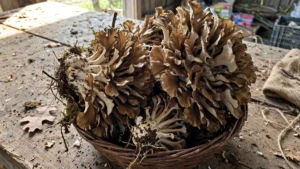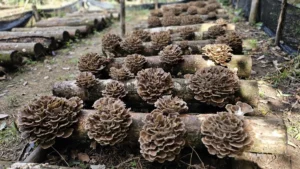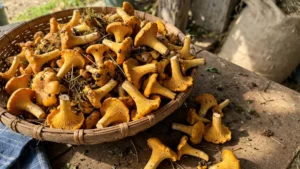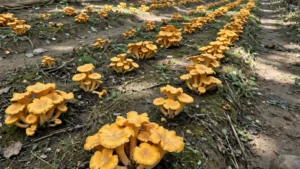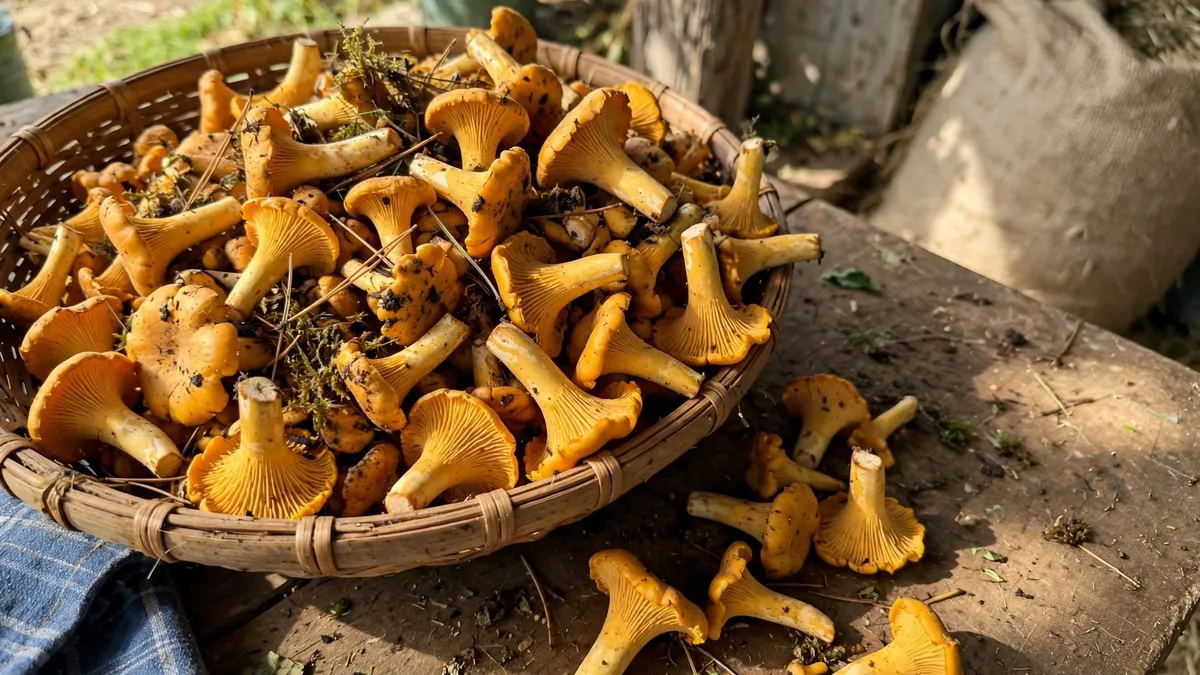
A chanterelle farm escape begins with the season, not the flight. Chanterelle is Cantharellus cibarius, a wild mushroom that fruits after summer rain, and the best weeks move with the weather from one year to the next. A farm that fruited in mid-August one year may wait until September the next, so your first message should ask about the woods, not the rooms.
Once the dates are set the trip is straightforward. Fly to a city, take a train or a farm transfer into the hills, and spend two or three nights walking beech, oak, birch and pine slopes beside a guide. Mornings belong to gathering, afternoons to cleaning, slicing and cooking, and evenings to cream sauces, pasta and soup made from the basket you carried home. The farms below are small, the guides are local, and the work is genuine, which is the whole point.
The nine steps that follow take you from the first message to the jar of dried caps you pack for home. Work through them in order and the woods will do the rest.
Key takeaways
- Chanterelle is Cantharellus cibarius, a wild mushroom that fruits after summer rain, so the season sets your dates, not the calendar.
- Two or three nights is the right length: one morning to learn the woods, one to gather in earnest, and one to cook and dry.
- Every walk needs a guide, because chanterelle has lookalikes, and only a checked mushroom reaches the kitchen.
- Get the rate in writing first: guided walks, meals, transfers and cooking sessions are sometimes charged apart.
- Chanterelle itself has no gluten, but the kitchens bake with flour, so ask about gluten before you take a seat to eat.
What a chanterelle farm escape actually is
A chanterelle farm escape is a short woodland holiday built around a wild mushroom. You sleep on a farm that owns or manages beech, oak, birch or pine woods, and each morning you walk those woods beside a guide, hunting the golden funnel caps of Cantharellus cibarius. The mushroom lives in partnership with tree roots, so the walk crosses real forest rather than a planted bed, over uneven ground that is damp and thick with fallen leaves.
The day falls into a rhythm. The walk begins at dawn, while the caps are cool and firm, and the basket fills slowly as the guide points out the signs: a wavy cap edge, a stem too thin, a ridge that looks wrong. Back at the farm the afternoon goes to brushing clean, slicing, and laying pieces out to dry, while the kitchen turns the freshest caps into cream sauce or pasta. Evenings stretch out slowly, with soup, bread and the smell of sautéed mushrooms in the air.
This is not a hotel that happens to serve mushrooms. The farms in this series are working places with three to eight guest rooms, a drying barn or shed, and a family that has gathered these woods for many years. For the same kind of trip around a different wild mushroom, our porcini farm escape guide follows the same pattern in the same European woods, with a brown-capped bolete in the basket instead of a golden chanterelle.
How to plan your chanterelle escape in nine steps
The steps below carry you from the first message to the last morning, in the order that avoids the most trouble. Each one says what to do, what to avoid, who it suits, how long it takes, and the tip that matters most. Read them all once before booking anything, then work them in order.
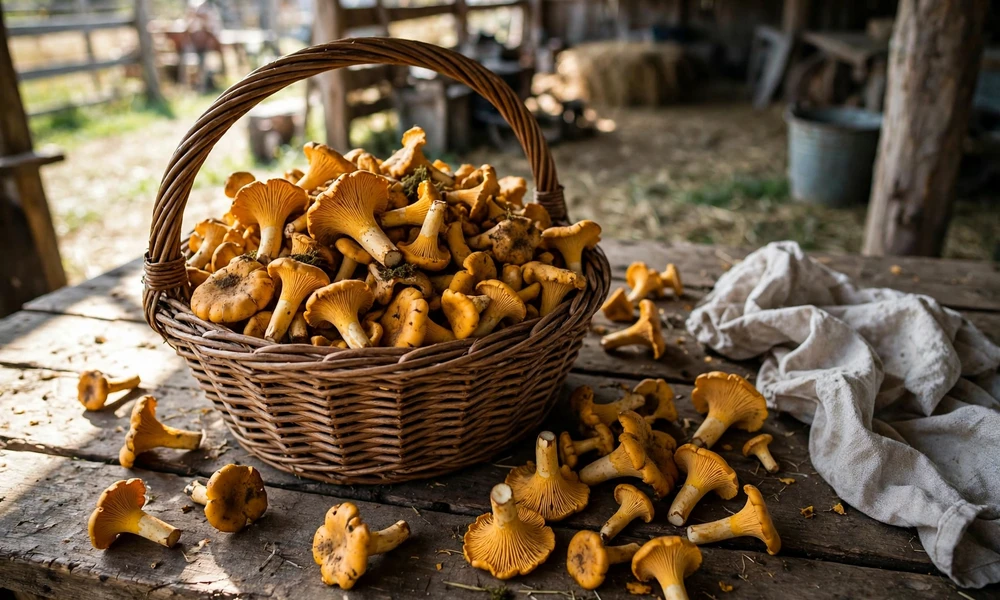
The 9 steps to a chanterelle farm escape
Step 1: Ask the farm when the golden caps are coming up
What to do: Write to two or three farms and ask which weeks the chanterelles are coming up, not only which weeks rooms are free. Ask about the rain so far, whether the early flush has begun, and whether a second flush is expected. What to avoid: Do not fix a week in June and hope the season arrives early; chanterelles fruit after summer rain, and a dry July pushes the season late. Best For: Travellers who can shift their dates by a week. Time Needed: A week of emails before booking. Standout Tip: Ask which week brought the farm its best baskets last year, not only when the season opens.
Fruiting follows rain and warm nights, so the season can move by two or three weeks between years. A farm that answers with real detail, naming slopes and recent finds, is one worth trusting. A farm that answers with a price list alone is not.
Step 2: Choose a farm with mossy woods beside the door
What to do: Pick a farm with beech, oak, birch or pine woods on its own land, a short walk from your room. Ask how far the nearest good slope sits, and whether the guide walks it with you or sends you out alone. What to avoid: Do not choose a farm that drives guests to a forest once a week; the walk should start at the door, at dawn, every morning. Best For: Travellers who came for the woods, not a shuttle. Time Needed: An evening of research and a note to each farm. Standout Tip: Ask the farm to name the trees on its slopes, since chanterelles follow beech, oak, birch and pine.
Step 3: Get the whole price in writing before any deposit
What to do: Get the nightly rate in writing, with meals, guided walks, transfers and the cooking session spelled out line by line. Ask what a jar of dried caps costs to carry home, and whether extra walks are charged. What to avoid: Do not pay a deposit against a rate that only promises breakfast included; walks and transfers are often charged apart. Best For: Travellers who dislike surprise charges. Time Needed: A day of emails going back and forth. Standout Tip: Ask for the whole price of a three-night stay with every walk included, so farms can be compared fairly.
Most chanterelle stays run from about seventy dollars a night for a plain room to around one hundred and seventy for a suite with meals and walks. The cheapest room is seldom the cheapest trip once the walks are counted.
Step 4: Stay two or three nights rather than one
What to do: Book at least two nights, and three when you can. The first morning teaches you the woods, the second fills the basket, and the third is for cooking, drying and a slow evening meal. What to avoid: Do not attempt it in a single night; the first walk finishes before you have learned what a good cap looks like. Best For: Anyone wanting more than a taster. Time Needed: A single message to confirm the dates. Standout Tip: Keep the cooking day last, so the kitchen works with your best basket.
Step 5: Book the journey after the farm confirms the flush
What to do: Once the farm confirms the fruiting weeks, book the flight and the train, then ask about the transfer from the station. Learn who collects you, from where, and what happens when your flight is delayed. What to avoid: Do not book a non-refundable flight before the farm confirms the season; a dry spell can shift the whole trip by a fortnight. Best For: Travellers flying in from abroad. Time Needed: An afternoon of bookings. Standout Tip: Pick a flight landing before noon, so you catch the afternoon walk on arrival day.
Farm transfers are usually one car or van, and the driver may run only once a day. A late flight can cost you the first walk, so land early and pack light.
Step 6: Pack for damp woods, rain and a basket
What to do: Pack closed shoes with grip, a light rain layer, gloves for handling, and a bag you are happy to get muddy. Bring a small knife and a soft brush when you own them, though most farms lend both. What to avoid: Do not wear white trainers or open sandals; the paths are wet, the slopes are steep, and the mud is deep. Best For: Travellers who like being ready. Time Needed: An evening of packing. Standout Tip: Pack a spare pair of socks for every morning, because wet feet cut walks short.
Step 7: Learn what to pick and what to leave on day one
What to do: On the first walk, stay near the guide and learn the rules: cut the stem cleanly, leave the young buttons, leave any cap you cannot name, and carry the basket so the caps stay whole. What to avoid: Do not pick alone, do not fill your basket with anything the guide has not checked, and do not taste anything in the woods. Best For: First-time foragers. Time Needed: One morning in the woods. Standout Tip: Ask the guide to show you one lookalike, so you learn what to leave as well as what to pick.
Chanterelle has lookalikes, and some are bitter or worse, so the guide’s eye is the whole safety system. A careful first morning makes every later morning quicker and safer.
Step 8: Use the afternoon to clean, slice and cook
What to do: After the walk, brush the caps clean, slice them thin, and lay them out in the drying barn or on racks in the sun. Keep the freshest caps for the kitchen and dry what is left. What to avoid: Do not rinse chanterelles under a tap; water soaks into the flesh and spoils the texture. Brush them clean instead. Best For: Travellers who enjoy the slow work. Time Needed: An afternoon at the farm. Standout Tip: Slice thin and dry quickly, because thick slices hold moisture and spoil in the jar.
Drying is where the trip earns its keep. A basket of fresh caps becomes a jar of dried slices that flavours cream sauce and soup for months, and the soaking liquid works as a stock on its own.
Step 9: Eat from your basket, then pack the dried caps home
What to do: Eat the evening meal the kitchen cooks from your basket, ask for the recipes, and pack the dried slices in a sealed jar or bag for the journey home. What to avoid: Do not pack fresh caps for a long journey; they bruise, sweat and spoil in a warm rucksack. Dried slices travel, fresh caps do not. Best For: Travellers who cook at home. Time Needed: An evening at the table plus a morning of packing. Standout Tip: Label the jar with the farm and the date, so you recall which woods it came from.
When to go and where to start
July into October is the season, with September the most reliable month across France, Italy and the Balkans. The first flush follows summer rain, and a second flush often follows a cool, wet September. Ask the farm about both, and keep a week of flexibility in your dates when you can.
Begin with the farm, not the flight. Write to two or three farms, compare their answers about the season, and book the one that describes its woods in detail. Our morel farm escape guide covers the same kind of planning for a spring mushroom, for travellers who would rather go in April than in September. Whichever region you pick, the season sets the dates, so let the farm lead and the travel follow.
The caveats that matter
Wild mushrooms deserve respect, and chanterelle is no exception. Eat nothing a guide has not checked, never eat chanterelle raw, and never pick alone. The kitchens use flour, so anyone avoiding gluten should ask before ordering pasta, goulash or toast. The rest comes down to warm weather, rain, mud and the distance to the nearest town.
| Detail | What is known |
|---|---|
| What it is | Cantharellus cibarius, golden funnel-shaped wild mushroom, apricot scent, blunt ridges not gills |
| Best months | July to October, with September the most reliable across Europe |
| How long to stay | Two or three nights: learn, gather, cook and dry |
| Can it be eaten raw | No, chanterelle must be cooked through, and only after a guide has checked the pick |
| Who should ask first | Anyone avoiding gluten, and anyone with a mushroom allergy |
| What to pack | Closed shoes for mud, gloves, a rain layer, a bag you do not mind getting dirty |
| How far ahead to book | Four to six weeks for the summer season, two weeks outside it |
| What it is not | Not porcini, not morel, not shiitake, despite the shared kitchen |
A last practical point: farm stays in this series are small, and summer weekends go first. When your dates are fixed, secure the room before the train ticket is bought. A farm with three guest rooms has no fourth one to offer you.
Checklist: before you book a chanterelle farm escape
Go through these checks before you pay, and again in the week you travel.
- Check the fruiting dates: ask the farm which weeks the caps are really coming up, not only when rooms are free.
- Check what the rate includes: meals, transfers, guided walks and the cooking session are sometimes charged separately.
- Raise the food questions early: gluten in pasta and goulash, dairy in cream sauces, and any mushroom allergy in the group.
- Check the ground underfoot: sturdy shoes, gloves for handling, and a bag you are happy to get dirty.
- Check the pickup: who meets you, at which station, and what happens when your flight is late.
- Check the rain backup: a wet spell makes the trails slippery, so keep one afternoon open for the kitchen.
Frequently asked questions
Do I need foraging experience to visit a chanterelle farm?
No. The guide walks with you and checks every mushroom, so beginners are welcome here. The first morning teaches what to pick and what to leave, and by the second morning most guests are spotting caps on their own.
Is it safe to eat the mushrooms I pick myself?
Yes, once a guide has checked them and the kitchen has cooked them right through. Never eat a mushroom you picked yourself without a guide’s check, and never eat chanterelle raw. The rule on every farm here stays simple: the guide checks, the kitchen cooks.
What sets chanterelle apart from porcini?
They come from different species and different families. Porcini is Boletus edulis, brown-capped with a thick white stem and a sponge of tiny tubes, while chanterelle is golden and funnel-shaped, with blunt ridges under the cap instead of pores. Chanterelle is lighter and more peppery, with an apricot scent porcini does not have.
When is the best month for a chanterelle farm escape?
September is the most reliable month, inside a season that usually runs from July into October. Ask the farm itself, because the exact weeks shift with the weather and are not the same in France, Italy and Croatia.
Can children join a chanterelle farm escape?
Often yes. Foraging is physical and muddy, which children usually love, and the cooking sessions let them join in. Ask the farm about age limits, steep tracks and the forecast, and bring sturdy closed shoes for the whole group.
Does chanterelle contain gluten?
The mushroom itself carries no gluten, but many farm dishes are made with flour. Pasta, goulash and toast made with chanterelles contain flour, so ask first, and tell the kitchen if you need a gluten-free plate.
The bottom line
A chanterelle farm escape works when the season, the farm and the guide all line up. Write to the farm first, ask about the fruiting weeks, book two or three nights, and let the woods set the rhythm. The farms near Paris, Lyon, Turin and Florence are the simplest first trips, while Budapest, Ljubljana and Zagreb reward travellers who can spare the time. Our oyster mushroom farm escape guide is the closest alternative if you would rather book a cultivated mushroom trip than a woodland one.
Book the fruiting weeks, nail down what the rate covers, pack for mud, and arrive hungry. The best chanterelle escape is the one where you walk at dawn, cook in the afternoon, and eat what you gathered by the evening, with moss on your shoes and a jar of dried caps in your bag.