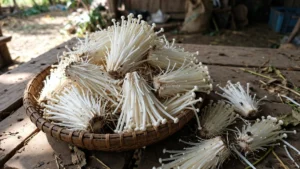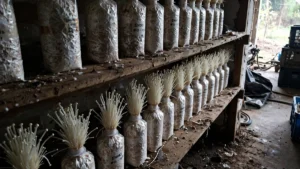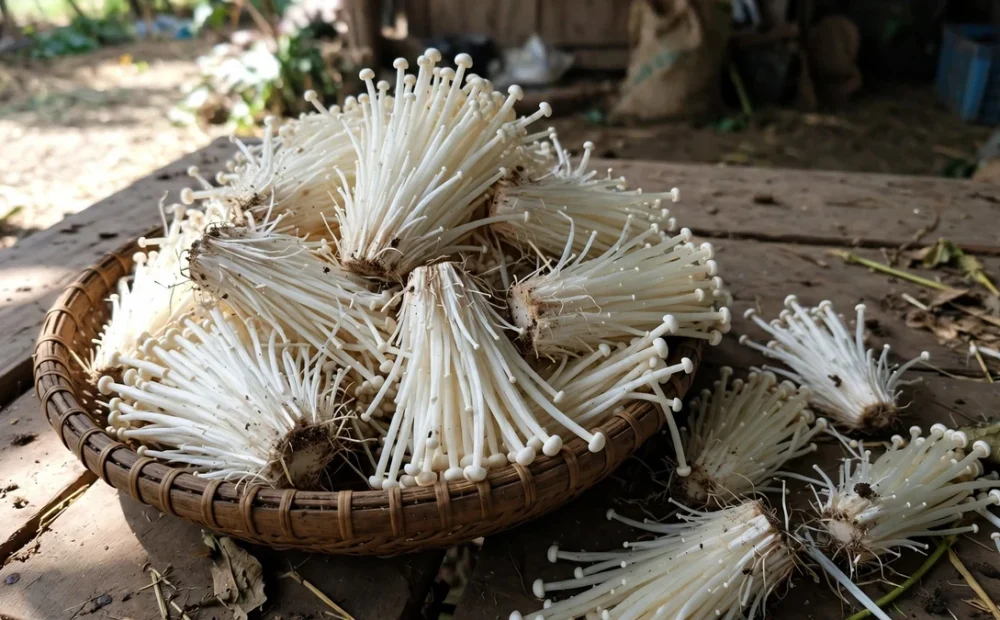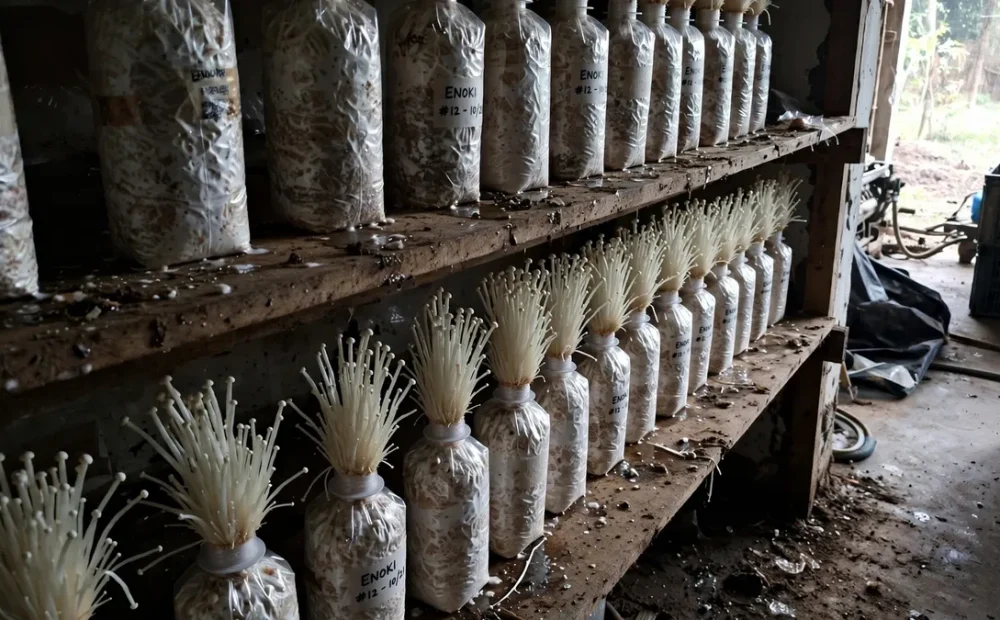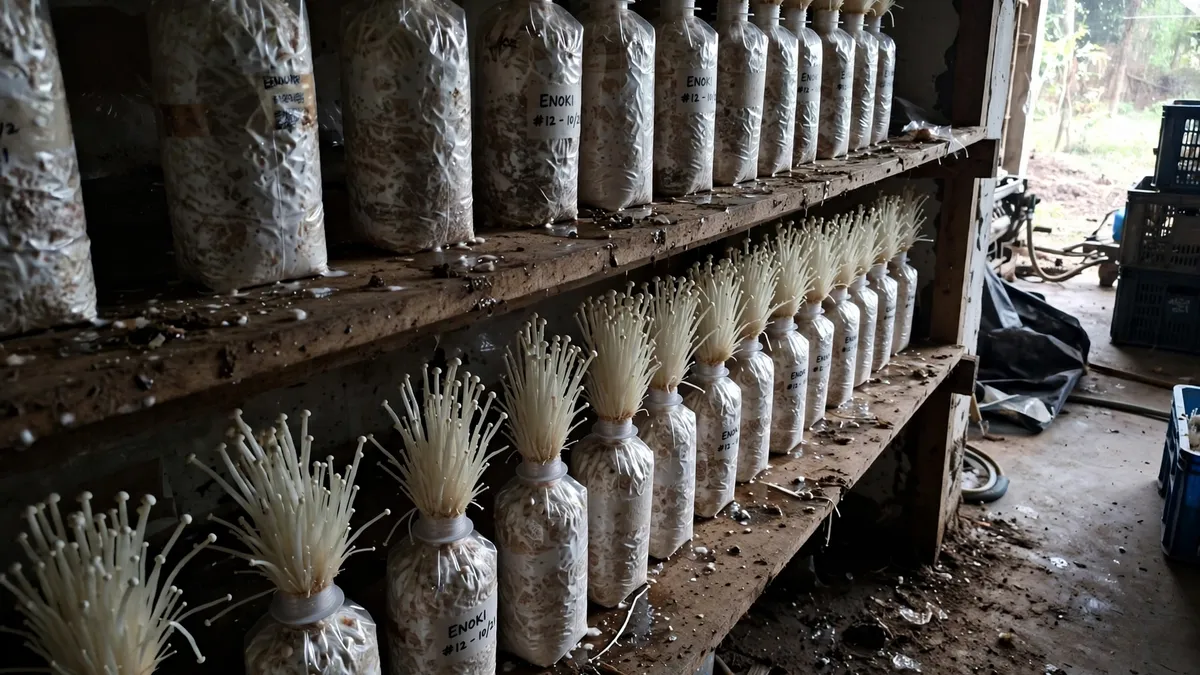
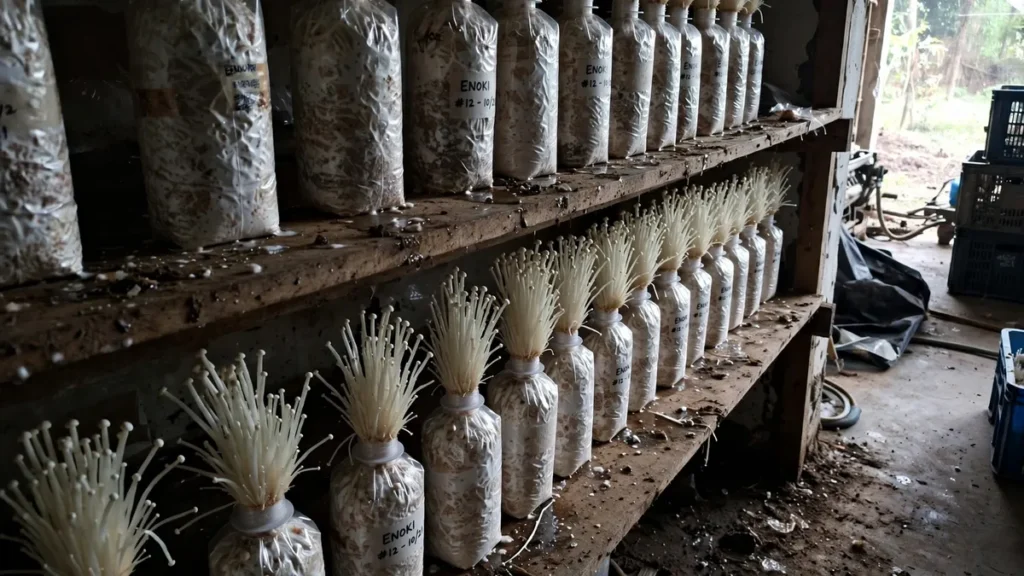
Enoki do not grow in fields. They grow in the dark, in bottles and jars stacked in cool rooms, where thin white stems push up in clusters toward a faint light. The grower controls the air, the water and the darkness, and the harvest comes all year, not in one season. That quiet indoor work is the point of the trip.
An enoki farm retreat is a few nights on a farm that grows enoki for the table, timed to a harvest you can watch. You sleep in a farmhouse room, eat long white stems cut from the bottle that morning, and walk the growing rooms to see the clusters rise in neat rows under low light. The farms run from the temple hills of Kyoto to the old streets of Hanoi, and the harvest ties them together.
Here are nine enoki farm retreats to weigh for 2027, starting with the gentlest Kyoto price and ending with the dearest Hanoi stay, covering bottle-grown enoki, hot-pot kitchens and mountain tables, so the choice turns on how you travel rather than where the map points.
Key takeaways
- Enoki grow indoors in bottles or jars in dark cool rooms, fruiting all year, so the trip follows the harvest calendar, not the seasons.
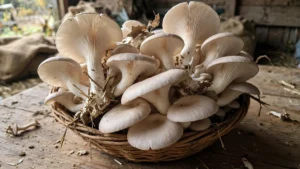
- Fresh stems are long, thin and white with tiny caps, mild and crisp; they go into soups, hot pots and noodles, never into a pan on their own.
- The cluster is cut at the base in one piece, then the brown root end is trimmed away in the kitchen — ask the cook to show you the cut.
- Growing rooms are cool, dim and quiet, so stays are small and calm, a drive from the nearest town, with supper at one shared table.
- Never eat enoki raw — wash them well and cook them through, since raw stems can carry germs — and soy sauce, broths and dumplings on the farm table may carry gluten, so settle the kitchen before you pay.
What an enoki farm retreat actually is
An enoki farm retreat means three to five nights on a working farm that grows enoki in bottles, timed to a harvest. You sleep in a farmhouse room, eat stems cut from the bottle that morning, and spend the days among the growing rooms, watching white clusters rise in rows under low light and carrying the basket back to the kitchen.
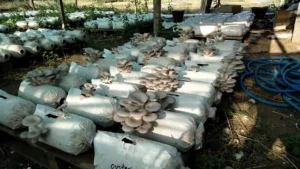
The work starts long before the harvest. A bottle is filled with sawdust and bran, steamed clean, and seeded with spawn, then left in the dark for weeks while the mycelium threads through the mix. When the bottle is ready, the grower moves it to a cool bright room, and the stems push up in a tight cluster, long and pale, ready to cut.
The farms are small, with a handful of rooms and one shared table, and the kitchen cooks what the growing room gave that morning. Fresh stems go into broth, noodles and hot pots, and the longest clusters are dried or pickled for the winter table. A farm that grows its own enoki is usually worth the extra night.
How we picked these stays, and what to ask first
We began with where enoki truly grow, not where they sell best. A genuine enoki farm offers growing rooms to walk through, clusters to stand among at harvest time, and a kitchen working with its own mushrooms. A farm that buys its stems from a wholesaler is a guesthouse with a mushroom menu, not an enoki farm.
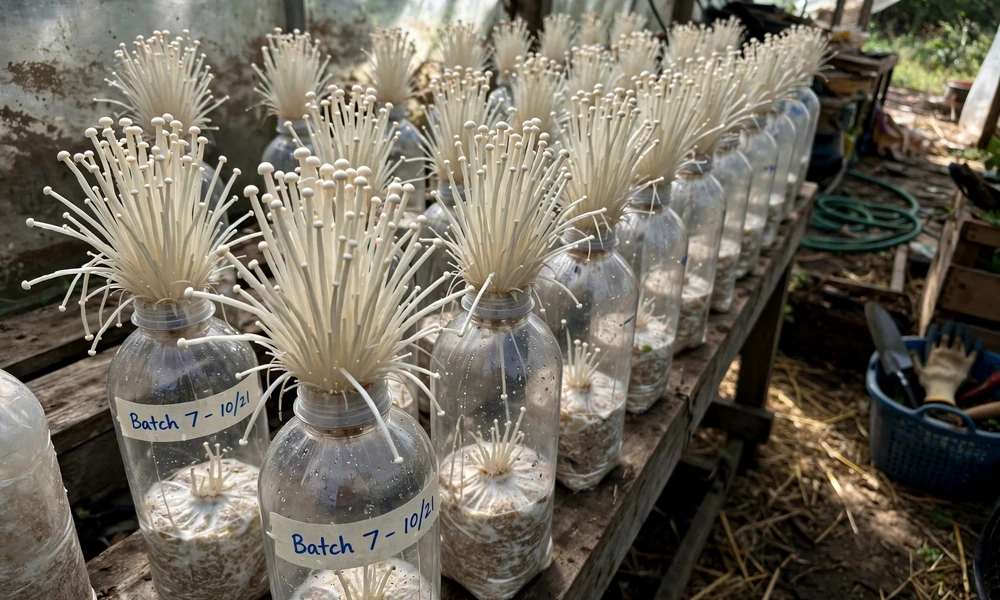
The best farms keep their guest list short, so the harvest stays real work instead of a show put on for visitors. Ask in the first message what the nightly rate covers — supper, the lift from the nearest town and the walks among the bottles should be part of the price, not extras added at checkout. A grower who talks plainly about bottles, spawn and harvest is usually a grower who looks after guests well too.
The 9 best luxury enoki farm retreats of 2027
Kyoto, Japan — Enoki in Bottle Rooms Below the Temple Hills
What we like: Enoki in Kyoto grow in bottles in the shaded hills below the temples, and the farm simmers them in a clear dashi with tofu. The hills are quiet, and the kitchen serves enoki broth, mushroom rice and pickled greens.
What to consider: The growing rooms are cool and dark, the walks are short and the evenings are quiet, so bring a book and a warm layer.
Style: Japanese temple-hill bottle-room farm stay. Best for: Travellers who want enoki where Japan grows its finest. Price range: $66–$94 per night. Standout feature: Enoki cut from the bottle that morning.
Osaka, Japan — Bottle-Grown Enoki Near the City Markets
What we like: Enoki in Osaka grow in bottles in the hills outside the city, and the farm drops them into a hot pot at the table for supper. The markets are close, and the kitchen serves enoki hot pot, mushroom soup and warm rice.
What to consider: The city is near and the farm books fast in spring, so write early and travel light.
Style: Japanese city-edge bottle-room farm stay. Best for: Travellers who want enoki within reach of a great food city. Price range: $82–$112 per night. Standout feature: Enoki dropped into the hot pot at your table.
Seoul, South Korea — Enoki in the Pine Hills North of the City
What we like: Enoki in Seoul grow in bottles in the pine hills north of the city, and the farm simmers them in a beef broth with noodles. The hills are cool, and the kitchen serves enoki broth, mushroom pancakes and warm rice.
What to consider: The hills are cold in the winter months, and the farm is a drive from the city, so pack a warm layer and settle the lift early.
Style: Korean pine-hill bottle-room farm stay. Best for: Travellers who want enoki near Seoul without the city noise. Price range: $98–$128 per night. Standout feature: Enoki simmered in broth from bottles harvested that morning.
Busan, South Korea — Coastal Enoki and Sea Air
What we like: Enoki in Busan grow in bottles in the hills above the coast, and the farm stir-fries the stems with greens and seafood for supper. The sea air is fresh, and the kitchen serves stir-fried enoki, mushroom soup and steamed rice.
What to consider: The coastal wind bites in the cool months, and the farm sits above the harbour, so bring a windproof layer.
Style: Korean coastal bottle-room farm stay. Best for: Travellers who want enoki with sea air and mountain walks. Price range: $114–$144 per night. Standout feature: Enoki stir-fried from coastal bottle rooms.
Taipei, Taiwan — Mountain Enoki Above the Capital
What we like: Enoki in Taipei grow in bottles in the mountains above the capital, and the farm steams them with ginger and chicken for supper. The mountains are green, and the kitchen serves steamed enoki, mushroom dumplings and warm tea.
What to consider: The mountain roads crawl in the mist, and the farm fills its harvest weeks early, so write well ahead.
Style: Taiwanese mountain bottle-room farm stay. Best for: Travellers who want enoki above a city they can still visit. Price range: $132–$164 per night. Standout feature: Enoki steamed from the mountain bottle rooms.
Chengdu, China — Enoki in the Sichuan Hills
What we like: Enoki in Chengdu grow in bottles in the Sichuan hills, and the farm drops them into a mala hot pot for supper. The hills are warm, and the kitchen serves enoki hot pot, mushroom noodles and warm rice.
What to consider: The Sichuan kitchen is fiery, and the hills are humid in the harvest months, so ask about mild dishes before you book.
Style: Chinese Sichuan hillside bottle-room farm stay. Best for: Travellers who want enoki with bold Sichuan cooking. Price range: $148–$180 per night. Standout feature: Enoki in the mala hot pot of the Sichuan hills.
Hangzhou, China — Enoki in the Lake Hills
What we like: Enoki in Hangzhou grow in bottles in the hills beside West Lake, and the farm simmers them in a light broth with bamboo shoots. The lake is calm, and the kitchen serves enoki broth, bamboo shoot soup and warm rice.
What to consider: West Lake draws crowds in the fine months, and the farm is a walk from the road, so travel in the cool morning air.
Style: Chinese lakeside bottle-room farm stay. Best for: Travellers who want enoki beside one of China’s prettiest lakes. Price range: $166–$198 per night. Standout feature: Enoki simmered beside West Lake.
Hong Kong — Enoki in the New Territories Hills
What we like: Enoki in Hong Kong grow in bottles in the hills of the New Territories, and the farm tosses them with garlic and oyster sauce for supper. The hills are green, and the kitchen serves garlic enoki, mushroom congee and warm tea.
What to consider: The city is close and the farm is small, so the harvest weeks fill fast and the rooms are plain.
Style: Hong Kong New Territories bottle-room farm stay. Best for: Travellers who want enoki a short ride from a great city. Price range: $184–$216 per night. Standout feature: Enoki tossed with garlic in the New Territories hills.
Hanoi, Vietnam — Enoki in the Northern Highlands
What we like: Enoki in Hanoi grow in bottles in the northern highlands, and the farm drops them into pho with herbs for supper. The highlands are cool, and the kitchen serves enoki pho, mushroom rolls and warm rice.
What to consider: The farm is the dearest stay here, and the highland roads are slow, so plan a year ahead and pack light.
Style: Vietnamese highland bottle-room farm stay. Best for: Travellers who want enoki in Vietnam’s cool north. Price range: $202–$234 per night. Standout feature: Enoki dropped into pho in the highlands.
Which enoki region fits your trip
If you want enoki where the crop is treated as a trade, start with Kyoto or Osaka, where the bottle rooms are widest and the farms are used to guests. A first visit works at either farm, with short walks through the growing rooms and long meals at the farm’s own table.
If you want scenery with your enoki, Hanoi puts the bottle rooms in the highlands, Hangzhou beside the lake, and Taipei in the mountains above the capital. Each of the three sits near a town with a market of its own, so a day off still tastes of the harvest.
If the bottle rooms leave you hungry for a different harvest, our guide to the shiitake farm retreats covers a log-grown mushroom instead, cut from oak in shaded yards, and the rutabaga farm retreats offer a root crop instead, dug from the ground rather than cut from a bottle.
The caveats that matter
Enoki farming answers to the harvest: farms give a best guess, never a promise, and a trip pinned to one cutting day gambles on cool dark rooms. The real warning is the mushroom itself.
| Detail | What is known |
|---|---|
| Best time to visit | All year, since bottle rooms fruit indoors; spring and autumn are the busiest harvest months |
| What the work involves | Walking the cool dark growing rooms, watching clusters cut by hand from bottles, and seeing them cooked in the farm kitchen |
| How long a stay runs | Three to five nights, set around a harvest |
| Who should take care | Guests with a mushroom allergy, and anyone unused to cool dark rooms or damp yards |
| What the kitchen serves | Enoki simmered in broth, dropped into hot pots, tossed with noodles and steamed with ginger, with pickles and warm tea beside the plate |
| Raw mushroom warning | Never eat enoki raw — wash them well and cook them through, since raw stems can carry germs; the kitchen always cooks them through |
| What to pack | Closed walking shoes, a warm layer for cool growing rooms, a rain jacket, and clothes that wash easily by hand |
| What it does not do | No promised harvest, no fixed menu, and no hotel-style service on a working farm |
Anyone with a mushroom allergy should ring the farm before booking. One question about the kitchen and the mushrooms before you book can spare you an awkward stay, and a farm that answers plainly is usually worth the visit. The same care applies at our porcini farm retreats, where the farm kitchen also cooks the crop it grew that day.
Checklist: booking an enoki farm stay honestly
Work through this list before you pay, and go over it again in the week before you travel.
- Ask for the harvest dates in writing, and find out what the farm offers if the clusters come late.
- Check the nightly price covers supper, the lift from the nearest town and the walks among the bottles.
- Ask if guests may cut clusters and watch the bottling, and whether the kitchen can cook a meal without mushrooms.
- Ask for a photo of the room before you pay, and check the bed, the heater and the hot water, since farm rooms are plain and small.
- Pack for cool rooms and damp yards: strong shoes, a warm layer, a rain jacket, and clothes you can wash in a basin.
- Keep a spare day for the nearest town, so a harvest that moves still leaves you a fine trip.
Frequently asked questions
What is the difference between fresh enoki and the enoki in supermarkets?
Fresh enoki from a farm are cut the day they are eaten, long and crisp with tiny caps. Supermarket enoki travel for days in plastic and go limp. Farm enoki keep their snap in hot broth; trim the root end, wash them well, and drop them in.
When is the best time to visit an enoki farm?
All year, since the bottles fruit indoors in dark cool rooms. Spring and autumn are the busiest harvest months, so ask the farm for its harvest window rather than a single date, and wait to book flights until that window is fixed.
Can you pick enoki yourself on a farm stay?
Most farms let guests walk the growing rooms, cut clusters by hand and carry the basket to the kitchen. Cutting is light work — a short knife at the base of the cluster — so ask the farm what guests may do before you book, and expect cool hands and sawdust on your shoes. Never gather wild mushrooms alone, even on a farm walk, unless the farmer walks beside you.
Are enoki safe to eat raw?
No. Enoki must be washed well and cooked through, since raw stems can carry germs that cooking kills. The farm kitchen always simmers, steams or stir-fries them; follow what the farm cook does and never eat a cluster straight from the bottle.
Which enoki region suits a first trip?
Kyoto is the simplest first trip: the bottle rooms are widest there, the farms welcome guests easily, and enoki in clear dashi show the crop at its best. Hanoi suits a traveller who wants the highlands as well as the meal.
Do enoki farms welcome guests with allergies?
Mostly, but say so in the first email. Mushroom spores float in the growing rooms, so a guest with a strong allergy may struggle indoors even if they never eat a stem. The farm can usually arrange walks away from the rooms and a kitchen that cooks without mushrooms, but settle the allergy and the harvest week before you pay.
The bottom line
An enoki farm retreat suits travellers who prefer cool dark growing rooms, farm kitchens and mushrooms cooked the farm’s own way to a hotel. The stems come fresh and crisp, the broth simmers with ginger, and the finest stays feed you from bottles they seeded themselves.
Set the harvest week first, then the travel dates, and hold a spare day at the end. If the bottles fruit on time you will eat stems cut that morning; if they do not, the hills, the lake towns and the old markets will still fill the week.