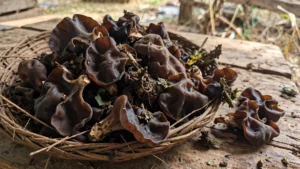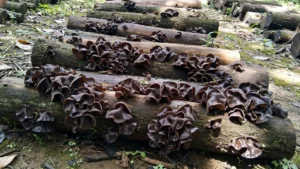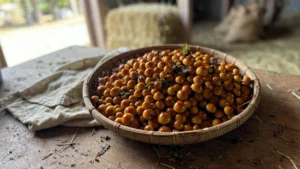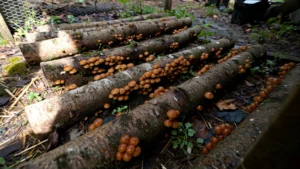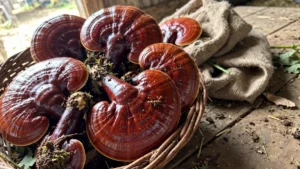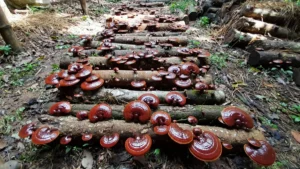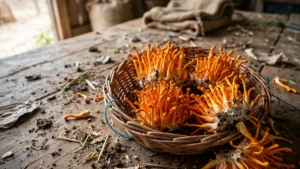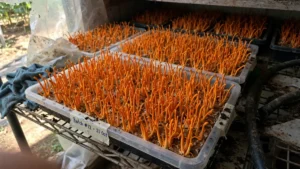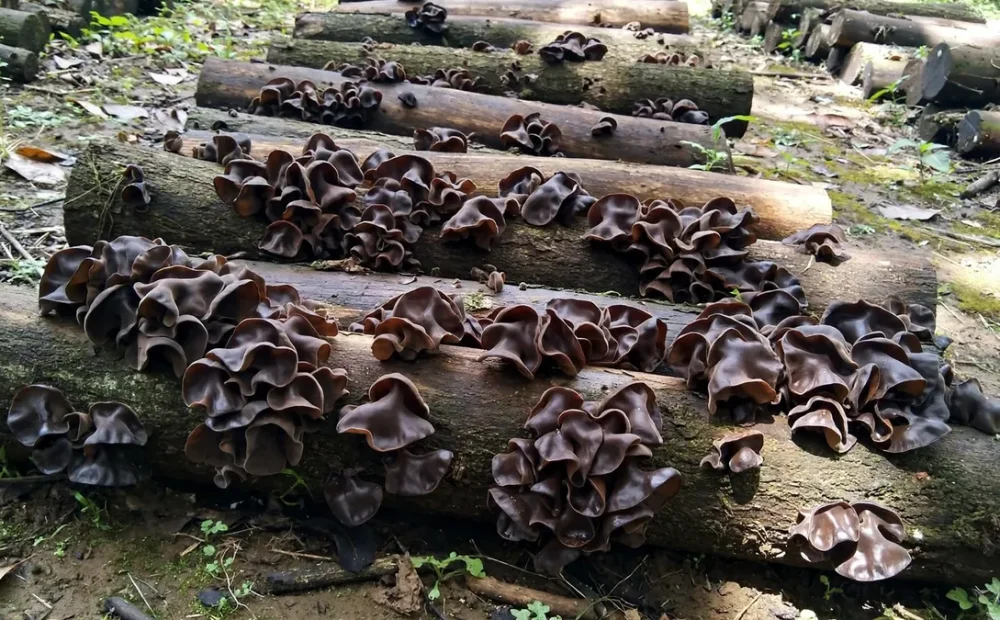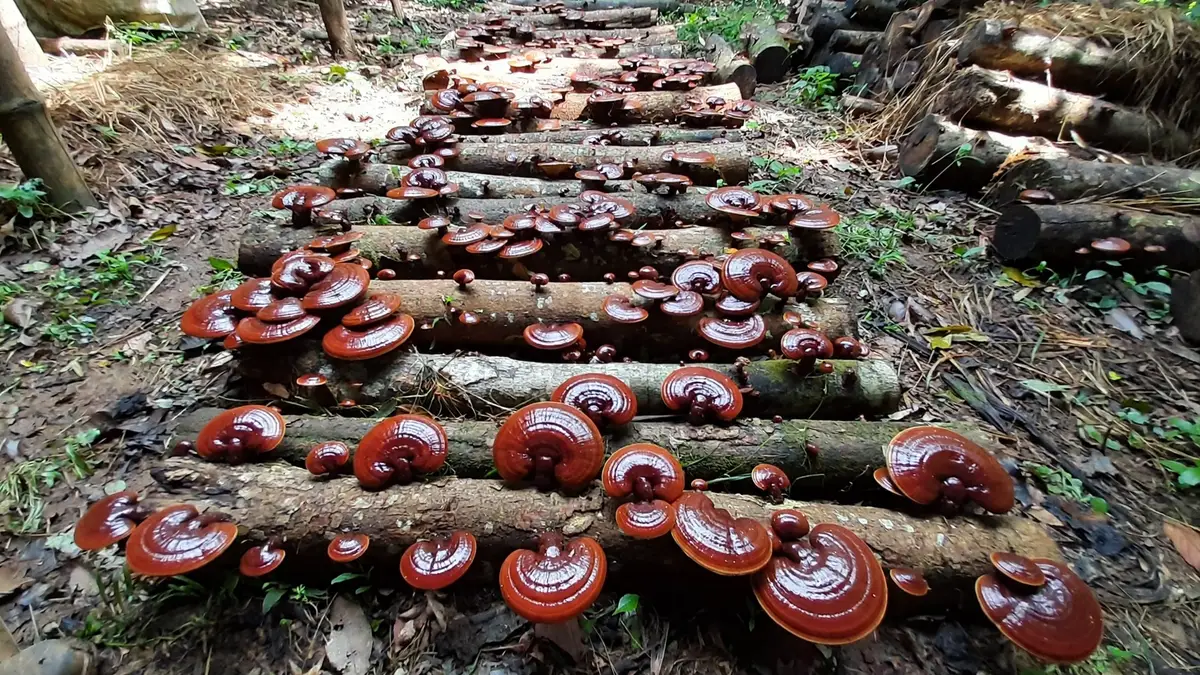
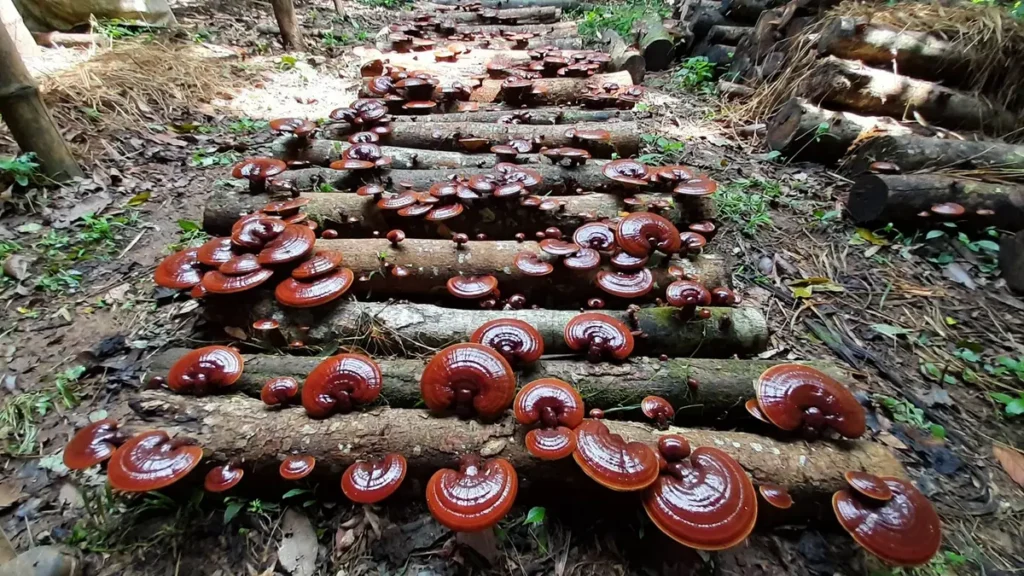
Reishi does not look like a mushroom you would cook for dinner. It grows as a hard, glossy fan, deep red-brown with a pale cream rim, and it feels more like varnished wood than food. In China it is called lingzhi, and it has been dried, sliced and simmered into bitter tea for centuries. A farm that grows it is a quiet place: rows of hardwood logs in damp shade, a drying room that smells of wood and earth, and a kettle that is almost always on.
The stays below are small working farms, not wellness resorts. Most keep fewer than eight rooms, grow their reishi on oak or maple logs, and brew the harvest in the farm kitchen the same week it is cut. The mushroom is the reason to go, and everything else — the room, the walk, the meal — is built around it.
Here are nine reishi farm retreats worth a look in 2027, from a bamboo grove outside Kyoto to a forest farm in the hills beyond Hanoi. Each entry notes what the farm does well, what to watch for, and who it suits, so you can match the stay to the trip you actually want.
Key takeaways
- Reishi is Ganoderma lucidum, known as lingzhi, a glossy red-brown mushroom with a woody texture and a bitter taste, grown on hardwood logs.
- Farms harvest it when the pale rim has turned fully red, then dry it and slice it for tea, broth and powder, since it is far too tough to eat fresh.
- The best stays grow the mushroom on site, let guests walk the log yard, and brew a cup from the current harvest.
- Two nights is the right length, because the drying and the tasting rarely fall on the same day.
- Reishi itself contains no gluten, but farm kitchens also serve noodles, bread and sauces, so ask about gluten before you book.
What reishi actually is
Reishi is Ganoderma lucidum, a shelf fungus that grows on dead hardwood, most often oak, maple and plum. The cap fans out from the log in a kidney or half-moon shape, glossy and dark red-brown, with a pale yellow-white rim while it is still growing. Underneath there are no gills, only a fine white pore surface that releases brown spores like dust when the cap is ripe. A finished cap is hard, light and woody, and it will keep for months once dried.
What sets it apart from the mushrooms people cook with is the taste and the texture. Reishi is intensely bitter and as tough as cork, so nobody eats it fresh. Instead the dried cap is sliced thin and simmered for a long time, and the dark tea that results is drunk in small cups, sometimes with honey or jujube to soften the bitterness. It is also ground into powder and stirred into broth. The farms in this guide treat it as a crop for tea and for the drying room, not as a supper ingredient.
Farms like it because a log, once inoculated, can fruit for more than one season, and the harvest is slow and visible. A cap takes weeks to colour fully, and the grower watches the pale rim shrink day by day until it disappears. That slow pace is also why a visit works: you can walk the log yard in the morning, see caps at every stage, and taste a tea brewed from a cap cut the same week. Our guide to lion’s mane farm retreats moves faster, because that mushroom fruits in days, while reishi asks you to slow down.
How we picked these nine farm stays
We looked for farms where reishi is the main crop, not a shelf of jars in a gift shop. Every stay on this list grows the mushroom on hardwood logs on site, and lets guests walk the log yard with the person who tends it. A farm that buys dried reishi in and only serves tea did not make the list. Neither did a hotel that lists a reishi drink on the menu but has no logs at all.
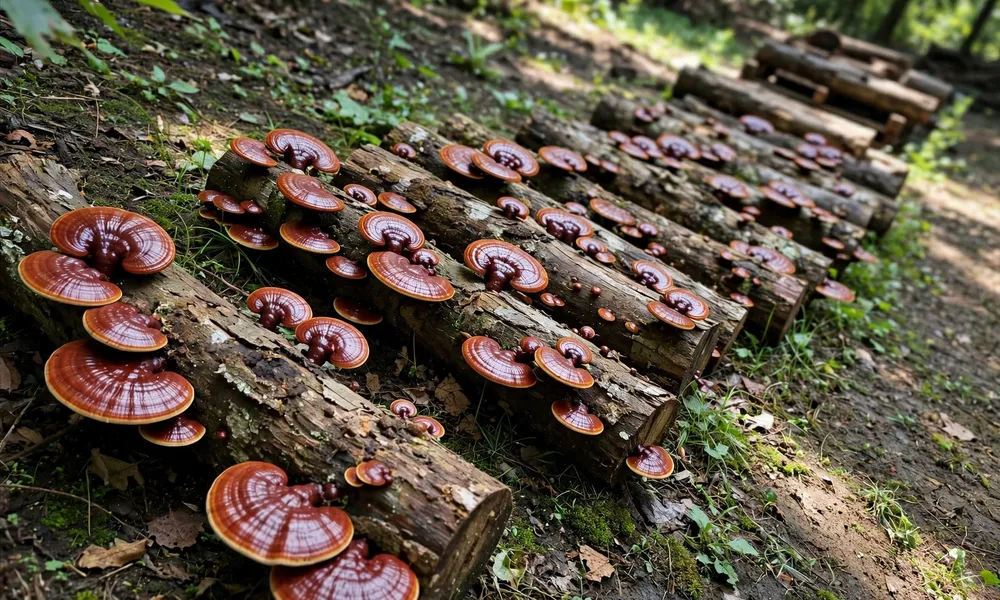
We also looked for kitchens and tea rooms that brew the current harvest. Reishi tea is at its best from caps dried within the last few months, and a farm that brews old stock is missing the point. The stays below all simmer fresh slices, most of them in a clay pot over low heat, and several run a short session where guests slice a dried cap and watch the tea darken. Our king oyster farm retreats guide uses a similar test for freshness, and it is the one that separates a real mushroom farm from a country hotel with a nice menu.
Lastly, we looked at the bedrooms and the surroundings. These are working farms, so the rooms are plain and the lanes can be muddy. What counts is a tidy bed, a hot shower, and a brief stroll from your door to the logs. All prices below are nightly rates for 2027, with breakfast counted in.
The 9 best reishi farm retreats of 2027
Arashiyama Reishi Log Farm Stay, Kyoto
What we like: A small log yard in the bamboo groves west of Kyoto, with five guest rooms, a shaded drying shed and a tea room that looks onto the logs. The morning walk is unhurried, and the evening tea is poured from a clay pot. What to consider: The rooms are plain, the lane in is tight, and there is no pool. Best For: A first reishi trip from Kyoto. Style: Working log farm beside bamboo. Price Range: $76–$113 a night, breakfast included. Standout Feature: The tea room looks straight onto the log yard.
Sakai Hills Reishi Tea Farm Retreat, Osaka
What we like: Low hills south of Osaka, a long log yard under shade cloth, and a kitchen that simmers reishi with jujube and ginger. The tea session is generous and the host explains every step. What to consider: The climb from the road is sharp, and the nights are silent. Best For: Travellers who want to learn the brewing, not just taste it. Style: Hillside tea farm. Price Range: $69–$105 a night, breakfast included. Standout Feature: Reishi tea simmered with jujube and ginger.
Ask for the clay pot at supper. The tea darkens slowly over the coals, and the host will pour you a second cup once the first has settled.
Bukhansan Reishi Forest Lodge, Seoul
What we like: Pine and oak forest on the edge of Seoul, with a stone lodge, a cool drying room and a kitchen that serves reishi broth with mountain greens. The woodland walks run long and the air feels fresh. What to consider: The woodland tracks turn to mud after rain, and the closest station needs a bus. Best For: Hikers who enjoy crisp forest air. Style: Stone lodge in pine forest. Price Range: $82–$120 a night, breakfast included. Standout Feature: Reishi broth served with mountain greens.
Gijang Coast Reishi Growers’ Stay, Busan
What we like: A coastal farm east of Busan, with a bright log yard, sea wind and a tea room above the drying shed. The farm shop is well stocked with dried slices and powder. What to consider: The wind off the sea is strong, and the farm is a bus ride from the nearest town. Best For: Travellers who want sea air with their tea. Style: Open coastal farm. Price Range: $67–$101 a night, breakfast included. Standout Feature: A tea room above the drying shed.
Yangmingshan Reishi Mountain Farm, Taipei
What we like: Volcanic hills north of Taipei, with a timber farmhouse, a misty log yard and a hot spring bath for cold evenings. The mountain walks are short and the views are wide. What to consider: The mist hangs late in the morning, and the bath needs booking ahead. Best For: A short mountain break from Taipei. Style: Timber farmhouse in volcanic hills. Price Range: $88–$130 a night, breakfast included. Standout Feature: A hot spring bath after the log yard walk.
Walk the mountain track before breakfast, while the mist is still in the trees. The log yard is warm and damp by contrast, and the shift between the two is part of the pleasure.
Dujiangyan Reishi Log Garden, Chengdu
What we like: A walled garden farm near the old irrigation works, with a long log yard, a vegetable patch and a kitchen that cooks reishi broth with local herbs. The rhythm is unhurried and the greeting is kind. What to consider: The log yard is cool and damp, so bring a layer, and the village shops close early. Best For: Newcomers who want a soft first farm stay. Style: Walled garden farm. Price Range: $64–$98 a night, breakfast included. Standout Feature: The garden supplies the broth pot alongside the mushroom.
West Lake Reishi Tea House Farm, Hangzhou
What we like: Tea hills west of Hangzhou, with a lake-view tea house, a shaded log yard and a kitchen that pairs reishi tea with local green tea. The evening light on the lake beats every other stay in this guide. What to consider: The lakeside paths are busy at weekends, and the tea house fills up on Saturday nights. Best For: Pairs who want the harvest served with a view. Style: Lakeside tea house farm. Price Range: $97–$141 a night, breakfast included. Standout Feature: Reishi tea paired with local green tea.
New Territories Reishi Shade Farm, Hong Kong
What we like: A shaded valley farm in the New Territories, with a neat log yard, a walled garden and a kitchen that simmers reishi with dried longan. The lanes are charming and the village market sits nearby. What to consider: The valley is humid in summer, and the market stalls close by mid-afternoon. Best For: A short break from Hong Kong with good tea. Style: Shaded valley farm. Price Range: $78–$116 a night, breakfast included. Standout Feature: Reishi simmered with dried longan.
Ba Vi Reishi Forest Retreat, Hanoi
What we like: Forested hills west of Hanoi, with a timber lodge, a long log yard and a kitchen that serves reishi tea with honey and lotus seed. The slopes are soft and the walks are gentle. What to consider: The hill road is narrow in rain, and the farm is a drive from the nearest town. Best For: Hungry travellers who want a generous farm table. Style: Timber lodge in forested hills. Price Range: $71–$108 a night, breakfast included. Standout Feature: Reishi tea with honey and lotus seed.
Which region suits which traveller
For a first trip, Kyoto and Osaka are the simplest choice. The farms sit near cities with good trains, the stays run short, and the tea is simple to grasp. With just two nights and no wish for a long journey, Japan is the place to start. The Arashiyama stay is the easiest of the nine to reach.
Seoul, Busan and Taipei suit travellers who like mountains, sea air and hot springs. The Bukhansan lodge is the most open and the most family-friendly, while the Yangmingshan farm is the best for anyone who wants a bath after the log yard. Chengdu, Hangzhou and Hong Kong suit tea lovers, with garden farms and lakeside tea houses. Hanoi suits a slower break, with forested hills and a generous farm table. Our guide to maitake farm retreats uses the same regional logic: pick the region that matches your pace, and the mushroom will follow.
The caveats that matter
Reishi is a well-known tea mushroom, but it is still a fungus with a strong bitter taste, and a few cautions apply. Never eat a wild mushroom you have not had checked by an expert, and never eat reishi fresh, since it is woody and hard to digest. Farm-grown caps are safe in tea once dried and simmered, but the tea is bitter and strong, so start with a small cup. If you are pregnant, take blood thinners or blood pressure medicine, ask a doctor before drinking reishi tea, and tell the farm before you book. A few farms raise other fungi in the same sheds, so ask about cross-contact before you book.
| Detail | What is known |
|---|---|
| What it is | Ganoderma lucidum, known as lingzhi, a glossy red-brown shelf mushroom with a woody texture and no gills |
| Where it grows | On hardwood logs, usually oak, maple and plum, in damp shade or in indoor grow rooms |
| Can it be eaten fresh | No, reishi is far too tough and bitter to eat fresh, and it is always dried first |
| Best-known uses | Reishi tea simmered in a clay pot, reishi broth, dried slices for the kitchen, ground reishi powder |
| Who should ask first | Anyone who is pregnant, takes blood thinners or blood pressure medicine, and anyone with a mushroom allergy |
| What to pack | A warm layer for the cool log yard, closed shoes for muddy paths, a bag for dried slices |
| How far ahead to book | Three to five weeks for the autumn season, two weeks outside it |
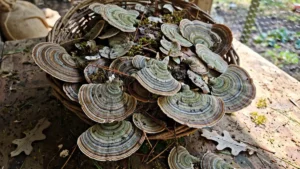
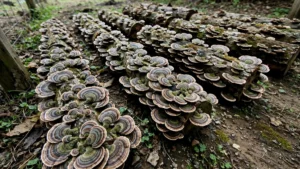
| What it is not | Not shiitake, not maitake, not turkey tail, despite the shared log yard |
One more practical note: farm stays in this series are small, and autumn weekends fill first. If your dates cannot move, book early and ask the farm which weeks the caps are colouring, not just which weeks rooms are free.
Checklist: before you book a reishi farm stay
Use these checks before you book, and again the week before you travel.
- Check the farm grows reishi on hardwood logs on site, and lets guests walk the log yard.
- Check the tea room brews the current harvest, not old dried stock.
- Check the colouring weeks, not just the room availability, before you fix your dates.
- Ask about gluten and allergies, and what the kitchen pours beside the tea.
- Pack a warm layer for the log yard, closed shoes for muddy paths, and a bag for dried slices.
- Book two nights, so the drying session and the tea tasting both fit the trip.
Frequently asked questions
Is reishi the same thing as shiitake?
No. Shiitake has a brown cap, a stem and gills, and a deep, savoury flavour that suits cooking. Reishi has no stem or gills, grows as a hard glossy fan, and tastes intensely bitter. Shiitake is eaten as food, while reishi is dried and simmered into tea.
How is reishi different from maitake?
Maitake grows in soft, frilly brown clusters that are roasted or simmered as food. Reishi grows as a single hard fan with a varnished red-brown surface, and it is far too tough to eat. Maitake is a kitchen mushroom, while reishi is a tea mushroom.
Can I eat reishi fresh?
No. Fresh reishi is woody, cork-like and very bitter. Farm stays dry the caps first, slice them thin, and simmer them for a long time to make tea, and that is how it should be taken.
When is the best month to visit a reishi farm?
Autumn, roughly September to November, when the outdoor log yards are cool and the caps are colouring. Some farms grow indoors year-round, so ask the farm which weeks are strongest before you book.
Do reishi farm stays suit children?
Most do, as long as children can walk the log yard quietly and stay clear of the drying equipment. The tea is very bitter, so children usually try a small sip, and the log yard walk is the part they enjoy most.
Is reishi gluten-free?
The mushroom itself contains no gluten. The risk is in the kitchen: noodles, bread, dumplings and sauces may contain gluten, so ask the farm what it can serve a gluten-free guest before you book.
The bottom line
The best reishi farm retreat in 2027 is not the grandest or the most expensive. It is the one where the mushroom grows on logs you can see, is dried on site and brewed the same week, with a clean room and a short walk between the two. For a first trip, the Arashiyama stay is the easiest to reach. For tea lovers, the West Lake tea house is the most beautiful. For walkers, the Bukhansan lodge is the most rewarding.
Choose one farm, book two nights, pack a warm layer, and judge the trip on the morning you walk the log yard and the evening you drink the tea. That is the honest way to meet a mushroom that looks like varnished wood, without turning the trip into a hotel stay with a tea bag on the tray.