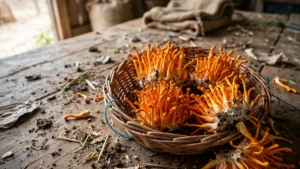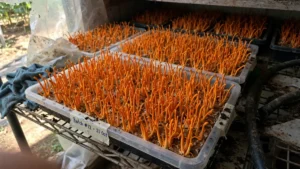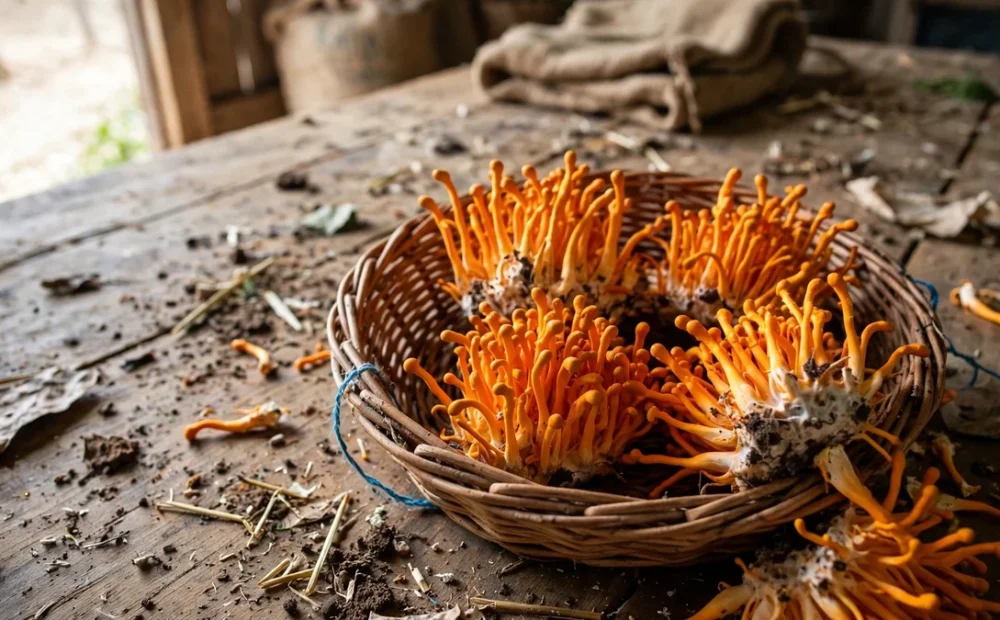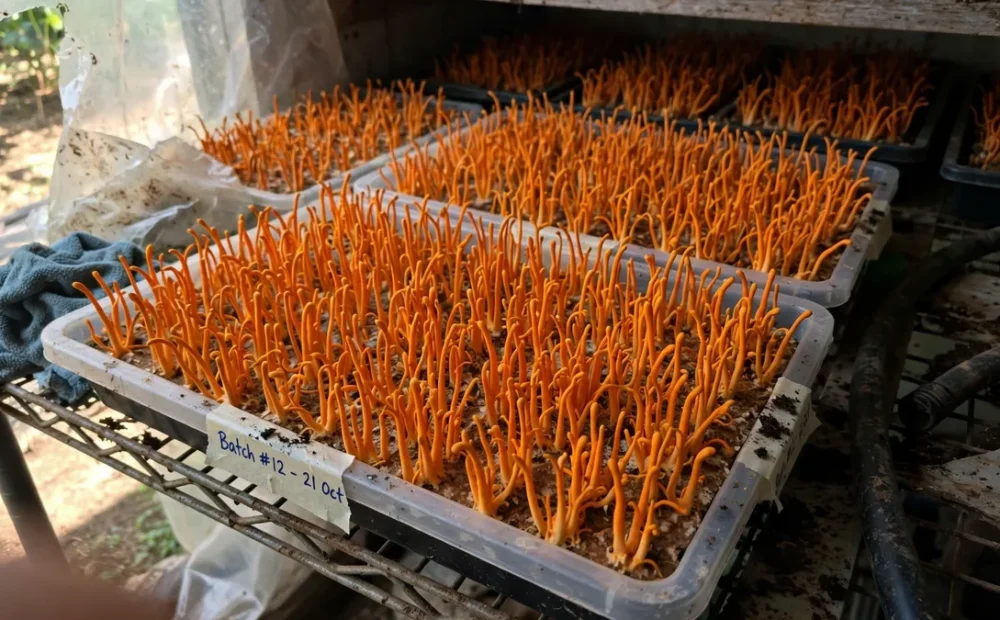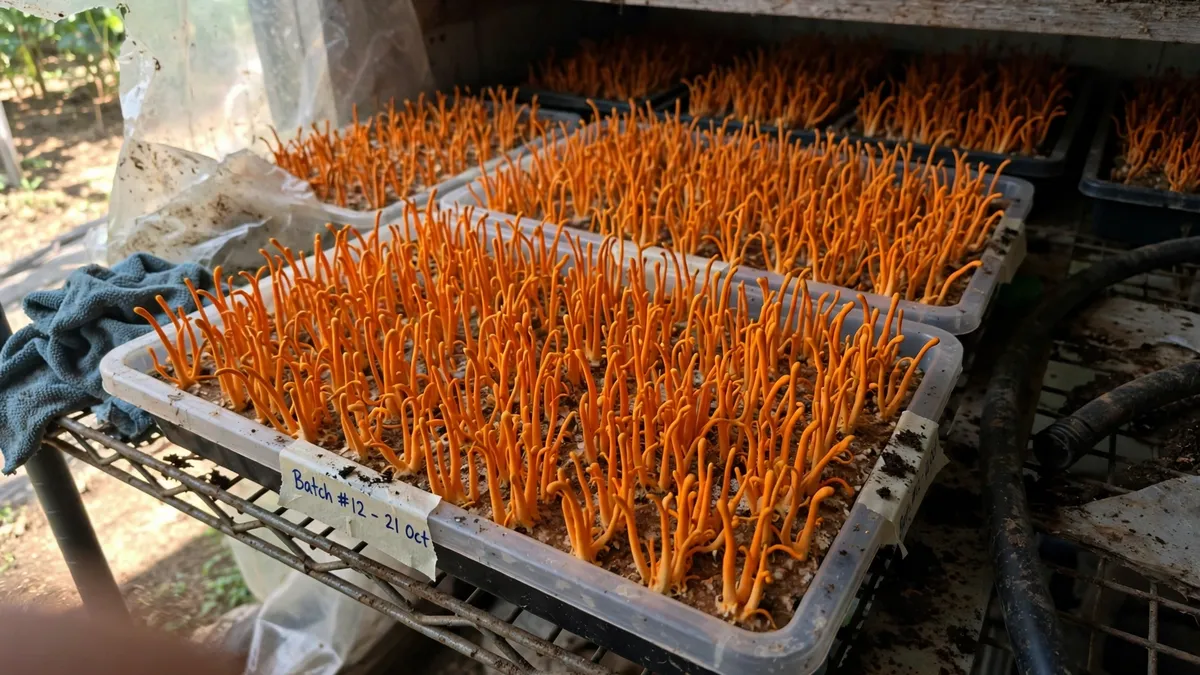
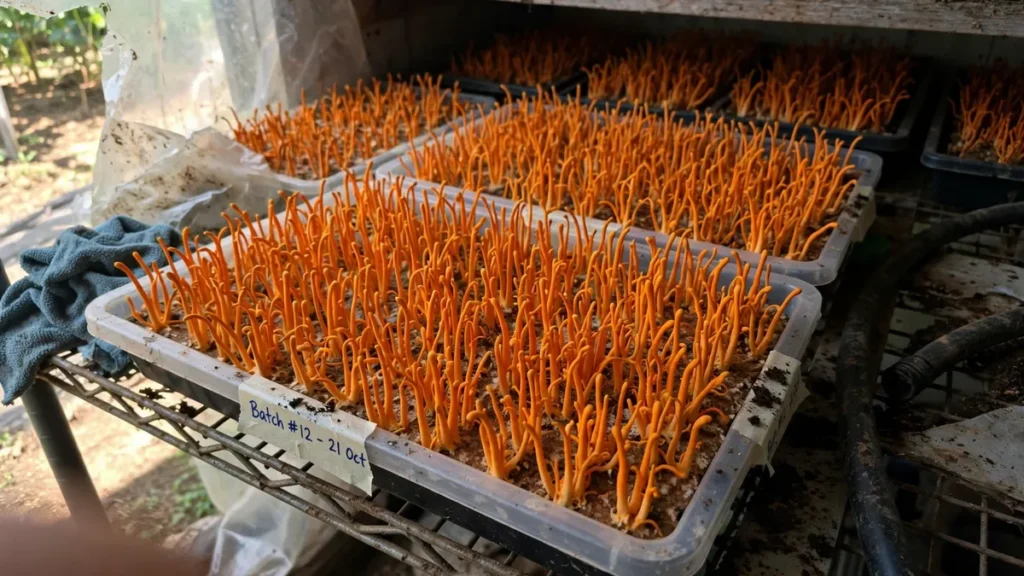
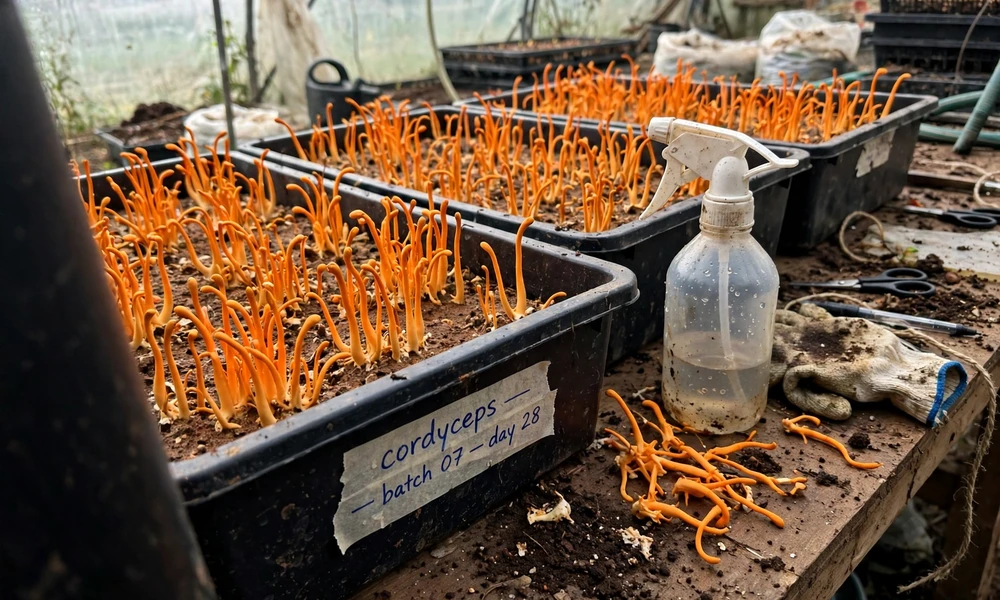
Cordyceps is the strangest fungus on this list of farm retreats, and that is exactly why travellers go looking for it. In the wild, the prized kind grows out of a buried caterpillar on the high Tibetan plateau, which is why a single kilo can cost more than a small car. On a farm, the story is friendlier: growers raise Cordyceps militaris, a close cousin, on trays of rice and grain in clean, cool rooms, where it throws up slender orange fingers that are dried for soups, teas and broths.
A cordyceps farm stay is quieter than a vineyard weekend and stranger than a truffle hunt. The grow rooms are dim and humid, the trays are stacked in long lines, and the harvest is measured in handfuls of bright orange threads. Most farms pair the grow-room tour with a kitchen session, where the dried fungus goes into a clear broth or a pot of herbal tea. It is a slow kind of travel, built around watching something odd grow.
Below are nine farm stays worth considering in 2027, from a working grow room on the edge of Chengdu to a high valley retreat above Lhasa and a small family farm outside Kyoto. For each stay, the notes below cover its strengths, its limits, and the traveller it suits best. Our guide to the best luxury enoki farm retreats follows the same pattern for a milder mushroom, if you want to compare a gentle first trip with a stranger one.
Key takeaways
- Cordyceps militaris is the farmed kind, grown on rice and grain in trays indoors; the wild caterpillar fungus, Cordyceps sinensis, is rare, very expensive and often faked.
- Farmed cordyceps fruits all year in controlled rooms, so you are not tied to one short wild season, but the best visits still fall in the cooler months.
- Dried cordyceps is the form you will cook with most often, in soups, broths and teas, and a good farm will show you how to soak and simmer it.
- Choose a farm that grows its own trays on site, lets you see the grow room, and names its strain.
- Cordyceps is a food and a traditional ingredient, not a medicine, and dishes made with it often contain gluten in the broth, noodles or soy sauce, so check the kitchen before you eat.
What cordyceps actually is
Cordyceps militaris is a fungus with a bright orange fruiting body shaped like a slim finger or a tiny club, usually two to six centimetres long. It grows in clusters from a bed of cooked rice, grain or a grain-based substrate, in trays kept dark, cool and humid. The colour is the first thing you notice: a vivid orange that looks almost artificial against the pale grain. There are no gills and no broad cap to slice. The whole finger is dried and used.
Its famous relative, Cordyceps sinensis, now usually called Ophiocordyceps sinensis, is a different story. It is a parasite that infects the caterpillar of a ghost moth, spends the winter inside it underground, and pushes a dark stalk out of the soil in spring. It only grows on the Tibetan plateau and the Himalayan highlands, above three thousand metres, and collectors dig it by hand for a few weeks a year. That scarcity is why it sells for tens of thousands of dollars a kilo, and why so much of what is sold as wild caterpillar fungus is fake or simply farmed militaris relabelled.
Farmed militaris is the practical answer to that problem. It grows indoors, fruits in weeks, and contains cordycepin, the compound researchers study. It is not the same organism as the wild caterpillar fungus, and an honest farm will say so plainly. It is a real, farmed fungus with a long history in Chinese cooking, and a flavour that is mild, earthy and slightly sweet once simmered in broth.
How we picked these nine farm stays
We looked for farms that grow their own cordyceps on site, in trays you can actually see, rather than guesthouses that buy dried stock and build a tour around it. Every farm on this list runs its own grow room, names the substrate it uses, and lets guests watch a harvest. A farm that keeps its grow room closed did not make the list.
We also weighed the kitchen. Cordyceps is mostly eaten dried, simmered in soup or steeped as tea, so a farm stay is only as good as its cooking. The best farms on this list simmer the fungus in a clear broth with chicken or pork, show you how long to soak it, and tell you plainly when a dish is seasoned with soy sauce or served with wheat noodles. The best luxury chanterelle farm retreats are a useful contrast here, because chanterelles are fried in butter on the day they are picked, while cordyceps rewards a slow pot.
The 9 best cordyceps farm retreats of 2027
Sichuan Basin Cordyceps Grow Room Stay, Chengdu
What we like: A working grow room on the edge of Chengdu, with six guest rooms, trays of orange cordyceps stacked floor to ceiling, and a kitchen that simmers the fungus in a clear chicken broth every evening. What to consider: The rooms are plain, the grow room is kept cool and dim, and there is no garden to sit in. Best For: A first cordyceps visit from Chengdu. Style: Working grow room farm. Price Range: $74–$118 a night, breakfast included. Standout Feature: The morning tray inspection, with the grower pointing out which fingers are ready to harvest.
Stone Forest Cordyceps Terrace Farm, Kunming
What we like: A terraced farm outside Kunming, with a sunny courtyard, a small tea house, and trays grown in a converted stone barn. The afternoon tea steeps dried cordyceps with red dates, and the evening meal is cooked over a wood fire. What to consider: The farm sits up a steep track, the rooms have thin walls, and the kitchen closes early. Best For: Travellers who want tea culture with their fungus. Style: Terraced hillside farm. Price Range: $66–$102 a night, breakfast included. Standout Feature: The tea house, where dried cordyceps is steeped in a glass pot so you can watch the colour deepen.
High Valley Cordyceps Meadow Retreat, Lhasa
What we like: A high valley retreat above Lhasa, where the farm keeps a small museum of wild caterpillar fungus specimens and grows militaris in a solar-heated room. The guide explains the difference between the wild and farmed kinds with real samples. What to consider: The altitude is over 3,600 metres, the rooms are cold at night, and the road in is rough. Best For: Travellers who want to understand the wild fungus honestly. Style: High altitude valley retreat. Price Range: $98–$150 a night, breakfast included. Standout Feature: The specimen table, where wild and farmed cordyceps sit side by side for comparison.
Himalayan Foothill Cordyceps Farm Stay, Kathmandu
What we like: A foothill farm outside Kathmandu, with a wide veranda, a vegetable garden, and a grow room run by a family that has collected wild yartsa gunbu for two generations. The family cooks a slow lentil and cordyceps broth and talks openly about fakes. What to consider: The power cuts out on some evenings, the rooms are basic, and the farm is an hour from the city on a bumpy road. Best For: Travellers curious about the Himalayan trade in caterpillar fungus. Style: Family foothill farm. Price Range: $58–$92 a night, breakfast included. Standout Feature: The family stories about the wild harvest, told over a pot of broth on the veranda.
Paro Valley Cordyceps Mountain Lodge, Thimphu
What we like: A mountain lodge in the Paro valley, with thick walls, a wood stove in every room, and a grow room kept warm through the cold season. The lodge serves cordyceps in a butter tea variation. What to consider: The lodge is remote, the meals are simple, and the season is short. Best For: A quiet mountain stay with a fungus focus. Style: Mountain valley lodge. Price Range: $88–$136 a night, breakfast included. Standout Feature: The wood stove evenings, with dried cordyceps tea passed around as the room warms.
Red River Cordyceps Garden Farm, Hanoi
What we like: A garden farm on the edge of Hanoi, with shaded tray houses, a pond, and a kitchen that folds cordyceps into a clear pork and lotus seed soup. The grower is a former pharmacist. What to consider: The farm is close to a busy road, the rooms are small, and the grow room is humid. Best For: An easy first cordyceps trip from Hanoi. Style: Riverside garden farm. Price Range: $62–$98 a night, breakfast included. Standout Feature: The drying racks, where orange fingers turn deep amber in the sun.
Alishan Foothill Cordyceps Tea Farm, Taipei
What we like: A tea farm in the Alishan foothills, with a modern grow room, a tasting bar, and a kitchen that serves cordyceps tea alongside oolong. The host runs a short class on telling farmed cordyceps from fakes. What to consider: The farm books up on weekends, the rooms are compact, and the mountain road is winding. Best For: Travellers who want a tasting class with their stay. Style: Tea farm with a grow room. Price Range: $82–$128 a night, breakfast included. Standout Feature: The fake-spotting class, with jars of genuine and imitation cordyceps to compare.
Seoul Hillside Cordyceps Grow House, Seoul
What we like: A hillside grow house above Seoul, with clean white tray rooms, a small shop selling dried cordyceps, and a kitchen that makes a gentle cordyceps and ginseng soup. The grower speaks English. What to consider: The farm is small, the garden is modest, and the soup is mild rather than rich. Best For: A comfortable city-edge cordyceps visit. Style: Modern hillside grow house. Price Range: $94–$144 a night, breakfast included. Standout Feature: The white tray rooms, where the orange fingers stand out sharply against the pale grain.
Kyoto Bamboo Grove Cordyceps Farm, Kyoto
What we like: A small farm on the edge of a bamboo grove outside Kyoto, with a tatami guest room, a quiet grow room, and a kitchen that simmers cordyceps in a delicate dashi broth. The host is a retired chef. What to consider: The farm takes only a few guests, the rooms are traditional and spare, and the broth is light. Best For: A calm, food-focused cordyceps stay. Style: Bamboo grove farm. Price Range: $108–$164 a night, breakfast included. Standout Feature: The dashi broth, served in a lacquered bowl with a single orange finger on top.
Which region suits which traveller
Chengdu and Kunming suit first-timers. The farms are working grow rooms, the kitchens are generous, and the travel is straightforward. Start here if you have never seen cordyceps grown. Hanoi and Seoul are the easiest city-edge options, with short journeys and modern rooms.
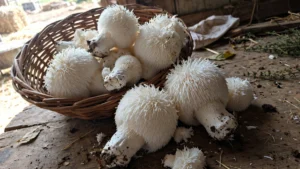
Lhasa, Kathmandu and Thimphu suit travellers who care about the wild fungus and its history. There the caterpillar fungus trade is part of everyday life, and the farms are honest about the difference between a wild specimen worth a fortune and a farmed finger worth a few dollars. The altitude and the roads demand more, but the conversations are unlike anything at a lowland farm. The best luxury lion’s mane farm retreats offer a gentler mountain alternative, with white pom-poms instead of orange fingers, if the high valleys feel too demanding.
Taipei and Kyoto suit food lovers. The tea farm in the Alishan foothills and the bamboo grove farm outside Kyoto both treat cordyceps as a kitchen ingredient first and a curiosity second. Book these if you want to taste the fungus properly, in tea, broth and soup, rather than just photographing it.
The caveats that matter
Cordyceps is a food with a long cooking history, not a medicine, and no farm stay should promise you a health result. Claims about energy, immunity or stamina are traditional, not proven, and a farm that guarantees them is overselling. A good farm shows you how the fungus is grown, dried and cooked, and leaves the health claims out of the conversation. If you take blood thinners, have an autoimmune condition, or are pregnant, ask your clinician before eating cordyceps regularly.
| Detail | What is known |
|---|---|
| Farmed kind | Cordyceps militaris, grown on rice or grain in trays indoors, fruits all year |
| Wild kind | Ophiocordyceps sinensis, caterpillar fungus from the Tibetan plateau, rare and very expensive |
| What it looks like | Slender orange fingers, two to six centimetres long, growing in clusters from the substrate |
| How it is eaten | Mostly dried, soaked, then simmered in soups, broths and teas |
| Best visiting months | Cooler months, when grow rooms run steadily and the trays fruit evenly |
| Who should ask first | Anyone on blood thinners, with an autoimmune condition, or pregnant, should check with a clinician |
| Fake-spotting | Wild caterpillar fungus is often faked; farmed militaris is the honest, affordable alternative |
| What it does not do | It is not a proven medicine, and it does not replace medical treatment or a balanced diet |
Buying dried cordyceps needs the same care as the visit itself. A bag labelled wild caterpillar fungus at a low price is almost certainly not wild, and a bag with no strain name, no farm name and no harvest date tells you nothing. Buy from the farm you visited. Keep it dry, sealed, away from light, and use it within a year.
Checklist: before you book a cordyceps farm stay
Use these checks before you pay a deposit, and again in the week before you travel.
- Check the farm grows its own trays on site and will let you see the grow room.
- Check the species: farmed Cordyceps militaris is the honest expectation, not wild sinensis at a bargain price.
- Check the kitchen: ask how the fungus is cooked, and whether broths, noodles or soy sauce contain gluten.
- Check the journey: ask how long the last stretch of road takes, and whether the farm collects guests from town.
- Check the season: cooler months give steadier fruiting, and farmed rooms still vary with the weather.
- Check the price in writing: confirm what is included, especially meals, tastings and any dried stock you take home.
Frequently asked questions
Is farmed cordyceps the same as wild caterpillar fungus?
No. Farmed cordyceps is Cordyceps militaris, grown on grain indoors. Wild caterpillar fungus is Ophiocordyceps sinensis, a parasite of ghost moth caterpillars on the Tibetan plateau. They are related but different organisms, and the wild one is far rarer and far more expensive.
Can I eat cordyceps raw?
No. Dried cordyceps should be soaked and then simmered in soup, broth or tea. Eating it raw is not how it is used, and the texture and flavour are poor without cooking.
How do I spot fake wild cordyceps?
Be suspicious of a low price, a missing species name, and a seller who cannot say where it was collected. Genuine wild caterpillar fungus is expensive, comes with a clear origin, and is usually sold through trusted dealers, not market stalls with bargain jars.
When is the best month to visit a cordyceps farm?
The cooler months are best, because the grow rooms run steadily and the trays fruit evenly. Farmed cordyceps fruits all year, so you can visit in any season, but hot, humid weeks can make the rooms harder to manage.
Do cordyceps farm stays suit children?
Older children who are curious about fungi usually enjoy the grow room tour and the kitchen session. Younger children may find the dim, humid rooms dull, and the food is mild rather than exciting, so check with the farm first.
Is cordyceps gluten-free?
The fungus itself contains no gluten, but the dishes it is served in often do. Broths may be seasoned with soy sauce, and soups are often served with wheat noodles, so ask the kitchen before you eat if you need a gluten-free meal.
The bottom line
The best cordyceps farm retreat in 2027 is not the one nearest a famous mountain or the one with the grandest dining room. It is the one that grows its own trays, opens its grow room to guests, and cooks the fungus honestly, in a broth or a tea you can watch being made. Chengdu and Kunming are the easiest first visits, Lhasa and Kathmandu are where you learn the wild story, and Kyoto and Taipei are where the cooking shines.
Choose one farm, go in the cooler months, ask which species you are looking at, and taste the fungus in a slow-cooked soup before you buy a bag to take home.