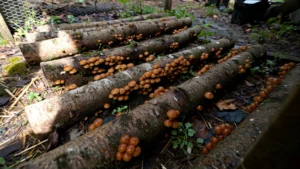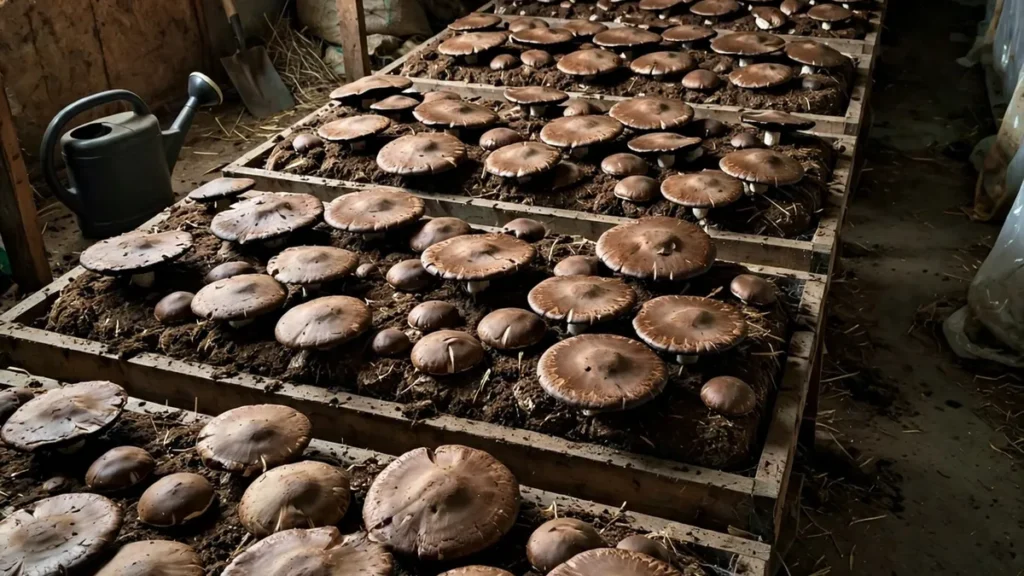
A portobello cap is the largest mushroom most home cooks ever handle. It spans a hand, its underside is lined with dark gills, and a few minutes over hot coals turn it from something pale and spongy into something dense, browned and savoury enough to carry a meal on its own. The farms that grow it work in the dark, in long rooms of compost where the caps rise in waves and the air is warm, damp and earthy.
Every stay in this guide is a working farm first and a place to sleep second. The rooms are few, the kitchen grills what was cut that morning, and the grower walks guests down the beds before breakfast. Nothing here is a hotel that added a mushroom dish to its menu. The compost, the flush and the grill run the day, and the guest fits around them.
Nine portobello farms made the cut for 2027, from a compost hall outside Paris to a timber lodge in the Laurentian hills. For each one we note its strengths, its drawbacks and the kind of traveller who will get the most from it, so the choice comes down to fit rather than reputation.
Key takeaways
- Portobello is the grown-on form of Agaricus bisporus, with a broad flat brown cap, dark gills and a thick short stem.
- It fruits from pasteurised compost in dark, humid halls, in several waves from the same bed over a few weeks.
- The stays worth booking let you walk the beds, cut caps with the grower, and grill them the same day.
- Give the trip two or three nights, because a single night seldom catches both a flush and a grill session.
- The mushroom has no gluten in it, yet farm kitchens bake bread, roll buns and thicken sauces, so ask about gluten when you book.
What portobello actually is
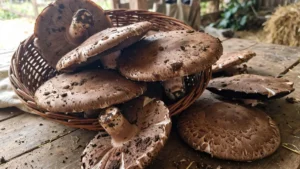
Agaricus bisporus is picked young and white as a button mushroom, but left to grow it opens into a portobello: a cap ten to fifteen centimetres wide, tan to brown on top, with gills below that darken to chocolate as it matures. The stem is short and pale, and the flesh is thick enough to slice like a steak. That size and density are the whole point. No other common farm mushroom grills whole the way a portobello does.
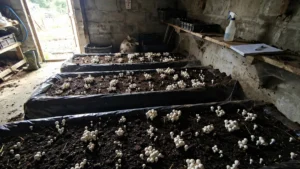
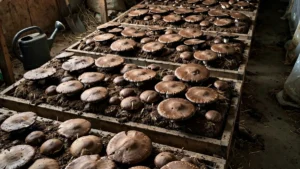
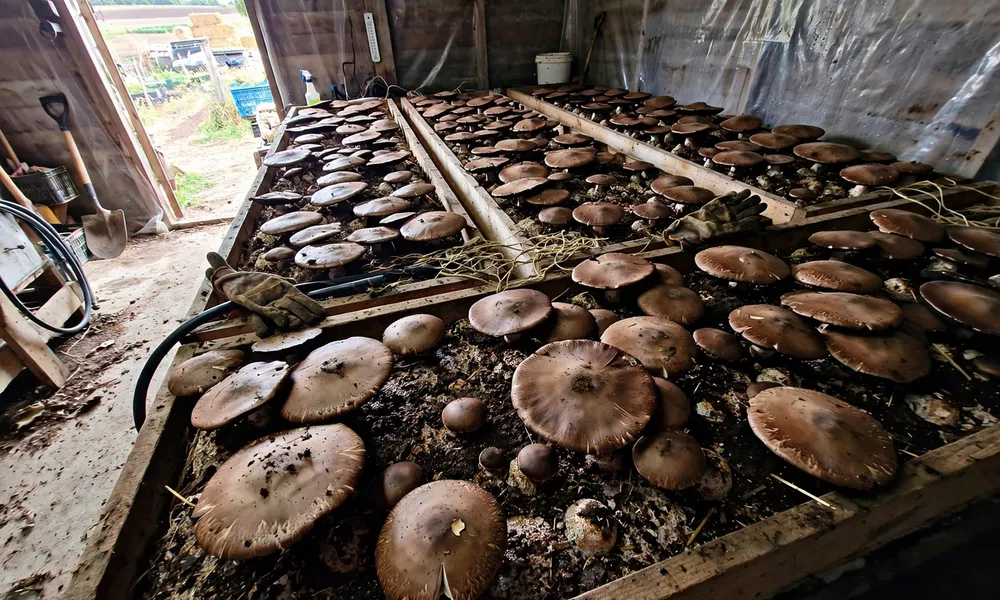
The growing is unlike the log and bag methods used for shiitake or lion’s mane. Straw and manure are composted, pasteurised and spread in long beds inside a dark hall, then seeded with spawn and kept cool and moist. Caps push up in flushes, a bed gives several waves, and the grower waters and watches between them. A good visit lands just as a flush is peaking, when the beds are crowded with broad caps.
Picking is part of the craft. A cap is ready when it has opened flat and the gills have turned the colour of dark chocolate, and the grower cuts it at the stem rather than pulling it, so the bed is left clean for the next wave. Guests learn the motion in minutes, and the basket fills faster than most people expect, because a single bed can hold dozens of caps at different stages.
In the kitchen the grill is where portobello earns its keep. Brushed with oil and cooked over charcoal until the rim darkens, a whole cap keeps its shape, turns smoky at the edges and stays juicy inside. It also takes stuffing well, which is why farm kitchens fill it with cheese, herbs and breadcrumbs. Our roundup of turkey tail farm retreats covers a mushroom that is brewed rather than eaten, but the farms run on the same rule: the crop sets the timetable, not the guest.
How we picked these nine farm stays
Portobello had to be the farm’s main crop, grown on its own compost, with a hall guests may walk. Farms that buy caps in, or treat portobello as a sideline beside vegetables, were left out. So were hotels that put a stuffed portobello on the dinner menu while the nearest compost bed is fifty miles away.
The kitchen mattered as much as the beds. A portobello is at its best the day it is cut, while the cap is still firm and the gills are dry. Any farm serving only frozen or tinned mushrooms was struck from the list. The nine below all grill fresh caps, most over charcoal or in a wood-fired oven, and several let guests grill their own. Our wood ear farm retreats guide uses the same test, because a kitchen that cooks the harvest fresh is the clearest sign of a real farm stay.
Rooms and setting came last. Working farms keep plain rooms and narrow lanes, so we looked for a clean bed, a hot shower and a short walk from the bedroom door to the grow hall. The prices quoted are per night, with breakfast, for 2027.
The 9 best portobello farm retreats of 2027
Île-de-France Portobello Compost Farm, Paris
What we like: A compact compost farm sixty minutes from Paris, with six bedrooms, long dark beds and a charcoal grill by the kitchen door. Cutting starts early and stays unhurried, and supper is generous. What to consider: Bedrooms are plain, the lane is tight for large cars, and there is no pool. Best For: A first mushroom trip out of Paris. Style: Working compost farm. Price Range: $63–$101 a night, breakfast included. Standout Feature: Caps grilled over charcoal at the farm table.
Rhône Hills Portobello Grill Retreat, Lyon
What we like: Terraces of stone above the river, a shaded hall, and a kitchen that turns the morning cut into lunch. Evening light over the valley is the finest of any farm on this list. What to consider: The path from the road climbs steeply, and evenings are very still. Best For: Two people wanting a view with the harvest. Style: Hillside grill farm. Price Range: $77–$118 a night, breakfast included. Standout Feature: Stone terraces above the river.
Brandenburg Portobello Compost Rooms, Berlin
What we like: Birch and pine woods east of Berlin, a broad compost hall, a wood-fired oven and a drying rack guests may visit. The growers are exacting about their craft and free with their time. What to consider: Paths turn to mud after rain, and the nearest station needs a bus. Best For: Guests who want to understand compost growing. Style: Forest farm with a wood-fired oven. Price Range: $63–$98 a night, breakfast included. Standout Feature: The wood-fired oven and drying rack.
Ask the grower to show you a bed on its second flush. Caps return quickly, and seeing the same bed fruit twice in one stay teaches more than any tour of the hall.
Styrian Portobello Farmhouse Stay, Vienna
What we like: Open meadow south of Vienna, a stone farmhouse, a cool cellar hall and a kitchen that pairs portobello with dumplings. The slopes are soft and the walking is easy. What to consider: Cellar stairs are steep, and town is a drive away. Best For: Hungry travellers who love a farm table. Style: Stone farmhouse in open meadow. Price Range: $93–$131 a night, breakfast included. Standout Feature: Portobello served with farm dumplings.
Bohemian Portobello Compost Farm, Prague
What we like: Spruce forest beyond Prague, a timber farmhouse, a misty compost hall and a sauna for cold nights. Walks are long and the air is clean. What to consider: Mist lingers into late morning, and the sauna must be booked ahead. Best For: Walkers who like cool forest mornings. Style: Timber farmhouse in spruce forest. Price Range: $79–$114 a night, breakfast included. Standout Feature: A wood-fired sauna for misty forest evenings.
Take the forest path before breakfast while mist still hangs in the spruces. The hall is warm and damp after that, and the contrast between the two is half the pleasure of the morning.
Cotswold Portobello Farm Retreat, London
What we like: A converted stone barn in the Cotswolds, a tidy compost hall, a walled garden and a kitchen that fills portobello with sage and cheese. The lanes are lovely and the village pub is near. What to consider: Barn bedrooms are small, and the pub is crowded on Fridays. Best For: A short escape from London with good food. Style: Stone barn conversion. Price Range: $95–$137 a night, breakfast included. Standout Feature: Portobello filled with garden sage and cheese.
Lothian Portobello Garden Farm, Edinburgh
What we like: A garden farm in the Lothian hills, a bright compost hall, a wood stove and a kitchen that plates portobello with oats and greens. When the sky clears, the Firth shows itself beyond the fields. What to consider: Weather changes quickly, and the hill road is tight in rain. Best For: Guests who enjoy a Scottish farm table. Style: Hillside garden farm. Price Range: $87–$121 a night, breakfast included. Standout Feature: Portobello with oats and garden greens.
Ontario Portobello Compost Farm, Toronto
What we like: A broad compost farm north of Toronto, long beds, a bright kitchen and bicycles for the lanes. The grill session is thorough and the shop is well stocked. What to consider: Wind sweeps the fields, and town is a drive away. Best For: Cyclists and families who like wide open land. Style: Open-field compost farm. Price Range: $66–$99 a night, breakfast included. Standout Feature: Bicycles for the country lanes.
Stay for the drying rack if the farm runs one. Sliced caps dry down to almost nothing, and a small bag of them turns a winter soup at home into a reminder of the farm.
Laurentian Portobello Hills Stay, Montreal
What we like: Rolling hills north of Montreal, a timber lodge, a cool compost hall and a kitchen that grills portobello with maple and herbs. Autumn colour here beats every other farm on the list. What to consider: The hill road is steep in wet weather, and the lodge fills early in autumn. Best For: Guests who want autumn colour with the harvest. Style: Timber lodge in rolling hills. Price Range: $89–$127 a night, breakfast included. Standout Feature: Portobello grilled with maple and herbs.
Which region suits which traveller
France is the easiest place to begin. Paris and Lyon sit close to farms reached by train, the stays are short, and the cooking is familiar. Two nights and a direct train are enough to learn the mushroom without a long journey, and the Île-de-France farm is the simplest of the nine to get to.
Berlin, Vienna and Prague reward guests who like woods, heavy cooking and long walks. Brandenburg explains the compost better than anywhere else, while Styria feeds you best. London and Edinburgh fit a weekend, with barns, gardens and a pub nearby. Toronto and Montreal suit a longer North American trip, with open fields and autumn colour. Our guide to reishi farm retreats follows the same regional thinking: match the region to your pace, and the mushroom will follow.
North America asks for a longer trip. Toronto and Montreal are a flight rather than a train ride for most European guests, so pair them with a few extra days and a second farm, or save them for a dedicated week. Europe rewards short hops: two farms in one trip, France then Belgium or Germany, works well when the flushes line up.
The caveats that matter
Portobello is a gentle, familiar edible mushroom, but it still deserves care. Wild mushrooms should never be eaten without an expert check, and portobello should never be eaten raw. Caps from the farm are safe once cooked, while raw portobello is tough and hard on the stomach, so the farm cooks it for you. Tell the farm about a mushroom allergy before booking, and ask what goes into the sauces. A few farms raise other fungi in the same halls, so ask about cross-contact too.
| Detail | What is known |
|---|---|
| What it is | Agaricus bisporus grown on, a broad flat brown cap with dark gills and a short thick stem |
| Where it grows | On pasteurised compost in dark, humid halls, fruiting in waves through the year |
| Can it be eaten raw | No, portobello needs thorough cooking, and only once the grower has checked the pick |
| Best-known dishes | Grilled portobello, stuffed portobello, portobello pasta, portobello soup, dried portobello stock |
| Who should ask first | Anyone with a mushroom allergy, and anyone avoiding gluten |
| What to pack | A warm layer for the cool hall, closed shoes for wet floors, a basket or bag |
| How far ahead to book | Three to five weeks for a strong flush, two weeks outside it |
| What it is not | Not a white button mushroom, not shiitake, not oyster mushroom, despite the shared kitchen |
One last practical point: these farms are small, and strong flushes get booked first. If your dates are fixed, reserve early and ask which weeks the beds are flushing, rather than only which weeks have rooms free.
Checklist: before you book a portobello farm stay
Use these checks before you book, and again the week before you travel.
- Confirm the farm grows portobello on its own compost and lets guests walk the hall.
- Confirm the kitchen grills the harvest the day it is cut, not from frozen stock.
- Ask which weeks the beds are flushing before you settle your dates.
- Ask about gluten and allergies, and what the kitchen plates beside the mushroom.
- Pack a warm layer for the hall, closed shoes for wet floors, and a basket for your pick.
- Stay two or three nights, so a fresh flush and a grill session both fit the trip.
Frequently asked questions
Is portobello the same thing as a white button mushroom?
It is one species, Agaricus bisporus, at a later stage. A white button is the small, young, pale form, picked early, while a portobello is left to grow until the cap opens flat and wide and turns brown. Flavour deepens as it grows, and the flesh turns meaty, which is why portobello is grilled whole and button mushrooms are sliced into salads and sauces.
How is portobello different from shiitake?
Shiitake carries a brown cap, a stem and gills, with a deep savoury flavour, and it usually grows on logs. Portobello has a flat open cap with dark gills, grows on compost beds in dark halls, and tastes milder and meatier. Shiitake is sliced into stir-fries and soups, while portobello is most often grilled whole.
Can I eat portobello raw?
No. Raw portobello is tough and hard to digest. Farm stays grill it, usually brushed with oil over charcoal or in a wood-fired oven, and that is how it should be eaten.
When is the best month to visit a portobello farm?
Portobello fruits through the year indoors, so no single month stands out. Farms are busiest in spring and autumn, when the lanes suit walking, so ask the farm which weeks the beds are flushing hardest before you book.
Do portobello farm stays suit children?
Most do, provided children can walk the hall quietly and keep clear of wet floors and equipment. The grill session is usually the part children enjoy most, because a whole cap on the grill looks like a burger and smells like one too.
Is portobello gluten-free?
The mushroom itself has no gluten in it. The risk sits in the kitchen: bread, buns, pasta and sauces may contain gluten, so ask the farm what it can serve a gluten-free guest before you book.
The bottom line
The finest portobello farm retreat in 2027 is not the grandest or the priciest. It is the one where the mushroom is grown on site, cut in the morning and grilled the same evening, with a clean room and a short walk between the two. For a first trip, the Île-de-France farm is the simplest to reach. For hungry travellers, the Styrian farmhouse has the most generous table. For walkers, the Bohemian compost farm is the most beautiful.
Pick one farm, stay two or three nights, pack a warm layer, and judge the trip by the morning you cut your own cap and the evening you eat it. That is the honest way to meet a mushroom most people only know from a plate, without turning the stay into a hotel visit with a mushroom on the menu.