A Guide to Buying a Pocket Square 2027
Buying a pocket square should be simple. It is a small square of fabric, it costs less than most accessories, and there are thousands to choose from. The problem is that the choice is too wide, and the details that matter — the size, the fabric, the edge, the fold — are not obvious until you have bought a few that do not work.
This guide walks through the nine steps that matter when you buy a pocket square in 2027, from deciding how you will wear it to checking the care label before you pay. Each step is practical, and each one is based on what actually goes wrong when a pocket square disappoints, rather than on a list of rules nobody follows.
By the end, you should be able to choose a square with confidence, and know that it will sit well, hold its fold, and suit the jacket you bought it for.
Key takeaways
- Decide how you will wear a pocket square before you buy it, because the fold you use determines the fabric and size you need.
- For most women, a 25 to 30 centimetre square is the right size, and linen, cotton and silk cover almost every occasion.
- Hand-rolled edges and true square corners are the clearest signs of a well-made pocket square, at any price.
- Match the square to your outfit, not to your tie, and choose a complementary colour rather than an exact match.
- No pocket square is worth buying if you will not care for it properly, and a silk or velvet square that is never dry cleaned will look worse than a cotton square that is washed well.
What buying a pocket square actually involves
Buying a pocket square involves more than choosing a colour. It involves matching a piece of fabric to a pocket, to a jacket, and to the way you dress. A square that looks beautiful flat on a shop counter can look wrong in a pocket, because a pocket is shallow and narrow, and the fabric has to sit in it without bunching, slipping, or pushing the pocket open.
The other thing it involves is honesty about how you will use it. A square you wear every week to work needs to be washable, hard-wearing, and easy to fold in a hurry. A square you wear once a year to a wedding can be silk, delicate, and dry-clean only. Each of these is a different purchase, and the right square for one is the wrong square for another.
Price is a poor guide on its own. A well-made cotton square for £15 can be better than a poorly made silk square for £60, if the cotton one is truly square, has neat edges, and holds a fold. The steps below are ordered so that the decisions that matter most come first, and the details that matter least, such as the exact shade, come later.
How we chose these steps and what to look for
Look first at the pocket you will put the square in. Measure the depth of your blazer pocket, or try a square in the shop before you buy it. A pocket that is 10 centimetres deep needs a square that folds to fit it, and a square that is too large will always bunch. This sounds obvious, but it is the step most people skip, and it is the reason most pocket squares end up unused in a drawer.

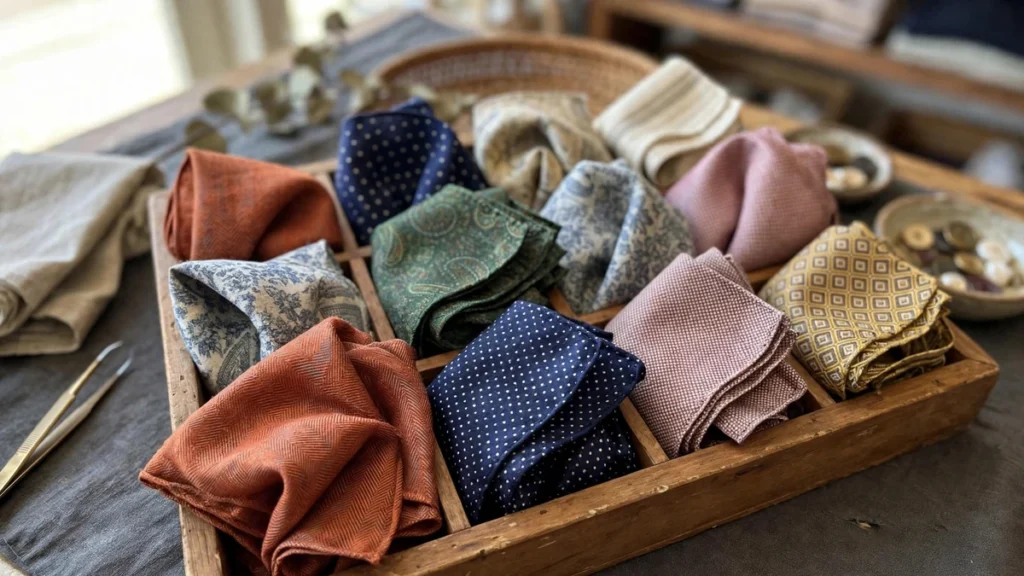
Look next at the fabric, and think about the season. Linen and cotton are spring and summer fabrics, light, breathable, and easy to wash. Silk works all year, and it is the most versatile fabric for a pocket square. Cashmere and velvet are autumn and winter fabrics, warm and soft, but too heavy for summer. A square in the wrong fabric for the season will feel wrong, however pretty it looks.
Finally, look at the finish. Hand-rolled edges, where the fabric is rolled and stitched by hand, are the mark of a well-made square. The edge should be soft and slightly raised, not flat and stiff. The corners should be truly square, and the pattern, if there is one, should be centred and even. Our guide to the best silk ties for men makes the same point about finish, because a tie and a pocket square are both small pieces of silk where the quality of the making shows immediately, and a well-finished accessory is worth more than a famous label.
The 9 steps to buying a pocket square in 2027
Decide how you will wear it
What we like: Starting with the wear, not the colour, saves money and disappointment, because it narrows the choice to squares that will actually work in your pocket. What to consider: It takes a moment of honest thought, and it means accepting that the square you love in the shop may not suit the jacket you own. Best for: Anyone buying a first pocket square, or buying for a specific occasion. Cost: Nothing, just a few minutes of thought. Time needed: Five minutes, before you shop.
Choose the fabric for the season
What we like: The right fabric for the season feels comfortable, looks right, and lasts longer, because it is not being asked to do something it cannot do. What to consider: It means owning more than one square if you wear them all year, and it means a silk square is the only one that truly works in every season. Best for: Building a small, practical collection rather than a single square. Cost: £15 to £80, depending on the fabric. Time needed: Ten minutes to compare fabrics in a shop.
Pick a size that sits right
What we like: The right size sits flat in the pocket, holds its fold, and stays put when you sit down, which is the whole point of a pocket square. What to consider: Sizes are not always labelled clearly, and a square that is sold as 30 centimetres may measure 28 or 32, so check it yourself. Best for: Women, whose blazer pockets are usually shallower than men’s. Cost: Nothing extra, if you measure before you buy. Time needed: Two minutes with a tape measure.
Match the colour, not the tie
What we like: A colour that complements your outfit looks considered and stylish, while a colour that matches another accessory exactly looks like a set, and a set looks dated. What to consider: It takes a little more thought than buying a matching set, and it means you cannot rely on the shop to tell you what goes together. Best for: Anyone who wants their pocket square to look deliberate rather than bought as part of a package. Cost: Nothing, just a better choice. Time needed: Five minutes, holding the square against your jacket.
Choose the pattern scale
What we like: A small, neat pattern is easier to wear than a large, busy one, and it suits more jackets, which makes the square more useful. What to consider: Small patterns can look plain from a distance, and a large pattern can be beautiful if the jacket is plain enough to carry it. Best for: Anyone buying a first patterned square, or buying for work. Cost: No difference in price between pattern scales. Time needed: Five minutes, folding the square to see how the pattern sits.
Check the edges and finish
What we like: Hand-rolled edges and true square corners are the clearest signs of a well-made pocket square, and they are visible the moment you hold it. What to consider: Hand-rolled edges cost more, and machine edges are perfectly fine for everyday cotton squares, so this step is about knowing what you are paying for, not about always buying the most expensive option. Best for: Silk and linen squares, where the finish matters most. Cost: Hand-rolled edges add roughly £10 to £20 to the price. Time needed: Two minutes, holding the square up to the light.
Decide on the fold before you buy
What we like: Knowing your fold before you buy means you can test the square in the shop, and you will not discover at home that it will not hold the shape you want. What to consider: It means learning two or three folds, which takes a few minutes, and it means some squares will be ruled out, which can feel disappointing. Best for: Anyone who has bought a square that would not hold its fold. Cost: Nothing. Time needed: Ten minutes to practise the folds at home first.
Set a budget and compare like with like
What we like: A clear budget stops you from overspending on a square that does not deserve it, and comparing like with like — silk with silk, linen with linen — makes the price differences meaningful. What to consider: It means accepting that a £15 cotton square can be better made than a £60 silk square, and that a famous label is not a guarantee of quality. Best for: Anyone building a collection, or buying a gift. Cost: £10 to £80 per square, depending on fabric and finish. Time needed: Fifteen minutes to compare three or four squares.
Keep the receipt and the care instructions
What we like: Keeping the receipt and the care label means you can return a square that does not work, and you will know how to look after the ones you keep. What to consider: It is the least glamorous step, and it is the one most people skip, which is why so many pocket squares end up ruined by the wrong wash. Best for: Silk, cashmere and velvet squares, which need dry cleaning. Cost: Nothing. Time needed: One minute, to file the receipt and read the label.
Which pocket square is right for you
The right pocket square depends on how you dress. If you wear tailored blazers to work, start with a white linen square and a solid silk square in a deep colour. They will cover almost every outfit, they are easy to fold, and they are the two squares you will reach for most often. If your style is softer, a silk floral print and a cotton gingham will suit you better.
If you dress up mainly in the evening, a velvet square in burgundy or forest green is the one to own first. It turns a plain black blazer into an evening outfit, and it needs nothing else to work. If you are buying a gift, a monogrammed linen square is personal and safe, because it is not size-dependent and it suits anyone who wears a blazer. A guide to how to wear a necktie follows the same logic for men, because the principle is the same: the accessory should suit the person wearing it, not the person buying it.
Think about your wardrobe as a whole, not just the jacket. A square should work with at least three outfits you already own, or it is not worth buying. Hold it against your blazer, your coat, and your favourite top, and if it works with all three, buy it. If it works with only one, wait.
The caveats that matter
The most common mistake when buying a pocket square is buying the wrong size. A men’s 40 centimetre square in a woman’s blazer pocket will bunch, push the pocket open, and fall out when you sit down. Measure your pocket, or buy a square made for women, usually 25 to 30 centimetres. The second mistake is buying a set — a pocket square that matches a tie or a scarf exactly. A set looks dated, and a complementary colour is always better than an identical one.
| Detail | What is known |
|---|---|
| Best size for women | 25 to 30 centimetres; larger men’s squares bunch in shallower pockets |
| Best fabric for everyday | Cotton and linen, washable and hard-wearing, holding a crisp fold |
| Best fabric for all seasons | Silk, versatile and soft, but it slips and needs dry cleaning |
| Best first purchase | White linen, for versatility and for learning how a square should sit |
| What to check before paying | Hand-rolled edges, true square corners, and a pattern that stays neat when folded |
| What to avoid | Exact matching sets, squares with no size given, and fabrics you will not care for |
| Typical price range | £10 to £30 for cotton and linen, £25 to £60 for silk, £35 to £80 for cashmere |
| What a guide cannot do | It cannot choose your colour for you, and it cannot fix a blazer that does not fit |
Care is the other caveat that matters. Silk, cashmere and velvet should be dry cleaned, or hand washed very gently and dried flat. Cotton and linen can be machine washed on a gentle cycle, but they need pressing while still slightly damp. A square that has been washed badly is worse than no square at all, so be honest with yourself about whether you will care for it before you buy it.
Checklist: buying a pocket square honestly
Use these checks before you pay, and again after you have worn the square once.
- Check the pocket: measure its depth, and try the square in it before you buy, if you can.
- Check the size: 25 to 30 centimetres for most women’s blazer pockets, with the measurements given in the listing.
- Check the fabric: linen and cotton for spring and summer, silk for all year, cashmere and velvet for winter.
- Check the edges and corners: hand-rolled edges and true square corners are the marks of a well-made square.
- Check the fold: practise the fold you will actually use, and make sure the square holds it and stays in the pocket.
- Check the care label and keep the receipt: do not buy a dry-clean-only square if you will not dry clean it.
Frequently asked questions
How much should a pocket square cost?
A good everyday cotton or linen square costs £10 to £30. A good silk square costs £25 to £60. A cashmere or monogrammed square costs £35 to £80. Price is a poor guide on its own, so judge a square on its edges, its corners, and the way it folds, not on its label.
What size pocket square should I buy?
For most women, 25 to 30 centimetres is the right size. It fills a shallower pocket without bunching, and it folds neatly into a straight fold or a puff. Larger squares, made for men’s jackets, tend to push the pocket open and fall out when you sit down.
Should I buy a matching tie and pocket square set?
No. A pocket square that matches a tie exactly looks like a set, and a set looks dated. Choose a square in a complementary colour, ideally one that echoes a colour already in your outfit, rather than copying another accessory.
Can I buy a pocket square online?
Yes, but check the measurements, the fabric, and the care instructions in the listing before you buy. If the size is not given, ask the seller or choose another square. Keep the receipt until you have tried the square in your pocket.
How do I know if a pocket square is well made?
Look at the edges and the corners. A well-made square has hand-rolled edges that feel soft and slightly raised, corners that are truly square, and a pattern that is centred and even. The back should look as neat as the front.
Is a pocket square a good gift?
Yes, especially a monogrammed linen square or a silk print in the recipient’s favourite colour. Pocket squares are personal, they are not size-dependent, and they suit anyone who wears a blazer. If you are choosing a gift for someone who dresses up often, our guide to luxury gifts under £1000 includes other small, personal presents in the same spirit.
The bottom line
Buying a pocket square is simple once you know what to look for. Decide how you will wear it, choose the fabric for the season, pick a size that sits right, and check the edges and the fold before you pay. A white linen square is the best first purchase, a silk square is the most versatile, and a cashmere square is the one for winter.
Buy one square, wear it with an outfit you already love, and judge it on how it sits. If it works, buy another in a different fabric. If it does not, return it and try a different size or fold. That is the honest way to build a small collection you will actually wear, rather than a drawer full of squares that never leave the house.