
A linen coat is the easiest warm-weather layer to get wrong and the easiest to get right. It breathes, it moves, and it looks relaxed without trying, which is exactly why it can tip into looking crumpled, shapeless, or like something you threw on to walk the dog. The problem is rarely the coat itself. It is how it is worn: the wrong length against the wrong trousers, a colour that fights the rest of the outfit, or a fit that swallows the shape underneath.
That is why this guide is organised by look, not by rule. A linen coat works over a white shirt and tailored trousers, over a slip dress and sandals, and open over jeans and a tee, but each of those outfits asks something different of the coat. The length, the weight, the colour, and whether you belt it or leave it open all change what the outfit says.
Below are nine ways to style a linen coat in 2027, from the sharpest work outfit to the simplest beach cover-up. Each one is described by what works about it, what to watch for, and who it suits best, so you can wear the coat you already own more often, and choose the next one with a clearer eye.
Key takeaways
- A linen coat looks best when the outfit underneath is simple: one clean shape, one or two colours, and nothing competing for attention.
- Length matters more than brand. A coat that ends at the knee suits most people; longer coats need a defined waist or a slim silhouette underneath.
- Belt it, half-belt it, or leave it open, but do not do all three in one outfit. Pick one structure and let the rest stay relaxed.
- Neutral colours are the safest buy, while a single strong colour works best when everything else in the outfit is quiet.
- No linen coat is a winter coat, and no amount of clever layering turns one into one, so plan for spring, summer, and early autumn only.
What a linen coat actually is
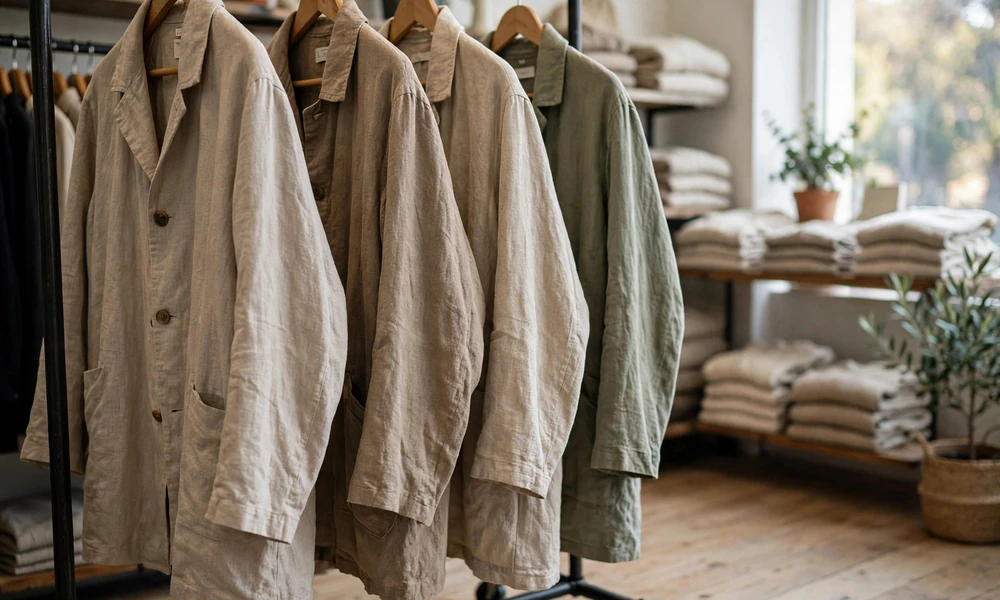
A linen coat is an unlined or lightly lined outer layer made mostly or entirely from flax fibre. Linen is strong, breathable, and absorbent, which is why it stays comfortable in heat that would make wool or cotton feel heavy. It also creases. That creasing is not a flaw in the fabric; it is the fabric.
Most linen coats fall into three shapes. The first is the relaxed, straight-cut coat that ends around the knee, often with a shirt collar and patch pockets. The second is the belted coat, cut closer through the waist with a self-tie belt that defines the shape. The third is the long duster, which falls below the knee and works best as a light layer over a slim outfit. Knowing which shape you own matters more than any styling trick, because a duster styled like a belted coat, or a belted coat worn loose and shapeless, will always look slightly off.
The colour range is narrow on purpose. Natural linen, stone, sand, oatmeal, white, and black cover most of what is made, with sage, navy, and rust appearing as seasonal options. A neutral coat is the most useful because it works with everything you already own, and our guide to why linen coats are worth it explains why the fabric earns its price in warm weather. A coloured coat can be beautiful, but it needs a quiet outfit underneath, or the colour ends up doing all the talking.
How we chose these styling tips and what to look for
Look first at the weight of the linen. A coat in a mid-weight linen, roughly the weight of a good shirt times two, holds its shape without feeling stiff and drapes without clinging. Very light linen looks lovely on a hanger but collapses on the body and shows every crease, while very heavy linen can look more like canvas than clothing. Hold the coat up to the light: you should see a little light through it, but not the outline of your hand.
Look next at the length against your height. A coat that ends just above or just below the knee suits most people and works with trousers, dresses, and jeans alike. If you are shorter, a coat that ends at the knee or a touch above keeps your legs looking long; if you are taller, a longer coat looks balanced rather than oversized. A coat that ends mid-calf is the hardest length to wear, because it cuts the leg at its widest point and needs a slim silhouette underneath to work.
Finally, look at the details before you buy or before you style what you own. A shirt collar reads smarter than a shawl collar, patch pockets read more casual than welt pockets, and a self-tie belt gives you the option of structure without forcing it. Check the lining, too: a half-lined coat breathes better and sits more softly than a fully lined one, which is what you want from linen in the first place.
The 9 ways to style a linen coat in 2027
These nine looks cover the whole life of a linen coat, from work to weekends to holidays. Start with the one closest to how you already dress, then try the next one that feels like a small step rather than a leap.
Over a white shirt and tailored trousers
What we like: Clean, sharp, and hard to get wrong. The white shirt gives the coat a crisp edge, and tailored trousers keep the outfit looking deliberate rather than thrown together.
What to consider: Keep the shirt tucked in and the trousers straight rather than wide, or the coat can look boxy. Best for: Work, smart lunches, and any day you want to look put together. Cost: Nothing extra if you own the pieces. Time needed: Five minutes.
With a slip dress and sandals
What we like: The contrast is the point. A soft slip dress under a structured linen coat looks effortless, and flat sandals keep it from tipping into evening wear.
What to consider: The dress should end above or just below the coat hem, or the layers will fight each other. Best for: Warm days, holidays, and long lunches. Cost: Nothing extra if you own the pieces. Time needed: Five minutes.
Belted at the waist over a knit dress
What we like: The belt gives the coat a waist and the knit dress gives it warmth, so the outfit looks intentional even on a cool morning.
What to consider: Tie the belt loosely at the front rather than cinching it tight, or the linen will bunch and crease in hard lines. Best for: Early autumn, smart days out, and dinners. Cost: Nothing extra if you own the pieces. Time needed: Five minutes.
Open over jeans and a tee
What we like: The most wearable look in this guide. An open linen coat over jeans and a plain tee looks relaxed without looking unfinished.
What to consider: Straight-leg jeans work better than very wide or very skinny ones, because the coat needs a clean line underneath. Best for: Weekends, errands, and casual days. Cost: Nothing extra if you own the pieces. Time needed: Two minutes.
With wide-leg linen trousers, tonal and relaxed
What we like: A tonal linen suit, coat and trousers in the same colour family, looks calm and expensive without any effort at all.
What to consider: The shades do not need to match exactly, but they should be close, or the outfit will look like two separate ideas. Best for: Holidays, warm evenings, and relaxed smart occasions. Cost: A pair of linen trousers if you do not own them. Time needed: Five minutes.
Over a swimsuit as a beach cover-up
What we like: A long linen coat over a swimsuit is the most elegant cover-up there is, and it doubles as a layer for lunch after the beach.
What to consider: Choose a light colour and an open fit, and leave the coat unbelted so it moves like a robe rather than a jacket. Best for: Beach days, poolside lunches, and resort holidays. Cost: Nothing extra if you own the pieces. Time needed: One minute.
With a silk scarf and loafers for work
What we like: A silk scarf adds colour and polish to a plain linen coat without adding weight, which is exactly what a warm-weather work outfit needs.
What to consider: Knot the scarf loosely at the neck or let it drape, and keep the rest of the outfit plain so the scarf stays the focus. Best for: Work, smart lunches, and occasions that need a little polish. Cost: A silk scarf if you do not own one. Time needed: Five minutes.
Layered over a fine roll neck in early autumn
What we like: A fine roll neck extends the life of a linen coat by a few weeks, adding warmth without the bulk of a knit.
What to consider: The roll neck must be fine, not chunky, or the collar will push the coat open and ruin the line. Best for: Early autumn, cool mornings, and transitional weather. Cost: A fine roll neck if you do not own one. Time needed: Five minutes.
As an evening layer over a satin slip dress
What we like: The matte texture of linen against the shine of satin is one of the best fabric contrasts in a wardrobe, and it keeps an evening dress wearable on a cool night.
What to consider: Keep the coat open and the dress simple, or the two fabrics will compete rather than complement each other. Best for: Evening dinners, summer parties, and warm-weather weddings. Cost: Nothing extra if you own the pieces. Time needed: Five minutes.
Which linen coat look is right for you
Start with your shape, not the trend. If you are tall, the long duster and the tonal linen suit will look balanced on you, and a belted coat will give you a waist without shortening your frame. If you are shorter, the knee-length coat over a white shirt or over jeans is the safer starting point, because it keeps your proportions clear and your legs looking long.
Next, think about where you actually wear a coat. If most of your days are at work, the white shirt outfit and the silk scarf outfit will earn their keep fastest. If your life is mostly weekends and holidays, the open coat over jeans and the beach cover-up will get worn far more often. A coat that suits your real days is worth more than a coat that suits an imaginary one, and our guide to styling a cashmere coat follows the same logic for colder weather.
Finally, be honest about how much effort you want to spend. Some people enjoy belting, knotting, and adjusting, and for them the belted coat and the scarf look are a pleasure. Others want to put a coat on and forget it, and for them the open coat over jeans, or the tonal suit, is the better buy. Neither is wrong. The right look is the one you will actually wear.
The caveats that matter
Linen creases, and no styling trick removes that. A linen coat will look different at six in the evening than it did at nine in the morning, and if that bothers you, linen may not be your fabric. Steaming helps, ironing helps more, but the creases return within an hour of sitting down. The honest answer is to accept the texture as part of the look, and to choose darker colours or textured weaves if the creasing really bothers you.
Linen is also not a cold-weather fabric. It breathes, which is its strength in heat and its weakness in cold, and even layered over a roll neck it will not keep you warm below about fifteen degrees. That is a limit, not a flaw, and the guide to natural fibres in clothing explains where linen sits against wool, cotton, and silk. Plan your linen coat for spring, summer, and early autumn, and reach for wool when the temperature drops.
| Detail | What is known |
|---|---|
| Best weight | Mid-weight linen that holds its shape without feeling stiff |
| Best length for most people | Just above or just below the knee |
| Best colours to start with | Natural, stone, sand, oatmeal, white, black, or navy |
| Best outfit underneath | One clean shape, one or two colours, nothing competing |
| When it works | Spring, summer, and early autumn, roughly above fifteen degrees |
| What to avoid | Very wide trousers under a long coat, and heavy knits at the waist |
| Care | Steam rather than iron, and accept that creases return quickly |
| What it does not do | It does not keep you warm in winter, whatever you layer under it |
One more caution: linen fades in strong sun if it is left hanging in a bright window, and light colours show marks more easily than dark ones. Store the coat on a proper hanger in a shaded wardrobe, and deal with marks quickly rather than leaving them until the end of the season.
Checklist: styling a linen coat honestly
Use these checks before you leave the house, and again when you buy your next linen coat.
- Check the length: the coat should end at the knee or just below it, unless you are deliberately wearing a duster.
- Check the outfit underneath: one clean shape and one or two colours, with nothing competing for attention.
- Check the waist: belt it, half-belt it, or leave it open, but pick one structure for the whole outfit.
- Check the creases: accept them as texture, and choose darker colours if they bother you.
- Check the weather: linen is for spring, summer, and early autumn, not for cold days.
- Check the shoes: flat sandals, loafers, or low heels keep the look relaxed; very high heels fight the fabric.
Frequently asked questions
Can I wear a linen coat to work?
Yes, if the outfit underneath is smart. A linen coat over a white shirt and tailored trousers, or over a simple dress with loafers, reads as polished rather than casual. Keep the colours neutral and the accessories simple, and it will look like work, not a weekend.
How do I stop a linen coat looking crumpled?
You cannot stop it entirely, and that is part of the fabric. Steaming before you leave the house helps, and a mid-weight linen creases less than a very light one. Darker colours and textured weaves also show creases less, so choose those if the creasing bothers you.
What shoes go best with a linen coat?
Flat sandals, loafers, and low heels are the natural partners, because they keep the look relaxed. Trainers work with the jeans outfit, and ankle boots work with the roll-neck look in early autumn. Very high heels tend to fight the softness of the fabric.
Can I wear a linen coat in autumn?
Yes, in early autumn, layered over a fine roll neck with trousers and ankle boots. Once the temperature drops below about fifteen degrees, the coat will not keep you warm, and it is time to switch to wool.
Should a linen coat be belted or left open?
Either, but not both at once. Belt it when you want shape, usually over a dress or a knit, and leave it open when you want ease, usually over jeans or a simple outfit. Half-buttoning the top button is a useful middle ground.
What colour linen coat should I buy first?
A neutral: natural, stone, sand, oatmeal, or black. A neutral coat works with everything you already own, which is what makes it useful. Add a colour, sage, navy, or rust, only once you know the neutral one gets worn.
The bottom line
The best way to style a linen coat in 2027 is to keep the outfit underneath simple and let the coat be the texture. One clean shape, one or two colours, and a length that suits your height will carry almost every look in this guide, from work to weekends to holidays. The belt, the scarf, and the roll neck are all optional extras, not requirements, and the coat looks best when only one of them is doing the talking.
Start with the look closest to how you already dress, wear it a few times, and then try the next one. A linen coat earns its place in a wardrobe slowly, one warm day at a time, and the right styling is simply the styling that gets it worn.