



Linen has a reputation problem. Most people think of it as a summer fabric, all crumpled shirts and beach holidays, and the idea of a linen coat sounds like a contradiction. A coat is supposed to keep you warm, and linen is famous for keeping you cool. Yet linen coats have quietly become one of the most useful pieces in a spring and autumn wardrobe, and for good reason.
A linen coat is light, breathable and easy to wear, and it has a relaxed structure that suits the in-between seasons better than a heavy wool coat or a stiff trench. It works over a knit on a cool morning, over a dress on a mild evening, and as a layer you can carry when the day warms up. It is not a winter coat, and it does not pretend to be one. It is a coat for the months when the weather cannot make up its mind.
Below are nine reasons a linen coat is worth it in 2027, from breathability and comfort to durability, styling and value. Each one looks at the fabric honestly, including the creasing, the care and the limits, so you can decide whether a linen coat earns a place in your wardrobe. It is a coat that rewards a little understanding, and once you know how linen behaves, it is easy to love.
Key takeaways
- Linen coats are at their best in spring and autumn, when a heavy coat is too much and no coat is too little.
- Linen breathes better than almost any other coat fabric, so it stays comfortable when the temperature changes through the day.
- Linen is strong and long-lasting, and it softens with wear rather than wearing out.
- Creasing is part of linen, not a fault, and a relaxed cut makes it look intentional rather than untidy.
- A linen coat is not a winter coat and not a financial investment, so buy it for the seasons it serves, not for year-round wear.
What a linen coat actually is
Linen is made from the flax plant, and its fibres are long, strong and naturally breathable. A linen coat is usually made from pure linen, or from a linen blend with cotton, viscose or a small amount of wool. Pure linen is the most breathable and the most prone to creasing. A linen and cotton blend is a little smoother and easier to care for, while a linen and wool blend adds warmth for cooler days.
The cut of a linen coat is usually relaxed. Expect an unstructured shoulder, a straight or slightly A-line shape, and a length that falls to the knee or just below. That looseness is part of the point. Linen does not hold a sharp, tailored shape the way wool does, so a linen coat is designed to drape and move, not to stand to attention. It suits casual and smart-casual outfits, and it looks at home with jeans, dresses and simple tailoring.
Understanding what linen is, and what it is not, is the key to loving it. It is a natural fibre, strong and breathable, with a texture that is visibly different from cotton or wool. A linen coat will never behave like a wool coat, and judging it by wool standards is the fastest way to be disappointed by it. Our guide to the best natural fibres in clothing explains where linen sits alongside wool, cotton, silk and cashmere, and why fibre choice matters more than brand for a coat you will wear for years.
How we judged a linen coat and what to look for
Look first at the fibre content and the weight of the cloth. A good linen coat uses a medium-weight linen that holds its shape without feeling stiff. Very light linen will crease badly and offer little protection from wind. Very heavy linen can feel board-like until it softens. Aim for pure linen or a linen blend with at least half linen, and check that the lining, if there is one, is breathable too. A polyester lining in a linen coat defeats the purpose of the fabric.
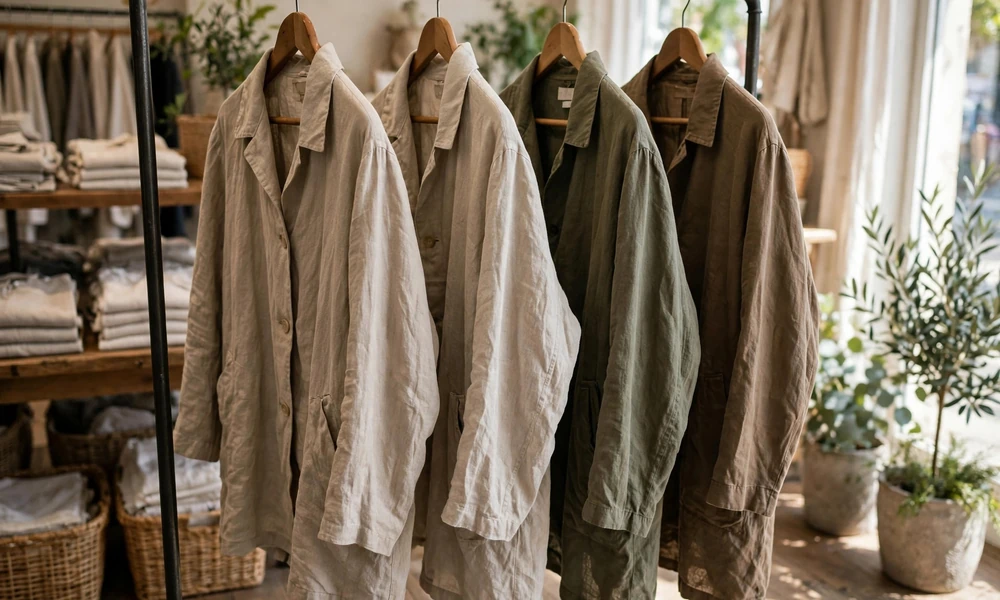
Look next at the construction. Check the seams, which should be neat and flat, and the buttons, which should be securely attached. Linen frays more easily than wool, so well-finished seams matter. Try the coat on and move in it. The shoulders should sit naturally, the sleeves should cover your wrists, and the coat should close without pulling. A linen coat that fits well will look relaxed. One that fits badly will look untidy.
Finally, be honest about your climate and your routine. If your spring and autumn are mild, with temperatures between 12 and 20 degrees, a linen coat will earn its keep for months. If your in-between seasons are short, wet or very cold, you may get less wear from it. That does not make it a bad coat. It makes it a coat for a particular season, and the value depends on how long that season lasts where you live.
The 9 reasons a linen coat is worth it in 2027
It breathes better than any other coat
What we like: Linen is one of the most breathable natural fibres, allowing air and moisture to pass through, so you stay comfortable when the temperature rises through the day. What to consider: That breathability means it offers little insulation, so it is not a coat for cold days. Best for: Spring and autumn, mild days, and moving between indoors and outdoors. Cost: Linen coats from around £120 to £800. Time needed: No breaking in, comfortable from the first wear.
It keeps you cool without looking underdressed
What we like: Linen wicks moisture away from the body and dries quickly, so it stays comfortable in warm, humid weather, while still looking like a proper coat. What to consider: In very hot weather, even linen is too much, and a lighter layer is a better choice. Best for: Warm spring days, early summer evenings, and humid climates. Cost: Similar to the range above, with pure linen at the higher end. Time needed: None, it works from the first wear.
It is stronger than it looks
What we like: Linen fibres are among the strongest natural fibres, and linen fabric becomes softer with wear and washing rather than wearing thin. What to consider: Linen can fray at seams and hems if the construction is poor, so check the finishing before you buy. Best for: A coat you plan to keep for years, not a single season. Cost: Good linen costs more than cheap cotton, but lasts longer. Time needed: A few washes to reach its softest feel.
It softens beautifully with wear
What we like: A new linen coat can feel crisp and slightly stiff, but it softens with every wear and wash, developing a relaxed drape and a lived-in feel. What to consider: That softening is gradual, so if you want instant softness, look for a washed or garment-dyed linen. Best for: Anyone who likes clothes that improve with age. Cost: Washed linen sometimes costs a little more, and it is worth it. Time needed: A few weeks of regular wear to feel the difference.
It works with almost everything you own
What we like: A linen coat in a neutral shade works over jeans, dresses, linen trousers, simple tailoring and knitwear, and it suits both casual and smart-casual outfits. What to consider: Very formal outfits may call for a sharper, more structured coat, and linen is not the best choice for a black-tie occasion. Best for: Everyday spring and autumn outfits, from the school run to a long lunch. Cost: A neutral linen coat justifies its price by how often it is worn. Time needed: No styling effort, it goes with what you already wear.
It is easy to pack and carry
What we like: Linen is light and folds down small, so a linen coat is easy to carry over your arm, pack in a bag, or take on a trip without weighing you down. What to consider: It will crease when folded, so shake it out and hang it up as soon as you arrive. Best for: Travel, commuting, and days when the weather changes. Cost: No extra cost, lightness is a property of the fibre. Time needed: A minute to hang and smooth it out.
It is a natural, low-impact choice
What we like: Flax, the plant linen comes from, needs less water and fewer chemicals than cotton to grow, and linen is biodegradable at the end of its life. What to consider: Not all linen is produced the same way, so look for reputable makers and clear labelling rather than vague claims. Best for: Anyone who wants a natural fibre with a lighter footprint. Cost: Responsibly made linen costs more, and the difference is real. Time needed: No extra time, just a closer look at the label.
The creasing is part of the charm
What we like: Linen creases, and that is not a flaw. The soft, lived-in creases are part of what makes linen look relaxed and natural, and a good cut makes them look intentional. What to consider: If you want a crisp, sharp finish, linen will frustrate you, and a cotton or wool coat is a better choice. Best for: People who like a relaxed, natural look rather than a pressed one. Cost: None, creasing is free. Time needed: A quick steam if you want it smoother, or nothing at all if you embrace it.
It holds its value season after season
What we like: Linen coats are not tied to a single trend, and a classic cut in a neutral colour will look right for years, so the cost per wear falls with every season. What to consider: A very fashionable cut or an unusual colour may date faster, so choose classic if longevity matters to you. Best for: A long-term wardrobe piece rather than a one-season buy. Cost: £120 to £800, with the best value at the middle of the range. Time needed: Years of wear to get the full value.
Which linen coat is right for you
Start with the colour. A neutral shade, beige, stone, navy or charcoal, will work with everything you own and will not date. A strong colour can be beautiful, but it will limit how often you reach for the coat. For a first linen coat, neutral is the honest choice.
Then choose the weight. A medium-weight linen is the most useful, warm enough for a cool morning and light enough for a mild afternoon. A linen and cotton blend is a good compromise if you want less creasing and easier care. A linen and wool blend is worth considering if your autumns are cold, because it adds warmth without losing the linen feel.
Finally, check the length. A knee-length coat is the most versatile, working over dresses and trousers alike. A longer coat looks more dramatic but can be harder to wear every day, and a shorter jacket is a different garment altogether. Our guide to why linen keeps you cool explains the science behind the comfort, and it is worth reading before you choose between pure linen and a blend.
The caveats that matter
Linen coats have real limits, and it is better to know them before you buy. Linen creases, it offers little warmth in cold weather, and it is not the best fabric for rain, which can leave water marks and make the cloth feel heavy. A linen coat is a coat for mild, dry days, and it will disappoint you if you ask it to be a winter coat.
| Detail | What is known |
|---|---|
| Best seasons | Spring and autumn, mild days between 12 and 20 degrees |
| Breathability | Among the best of any coat fabric, stays comfortable as temperatures change |
| Warmth | Low, linen insulates poorly and is not a winter coat |
| Durability | Strong fibre, softens with wear, lasts for years with good construction |
| Creasing | Normal and expected, part of the relaxed look of linen |
| Care | Many linen coats can be machine washed, but check the label first |
| Weather | Best in dry weather, rain can mark the cloth and make it feel heavy |
| What it is not | Not a winter coat, not waterproof, and not a financial investment |
Care is simpler than many people expect. Many linen coats can be machine washed on a gentle cycle, but always check the label, because a lined coat or a blended cloth may need dry cleaning. Dry linen slowly, away from direct heat, and iron or steam it while it is still slightly damp if you want a smoother finish.
Checklist: buying a linen coat honestly
Use these checks before you buy, and again at the start of each spring.
- Check the label: aim for at least half linen, with a breathable lining, not polyester.
- Check the weight: medium-weight linen is the most useful, light enough to breathe and heavy enough to hold its shape.
- Check the fit: shoulders should sit naturally, sleeves should cover your wrists, and it should close without pulling.
- Check the colour: neutrals work hardest, and a colour you love is worth it only if you will wear it often.
- Check the care: read the label and be honest about whether you will machine wash it or take it to the cleaner.
- Check the season: if your spring and autumn are short or very wet, a linen coat will earn its keep less often, so weigh the price accordingly.
Frequently asked questions
Can you wear a linen coat in winter?
Not as your main coat. Linen offers little insulation, so it is too cold for winter on its own. It works as a layer over a heavy knit on a mild winter day, but for real cold, wool is the right fabric.
How do you stop a linen coat from creasing?
You cannot stop it completely, and you should not try to. Choose a relaxed cut, hang the coat up rather than folding it, and steam it lightly if you want it smoother. A linen and cotton blend creases less than pure linen, if that matters to you.
Can you machine wash a linen coat?
Many linen coats can be machine washed on a gentle, cool cycle, but always check the label first. Lined coats, blended cloths and structured coats often need dry cleaning, and washing the wrong coat can damage the shape.
Is linen better than cotton for a coat?
Linen is stronger, more breathable and more durable than cotton, and it softens more beautifully with wear. Cotton creases less and is easier to care for, so the better choice depends on whether you value breathability or a crisper finish more.
What should I wear under a linen coat?
Almost anything. A fine knit, a simple dress, jeans and a shirt, or linen trousers all work well. The coat is light enough to layer over a knit on a cool morning and to wear open over a dress on a mild evening. A good winter coat is a different tool for a different season, so do not judge a linen coat by winter standards.
Are linen coats in style in 2027?
Yes. Linen coats remain a strong choice for spring and autumn, especially in neutral colours and relaxed, classic cuts. They are a wardrobe staple rather than a trend, so a well-chosen linen coat will not date quickly.
The bottom line
A linen coat is worth it if you have a real spring and autumn, and if you want a coat that is light, breathable and easy to live with for those months. It is strong, it softens beautifully, it works with almost everything you own, and it will last for years. It is not a winter coat, it creases, and it needs dry weather, but those are the terms of the fabric, not faults.
Buy a neutral colour, a medium weight, and a good fit, and let the creases be part of the charm. A linen coat will not do everything, but for the seasons it serves, few coats do it better.


