



A silk dress is one of the most flattering things a woman can own, and one of the most intimidating to style. The fabric is fluid, light-catching, and unforgiving of the wrong shoes or the wrong layer. Wear it on its own and it can feel too dressed up for the daytime. Add the wrong jacket and it can look heavy and awkward. Get the styling right, though, and a single silk dress can work for a wedding, a work dinner, a summer lunch, and a night out.
The secret is that a silk dress does not need much. Silk already brings the drama, the sheen, and the movement. The job of the rest of the outfit is to support it, not compete with it. That means simple shoes, a restrained bag, and jewellery that does not fight the neckline. It also means thinking about the season, because a silk dress styled for a July garden party and a silk dress styled for a November evening are two very different outfits.
Below are nine ways to style a silk dress in 2027, from daytime looks to evening looks, with honest notes on what works, what to watch for, and how much each approach costs in time and money.
Key takeaways
- Let the silk do the work. Keep shoes, bags, and jewellery simple so the dress, not the accessories, is the focus.
- Length decides the occasion. A midi silk dress is the most versatile, working for day and evening with a change of shoes.
- A knit or a tailored jacket is the easiest way to make a silk dress feel right in cooler weather, and to make it look less formal in the daytime.
- Match the shoe to the setting, not the dress. Trainers for daytime, ankle boots for autumn, and heels for evening.
- No styling trick fixes a badly fitting silk dress, and a dress that pulls, gaps, or clings in the wrong place needs tailoring, not accessories.
What styling a silk dress actually involves
Styling a silk dress starts with the dress itself. Silk is a fluid fabric, so the cut matters more than with a stiffer material. A bias-cut silk dress skims the body and moves when you move, which is flattering but can cling. A straight-cut silk dress is more structured and easier to layer. Before choosing shoes or a jacket, check how the dress sits on the shoulders, whether the neckline gaps when you move, and whether the hem falls where you want it to. A dress that fits well needs very little styling. A dress that does not fit well cannot be saved by accessories.
The second thing to consider is the occasion. A silk dress at a wedding, a work dinner, and a weekend lunch are three different outfits, even if the dress is the same. The shoes, the bag, and the outer layer do most of the work of setting the tone. A pair of simple heels and a small clutch says evening. Trainers and a cross-body bag say daytime. Ankle boots and a leather jacket say autumn. The dress stays the same, and the styling changes the message.
Colour and pattern matter too. A plain silk dress in a solid colour is the easiest to style, because almost any neutral shoe or bag works with it. A printed silk dress needs quieter accessories, so the print is not fighting a busy bag or patterned shoes. A dark silk dress suits evening and winter, while a pale or pastel silk dress suits spring and summer days.
How we chose these styling tips and what to look for
Look first at the dress you already own, or the one you are thinking of buying. A midi length, a simple neckline, and a solid colour are the most versatile combination, because they give you the most styling options. A very short or very long silk dress is harder to style for more than one occasion, and a very busy print limits the accessories you can use with it. If you are buying your first silk dress, choose a midi in a colour you already wear often.
Look next at the shoes you already have. The easiest silk dress looks use shoes that are already in the wardrobe, not a new pair bought for one occasion. Trainers, ankle boots, and a simple pair of heels cover almost every silk dress situation between them. If a look needs a shoe you do not own and would not wear again, it is probably not the right look for that dress.
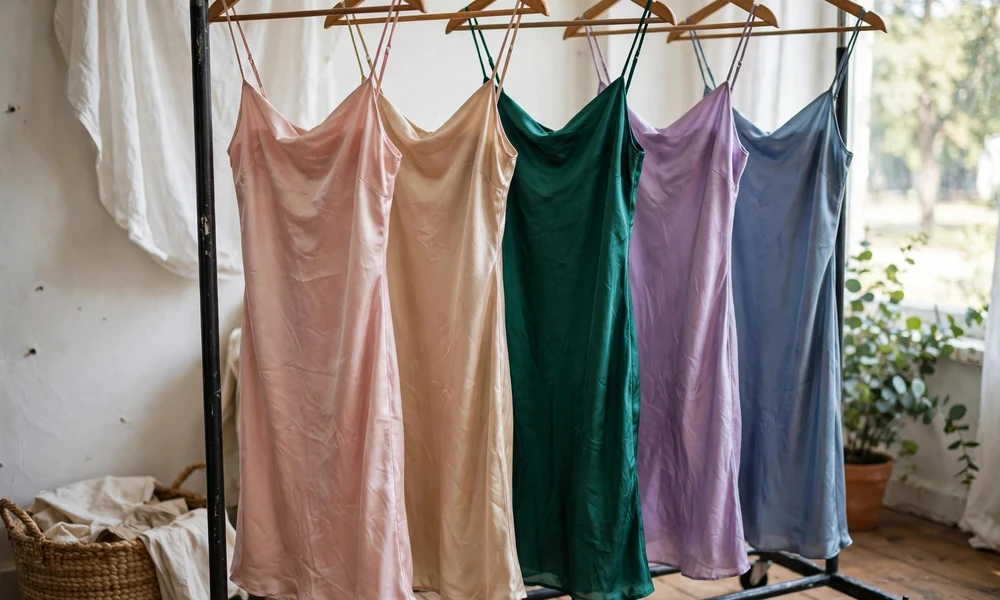
Finally, look at the layers. A silk dress on its own is a summer outfit. With a knit, a blazer, or a leather jacket, it becomes a three-season outfit, which is what makes it worth the price. Our guide to what a slip dress is explains the simplest silk dress shape, and many of the tips here work just as well for a slip dress as for a fuller silk dress.
The 9 ways to style a silk dress in 2027
Start with the right length
What we like: A midi length is the most versatile, falling between the knee and the ankle, and it works for day and evening with a change of shoes. What to consider: A maxi silk dress can drag or trip on stairs, and a very short silk dress can feel too dressed up for daytime. Best for: Anyone buying a first silk dress. Cost: No extra cost, it is a choice made when buying. Time needed: A few minutes trying on different lengths.
Length is the single most useful decision in styling a silk dress. A midi dress can be dressed down with trainers and dressed up with heels, which is why it is the safest first silk dress. A maxi is beautiful for an evening event but harder to wear in the daytime, and a mini silk dress suits a night out more than a lunch.
Layer a knit over it
What we like: A fine knit worn over a silk dress softens the look, adds warmth, and makes the dress feel right in autumn and winter. What to consider: A chunky knit can overwhelm a fine silk dress, and a knit that is too long hides the dress entirely. Best for: Cooler days and casual settings. Cost: A knit you already own costs nothing; a new fine knit is around £30 to £80. Time needed: Two minutes to layer and adjust.
Add a belt to define the waist
What we like: A slim belt gives shape to a loose silk dress, marks the waist, and stops the dress looking like a nightdress. What to consider: A wide or heavy belt can crease silk and fight the fluid drape. Best for: Loose or straight-cut silk dresses. Cost: A slim leather belt is around £20 to £60. Time needed: One minute.
A belt is the fastest fix for a silk dress that feels shapeless. Choose a slim belt in a neutral colour, sit it at the natural waist, and keep the buckle small. A belt in the same colour family as the dress looks more polished than a contrasting one.
Pair it with ankle boots
What we like: Ankle boots make a silk dress feel grounded and autumnal, and they work with a midi length without cutting the leg line. What to consider: Very heavy boots can look clumsy with a fine silk dress, and a boot that hits at the wrong point on the calf shortens the leg. Best for: Autumn and early winter. Cost: Boots you already own cost nothing. Time needed: No extra time.
Wear it with trainers for daytime
What we like: Clean white trainers take a silk dress straight into daytime, making it feel modern and relaxed rather than formal. What to consider: Bulky or brightly coloured trainers can fight the dress, and dirty trainers undo the whole look. Best for: Daytime, lunch, and shopping. Cost: Trainers you already own cost nothing. Time needed: No extra time.
This is the look that makes a silk dress a daytime outfit rather than an occasion outfit. A simple white trainer, a midi silk dress, and a small cross-body bag is one of the most wearable combinations in this guide, and it works because the trainers deliberately lower the formality of the silk.
Dress it up with heels for evening
What we like: A simple heeled sandal or court shoe lifts a silk dress into evening wear, lengthens the leg, and suits weddings and dinners. What to consider: Very high heels with a long silk dress can be hard to walk in, and a fussy shoe competes with the dress. Best for: Evenings, weddings, and formal dinners. Cost: Heels you already own cost nothing. Time needed: A few minutes to choose the right heel height.
Add a jacket for structure
What we like: A tailored blazer or a leather jacket gives a silk dress structure, warmth, and a clear sense of occasion. What to consider: A jacket that is too long hides the dress, and a heavy jacket can crush fine silk at the shoulders. Best for: Work, evenings out, and cooler weather. Cost: A jacket you already own costs nothing. Time needed: Two minutes to layer.
A blazer makes a silk dress work-appropriate, while a leather jacket makes it feel modern and a little edgy. Both work best when the jacket ends at the waist or hip, so the skirt of the dress is still visible. A denim jacket can work too, for a very casual daytime look.
Keep jewellery simple
What we like: A single necklace, a pair of small earrings, or a plain bracelet is enough with a silk dress, because the fabric already catches the light. What to consider: Large, busy jewellery competes with the dress and can snag fine silk. Best for: Every silk dress occasion. Cost: Jewellery you already own costs nothing. Time needed: One minute.
Choose the right bag
What we like: A small, structured bag in a neutral colour suits a silk dress for evening, while a simple cross-body bag suits it for daytime. What to consider: A large, slouchy bag can overwhelm a fine silk dress, and a bag with a rough strap can mark the fabric. Best for: Every silk dress occasion. Cost: A bag you already own costs nothing. Time needed: One minute to swap bags.
Which silk dress look is right for you
Start with the occasion. For a daytime look, choose trainers or flat shoes, a simple bag, and no more than one piece of jewellery. The dress will look relaxed and modern. For an evening look, choose heels, a clutch, and a single piece of jewellery, and let the silk carry the outfit. For work, add a blazer and a structured bag, and keep the hem at midi length.
Think about the season as well. In spring and summer, a silk dress on its own, with sandals or trainers, is enough. In autumn, add ankle boots and a knit or a leather jacket. In winter, a silk dress works best as an evening outfit, with a coat over the top for the journey and heels underneath. A silk dress is not a winter daytime outfit on its own, and pretending it is will leave you cold.
Finally, think about what you already own. The best silk dress looks use shoes, bags, and jackets that are already in the wardrobe. If a look needs three new purchases, it is not the right look for that dress. A roundup of satin dresses is worth a look if you like the silk dress shape but want a more affordable fabric, because satin drapes in a similar way and many of the same styling rules apply.
The caveats that matter
Silk is a delicate fabric, and it needs honest care. It creases, it can be marked by water, and it can be pulled by rough jewellery or bag straps. A silk dress should be stored on a padded hanger, kept out of direct sunlight, and cleaned according to the label, usually by a specialist cleaner. A silk dress that is washed at home in hot water can shrink, lose its sheen, or go stiff.
| Detail | What is known |
|---|---|
| Most versatile length | Midi, between the knee and the ankle |
| Best daytime shoes | Clean white trainers or flat sandals |
| Best evening shoes | A simple heeled sandal or court shoe |
| Best autumn shoes | Slim heeled ankle boots in black or brown |
| Easiest layer | A fine knit, a blazer, or a leather jacket ending at the waist or hip |
| Jewellery rule | One piece at a time; delicate gold or silver suits most silk dresses |
| Bag rule | Small and structured for evening, simple cross-body for daytime |
| What it does not do | It does not fix a bad fit, and no accessory saves a dress that pulls, gaps, or clings |
Fit is the other honest caveat. Silk shows every pull and gap, so a dress that is too tight across the bust or hips will not look better with a belt or a jacket. If a silk dress needs more than a small adjustment, take it to a tailor. A roundup of silk blouses can be a useful alternative if a full silk dress feels like too much fabric, because a silk blouse gives the same sheen with a more forgiving fit.
Checklist: styling a silk dress honestly
Use these checks before you leave the house.
- Check the fit: the dress should skim, not pull or gap, and the hem should fall where you want it to.
- Check the shoes: match the shoe to the occasion, not just to the dress.
- Check the layers: a knit, blazer, or jacket should end at the waist or hip, so the skirt is still visible.
- Check the jewellery: one piece at a time, and nothing that can snag the silk.
- Check the bag: small and structured for evening, simple cross-body for daytime, and a smooth strap.
- Check the weather: a silk dress on its own is a warm-weather outfit, so add a layer or a coat when it is cold.
Frequently asked questions
Can I wear a silk dress in winter?
Yes, as an evening outfit, with a coat over the top and heels underneath. Add a knit or a jacket for warmth, and choose a darker colour. A silk dress on its own is not a winter daytime outfit.
Can I wear trainers with a silk dress?
Yes, and it is one of the best daytime looks. Choose clean, simple white trainers, a midi length, and a small cross-body bag. Avoid bulky or brightly coloured trainers, which fight the dress.
What jacket goes with a silk dress?
A tailored blazer for work, a leather jacket for a modern evening look, and a fine knit or long cardigan for casual warmth. The jacket should end at the waist or hip, so the skirt of the dress is still visible.
How do I stop a silk dress looking like nightwear?
Add structure. A belt, a blazer, or a leather jacket, plus real shoes rather than slippers, makes it clear the dress is an outfit. A slip-style silk dress needs this more than a structured one.
What jewellery should I wear with a silk dress?
One piece at a time. Delicate gold or silver earrings or a simple necklace suit most silk dresses. Avoid large, chunky jewellery, which competes with the fabric and can snag it.
How do I care for a silk dress?
Store it on a padded hanger, keep it out of direct sunlight, and follow the care label, which usually means specialist cleaning. Do not wash silk at home in hot water, and keep rough bag straps and chunky jewellery away from the fabric.
The bottom line
Styling a silk dress in 2027 is simpler than it looks. Choose a midi length in a colour you already wear, let the silk do the work, and keep everything else simple. Trainers and a cross-body bag for daytime, heels and a clutch for evening, ankle boots and a knit for autumn, and a blazer or a leather jacket when you need structure.
The best silk dress look is the one that uses what you already own, fits well, and suits the occasion. Get the fit right first, add one layer and one piece of jewellery, and the dress will do the rest.


