


Can you really use beard dye on your eyebrows? It sounds clever. One box, two jobs, and a few dollars saved. But the answer is more complicated than a quick yes or no, and it depends on where you live, what’s in the box, and how close you’re willing to get to your own eyes with a chemical designed for your chin.
The short version: beard dye and eyebrow tint are not the same product category, even when the box looks similar. Beard dye is formulated for thick facial hair and the tougher skin around the jaw. Eyebrow tint is formulated for a small, delicate area right above the eye. That difference matters more than most people realize.
Why People Reach for Beard Dye in the First Place
The appeal is obvious. Beard dye is cheap, easy to find, and comes in a kit with everything you need. A dedicated brow tint costs more and often requires a salon visit or a separate purchase. If a man already dyes his beard, the temptation to dab a little on his brows is strong.
There’s also a practical gap. Many men have lighter or patchier eyebrows than their beard, and filling them in with a pencil every morning gets old fast. A dye that lasts a few weeks sounds like a real solution.
The problem is that the skin around the eye is not the skin around the jaw. It’s thinner, more permeable, and sits inches from the eyeball. A product that’s fine on a beard can be genuinely dangerous near the eye, even if the ingredients are similar on paper.
What Beard Dye and Eyebrow Tint Actually Are
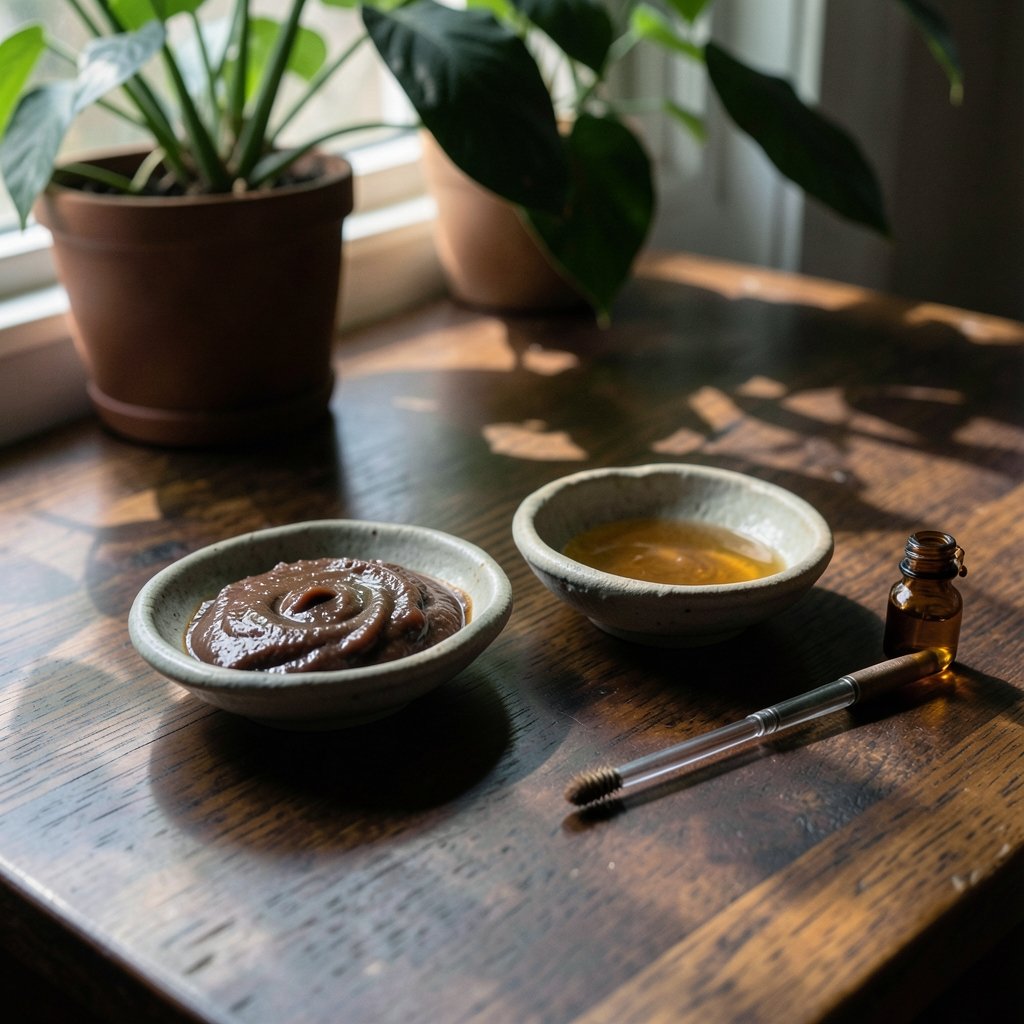
Most beard dyes and brow tints are oxidative hair dyes. They work the same way permanent hair color works: dye precursors react with hydrogen peroxide inside the hair shaft, and the color becomes trapped there. The chemistry is the same family used in beard dye, brow tint, and many boxed hair colors. If you want the full breakdown of how these products work, a solid hair dye guide covers the types and safe-use basics well.
The key ingredient in most oxidative dyes is p-phenylenediamine, usually shortened to PPD. It’s an effective dye precursor, and it’s also a well-documented contact allergen. PPD is regulated as a skin sensitizer, and it’s the reason patch tests exist in the first place.
That single fact drives most of the safety advice in this article. PPD allergy is real, it’s more common in people who’ve been exposed before, and it can show up suddenly after years of problem-free dyeing.
The difference is in the label, not the chemistry
Two products can share similar chemistry and still carry very different legal status. What separates beard dye from eyebrow tint is not the molecule. It’s the approved use, the concentration, the packaging, and the warnings.
| Feature | Beard dye | Eyebrow tint |
|---|---|---|
| Target hair | Thick, coarse facial hair | Fine, short brow hair |
| Skin nearby | Thicker jaw and cheek skin | Thin eyelid and brow-area skin |
| Typical format | Oxidative cream or gel kit | Oxidative gel, often salon-only |
| Near-eye approval | Not intended for eye area | Varies by country and product |
| Main risk | Contact allergy, irritation | Allergy plus eye injury risk |
| Usual application | Self-applied at home | Often professional |
That table is the whole argument in miniature. The products look similar, but the risk profile near the eye is not similar at all.
The Regulatory Picture: Why “Near the Eye” Changes Everything
Here’s where it gets serious. In the European Union, oxidative hair dyes are not approved for use on eyelashes or eyebrows under the cosmetics framework. Some member states allow limited professional tinting under national rules, but the default position is restrictive.
In the United States, the Food and Drug Administration has long held that coal tar hair dyes are not permitted for eyelashes or eyebrows, and that permanent eyelash and eyebrow tints are not approved. The agency has warned about serious reactions, including eye injuries, from products used in that area. The rules differ between markets, which means a product that’s legal in one country may not be approved in another. A box bought online can easily fall outside the rules where you live.
This is the part people skip. They read “patch test recommended” on the box and assume the product is fine everywhere. It isn’t. The label tells you what the product was approved for. Using it somewhere else shifts the risk onto you.
What Can Actually Go Wrong
The risks fall into two buckets: allergic reactions and eye damage.
Allergic contact dermatitis is the big one. PPD allergy can cause redness, swelling, itching, blistering, and in severe cases swelling of the face and eyelids. Eyelid skin is thin and reacts dramatically, so a reaction there can look alarming and take weeks to settle. Once you’re sensitized, you stay sensitized. Future exposure, even to a tiny amount, can trigger a worse reaction.
Eye injury is the second bucket. Dye near the brow line can drip, run, or be rubbed into the eye. Oxidative dye in the eye is painful and can cause chemical injury. Even careful application carries risk when the product wasn’t designed for that area.
There’s also cross-reactivity to consider. People allergic to PPD may react to related compounds, including some azo dyes and other para-amino compounds. That narrows the safe product list considerably and is why a dermatologist’s input matters after a reaction.
One more wrinkle: “black henna” temporary tattoos often contain PPD, sometimes at very high levels. Many people who react to hair dye were first sensitized by a henna tattoo years earlier without connecting the dots. If you’ve had a reaction to a temporary tattoo, treat oxidative dye as high risk.
Beard Dye vs. Other Options: A Practical Comparison
If the goal is darker, fuller-looking brows, there are safer routes. Here’s how the main options stack up.
| Option | Lasts | Near-eye risk | Skill needed | Notes |
|---|---|---|---|---|
| Beard dye on brows | 2–4 weeks | High | Low | Not approved for eye area |
| Professional brow tint | 3–6 weeks | Lower | Pro | Salon or trained tech |
| Brow pencil or powder | 1 day | Very low | Low | Zero chemical risk |
| Tinted brow gel | 1 day | Very low | Low | Good for light coverage |
| Brow lamination plus tint | 4–6 weeks | Moderate | Pro | Shape plus color |
| Lash and brow lift tint | 4–6 weeks | Moderate | Pro | Combines lift with tint |
If you’re curious about the salon route, a lash lift and tint treatment explains what a professional near-eye service actually involves, including the patch test and consent steps that separate it from a kitchen-sink experiment.
For anyone who wants color without the near-eye risk, semi permanent hair dye is worth understanding as a category, though it’s still formulated for scalp hair, not brows. The same goes for demi permanent hair dye, which deposits color with less lift. Neither is a brow product, but knowing the difference between dye types helps you read labels properly.
If You’re Going to Dye Your Brows Anyway
Some readers will ignore all of the above. Fair enough. Here’s how to reduce the risk if you insist on using a dye near your brows, whether it’s a beard kit or a brow-specific product.
- Patch test 48 hours before. Mix a small amount, apply it behind the ear or on the inner forearm, and leave it. Check for redness, itching, or swelling. Do this every single time, even with a product you’ve used before.
- Read the label for approved use. If the box doesn’t say eyebrows, it isn’t approved for eyebrows. That’s not a suggestion.
- Never use a beard dye kit on lashes. Ever. Lash dye is a different risk category entirely.
- Keep the product off the skin. Apply only to the hair, use a barrier cream around the brow, and work with a spoolie rather than a brush that can drip.
- Have saline or water ready. If product gets in the eye, rinse immediately and thoroughly, then seek medical advice.
- Don’t mix brands or boost with extra developer. More peroxide does not mean better color. It means more damage and more risk.
- Stop at the first sign of tingling or burning. Tingling during processing is not normal. Wash it out.
Common mistakes people make: leaving the dye on too long “for better coverage,” reusing mixed dye from a previous session, and skipping the patch test because “it worked last time.” Sensitization can develop at any point, which is exactly why the patch test is repeated.
A note on timing and eyebrows specifically
Brow hair is short and fine, so it processes fast. Most brow tints are left on for a fraction of the time a beard dye would need. Applying a beard-strength product for beard-length timing over fine brow hair is a recipe for over-processing and skin irritation. If a product’s instructions say ten minutes for a beard, that number does not transfer to your eyebrows.
What the Professionals Do Differently
A trained brow technician does three things most home users skip. First, they patch test and ask about prior reactions, including henna tattoos. Second, they use a product approved for the area and mixed at the correct ratio. Third, they keep the product off the skin and control the shape precisely.
That last point is underrated. Most of the visible damage from DIY brow dye isn’t chemical, it’s shape. A slightly wrong angle or an over-dark patch can make brows look harsh for weeks. A pro gets the shape right and the color matched to your skin tone, which is harder than it looks.
If cost is the concern, compare the price of a salon tint every six weeks against the cost of a dermatologist visit for contact dermatitis. The math usually favors the salon.
Conclusion
Beard dye and eyebrow tint sit close together on the shelf and far apart in risk. The chemistry overlaps, but the approved use, the concentration, and the skin they touch do not. Near the eye, thin skin and a documented allergen make a bad combination, and regulators in both the EU and the US have drawn a line around that area for good reason.
If you want darker brows, the safest path is a professional tint with a patch test, or a daily pencil or gel that carries no chemical risk at all. If you’re set on DIY, use a product approved for brows, patch test every time, keep it off the skin, and never put beard dye near your lashes. Your eyebrows will grow back. Your eyes won’t.
Frequently Asked Questions
Can I use beard dye on my eyebrows?
It’s strongly discouraged. Beard dye isn’t approved for the eye area, and the skin around the brow is thinner and more permeable than jaw skin. Regulatory bodies in the EU and US restrict oxidative dyes near the eye because of allergy and injury risk. Use a product labeled for eyebrows instead.
Is beard dye the same as eyebrow tint?
They’re often both oxidative dyes, so the chemistry overlaps. But they differ in concentration, approved use, packaging, and warnings. A beard product is formulated for coarse facial hair and tougher skin, not for the delicate area above the eye.
How long does eyebrow tint last?
Most brow tints last around three to six weeks, depending on your hair growth cycle and how often you wash your face. Professional tints tend to last slightly longer than DIY kits because the application is more even.
What is PPD and why does it matter?
PPD, or p-phenylenediamine, is a common dye precursor in oxidative hair dyes. It’s a well-documented contact allergen and is regulated as a skin sensitizer. Once you become allergic, you stay allergic, and reactions can get worse with each exposure.
Can I dye my eyelashes with beard dye?
No. Never. Oxidative dyes aren’t approved for eyelashes, and the FDA has warned specifically about permanent eyelash and eyebrow tints. Dye near the eye can cause chemical injury. See a professional for lash services instead.
What should I do if I react to brow dye?
Wash the area gently with mild soap and water, rinse your eyes thoroughly if any product got in them, and seek medical advice. Don’t reapply the product. A dermatologist can confirm whether you have a PPD allergy and advise on which products to avoid in future.









