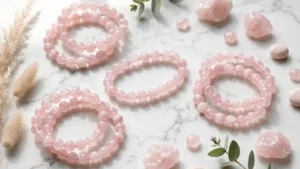
Amethyst is the purple stone most people picture first when they think of coloured jewellery, and a bracelet is the easiest way to wear it every day. It sits close to the wrist, catches light as you move, and works with almost everything from a white shirt to a black evening dress. The problem is not finding an amethyst bracelet. It is finding one where the stone is genuinely good, the setting protects it, and the price matches what you are actually getting.
That is why this guide is organised by quality and wearability, not just by brand name. A deep, evenly coloured amethyst in a solid bezel will look better in five years than a pale, cloudy stone in a flimsy prong setting, whatever the label says. Price is a poor guide on its own. Amethyst is plentiful and affordable, so a high price usually pays for the metal, the brand, or the design, not for a rare stone.
Below are nine amethyst bracelets worth considering in 2027, from a classic tennis bracelet to sculptural cuffs and simple beaded strands. Each one is described by what it does well, what to watch for, and who it suits best, so you can choose with your wrist and your budget in mind, not just a bestseller list.
Key takeaways
- Amethyst is quartz, hard enough for daily wear at Mohs 7, but it can still chip if it takes a hard knock on a desk or door frame.
- Look for an even, medium-to-deep purple with no large pale or grey patches, and check whether the stone is natural, synthetic, or glass.
- Bezel and channel settings protect amethyst best on the wrist, while high prongs leave the stone exposed to knocks.
- Heat treatment can lighten amethyst and prolonged strong sunlight can fade it, so store it away from windows and radiators.
- Amethyst has no proven healing properties, and jewellery is rarely an investment, so buy it because you love the colour, not because it will gain value.
What amethyst actually is
Amethyst is the purple variety of quartz, coloured by traces of iron and natural irradiation in the earth. It is the February birthstone and one of the most widely available coloured stones in the world, mined in large quantities in Brazil, Uruguay, Zambia and South Korea. That abundance is good news for buyers. It means a well-coloured amethyst bracelet should not cost a fortune, and it means you can afford to be picky about colour.
Colour is where the money goes. The most prized amethyst is a rich, saturated purple with a hint of red, sometimes called Siberian colour after the old Russian material. Most commercial amethyst is lighter, a soft lilac to medium purple, and that is perfectly fine for a bracelet. What matters is that the colour is even across the stone, with no washed-out centre and no dark, almost black patches at the edges. Hold the bracelet up to daylight and turn it slowly. A good stone keeps its colour as it moves. A poor one goes grey or patchy.
Amethyst is hard, at 7 on the Mohs scale, which makes it a sensible choice for a bracelet, a piece that takes more knocks than a necklace or a pair of earrings. It is not indestructible. A sharp blow can chip a corner, and a stone set high in prongs is more exposed than one set low in a bezel. It is also sensitive to heat and to long exposure to strong sunlight, both of which can fade the colour over time. That does not mean you cannot wear it in summer. It means you should not leave it on a sunny windowsill for months, and you should never clean it with steam or an ultrasonic cleaner.
How we chose these bracelets and what to look for
Look first at the stone. Ask whether it is natural amethyst, lab-grown amethyst, or glass. Natural and lab-grown amethyst are chemically the same mineral, and a lab-grown stone is a legitimate, affordable choice, but it should be disclosed and priced accordingly. Glass imitations are common at the cheapest end of the market. They often look too perfect, with bubbles visible under a loupe, and they scratch far more easily than quartz. If a bracelet is very cheap and the stones look flawless, ask what they are.

Look next at the setting and the metal. A tennis bracelet, where stones run in a continuous line, shows off amethyst beautifully, but each stone is held by small prongs, so check that they are even and snug. A bezel setting wraps the metal around the edge of the stone and protects it best, which is the safer choice if you wear your bracelet every day. Gold suits amethyst well, and yellow gold warms the purple in a way that suits warmer skin, while white gold and silver keep the colour cool and crisp. If you want a matching set, our guide to the best amethyst necklaces covers the same stone in pendants and strands, so you can compare colour and metal across both pieces.
Finally, look at the clasp and the fit. A bracelet that is too loose slides around and bangs against desks, which is how stones chip. A bracelet that is too tight is uncomfortable and strains the clasp. A box clasp with a safety catch is the most secure choice for a tennis bracelet, while a simple spring-ring clasp is fine for a light beaded strand. Measure your wrist, add about one centimetre for comfort, and check whether the bracelet can be shortened or lengthened before you buy.
The 9 best amethyst bracelets of 2027
Tiffany & Co. Amethyst Tennis Bracelet
What we like: A classic line of well-matched, evenly coloured amethysts in a secure setting, with the finish and clasp quality Tiffany is known for. What to consider: Premium price, and the stones are a medium purple rather than the deepest Siberian colour. Stone: Natural amethyst, medium purple. Setting: 18-karat yellow gold, prong set, box clasp with safety catch. Best for: A special-occasion bracelet that still works every day. Price range: £2,500–£3,500.
Cartier Amethyst Line Bracelet
What we like: Elegant, slim proportions, carefully matched stones, and a clasp that closes with a reassuring click. What to consider: The slim line means smaller stones, so the colour impact is softer than a bolder cuff. Stone: Natural amethyst, medium purple. Setting: 18-karat white gold, prong set, box clasp with safety catch. Best for: Evening wear and layering with a watch. Price range: £2,000–£3,000.
David Yurman Amethyst Cable Bracelet
What we like: The signature cable design gives the bracelet presence without heaviness, and the amethyst end caps are a deep, even purple. What to consider: The cable style is distinctive, so it suits people who already like the look. Stone: Natural amethyst cabochons. Setting: Sterling silver cable with 18-karat gold accents. Best for: Everyday wear with a designer signature. Price range: £600–£900.
Mejuri Amethyst Tennis Bracelet
What we like: A clean, modern tennis bracelet at a fair price, with well-cut stones and a secure clasp. What to consider: The stones are lighter in colour than the deepest amethysts, and the bracelet is best in 14-karat gold rather than vermeil for daily wear. Stone: Natural amethyst, light to medium purple. Setting: 14-karat solid gold, prong set, box clasp with safety catch. Best for: A first fine amethyst bracelet. Price range: £350–£550.
Monica Vinader Amethyst Tennis Bracelet
What we like: A neat, well-proportioned line bracelet with a smooth finish and a clasp that is easy to fasten one-handed. What to consider: The vermeil version needs more care than solid gold, so choose solid gold if you plan to wear it daily. Stone: Natural amethyst, medium purple. Setting: 18-karat gold vermeil or solid gold, prong set, box clasp. Best for: Everyday elegance on a moderate budget. Price range: £150–£450.
Missoma Amethyst Chain Bracelet
What we like: A relaxed chain bracelet with amethyst drops that catch the light as you move, light enough to wear all day. What to consider: The stones are small, so the colour reads as an accent rather than a statement. Stone: Natural amethyst, light purple. Setting: 18-karat gold vermeil on recycled sterling silver, claw set. Best for: Layering and casual everyday wear. Price range: £100–£180.
Maria Black Amethyst Sculptural Cuff
What we like: A bold, architectural cuff with a single deep amethyst as the focal point, unlike anything else in this list. What to consider: The cuff style suits confident styling and may feel heavy if you prefer delicate jewellery. Stone: Natural amethyst, deep purple. Setting: Sterling silver cuff, bezel set. Best for: A statement piece for evenings and events. Price range: £250–£400.
Astrid & Miyu Amethyst Tennis Bracelet
What we like: A slim, well-made tennis bracelet with evenly sized stones and a neat clasp, at a very fair price. What to consider: The stones are modest in size, so the bracelet is delicate rather than dramatic. Stone: Natural amethyst, medium purple. Setting: 18-karat gold vermeil, prong set, box clasp. Best for: Delicate everyday wear and stacking. Price range: £120–£200.
Thomas Sabo Amethyst Link Bracelet
What we like: A chunky link bracelet with amethyst-set charms, playful and distinctive, with a strong clasp. What to consider: The style is bold and casual, so it does not suit formal occasions. Stone: Natural amethyst, medium purple. Setting: Sterling silver links, bezel-set stones. Best for: Casual wear and charm collectors. Price range: £150–£250.
Which amethyst bracelet is right for you
Start with how you will wear it. If you want one bracelet for everything, a tennis bracelet in solid gold is the safest choice, and the Mejuri or Monica Vinader versions give you that look without a luxury price. If you want a statement piece for evenings, the Maria Black cuff gives you the deepest colour and the most presence in this roundup. If you like to layer, a slim chain or tennis bracelet from Missoma or Astrid & Miyu will sit neatly beside a watch or a bangle.
Then think about metal. Yellow gold warms amethyst and suits warmer skin tones, while white gold and silver keep the purple cool and crisp. Gold is also the more practical choice for a bracelet you will wear every day, because it resists tarnish better than silver. If you already own gold jewellery you love, our guide to gold jewellery for everyday wear is a useful check on what works together, because a bracelet that matches what you already own will get worn far more than one that does not.
Finally, be honest about your budget. Amethyst itself is affordable, so most of what you pay goes to the metal, the brand, and the craftsmanship. A £150 bracelet with well-cut stones and a secure clasp can look better on the wrist than a £2,000 bracelet with a poor colour match. Spend on the setting and the clasp, not on a brand name, unless the brand itself is part of what you want.
The caveats that matter
Amethyst is a good, honest stone for a bracelet, but it has limits. It can fade in strong sunlight over a long time, it can chip if it hits something hard, and it is often confused with glass or with synthetic material. None of that is a reason not to buy it. It is a reason to buy carefully, to check what you are getting, and to look after it once it is yours.
| Detail | What is known |
|---|---|
| What it is | Purple quartz, coloured by iron and natural irradiation, Mohs 7 |
| Best colour | Even, medium-to-deep purple with a hint of red; avoid pale, grey or patchy stones |
| Best setting for a bracelet | Bezel or channel, which protect the stone; high prongs leave it exposed |
| What to ask before buying | Is the stone natural, lab-grown, or glass, and has it been heat treated |
| Cleaning | Warm water, mild soap, soft brush; never ultrasonic or steam cleaners |
| Storage | Separate pouch or lined box, away from sunlight and harder jewellery |
| Who should be careful | Anyone who works with their hands all day; a cuff or bezel-set bracelet is safer |
| What it does not do | It has no proven healing properties, and jewellery is rarely an investment |
If you are buying amethyst as a February birthstone gift, the colour and the setting matter more than the size of the stone. A small, well-coloured stone in a secure setting will be worn and loved, while a large, pale stone in a flimsy setting will sit in a drawer. And if you are buying for yourself, remember that amethyst pairs well with diamonds and white sapphires, so a simple tennis bracelet can sit beside pieces you already own without clashing.
Checklist: choosing an amethyst bracelet honestly
Use these checks before you buy, and again when the bracelet arrives.
- Check the colour in daylight: even, medium-to-deep purple, no pale centre or grey patches.
- Ask what the stone is: natural, lab-grown, or glass, and whether it has been heat treated.
- Check the setting: bezel or channel for daily wear, snug prongs with no wobble for a tennis bracelet.
- Check the clasp: a box clasp with a safety catch for a tennis bracelet, a strong lobster clasp for a chain.
- Check the fit: about one centimetre larger than your wrist, and ask if it can be adjusted.
- Check the metal: solid gold or sterling silver for daily wear, and keep vermeil for occasional use.
Frequently asked questions
Can I wear an amethyst bracelet every day?
Yes, amethyst is hard enough at Mohs 7 for daily wear, but a bezel-set bracelet or a cuff is safer than a high-prong tennis bracelet if you work with your hands. Take it off for the gym, gardening, and heavy housework.
Does amethyst fade in sunlight?
It can fade slowly after long exposure to strong sunlight or heat, so do not store it on a sunny windowsill. Normal daily wear is fine. Keep it in a pouch or a lined box when you are not wearing it.
How can I tell real amethyst from glass?
Real amethyst is cool to the touch, has a hardness of 7, and often shows slight colour zoning under a loupe. Glass is warmer, scratches easily, and often contains tiny round bubbles. When in doubt, buy from a jeweller who will put the stone type in writing.
Is lab-grown amethyst worth buying?
Yes, if it is disclosed and priced as lab-grown. It is chemically the same mineral as natural amethyst, usually with a cleaner colour, and it costs less. It is not a fake, but it should not be sold at a natural-stone price.
What metal goes best with amethyst?
Yellow gold warms the purple and suits warmer skin, while white gold and silver keep it cool and crisp. Rose gold can work too, though it softens the colour. The best choice is the metal you already wear most, because the bracelet will get more use.
Can I wear an amethyst bracelet with a diamond necklace?
Yes, amethyst and diamonds work well together, and the white sparkle lifts the purple nicely. If you are building a set, our guide to the best diamond necklaces covers pendants and strands that pair well with a purple bracelet.
The bottom line
The best amethyst bracelet in 2027 is not the most expensive or the one with the biggest stones. It is the one with an even, well-saturated purple, a setting that protects the stone, and a clasp you trust, in a metal you will actually wear. For most people, a solid gold tennis bracelet from Mejuri or Monica Vinader is the smartest buy, while the Maria Black cuff is the best choice if you want a statement.
Choose one bracelet, check the colour in daylight, ask what the stone is, and wear it. Amethyst is an affordable stone, so there is no reason to overpay for it, and every reason to pick the colour and the setting you love. That is the honest way to buy a bracelet you will still be reaching for in five years.