



What makes a great apple pie? Most people point to the crust or the cinnamon. But the real make-or-break decision happens at the produce bin. Choose the wrong apple, and you get a filling that collapses into sweet, watery mush. Choose the right one, and you get distinct, tender slices with a flavor that balances tart and sweet. So which apples actually belong in a pie?
The short answer: firm, tart-to-tart-sweet varieties. The longer answer involves texture, acidity, juiciness, and a few regional traditions that surprise most bakers. Here is a practical breakdown of the best apples for apple pie, how they behave in the oven, and how to blend them for the best possible filling.
Why Texture Matters More Than Sweetness
A pie filling has to survive two things: the heat of the oven and the weight of the top crust. Soft apples break down under both. They release water, turn grainy, and leave a gap between the filling and the crust.
Firm apples behave differently. Their cell walls hold up longer, so slices stay intact and the filling sets with body instead of slumping. This is why baking guides and university extension services almost always steer bakers toward apples described as firm and crisp.
Acidity matters just as much. Tart apples bring a brightness that cuts through sugar and butter. Without that acid, a pie tastes flat even when it is perfectly sweet. Many bakers also argue that acid helps the filling set, though that is a culinary principle rather than a lab-verified result for pie specifically.
The practical takeaway is simple: pick apples that are firm and have some tartness. Everything else is preference.
The Best Apples for Apple Pie, Ranked by How They Bake
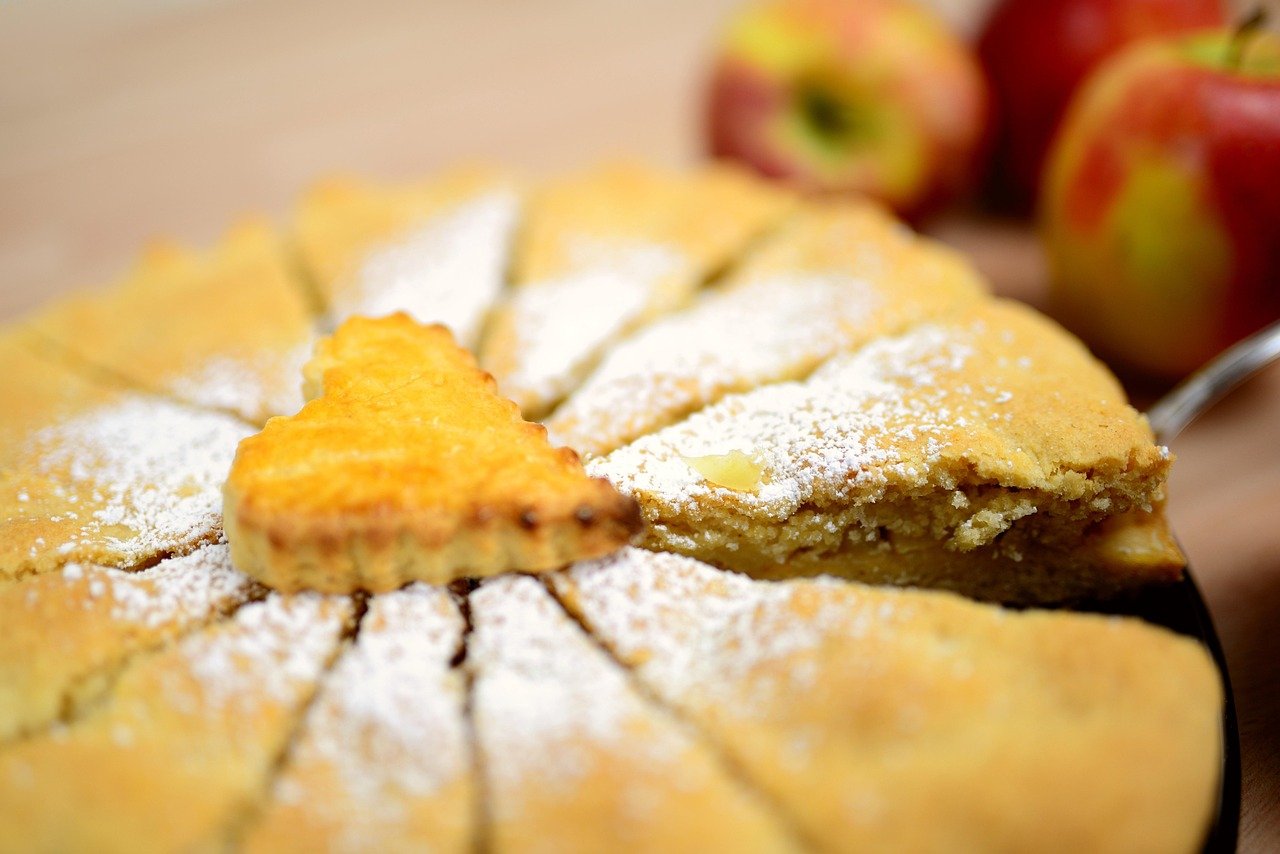
No single apple wins for everyone. The right choice depends on whether a baker wants a chunky, cohesive filling or a softer, saucier one. This table compares the most commonly recommended varieties by firmness, flavor, and how they behave in the oven.
| Apple | Firmness | Flavor | How It Bakes | Best Use |
|---|---|---|---|---|
| Granny Smith | Very firm | Sharply tart | Holds shape well, stays distinct | Solo or as the tart base |
| Golden Delicious | Medium-firm | Mildly sweet | Softens more, sweetens the mix | Blended with tarter apples |
| Honeycrisp | Firm and crisp | Sweet-tart, balanced | Holds shape but releases juice | Blended; drain if very juicy |
| Braeburn | Firm | Tart-sweet, spicy | Holds shape, good balance | Solo or blended |
| Bramley | Firm but breaks down | Very tart | Collapses into a fluffy texture | Classic British cooking apple |
| Jonagold | Firm | Sweet with tang | Holds reasonably well | Good all-purpose choice |
| Pink Lady | Very firm | Sweet-tart | Stays firm, needs enough sugar | Solo for firm-filling fans |
| Red Delicious | Soft | Mildly sweet | Turns mushy and grainy | Avoid for pie |
Granny Smith: The Default Choice
Granny Smith is the most commonly cited single variety for apple pie. It is firm and tart, so it holds its shape and offsets the sugar in a filling. Bakers who want a classic, chunky pie almost always start here.
The trade-off is that Granny Smith can be one-dimensionally sour. Used alone with a heavy hand on the sugar, it can taste sharp rather than balanced. That is why many recipes pair it with a sweeter apple rather than using it solo.
Golden Delicious: The Sweetener
Golden Delicious is often recommended as a blending apple rather than a standalone choice. It softens more than Granny Smith, so used alone it can produce a softer filling. But its mild sweetness rounds out a tarter apple beautifully.
A common pairing is one part Golden Delicious to two parts Granny Smith. The result is a filling that is both tart and rounded, with enough structure to slice cleanly.
Honeycrisp: Great Flavor, Extra Juice
Honeycrisp is frequently listed as a good all-purpose pie apple. It is crisp and balanced, with a sweet-tart flavor many people love fresh. The catch is juiciness. Honeycrisp releases a lot of liquid, and some bakers say it makes a wetter filling.
The fix is straightforward. Toss the slices with sugar and let them sit for 15 to 20 minutes, then drain the released liquid and reduce it on the stove before adding it back. Or simply blend Honeycrisp with a firmer, drier apple like Braeburn.
Braeburn: The Underrated All-Rounder
Braeburn is firm with a tart-sweet, slightly spicy flavor. It holds its shape well and brings enough acidity to balance sugar without overwhelming the pie. It works solo or blended and tends to be less juicy than Honeycrisp, which makes it forgiving for beginners.
Bramley: The British Classic
Bramley is the classic British cooking apple for pies. It is very tart and breaks down into a fluffy texture when baked, which is exactly what many UK recipes want. British bakers often pair it with a sweeter apple to balance the sharpness.
This is a genuine regional difference. A Bramley pie is softer and more sauce-like than a Granny Smith pie. Neither is wrong. They are simply different traditions, and knowing which texture is wanted is half the decision.
Which Apples to Avoid in Pie
Soft or mealy varieties are generally discouraged because they break down and turn mushy. Red Delicious is the usual example: it is sweet and mild but lacks the structure a filling needs.
McIntosh is more contested. Some bakers avoid it for pie because it softens quickly, while others use it deliberately for a saucier filling. It is more commonly used for applesauce than for a structured pie. If a recipe calls for McIntosh, it usually expects a softer result.
The broader rule: if an apple feels soft when pressed or has a mealy, grainy texture, it will not do a pie any favors.
How to Blend Apples for the Best Filling
Mixing varieties is a common professional recommendation, and it solves the biggest problem in apple pie: the tension between structure and flavor. One apple gives firmness; another gives sweetness and aroma.
A reliable formula is one firm-tart apple plus one firmer-sweet apple. For example:
- Choose a tart base such as Granny Smith or Bramley for structure and acidity.
- Add a sweeter apple such as Golden Delicious, Jonagold, or Honeycrisp for roundness.
- Keep the ratio around two parts tart to one part sweet for a balanced pie.
- Taste a raw slice of each before committing. If an apple tastes bland raw, it will taste bland baked.
This approach also protects against a bad batch. If one variety is slightly mealy at the store, the firmer apple carries the filling.
Practical Tips That Actually Work
Experience with pie baking tends to produce the same handful of lessons. These are the ones that matter most.
Buy firm apples and use them soon. An apple that is crisp at the store can soften in the fridge over a week or two. Press each one before buying; it should feel hard, not yielding.
Control the moisture before it reaches the crust. Toss sliced apples with sugar, let them sit, and drain the liquid. Reducing that liquid and stirring it back into the filling concentrates flavor and prevents a soggy bottom.
Cut slices evenly. Thick and thin slices bake at different rates. Even, roughly quarter-inch slices cook uniformly and hold together better.
Do not over-sugar a tart apple. Granny Smith and Bramley need sugar, but too much masks their brightness. Start with less and adjust after tasting the raw filling.
Consider the thickener. Firm apples release less water, so a recipe built for soft apples may need less thickener. Too much starch turns a filling gluey.
Skip the peel only if texture allows. Peels add structure and flavor, but thick-skinned varieties can feel tough. Many bakers peel firm apples and leave a little peel on sweeter ones for color and body.
For readers who care about how labeling shapes food choices, the same scrutiny applied to produce labels is worth applying to juice and packaged products; a closer look at what an organic apple juice label really tells you shows how much marketing language can obscure.
Common Mistakes That Ruin Apple Pie
The most frequent error is choosing apples by sweetness alone. A pie made only with soft, sweet apples tastes cloying and turns to mush. Sweetness is a seasoning, not a strategy.
The second mistake is skipping the moisture step. Juicy apples plus a cold crust equals a soggy bottom, no matter how good the variety.
The third is overfilling. A mountain of apples that towers over the crust will collapse as it bakes and spill onto the oven floor. Pile the filling slightly higher in the center and let it settle. (4c hair)
Finally, many bakers underbake the filling. If the apples are still crunchy when the crust is golden, the pie needs more time, often with a foil shield over the edges. Firm apples need real oven time to soften properly.
Does the Apple Variety Really Matter That Much?
Yes, but not in the way most people expect. The difference between a Granny Smith pie and a Red Delicious pie is dramatic. The difference between a Braeburn pie and a Jonagold pie is subtle. Variety matters most at the extremes: very firm and tart versus very soft and sweet.
There is also no single official ranking of pie apples. “Best” is genuinely contested and depends on texture preference, sweetness tolerance, and whether a baker wants a cohesive or chunky filling. Anyone who claims one definitive list is oversimplifying.
That uncertainty is useful. It means bakers can experiment without fear. Try a solo Granny Smith pie, then a blend, then a Bramley if the softer British style appeals. The best apple for pie is the one that produces the texture a baker actually enjoys eating.
A Note on Regional Traditions
American baking guidance leans heavily on Granny Smith, Golden Delicious, Honeycrisp, and Braeburn. British baking leans on Bramley, often paired with a sweeter apple. Both traditions agree on the underlying principle: firm texture plus acidity.
This is also why apple recommendations vary so much between recipe sources. A recipe written for Bramley may produce a wetter filling when made with Honeycrisp, and vice versa. Matching the apple to the recipe’s intended texture is more important than following a generic list.
Conclusion
The best apples for apple pie are firm, tart-to-tart-sweet varieties that hold their shape and bring acidity to balance sugar. Granny Smith is the most reliable single choice, Golden Delicious is the classic blending partner, and Honeycrisp and Braeburn are strong all-purpose options. Bramley remains the British standard for a softer, fluffier filling.
Beyond the variety, technique decides the outcome. Buy firm fruit, drain excess juice, cut even slices, and do not over-sugar a tart apple. Blend varieties to balance structure and flavor, and taste the raw filling before it goes into the crust.
Apple pie rewards attention at the produce bin more than almost any other dessert. Pick apples with backbone, treat their moisture with respect, and the filling will hold together as beautifully as the crust on top.
Frequently Asked Questions
What is the single best apple for apple pie?
Granny Smith is the most commonly cited choice because it is firm and tart, so it holds its shape and balances the sugar in a filling. That said, no single variety is officially best. Bakers who prefer a softer, fluffier filling often choose Bramley, and those who want a sweeter profile blend in Golden Delicious or Honeycrisp.
Can I use just one type of apple in a pie?
Yes. A single firm, tart apple such as Granny Smith or Braeburn makes an excellent pie. Blending is a recommendation, not a rule. Mixing varieties helps balance texture and flavor, but a solo apple works well if it is firm and has enough acidity.
Are Honeycrisp apples good for pie?
Honeycrisp is frequently listed as a good all-purpose pie apple because it is crisp and balanced. The main complaint is juiciness, which can make a wetter filling. Draining the released liquid after tossing the slices with sugar, or blending Honeycrisp with a firmer apple like Braeburn, solves the problem.
Why do my apple pies turn out mushy?
Mushy filling usually comes from soft or mealy apples, excess moisture, or uneven slices. Soft varieties break down in the oven and release water. Choose firm apples, drain the liquid that comes out after sugaring the slices, and cut even pieces so everything cooks at the same rate.
Should I peel apples for apple pie?
It depends on preference and variety. Peels add structure, flavor, and color, but thick-skinned apples can feel tough in the filling. Many bakers peel firm apples completely and leave a bit of peel on sweeter varieties for texture and appearance.
What about dogs and apple scraps?
Apple pie prep generates a lot of peels and cores, and it is worth knowing what is safe to share. Plain apple flesh is generally fine for dogs, but the core, seeds, and sugary pie filling are not. A quick check on whether dogs can have pineapple and what is safe and what is not much follows the same logic: the fruit itself is usually fine, but processed and sugared versions are a different story.
Do apple variety recommendations differ between countries?
Yes. American baking guidance leans on Granny Smith, Golden Delicious, Honeycrisp, and Braeburn, while British recipes favor Bramley, often paired with a sweeter apple. Bramley breaks down into a fluffier texture, so a British pie is typically softer than an American one made with Granny Smith. Both approaches follow the same principle of firm texture plus acidity, and knowing which style is intended helps bakers choose the right apple.














