

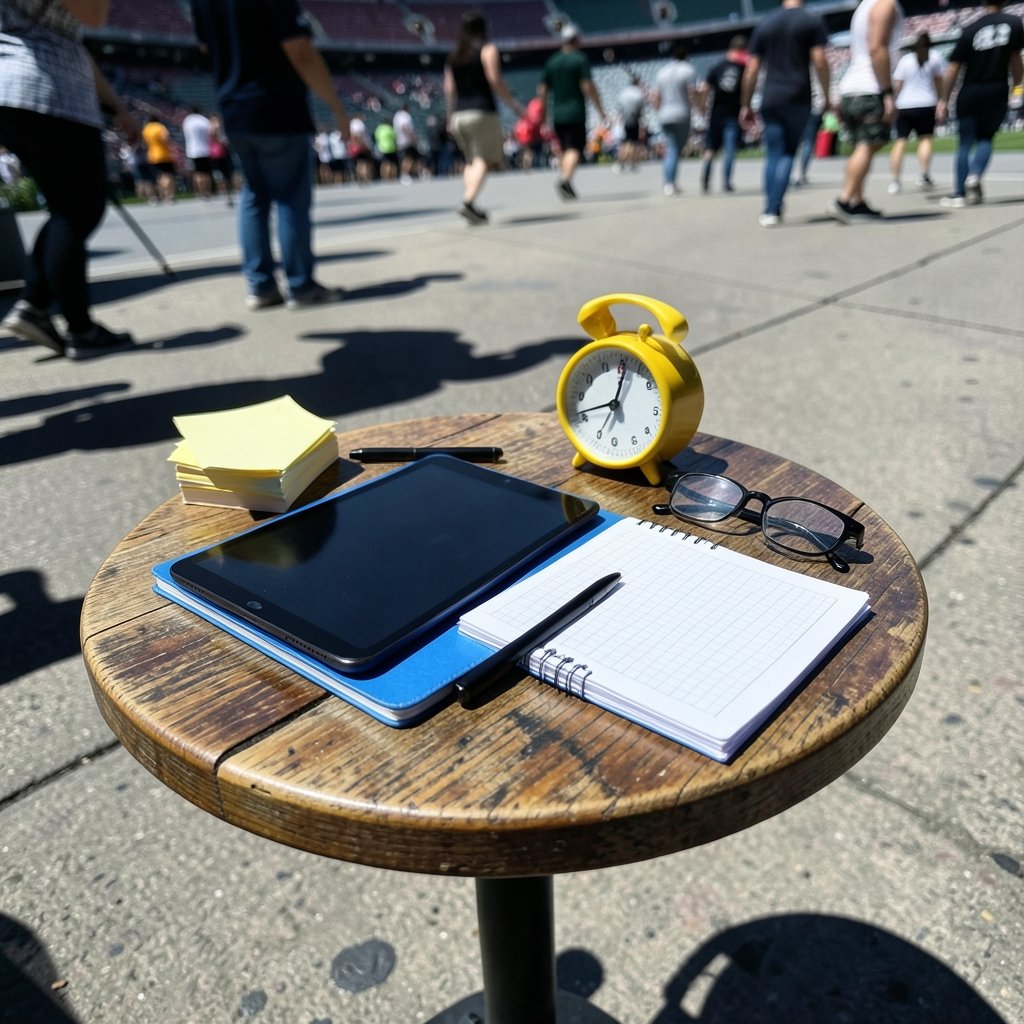
What if the productivity app you just downloaded is the reason your to-do list keeps growing? That sounds backwards, but it happens all the time. People spend a weekend setting up the perfect system, color-code every project, connect every calendar, and then spend the next month maintaining the system instead of doing the work. The tool becomes the task.
So the honest question isn’t “which productivity app has the most features?” It’s “which app will you still open on a bad Tuesday three months from now?” That’s the lens this guide uses. Below are the apps that hold up in real use, grouped by the job they actually do, plus the mistakes that quietly wreck even good setups.
Start With the Job, Not the App
Most app-hopping comes from skipping a step: deciding what kind of friction you’re trying to remove. Productivity tools generally fall into five buckets, and picking the wrong bucket is the most common mistake people make.
| Job to be done | App type | Good fit for |
|---|---|---|
| Remembering everything | Task managers | People juggling many small commitments |
| Thinking and writing | Notes and knowledge bases | Writers, students, researchers |
| Protecting focus time | Focus timers and blockers | Anyone interrupted by notifications |
| Planning the day or week | Calendars and time-blocking tools | People with meeting-heavy schedules |
| Removing repetitive steps | Automation tools | Anyone copying data between apps |
A quick self-check before you install anything: write down the three moments last week when something slipped. A missed deadline, a forgotten errand, a document you couldn’t find. The pattern in those three moments tells you which row of the table you actually need. If two of the three were “I forgot,” you need a task manager, not a better note-taking app.
Task Managers: The Backbone of Any System

Todoist
Todoist has been around since 2007, which in app years makes it practically geological. That longevity matters: it means the app is stable, the keyboard shortcuts are mature, and the natural-language input (“pay rent every first friday”) works reliably. It handles projects, labels, filters, and shared lists without burying you in settings.
The practical tip that makes Todoist work: use due dates sparingly. New users date everything, the list turns red, and they abandon it. Date only what genuinely has a deadline. Everything else goes in a project list with no date and gets pulled forward during a weekly review.
Things and Apple Reminders
For people fully inside Apple’s ecosystem, Apple Reminders is free, syncs flawlessly, and now handles tags, subtasks, and location-based reminders. Things is the polished paid alternative with a calmer interface and a strong “Today” view. Neither will manage a team project, but for personal commitments they’re hard to beat, and the zero cost of Reminders removes the “I paid for it so I must use it” guilt that keeps bad systems alive.
When a Task Manager Is the Wrong Choice
If your work lives in tickets, issues, or shared boards, a personal task manager becomes a second source of truth. Two lists mean two places to check, and one of them will rot. In that case, keep the task manager for personal life only and let the work system own work.
Notes and Knowledge: Where Thinking Happens
Notion
Notion launched publicly in 2016 and grew into a hybrid of notes, databases, and lightweight project management. Its strength is structure: you can build a reading list, a content calendar, and a meeting-notes archive that all talk to each other. Its weakness is the same thing. Notion invites you to build cathedrals of nested pages that feel productive to construct and are tedious to maintain.
The rule that saves Notion users: build the smallest system that answers a real question. If you can’t name the question a database answers (“what did I decide in last month’s client calls?”), don’t build it.
Obsidian
Obsidian arrived in 2020 and took the opposite approach: plain text files stored on your own device, linked together rather than filed into folders. Nothing is trapped in a proprietary format, and search is instant. For research and long-form writing, linking notes by concept beats sorting them into folders, because ideas rarely respect categories.
Obsidian’s trap is the plugin rabbit hole. Every plugin is a small project, and a vault with forty plugins is a hobby, not a tool. Start with links and search. Add plugins only when a specific annoyance repeats for a week.
If your work leans visual, the same principle applies to spatial tools: the best apps for interior design and room design apps reward a small, focused setup over an elaborate one, and the same advice about choosing a tool for the job shows up in this comparison of the best apps for interior design, where picking one clear purpose beats stacking features.
Focus Tools: Protecting the Hours You Already Have
No app creates time. Focus tools just stop other apps from stealing it.
Pomodoro timers
The Pomodoro Technique was developed by Francesco Cirillo in the late 1980s as a university student, using a tomato-shaped kitchen timer. The method is simple: work in focused blocks, take short breaks, repeat. Any timer works, including the one on your phone in airplane mode. Apps add tracking and automation, but the technique itself is free.
Where people go wrong: treating the timer as a productivity scoreboard. A day of eight perfect pomodoros that produced nothing useful is worse than three messy hours that shipped the thing. The timer is a focusing aid, not a KPI.
Built-in screen time tools
Apple’s Screen Time arrived with iOS 12 in September 2018, and Google’s Digital Wellbeing shipped with Android 9 Pie in August 2018. Both show where your hours go and let you set app limits. They’re free, already installed, and underused. Before buying a subscription blocker, spend a week with the built-in report. Most people are surprised by which app tops the list, and it’s rarely the one they suspected.
On Windows, Focus Assist appeared in the April 2018 update and was renamed Focus in Windows 11 in 2021. It suppresses notifications during chosen hours. Turning it on during deep work is a two-minute change with an outsized effect.
Deep work and time-blocking
Cal Newport’s 2016 book Deep Work popularized scheduling long, uninterrupted blocks for cognitively demanding tasks, and the related practice of time-blocking means assigning every part of the day to a specific activity on the calendar. The app matters less than the calendar entry. A block called “write report, phone in drawer, 9 to 11” beats any to-do list tag.
Planning and Review: The Step Everyone Skips
David Allen’s 2001 book Getting Things Done introduced a workflow that still holds up: capture everything, clarify what each item actually is, organize it, reflect regularly, and engage. The famous two-minute rule comes from the same method: if a task takes under two minutes, do it now instead of tracking it.
The step most people skip is reflection. A weekly review, even a twenty-minute one, is what keeps a system from becoming archaeology. Put it on the calendar as a recurring event. Ask three questions: what got done, what slipped, and what needs to move. Without this, every task app eventually becomes a museum of good intentions.
For the thinking side of planning, the best productivity books worth your time they work covers the underlying methods in more depth than any app review can, and it’s worth reading one book before subscribing to a second tool.
Automation: Removing the Copy-Paste Tax
Zapier (founded 2011) and IFTTT (launched 2010) connect apps so repetitive steps happen without you. The classic example: a form submission creates a task, a calendar event, and a row in a spreadsheet. Done once, it saves minutes a week forever.
The mistake here is automating before understanding the manual version. If you can’t describe the steps clearly on paper, the automation will silently do the wrong thing. Build the routine by hand for two weeks, then automate the stable parts. And audit automations quarterly, because the ones nobody remembers are the ones quietly creating duplicate entries.
The same discipline applies outside work software. Choosing a product that does one job well, rather than five jobs adequately, shows up everywhere from skincare to software, as this look at the best product removing blackheads actually works clogged demonstrates: the tool that fits the actual problem wins over the one with the longest feature list.
The Mistakes That Wreck Good Setups
These show up again and again, and each one is fixable.
- Migrating everything at once. Moving years of notes into a new app is a project that produces no output. Move only what you’ll touch this month.
- Paying before using. Run the free tier for two weeks. If you haven’t opened it by day ten, the paid tier won’t change that.
- Building for your ideal self. A system that assumes you’ll review it daily at 7 a.m. will fail by week two. Build for the version of you that’s tired.
- Letting notifications stay on. Every app that can buzz will buzz. Turn off everything except messages from actual humans.
- Measuring setup, not output. Time spent organizing is not work. The only honest metric is whether the important thing got done.
- Running two systems in parallel. Pick one home for tasks and one for notes. Duplicates create doubt, and doubt creates checking, which creates the very distraction you were avoiding.
A Realistic Starter Stack
For someone starting from zero, a workable combination looks like this: one task manager (Todoist or Apple Reminders), one notes app (Obsidian for private thinking, Notion if you need shared databases), the built-in screen time tool for awareness, and the calendar for time-blocking. That’s four tools, two of them free and already installed.
Add automation only after a repetitive step has annoyed you three times. Add a paid focus app only after the free tools have shown you where the time goes. The stack should grow from friction you’ve actually felt, not from a list you read.
If you’re curious how quickly this category changes, the top 10 yacht charter apps updated 2027 actually changed is a useful case study in how app rankings age: features shift, interfaces get redesigned, and the tool that was best last year is sometimes just fine this year. The method of choosing matters more than the ranking.
Conclusion
The best productivity app is the one you’ll still open when you’re tired, busy, and out of patience. That usually means fewer tools, smaller systems, and a weekly review that keeps the whole thing honest. Start with the job you actually need done, test the free tier for two weeks, and resist the urge to build a cathedral when a notebook would do. The apps above are all capable. What separates people who get things done from people who collect apps is not the software. It’s the willingness to keep the system small enough to maintain.
Frequently Asked Questions
What is the single best productivity app overall?
There’s no universal winner, because the right app depends on what’s slipping. If you forget commitments, a task manager like Todoist or Apple Reminders is the highest-value install. If you can’t find what you wrote, a notes app matters more. Pick based on the problem, not the ranking.
Are free productivity apps good enough?
Often, yes. Apple Reminders, Google Keep, the built-in screen time tools, and the calendar app already on your phone cover most of what paid apps do. Paid tools tend to win on polish and cross-app integration, not on core function. Use free tiers for two weeks before paying for anything.
How many productivity apps should one person use?
Most people do well with three to five: one task manager, one notes app, a calendar, and optionally a focus tool or automation service. Beyond that, maintenance time grows faster than the benefit. If two apps do the same job, one of them needs to go.
Does the Pomodoro Technique actually work?
It works for many people because it lowers the cost of starting: you commit to a short block, not a whole project. The technique dates back to the late 1980s and needs nothing more than a timer. It works less well for work that requires long, uninterrupted thought, where longer blocks suit better.
What is the two-minute rule in Getting Things Done?
It’s a guideline from David Allen’s 2001 method: if a task takes less than two minutes, do it immediately instead of adding it to a list. Tracking tiny tasks costs more time than completing them. The rule prevents small items from piling up into a discouraging backlog.
Why do productivity systems stop working after a few weeks?
Usually because the review step gets dropped. Systems decay when nothing pulls stale tasks forward and nothing gets deleted. A short weekly review, where you check what slipped and move what matters, is the maintenance that keeps any app useful past the novelty phase.














