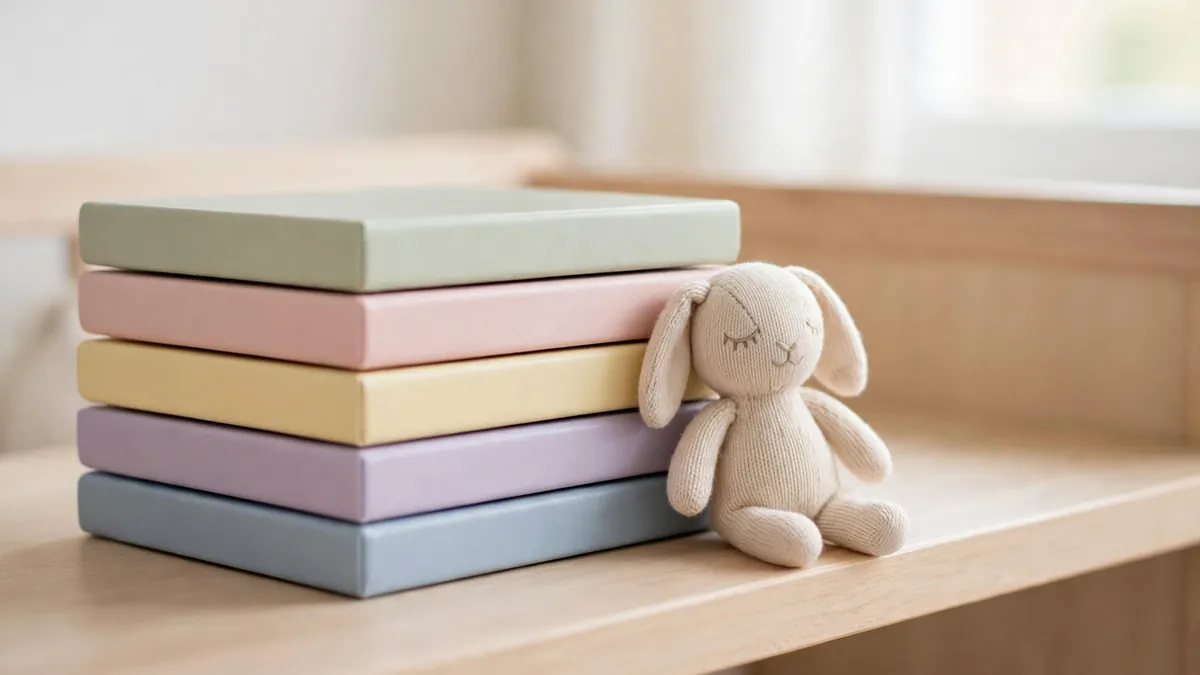
The best baby books are the ones you reach for again and again, even when you know every page by heart. Which ten deserve a place on the shelf in 2027? A mix of sturdy board books for grabbing and chewing, gentle rhymes for bedtime, and a few picture books your baby will grow into.
A good baby book needs clear pictures, a rhythm you can read aloud without stumbling, and pages that survive being grabbed and dropped. The ten books below meet that test.
Key takeaways
- Start with sturdy board books for babies under one, then add longer picture books as attention grows.
- Repetition is a strength, not a flaw: babies love hearing the same words and pictures again.
- Choose books with clear pictures and a steady rhythm that is easy to read aloud.
- Keep the shelf small and rotate books rather than buying a large pile at once.
How to choose a baby book
Begin with the format. Board books have thick pages that small hands can turn without tearing. Paper pages suit older babies who have learned to turn pages gently, so save those for supervised reading.
Look at the pictures before you read the words. A baby follows bold shapes, clear faces and strong colour contrasts long before following a story. One clear image per page works well in the early months, while busier pages suit toddlers who like to point and name things.
Read a page aloud before you buy. Short sentences and a regular beat make reading aloud easier, especially at bedtime when you are tired. Books sit happily beside other slow, screen-free play, such as a butterfly house kit for kids, and the two together can fill a rainy afternoon without a screen in sight.
The 10 Best Baby Books in 2027
These ten books cover the full range of baby reading, from first peekaboo games to longer stories for toddlers. Every title below is a real book by a named author, and each one is widely available in a board book edition. Start with two or three, see which ones your baby reaches for, and build from there.
1. The Very Hungry Caterpillar by Eric Carle
A tiny caterpillar eats his way through the week, and the pages grow wider as he grows bigger. First published in 1969, it has been read by generations of children, and the board book edition is made for small hands. Point at each food, count the fruit together, and let your baby turn the chunky pages.
Best for: counting and colours.
2. Goodnight Moon by Margaret Wise Brown
A small rabbit says goodnight to everything in the room, from the clock to the bowl of mush, in a slow rhythm. First published in 1947, illustrated by Clement Hurd, it is a bedtime staple in homes around the world. Keep it by the bed, so it stays linked to winding down.
Best for: bedtime.
3. Guess How Much I Love You by Sam McBratney
Little Nutbrown Hare and Big Nutbrown Hare try to outdo each other, stretching their arms wide and hopping high. Sam McBratney wrote the text, and Anita Jeram illustrated it with soft watercolour hares in a quiet landscape. It suits a cuddle on a lap, with the baby held close.
Best for: a bedtime cuddle.
4. Brown Bear, Brown Bear, What Do You See? by Bill Martin Jr
This book asks the same question on every page, and a different animal answers each time. Bill Martin Jr wrote the text, and Eric Carle provided bold collage pictures of a brown bear, a red bird and a yellow duck. The repetition helps babies guess what comes next, and toddlers often learn the animal names here first.
Best for: first animal words.
5. Dear Zoo by Rod Campbell
A child writes to the zoo asking for a pet, and the zoo sends one animal after another behind flaps. Each animal is too big, too tall or too fierce, until the right pet finally arrives. Rod Campbell wrote and illustrated this classic, and the board book edition is built for repeated lifting.
Best for: lift-the-flap surprises.
6. The Gruffalo by Julia Donaldson
A clever mouse walks through the deep dark wood and invents a fearsome Gruffalo to scare off a fox, an owl and a snake, only to meet the real thing. Julia Donaldson wrote the story, and Axel Scheffler illustrated the mouse and the woodland animals. Read it with different voices, and let your child guess what the mouse will say next.
Best for: rhyming read-alouds.
7. Where the Wild Things Are by Maurice Sendak
Max sails away to the land of the wild things, joins their rumpus, and sails home to find his supper waiting. Maurice Sendak wrote and illustrated this classic, and the board book edition suits younger readers. Babies will enjoy the big pictures and the rumpus, while toddlers follow Max and his journey.
Best for: imaginative toddlers.
8. Peek-a-Who? by Nina Laden
Each page has a cut-out window and a rhyming clue. The final page reveals a baby looking back at the reader.
Nina Laden wrote and illustrated this board book, and its sturdy pages suit babies still learning to turn pages gently. Read it face to face, pause at each window, and let your baby guess who is hiding.
Best for: peekaboo play.
9. First 100 Words by Roger Priddy
First 100 Words is a first-word book with bright photographs of everyday things, from apples and shoes to cars and cups. Each page groups words by theme, so you can point, say the word, and let your baby babble back. Roger Priddy created this book for the youngest readers, and the padded edition is easy to hold and hard to damage.
Best for: everyday first words.
10. On the Night You Were Born by Nancy Tillman
This gentle, lyrical book tells of the night a baby was born, when the moon smiled and the stars peeked in. Nancy Tillman wrote and illustrated the book, and it has become a favourite gift for new parents. It suits a quiet moment with a newborn, a naming day or a first birthday, and it reads just as well to a toddler.
Best for: a new-baby gift.
What Storytime Feels Like
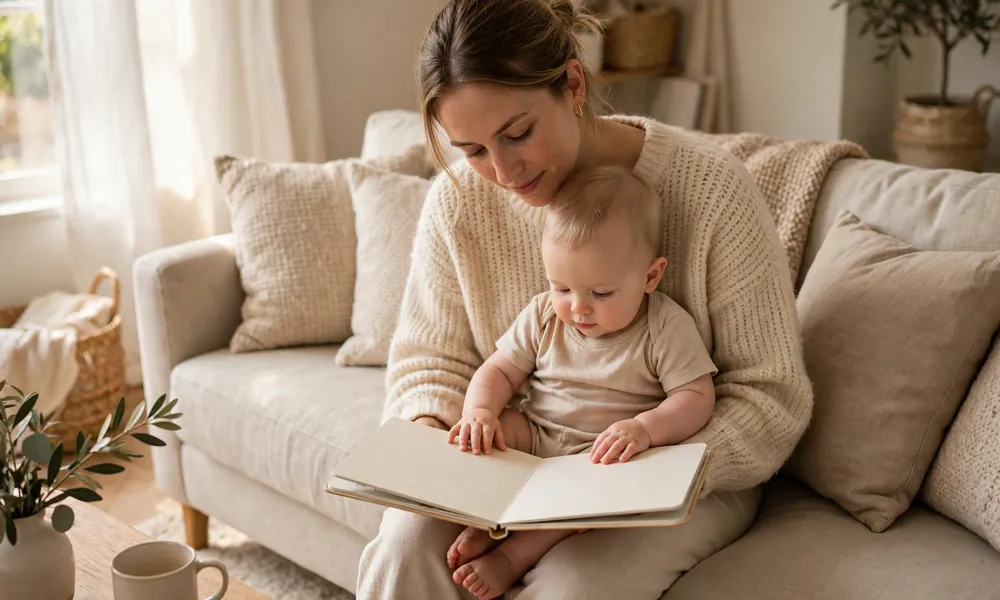
Storytime with a baby rarely looks like the pictures in a catalogue. The baby grabs the page, chews the corner, wriggles off your lap and comes back again.
That is normal, and it is still reading. The point is the closeness, the sound of your voice and the habit of opening a book together each day.
Keep sessions short and follow your baby’s lead. Two pages can be enough, and you can stop whenever attention wanders. Try reading at the same time each day, after a bath or before a nap, so the book becomes part of the routine.
On sunny days, take the book outside into the garden or the park, and remember a sunscreen that protects without battles if your baby will be in the sun. A change of scene can hold attention for longer.
How do the best baby books compare?
The table below sums up the ten picks at a glance. Start with the format and the best-for note, then pick the one that matches the moment you most want to fill.
| Book | Format | Best for | Why it earns its place |
|---|---|---|---|
| The Very Hungry Caterpillar | Board book | Counting and colours | Bright pictures, a week-long journey |
| Goodnight Moon | Board book | Bedtime | Slow rhythm that suits winding down |
| Guess How Much I Love You | Board book | A bedtime cuddle | Warm hares and a gentle ending |
| Brown Bear, Brown Bear, What Do You See? | Board book | First animal words | Repeatable questions and bold animals |
| Dear Zoo | Board book | Lift-the-flap surprises | Flaps that invite guessing and giggling |
| The Gruffalo | Picture book | Rhyming read-alouds | Bouncy rhyme and a clever mouse |
| Where the Wild Things Are | Board book | Imaginative toddlers | A short adventure with big pictures |
| Peek-a-Who? | Board book | Peekaboo play | Windows and rhymes for young readers |
| First 100 Words | Board book | Everyday first words | Clear photos of familiar objects |
| On the Night You Were Born | Board book | A new-baby gift | Soft pictures and a warm welcome |
What to Check Before You Buy
Check the format before you order. Look for the words board book in the listing, as some titles come in several editions. A board book edition is the right choice for babies, while a paperback picture book suits an older toddler or a gift for the shelf.
Look at the condition if you are buying second-hand. Lift-the-flap books often have torn or missing flaps, and board books can have chewed corners or loose pages. A little wear is fine for a well-loved book, but missing flaps spoil the surprise in Dear Zoo and Peek-a-Who?
Think about where the book will live. A small shelf at your baby’s height invites browsing, while a basket by the sofa suits books you read together. If screens do enter the picture later, our tablet picks that survive real family life can help, but books work best with their own visible place in the room.
Your Baby Book Checklist
- Board book format with thick pages for small hands
- Clear pictures with one main image per page
- Short text with a steady rhythm for reading aloud
- Sturdy binding that survives drops and chewing
- A topic your baby already loves, such as animals or food
- A place on a low shelf where your baby can reach it
Frequently Asked Questions
How many baby books should I buy to start with?
Two or three books are enough, and a small shelf works better than a large pile. Watch which books your baby reaches for, then add one at a time. Rotating books can make an old favourite feel new again.
When should I start reading to my baby?
You can start from the first weeks, even if your baby seems too young to follow along. Newborns respond to the sound of your voice and the closeness of being held. Short, regular sessions matter more than long ones.
Are board books better than paper books for babies?
Board books are the better choice for babies under one, as the thick pages resist tearing and wipe clean. Paper books suit older babies who have learned to turn pages gently. Many families keep both.
What if my baby chews or tears a book?
Chewing is a normal way for babies to explore a book, and board books are made to handle it. Wipe the pages clean and carry on, and keep paper books for supervised reading.
How do I keep baby books in good condition?
Store books upright on a low shelf or in a basket, away from damp and direct sunlight. Wipe board book pages with a damp cloth after sticky hands, and keep tape nearby for flap repairs.
The Bottom Line
The best baby books in 2027 are not the newest titles, but the ones that have been read, re-read and loved for years. Start with a sturdy board book or two, add a bedtime favourite, and let your baby’s choices guide the shelf. A small collection of good books, read often and with warmth, beats a shelf full of titles nobody reaches for.
If you buy just one book from this list, make it the one that fits the moment you share most often.
For bedtime, choose Goodnight Moon or Guess How Much I Love You. For playtime, choose Dear Zoo or Peek-a-Who? For a gift, choose On the Night You Were Born.