A channel engagement ring sets its stones in a row between two walls of metal, with no prongs at all. The stones sit side by side in a groove, held in place by the channel walls, and the result is a smooth, unbroken line of sparkle that runs around the band. It is the setting that makes an eternity band possible, the one that lets a row of small diamonds shine without a single claw catching on a jumper or a glove.
That smoothness is exactly why channel engagement rings have become so popular for people who want sparkle without fuss. There is nothing to snag, nothing to bend, and nothing to catch on clothing, which makes a channel ring one of the most practical settings for everyday wear.
Below are nine channel engagement rings worth considering in 2027, from classic diamond eternity bands to sapphire and mixed-stone designs. Each one is described by what it is good at, what to watch for, and who it suits best, so you can choose with your eyes open, not just your heart.
Key takeaways
- A channel setting holds a row of stones between two metal walls, with no prongs, so the ring is smooth and will not snag on clothing.
- Channel settings suit small, hard stones best: diamonds, sapphires and moissanites are ideal, while soft stones should be avoided.
- Channel rings are difficult or impossible to resize, so an exact finger size before ordering is essential.
- Loose channel stones are harder to replace than loose prong stones, so a yearly inspection matters.
- A channel setting is a practical, everyday choice, but it is not the right setting for a single large centre stone, which needs prongs or a bezel instead.
What a channel engagement ring actually is
A channel setting is a groove cut into the band, with a row of stones set into it and held by two parallel walls of metal. The stones sit edge to edge, girdle to girdle, and the metal walls are burnished over their edges to hold them in place. From the top, you see an unbroken line of stones. From the side, you see clean metal walls with no prongs sticking up. It is a setting that hides its engineering completely, which is part of its appeal.
The setting works best with small, evenly matched stones. A channel of round brilliant diamonds, each the same size, gives the most even sparkle, and it is why the classic channel eternity band has never gone out of fashion. Princess-cut stones also work well, because their straight edges sit neatly together, while baguette stones give a sleek, architectural look.
The metal matters, too. Platinum is the best choice for a channel setting because it is strong and moves rather than breaks, so the channel walls hold their shape for decades. Gold works well, but 14 karat is better than 18 karat for a channel band, because it is harder and less likely to wear thin at the walls.
How we chose these rings and what to look for
Look first at the stones. In a good channel setting, every stone should be the same size, the same colour and the same clarity, and they should sit level with each other, with no stone higher or lower than its neighbours. Run your finger gently along the channel: it should feel smooth, with no sharp edges and no stone that rocks when you press it. If one stone sits proud or feels loose, the setting was not made properly.
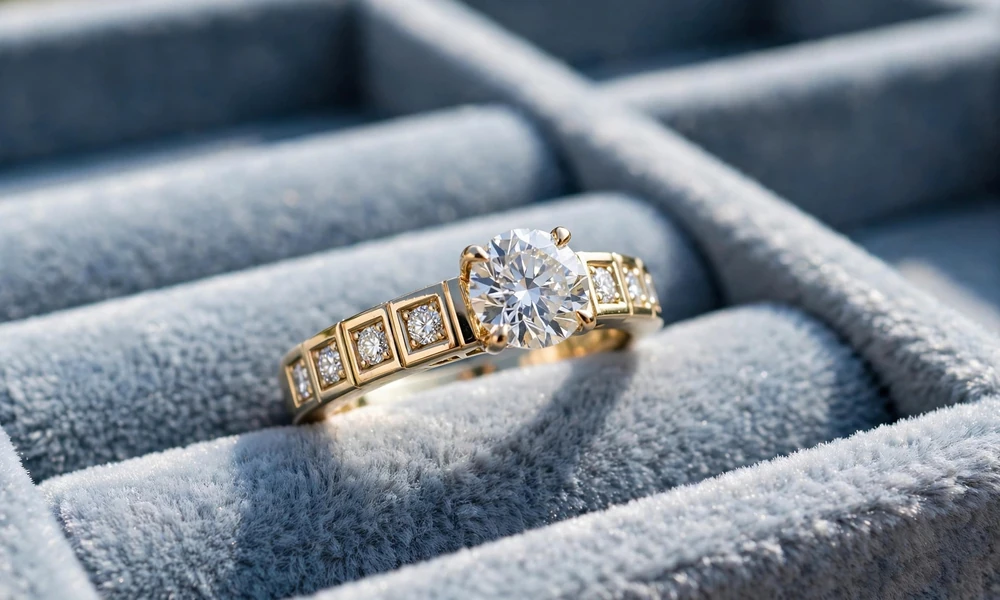
Look next at the channel walls. They should be even in height and thickness all the way around the ring, with no thin spots and no gaps. A well-made channel band feels solid and slightly heavy for its size, which is a good sign, not a bad one.
Finally, look at the centre stone, if there is one. Most channel engagement rings have a prong-set or bezel-set centre stone with a channel band, and the two parts should feel like one ring, not two ideas joined together. The centre stone should sit securely, the channel stones should complement it rather than compete with it, and the whole ring should feel balanced on the finger. Our guide to the best engagement rings of 2027 is a useful starting point if you are still deciding between setting styles, because the right setting depends as much on how you live as on how the ring looks.
The 9 best channel engagement rings of 2027
Tiffany & Co. Channel Eternity Ring
What we like: A full eternity band in platinum with round brilliant diamonds set in a channel all the way around, made to Tiffany’s exacting standards, with perfectly matched stones and channel walls that feel solid and even.
What to consider: A full eternity band cannot be resized at all, and the price is premium. Stone: Round brilliant diamonds, 1.5 carats total. Setting: Channel, platinum. Best for: A classic eternity band with a top-tier maker. Price range: $8,000 to $12,000.
Cartier Channel Solitaire Ring
What we like: A round brilliant centre diamond in a four-prong setting, with a channel-set band of small diamonds in 18 karat white gold, Cartier’s clean lines, and a ring that feels luxurious without being showy.
What to consider: White gold needs rhodium replating every year or two, and the channel band cannot be resized. Stone: Round brilliant diamond, 1 carat centre, 0.4 carats channel. Setting: Prong centre with channel band, 18 karat white gold. Best for: A luxury ring that pairs a centre stone with a channel band. Price range: $10,000 to $15,000.
David Yurman Channel Cable Ring
What we like: A channel of small diamonds set into Yurman’s signature cable band, with a sculptural, hand-finished feel and a diamond row that catches light from every angle because the channel is open at the top.
What to consider: The cable texture can trap lotion and needs regular cleaning, and the ring runs slightly large. Stone: Round brilliant diamonds, 0.8 carats total. Setting: Channel, sterling silver and 18 karat gold. Best for: A distinctive, artistic take on the channel look. Price range: $3,500 to $5,500.
Mejuri Channel Band Ring
What we like: A slim 14 karat gold band with a half-channel of lab-grown diamonds, at a price that makes the channel look accessible, with Mejuri’s straightforward returns and sizing help.
What to consider: A half-channel, not a full eternity, so the sparkle stops at the sides, and the band is slim, so it suits smaller stones best. Stone: Lab-grown diamonds, 0.5 carats total. Setting: Half-channel, 14 karat gold. Best for: A first channel ring on a sensible budget. Price range: $900 to $1,500.
Monica Vinader Channel Sapphire Ring
What we like: A half-channel of blue sapphires in recycled 18 karat gold vermeil over sterling silver, with a rich, colourful look that stands out from the usual all-diamond channel bands.
What to consider: Vermeil wears over time and will need replating, and the sapphires are small, so the sparkle is softer than diamond. Stone: Blue sapphires, 0.6 carats total. Setting: Half-channel, gold vermeil. Best for: A colourful channel ring that breaks from tradition. Price range: $500 to $850.
Missoma Channel Stacking Ring
What we like: A slim channel band with small white topaz stones, designed to stack with a wedding band, in recycled gold vermeil, with a light, easy feel that suits everyday wear.
What to consider: White topaz is softer than diamond and will scratch over time, so this is a fashion ring, not a forever ring. Stone: White topaz, 0.4 carats total. Setting: Channel, gold vermeil. Best for: A delicate channel ring that stacks neatly. Price range: $200 to $400.
Maria Black Channel Sculptural Ring
What we like: A sculptural, architectural band in solid sterling silver with a channel of white sapphires, Maria Black’s modern Danish design, and a shape that looks like jewellery and small-scale sculpture at once.
What to consider: Silver is soft and will scratch with daily wear, and white sapphire is less brilliant than diamond. Stone: White sapphires, 0.5 carats total. Setting: Channel, sterling silver. Best for: A design-led ring for a wearer who loves modern jewellery. Price range: $350 to $650.
Astrid & Miyu Channel Baguette Ring
What we like: A channel of baguette diamonds in solid 14 karat gold, with a sleek, architectural look that feels modern and minimal, at a price that undercuts most luxury houses.
What to consider: Baguette stones show colour more than round brilliants, so choose a higher colour grade, and the ring is made to order, so delivery takes longer. Stone: Baguette diamonds, 0.7 carats total. Setting: Channel, 14 karat gold. Best for: A modern, minimal channel ring with an architectural edge. Price range: $1,500 to $2,500.
Thomas Sabo Channel Charm Ring
What we like: A playful half-channel ring with coloured cubic zirconia stones, in sterling silver, with Thomas Sabo’s cheerful, accessible design and a price that makes it easy to try the style before committing to a fine version.
What to consider: Cubic zirconia is soft and will scratch, so this is a fashion ring, not a forever ring, and the stones are small. Stone: Cubic zirconia, 0.5 carats total. Setting: Half-channel, sterling silver. Best for: Trying the channel look before buying fine jewellery. Price range: $100 to $200.
Which channel engagement ring is right for you
If you want the purest version of the look, choose a full eternity band in platinum with round brilliant diamonds, from a maker with a strong guarantee. It will cost more, and it cannot be resized, but it is the classic channel ring, and it will look the same in thirty years as it does on the day you buy it.
If you want a centre stone as well, choose a prong-set or bezel-set diamond with a channel band, in 14 karat gold or platinum. You get the drama of a centre stone and the smooth, practical feel of a channel band, and the two parts balance each other well. Before you commit to a centre stone, it is worth understanding what you are buying, and our diamond buying guide explains the four Cs, the difference between natural and lab-grown stones, and the questions to ask any jeweller, so you can spend your budget where it shows.
If you want colour rather than a white stone, sapphire is the best choice for a channel setting, because it is hard enough to take daily wear and its colour looks rich in a row. Avoid soft coloured stones such as emerald, opal and tanzanite in a channel setting, because they chip easily at the edges where the channel walls grip them.
The caveats that matter
A channel setting is one of the most practical settings for everyday wear, but it is also one of the hardest to repair. If a prong bends, a jeweller can straighten it in minutes. If a channel wall wears thin or a stone comes loose, the repair is slower, more expensive, and sometimes impossible without remaking the band. That does not mean you should avoid channel rings, only that you should buy them well, from a maker who guarantees the setting, and have the ring checked every year. A yearly inspection takes ten minutes and catches a loose stone before it becomes a lost stone.
| Detail | What is known |
|---|---|
| How it works | A row of stones sits in a groove between two metal walls, with no prongs |
| Safe stones | Diamond, sapphire, ruby and moissanite, all hard enough for daily wear |
| Stones to avoid | Emerald, opal, tanzanite, pearl and any soft or brittle stone |
| Best metals | Platinum holds channel walls best; 14 karat gold is better than 18 karat |
| Resizing | Difficult or impossible, especially for full eternity bands; size exactly first |
| Biggest risk | Worn channel walls let stones loosen, and loose channel stones are costly to replace |
| Maintenance | Yearly inspection, gentle cleaning, no ultrasonic cleaner for older rings |
| What it does not do | It does not hold a single large centre stone, and it is not the cheapest setting to repair |
If you work with your hands, lift weights, or play sport, a channel ring is actually one of the better choices, because there are no prongs to catch or bend. The smooth profile is the reason so many people choose a channel band as a wedding ring.
Checklist: choosing a channel engagement ring honestly
Use these checks before you buy, and again at every yearly inspection.
- Check the stones: all the same size, colour and clarity, sitting level, with none rocking when pressed.
- Check the channel walls: even in height and thickness all the way around, with no thin spots or gaps.
- Check the metal: platinum for a full eternity band, or 14 karat gold for a half-channel, never thin, soft gold.
- Check the size: get your finger measured properly, in warm and cool conditions, because resizing is difficult or impossible.
- Check the maker: a written guarantee covering the channel stones, from a jeweller who makes channel rings regularly.
- Check the aftercare: yearly inspection, gentle cleaning, and a clear answer on what happens if a stone loosens.
Frequently asked questions
Can a channel engagement ring lose its stones?
Yes, it can, and that is the honest answer. A well-made channel ring from a good maker is secure in normal wear, but the channel walls wear down over years of daily use, and worn walls let stones loosen. Yearly inspection catches most problems early, and a written guarantee from the maker covers you if a stone does come loose.
Can a channel ring be resized?
Usually not. Resizing a channel band means cutting through the channel, which disturbs the stones and the walls that hold them. A half-channel band can sometimes be sized by one size, but a full eternity band cannot be resized at all. Get your size measured properly before ordering.
Are channel settings safe for everyday wear?
Yes, and they are one of the safest settings for daily wear, because there are no prongs to catch on clothing or bend. Diamond, sapphire, ruby and moissanite are all safe in a channel setting. If you work with your hands, a channel band is often a better choice than a high prong setting.
Is a channel setting more expensive than a prong setting?
It depends. A simple half-channel band with small stones can cost less than a solitaire with a large centre stone, because the stones are small. A full eternity band in platinum with matched diamonds costs more than a simple prong solitaire, because of the number of stones and the precision of the work. The setting cost is in the craftsmanship, not just the stones.
Can I have a coloured stone in a channel ring?
Sapphire and ruby, yes, because they are hard enough at Mohs 9. Emerald, opal, tanzanite and aquamarine are not safe in a channel setting, because they chip easily at the edges where the channel walls grip them. If you love gold as much as the stones, our guide to the best gold jewellery for everyday wear covers how different gold colours and karats hold up in rings you wear every day, including channel bands.
How do I clean a channel engagement ring?
Gently, with warm water, mild soap and a soft brush, then rinse and pat dry. Pay attention to the channel itself, where lotion and soap can build up between the stones. An ultrasonic cleaner is safe for a new, well-made diamond channel ring, but ask your jeweller first, and never use one on an older ring or a ring with soft stones. Have the ring inspected once a year, and take it in immediately if a stone moves when you press it.
The bottom line
The best channel engagement ring in 2027 is not the most expensive or the most heavily set. It is the one with evenly matched hard stones, even channel walls, a strong metal, and a maker who guarantees the setting in writing. For a full eternity band, platinum with round brilliant diamonds is the safest choice. For a centre stone with a channel band, 14 karat gold or platinum with a lab-grown diamond is the smarter buy.
Choose the setting that fits how you actually live, get the size exactly right, and have the ring checked every year. A channel ring is the most practical way to wear a row of diamonds every day, and like all good engineering, it rewards the person who buys it properly and looks after it.