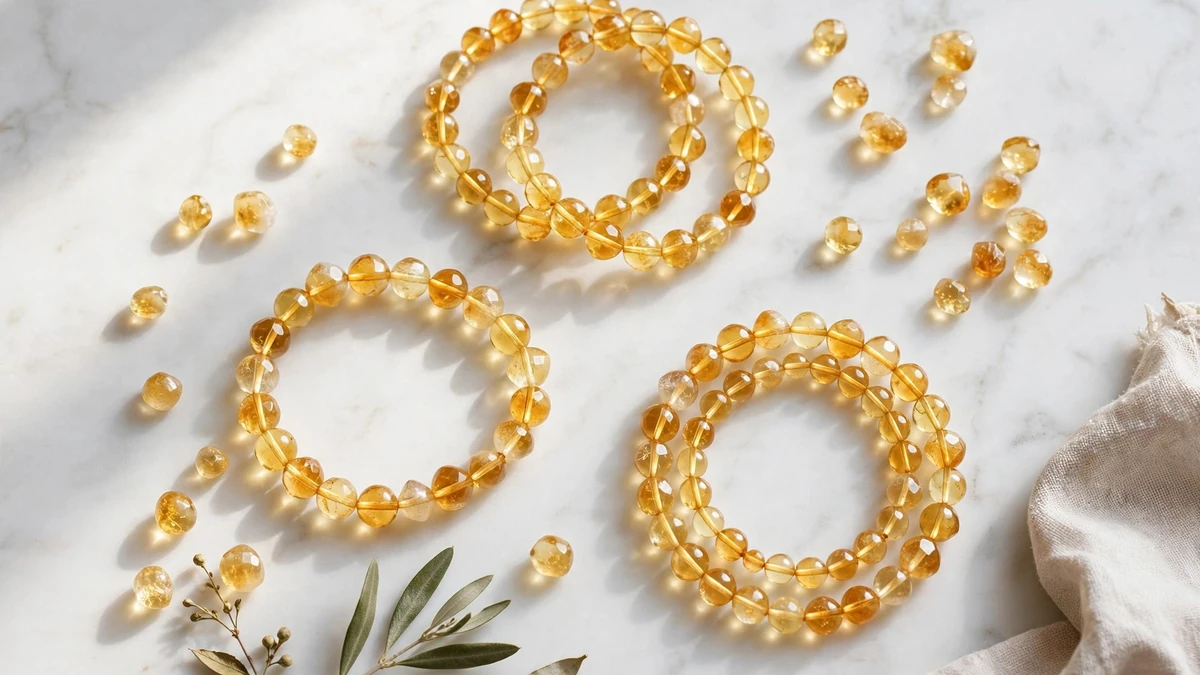

Citrine is the warmest stone in the jewellery box. Its honey and amber tones catch light without shouting, and on a bracelet it reads as sunshine rather than sparkle, which is why it has become a quiet favourite for everyday wear. The problem is not finding a citrine bracelet. It is finding one where the stone is honestly described, the setting is strong enough for daily wear, and the price reflects what you are actually buying.
That is why this guide is organised by what matters most: the stone, the setting, and how the bracelet will actually be worn. A delicate chain bracelet with small citrine drops suits a desk and a dinner, while a chunky bangle with a large stone needs a different kind of care and a different budget. Price is a poor guide on its own. Some of the best-value citrine bracelets are mid-priced, and some of the most expensive are the hardest to wear every day.
Below are nine citrine bracelets worth considering in 2027, from a classic tennis bracelet to beaded and bangle styles for every wrist. Each one is described by what it is good at, what to watch for, and who it suits best, so you can choose with your wrist in mind, not just a bestseller list.
Key takeaways
- Citrine is a quartz, hard enough at Mohs 7 for everyday wear, and its warm yellow to amber tones suit both gold and silver settings.
- Most citrine on the market is heat-treated amethyst, which is standard practice, but it should always be disclosed by the seller.
- Natural citrine is paler and rarer than the deep orange stones most shops sell, and it usually costs more per carat.
- A bracelet worn daily needs a secure clasp, a protective setting, and stones that sit close to the wrist rather than proud of it.
- Citrine has no proven healing properties and is not an investment stone, and a very cheap bracelet is almost always glass, synthetic, or heavily treated.
What citrine actually is
Citrine is a yellow to orange variety of quartz, coloured by traces of iron. In plain terms, it is the same mineral family as amethyst and clear rock crystal, which is why it is hard, durable, and easy to cut into the small, even stones that suit bracelets. Its colour ranges from a pale lemon yellow to a deep burnt orange, and the most prized natural stones sit in the middle, a clear golden honey with no brown or grey cast.
What most shoppers do not know is that the deep orange citrine in most shops started life as amethyst. Heating amethyst to around 470 degrees changes its purple to a warm orange, and the result is sold, quite legally, as citrine. This is standard, stable, and permanent, but it should be disclosed, and a seller who calls a heat-treated stone natural is not being honest. Natural citrine is usually paler, often with a smoky or greenish undertone, and it costs more because it is genuinely rarer.
Citrine is also November’s birthstone, which makes it a natural gift choice, and it pairs well with yellow gold, which warms its colour, and with white gold or silver, which keeps it bright. It is not a fragile stone, but it is not invincible either. Hard knocks can chip the edges of a faceted stone, and a bracelet, which swings against desks and door frames all day, is the piece of jewellery most likely to take those knocks.
How we chose these bracelets and what to look for
Look first at the stone. A good citrine should be clear, with an even colour and no cloudy patches or visible cracks. Hold it up to the light: a clean stone glows, while a cloudy one looks dull from every angle. Ask whether the stone is natural or heat-treated, and whether the treatment has been disclosed in writing. A reputable seller will answer both questions without hesitation.
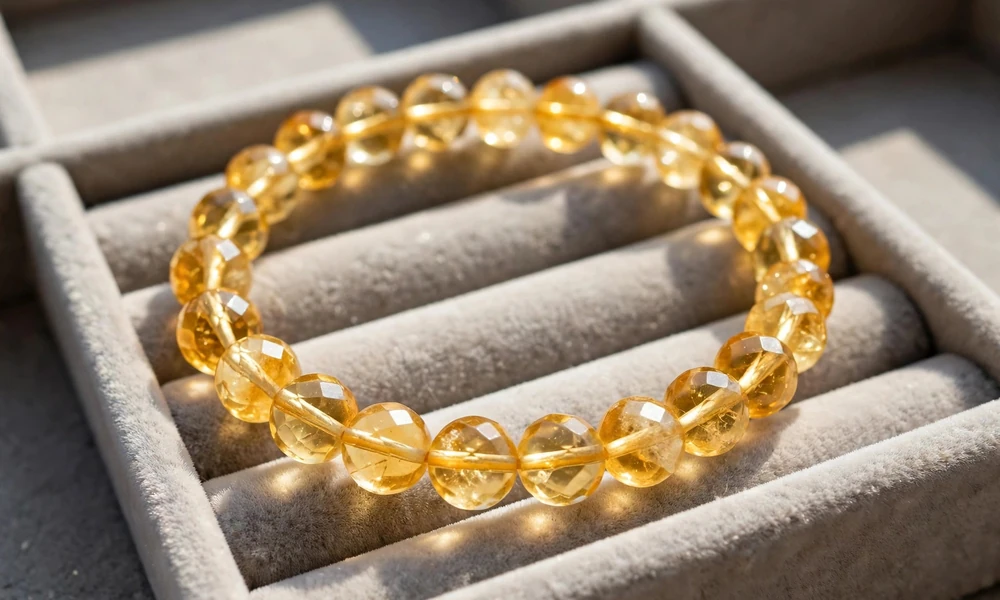
Look next at the setting and the clasp. On a bracelet, the setting matters more than on a necklace, because the wrist moves constantly. Bezel and channel settings protect the edges of each stone, while prong settings show off more of the stone but leave the corners exposed. A box clasp with a safety catch is essential on a tennis bracelet, and a bangle should fit closely enough that it does not slide up and down your forearm. Our guide to diamond bracelets explains why clasp security matters, because a bracelet that opens on its own is a bracelet you will lose.
Finally, look at the metal and the fit. Fourteen-karat gold suits daily wear better than eighteen-karat, because it is harder and less likely to scratch, while sterling silver needs regular polishing but keeps the price down. Measure your wrist properly, with a tape measure over the bone, and add half a centimetre for comfort. A bracelet that is too tight will pinch and wear out faster, and one that is too loose will catch on everything. Gold for everyday wear, such as our gold jewellery for everyday guide, is worth reading before you buy, because the right metal makes the difference between a bracelet you wear daily and one that lives in a drawer.
The 9 best citrine bracelets of 2027
Tiffany & Co. Citrine Tennis Bracelet
What we like: A classic line of evenly matched citrine stones in a secure channel setting, with a box clasp and safety catch, and the clean, understated finish Tiffany & Co. is known for.
What to consider: Premium price, and the stones are heat-treated amethyst, which should be disclosed at purchase. Stone: Citrine, heat-treated, in a graduated line. Setting: 18-karat yellow gold, channel set. Best for: Everyday luxury and special occasions. Price range: Premium.
Cartier Citrine Bangle
What we like: A polished gold bangle with a single, well-cut citrine as its centrepiece, elegant in its simplicity, and made to be worn alone or stacked.
What to consider: A bangle fit is fixed, so sizing must be exact, and the single stone is exposed to knocks. Stone: Citrine, heat-treated, oval cut. Setting: 18-karat yellow gold, bezel set. Best for: Minimalist styling and stacking. Price range: Premium.
David Yurman Citrine Cable Bracelet
What we like: The signature twisted cable design with a citrine cabochon at each end, comfortable to wear, and instantly recognisable without being loud.
What to consider: The cable design is distinctive, so it suits some styles more than others, and the cabochon stones are softer-looking than faceted ones. Stone: Citrine cabochon, heat-treated. Setting: Sterling silver with 18-karat gold accents. Best for: Everyday wear with a designer signature. Price range: High.
Mejuri Citrine Tennis Bracelet
What we like: A slim, well-made tennis bracelet at a fair price, with small, evenly matched citrine stones and a secure clasp, designed for daily wear.
What to consider: The stones are small, so the colour is subtle rather than bold, and the setting is delicate. Stone: Citrine, heat-treated, round cut. Setting: 14-karat yellow gold, prong set. Best for: Everyday wear and layering. Price range: Mid-range.
Monica Vinader Citrine Chain Bracelet
What we like: A fine gold chain with a single citrine drop, delicate and easy to layer, with an adjustable length that solves most sizing problems.
What to consider: A single small stone means the colour is a whisper rather than a statement, and fine chains need gentle handling. Stone: Citrine, heat-treated, briolette cut. Setting: 18-karat gold vermeil on sterling silver. Best for: Layering and delicate styling. Price range: Mid-range.
The adjustable chain is genuinely useful. It means the bracelet fits properly from day one, rather than needing a jeweller to adjust it, which is a common reason delicate bracelets disappoint.
Missoma Citrine Beaded Bracelet
What we like: A relaxed beaded design with warm citrine beads on a strong elastic cord, comfortable all day, and easy to stack with other bracelets.
What to consider: Beaded bracelets stretch over time, and the beads are more exposed to knocks than stones in a metal setting. Stone: Citrine beads, heat-treated. Setting: Beaded on elastic cord with a gold bead accent. Best for: Casual wear and stacking. Price range: Affordable.
This is the budget-friendly, everyday entry point. It will not suit a formal occasion, but worn daily it adds a warm flash of colour without any fuss or worry.
Maria Black Citrine Cuff Bracelet
What we like: A sculptural open cuff with a citrine at each end, modern and architectural, and easy to slip on and off without a clasp.
What to consider: An open cuff can catch on sleeves, and the stones sit proud of the metal, so they need care. Stone: Citrine, heat-treated, round cut. Setting: Sterling silver, open cuff. Best for: Modern styling and statement looks. Price range: Mid-range.
A straightforward, design-led choice for people who want a citrine bracelet that looks like a piece of design rather than a piece of traditional jewellery. The open cuff is comfortable once you get used to it.
Astrid & Miyu Citrine Charm Bracelet
What we like: A slim chain bracelet with a citrine charm and a small gold disc, playful and light, and easy to wear with other charm bracelets.
What to consider: The charm is small, so the colour is subtle, and the chain is fine enough to tangle if stored loosely. Stone: Citrine, heat-treated, faceted charm. Setting: Gold-plated sterling silver. Best for: Casual wear and gifting. Price range: Affordable.
If your wrist is small and you find most bracelets heavy or oversized, this slim charm style is often much more comfortable, while still giving you the warm colour you wanted.
Thomas Sabo Citrine Link Bracelet
What we like: A sturdy link bracelet with a citrine set into the central link, well made for the price, and with a secure lobster clasp that is easy to fasten one-handed.
What to consider: The links are chunky, so it suits a bolder style, and the central stone is the only citrine on the piece. Stone: Citrine, heat-treated, cushion cut. Setting: Sterling silver, bezel set. Best for: Everyday wear with a bolder look. Price range: Affordable.
A sensible choice, especially if you want a citrine bracelet you can wear without thinking about it. It is sturdy enough for daily use, and the bezel setting protects the stone well.
Which citrine bracelet is right for you
Small wrists usually do best with a slim tennis bracelet or a fine chain, because a chunky bangle will overwhelm the wrist and slide around. The goal is a bracelet that sits comfortably on the wrist bone without pinching, so a piece that feels light after five minutes is a better sign than one that feels impressive in the box. Larger wrists can carry a bangle or a cuff, which need a bit of presence to look intentional rather than lost.
Daily wear needs a different bracelet from occasional wear. A tennis bracelet with a box clasp and safety catch, or a beaded bracelet on strong cord, will survive a desk, a gym bag, and a coat sleeve. A delicate chain with a single drop is better kept for evenings and occasions, where it will not be knocked against a keyboard all day. Citrine jewellery in general, such as our citrine jewellery guide, is a useful frame here, because the right style changes with how often you will wear it, and a bracelet that worked for a wedding may be too delicate for a working week.
Skin tone matters less than people think, but metal choice does change how citrine looks. Yellow gold warms the stone and suits warm undertones, while white gold and silver keep the colour bright and suit cooler undertones. If you already wear mostly gold, a citrine bracelet in yellow gold will sit naturally with your other pieces, and if you wear mostly silver, a white metal setting will do the same.
The caveats that matter
Citrine is hard and durable, but it is not a stone you can ignore. It will not scratch easily, but a hard knock against a door frame can chip the edge of a faceted stone, and a chipped stone is expensive to repair. It can also be damaged by harsh chemicals, so take it off before cleaning, swimming in a chlorinated pool, or using strong household products. That does not mean you cannot wear it every day, only that you should treat it like the piece of jewellery it is, not like a watch.
| Detail | What is known |
|---|---|
| Stone family | Quartz, coloured yellow to orange by traces of iron |
| Hardness | Mohs 7, hard enough for everyday wear with care |
| Most common treatment | Heat-treated amethyst, standard and stable, must be disclosed |
| Natural citrine | Paler, rarer, and usually more expensive than heat-treated stones |
| Best settings for bracelets | Bezel and channel settings protect stone edges best on the wrist |
| Cleaning | Warm water, mild soap, and a soft brush; never steam or ultrasonic |
| What to avoid | Hard knocks, harsh chemicals, chlorine, and storing loose with other jewellery |
| What it does not do | It has no proven healing properties and is not an investment stone |
If you are buying citrine as a gift, check the return policy before you buy, and keep the receipt and any certificate. A reputable seller will accept a return within a reasonable period, and a certificate that states whether the stone is natural or heat-treated is worth more than a vague description. That is not a formality. It is the difference between knowing what you bought and finding out later.
Checklist: choosing a citrine bracelet honestly
Use these checks before you buy, and again after a week of wear.
- Check the stone: clear, evenly coloured, no cloudy patches or visible cracks.
- Check the treatment: ask whether the stone is natural or heat-treated, and get it in writing.
- Check the clasp: a box clasp with a safety catch on a tennis bracelet, or a secure lobster clasp on a chain.
- Check the fit: measure your wrist over the bone and add half a centimetre for comfort.
- Check the setting: bezel or channel settings protect stone edges best on a bracelet.
- Check the price: a very cheap citrine bracelet is almost always glass, synthetic, or heavily treated.
Frequently asked questions
Is most citrine heat-treated amethyst?
Yes. Most citrine on the market started life as amethyst and was heated to change its colour from purple to orange. This is standard, stable, and permanent, but it should always be disclosed by the seller.
Is citrine hard enough for a bracelet?
Yes, at Mohs 7 it is hard enough for everyday wear. It can still chip if it takes a hard knock, so a bezel or channel setting is a sensible choice on a bracelet, which moves and bumps into things all day.
How do I clean a citrine bracelet?
Warm water, mild soap, and a soft brush are enough. Rinse well, dry with a soft cloth, and never use a steam cleaner or an ultrasonic cleaner, which can damage the stone and loosen the setting.
Does citrine fade in sunlight?
No, citrine is stable in sunlight and will not fade with normal wear. It is one of the more stable coloured stones, which is another reason it suits everyday jewellery.
Is citrine a good birthstone gift?
Yes, citrine is November’s birthstone, which makes it a natural gift for November birthdays. Choose a style that suits how the person actually dresses, not just the stone, and keep the receipt in case the fit needs adjusting.
Is citrine an investment?
No. Citrine is a relatively common stone, and jewellery rarely holds its retail value on resale, even when the stone is natural. Buy it because you love the colour and will wear it, not because you expect it to gain value.
The bottom line
The best citrine bracelet in 2027 is not the most expensive or the boldest. It is the one with a clear, honestly described stone, a setting that protects it, and a clasp you can trust, in a style you will actually wear. For daily wear, a slim tennis bracelet or a beaded design is a strong choice. For occasions, a bangle or a cuff with a single good stone is the smarter pick.
Choose one bracelet, check the treatment disclosure, measure your wrist properly, and judge it on how it feels after a week of wear, not on how it looks in the box. That is the honest way to buy citrine, without paying for a story the stone cannot support.