
A diamond bracelet is one of the few pieces of jewellery that works almost everywhere. It sits quietly on the wrist at work, catches the light at dinner, and, unlike a ring or a necklace, it does not need an occasion to justify itself. The problem is not finding a diamond bracelet. It is finding one that is well made, fairly priced, and suited to how you actually live.
That is why this guide is organised by setting and lifestyle, not just by carat weight. A tennis bracelet with a secure clasp can be an everyday piece, while a delicate pavé bangle may be better kept for evenings. A lab-grown diamond can give you a larger stone for the same budget, while a natural diamond holds a different kind of value. Price is a poor guide on its own.
Below are nine diamond bracelets worth considering in 2027, from a classic tennis bracelet to a modern cuff, a chain-link design, and a simple solitaire bangle. Each one is described by what it does well, what to watch for, and who it suits best.
Key takeaways
- A diamond bracelet works for everyday wear when the setting is secure, the clasp is strong, and the stones sit close to the wrist.
- Tennis bracelets are the most versatile style, while bangles, cuffs, and chain-link designs suit different wrists and different occasions.
- Lab-grown diamonds offer a larger stone for the same budget, while natural diamonds are the traditional choice for pieces meant to be kept for decades.
- Check the four Cs, the metal, and the clasp before you buy, and ask for a grading report on any stone above half a carat.
- No bracelet is truly scratch-proof or maintenance-free, and a piece that is loose, snags on fabric, or has a weak clasp should be repaired or exchanged, not worn anyway.
What makes a diamond bracelet worth the price
A diamond bracelet earns its price in three places: the stones, the setting, and the metal. The stones matter most, and they are judged by the four Cs, cut, colour, clarity, and carat weight. Cut affects sparkle more than any other factor. A well-cut stone returns light brightly, while a poorly cut stone of the same weight can look dull. Colour runs from D, colourless, to Z, visibly tinted. For a bracelet, near-colourless grades, G to J, usually look white on the wrist.
Clarity matters less on a bracelet than on a ring, because the stones are smaller and further from the eye. A VS2 or SI1 stone that is eye-clean, with no visible inclusions, is usually a sensible choice. Carat weight is the total weight of all the stones in the piece, not the size of one stone. A tennis bracelet listed at three carats total weight may hold fifty stones of 0.06 carats each, which is a very different look from a bracelet with five stones of 0.6 carats each.
The setting is what holds those stones in place and decides how the bracelet wears. Prong settings show the most stone and let the most light in, but the prongs can catch on knitwear. Bezel settings are smoother and more protective, and they suit active wearers, though they show slightly less of the stone. Pavé settings give a continuous line of sparkle, but they need regular checking, because a single loose stone can be lost unnoticed.
How we chose these bracelets and what to look for
Look first at the clasp and the fit. A bracelet that is too loose slides over the hand and risks damage, while one that is too tight pinches and pulls at the setting. A good fit leaves about a finger of room between the bracelet and the wrist. The clasp should close with a firm click and, on a valuable piece, should have a safety chain or a figure-of-eight catch. If a bracelet has only a simple spring-ring clasp and no safety, it is not an everyday piece.

Look next at the metal. Fourteen-carat gold is harder and more practical for daily wear than eighteen-carat gold, which is softer and more prone to scratching. Platinum is heavier and more durable still, and it suits white diamonds well, though it costs more. White gold needs occasional rhodium replating to keep its bright white finish, which is a small ongoing cost worth knowing about before you buy. A diamond buying guide explains the four Cs in more detail, and it is worth reading before you spend serious money on any diamond piece.
Finally, look at the paperwork. A grading report from a recognised laboratory, such as the GIA or IGI, confirms the stone’s weight, colour, clarity, and cut, and it protects you if you ever need to insure, repair, or resell the piece. Ask for it on any stone above half a carat. A reputable seller will provide it without hesitation.
The 9 best diamond bracelets of 2027
Cartier Juste un Clou Bracelet with Diamonds
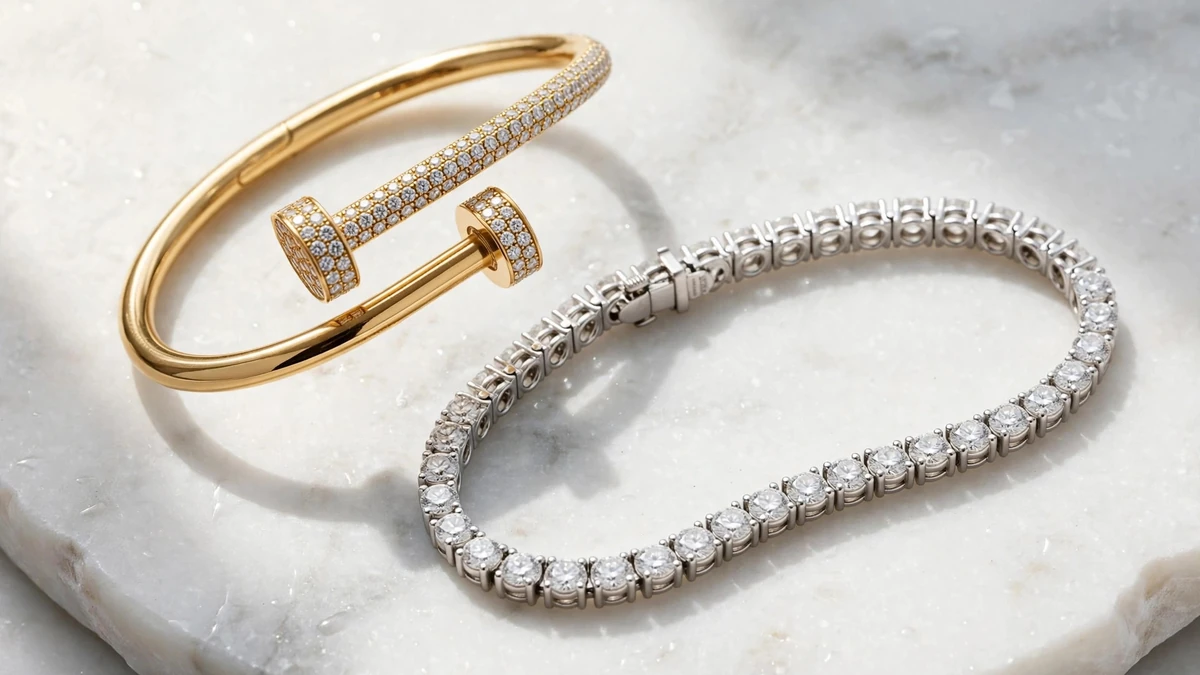
What we like: A nail bent into a bracelet, set with diamonds along its length, in 18-carat gold. Bold, instantly recognisable, and made to be worn every day. What to consider: Premium price, and the open design means the size must be right. Stone: Round brilliant diamonds, pavé-set. Setting: Pavé, 18-carat yellow, white, or rose gold. Best for: A statement everyday bracelet. Price range: £9,000 to £14,000.
This is a design piece as much as a diamond piece, and its simple shape works with almost anything.
Tiffany & Co. Diamond Tennis Bracelet
What we like: A classic line of round brilliant diamonds in a shared-prong setting, with a secure box clasp and safety chain. Clean, bright, and easy to wear. What to consider: The classic design is widely copied, so buy from Tiffany or a trusted authorised seller. Stone: Round brilliant diamonds, near-colourless. Setting: Shared prong, 18-carat gold or platinum. Best for: Everyday elegance and formal occasions. Price range: £4,000 to £12,000.
The tennis bracelet is the default for a reason, and this is the version other makers are measured against.
Mejuri Diamond Tennis Bracelet
What we like: A lab-grown diamond tennis bracelet at a far lower price than a natural-stone equivalent, with a slim, comfortable profile. What to consider: Lab-grown stones have lower resale value, and the setting is lighter than a fine-jewellery piece. Stone: Lab-grown round brilliant diamonds. Setting: Prong, 14-carat gold vermeil or solid gold. Best for: A first diamond bracelet on a sensible budget. Price range: £400 to £1,200.
For anyone who wants the look of a tennis bracelet without the fine-jewellery price, this is the most sensible starting point.
Van Cleef & Arpels Perlee Diamonds Bracelet
What we like: A row of polished gold beads edged with diamonds, soft, fluid, and unmistakably Van Cleef. It layers beautifully with a watch or a plain bangle. What to consider: The beaded design is delicate, so it suits gentle wear rather than sport. Stone: Round brilliant diamonds, pavé-set. Setting: Pavé on gold beads, 18-carat gold. Best for: Layering and soft, feminine styling. Price range: £5,500 to £9,000.
This is the bracelet to choose if you like jewellery that feels soft rather than sharp.
Bulgari Serpenti Viper Bracelet
What we like: A coiled serpent design in pavé diamonds, bold, sculptural, and unmistakably Bulgari. It wraps the wrist in a way no straight bracelet can. What to consider: A strong design statement, so it suits confident styling rather than quiet outfits. Stone: Round brilliant diamonds, pavé-set. Setting: Pavé, 18-carat gold. Best for: Evening wear and statement styling. Price range: £8,000 to £16,000.
The Serpenti is jewellery as sculpture, and it is not the bracelet to buy if you want something discreet.
Monica Vinader Linear Diamond Bracelet
What we like: A fine chain with a single line of small diamonds, light, affordable, and designed to layer with other bracelets. What to consider: The stones are small, so this is a subtle sparkle rather than a bold one. Stone: Small round brilliant diamonds. Setting: Prong on a fine chain, 18-carat gold vermeil. Best for: Layering and everyday wear. Price range: £150 to £350.
This is the bracelet for people who wear jewellery every day and want a diamond that fits into a normal routine.
David Yurman Diamond Pavé Cuff
What we like: A sculpted cable cuff with a pavé diamond centre, substantial in the hand, with a comfortable oval shape that stays put on the wrist. What to consider: A cuff does not open, so the size must be exact, and it is heavier than a chain bracelet. Stone: Pavé round brilliant diamonds. Setting: Pavé on a cable cuff, sterling silver or 18-carat gold. Best for: A bold cuff that works day to night. Price range: £2,500 to £6,000.
A cuff suits people who find chain bracelets fiddly or who want a bracelet that stays where it is put.
Astrid & Miyu Diamond Tennis Bracelet
What we like: A slim tennis bracelet in solid gold with lab-grown diamonds, at a price that makes a first diamond bracelet realistic. What to consider: The stones are small, and the bracelet is best for occasional wear rather than heavy daily use. Stone: Lab-grown round brilliant diamonds. Setting: Prong, 14-carat solid gold. Best for: A first tennis bracelet or a gift. Price range: £350 to £800.
This is a good gift choice, because the size range is forgiving and the price is accessible.
Chopard Happy Diamonds Bracelet
What we like: Loose diamonds that move freely under sapphire glass, so the bracelet sparkles differently with every movement of the wrist. What to consider: The moving-diamond design is playful, so it suits relaxed styling more than formal dress. Stone: Moving round brilliant diamonds. Setting: Floating under sapphire crystal, 18-carat gold. Best for: A playful, distinctive bracelet. Price range: £4,500 to £8,000.
The Happy Diamonds idea is simple and it works, because the stones dance as you move.
Which diamond bracelet is right for you
Start with how you will wear it. If you want a bracelet for every day, choose a tennis bracelet or a fine chain with a secure clasp and a safety chain. The stones should sit close to the wrist, the setting should be smooth enough not to catch on knitwear, and the metal should be 14-carat gold or platinum, which cope better with daily knocks. If you want a bracelet for evenings and occasions, a cuff, a bangle, or a bold design piece will give you more presence for the same budget.
Next, decide between natural and lab-grown diamonds. Lab-grown stones are chemically identical to natural diamonds and cost considerably less for the same size and quality, which means a larger stone for the same budget. Natural diamonds cost more and hold their value better over time, which matters if the bracelet is meant to be kept for decades or passed on. Our guide to the best diamond necklaces follows the same logic, because the natural versus lab-grown question is the same whatever the piece.
Finally, think about what you already own. A diamond bracelet should work with your watch, your rings, and your other bracelets, not compete with them. If you wear a gold watch, a yellow gold bracelet will sit more comfortably beside it than white gold. If you already own a diamond necklace, a simple bracelet will balance it better than a second bold piece. Buy the bracelet that completes what you have, not the one that repeats it.
The caveats that matter
Diamond bracelets are durable, but they are not indestructible. Diamonds are hard, which means they resist scratching, but they can chip if they are knocked hard against a stone surface, and the settings that hold them can loosen over time. A bracelet that is worn every day should be checked by a jeweller once a year, and the prongs should be tightened before a stone is lost, not after.
| Detail | What is known |
|---|---|
| Best style for everyday wear | A tennis bracelet or fine chain with a secure clasp and safety chain |
| Best metal for daily wear | 14-carat gold or platinum, which are harder and more durable than 18-carat gold |
| Natural vs lab-grown | Lab-grown costs less for the same size; natural holds value better over time |
| Clarity to aim for | VS2 or SI1 that is eye-clean; flawless grades are rarely visible on small stones |
| Colour to aim for | Near-colourless, G to J, which looks white on the wrist in most settings |
| Fit | About a finger of room between bracelet and wrist; too loose risks damage, too tight pinches |
| Maintenance | Annual jeweller check, prongs tightened, cleaned in warm soapy water with a soft brush |
| What it does not do | No bracelet is scratch-proof or maintenance-free, and a weak clasp should be repaired, not ignored |
Be careful with cleaning, too. Warm water, mild soap, and a soft brush are enough for most diamond bracelets. Ultrasonic cleaners are effective, but they can loosen stones in older or pavé settings, so ask your jeweller before using one.
Checklist: buying a diamond bracelet honestly
Use these checks before you buy, and again after two weeks of wear.
- Check the fit: about a finger of room between the bracelet and your wrist, and a clasp that closes with a firm click.
- Check the clasp: a box clasp with a safety chain or figure-of-eight catch on any valuable piece.
- Check the paperwork: a grading report from a recognised laboratory for any stone above half a carat.
- Check the stones: eye-clean at arm’s length, with no visible dark spots or cloudy patches.
- Check the setting: run a finger over it; prongs should be smooth, with no sharp edges or snagging points.
- Check the return policy: a reputable seller offers at least 30 days, so you can wear it at home before committing.
Frequently asked questions
How much should I spend on a diamond bracelet?
There is no right figure, only a right balance between stone size, metal, and maker. A good lab-grown tennis bracelet starts at a few hundred pounds, a solid gold natural-stone tennis bracelet starts at a few thousand, and a fine-jewellery design piece can cost ten times that.
Are lab-grown diamonds real diamonds?
Yes. Lab-grown diamonds have the same chemical composition, crystal structure, and optical properties as natural diamonds. They are graded the same way, and they look the same to the eye. The difference is origin and price, and, over time, resale value, which is lower for lab-grown stones.
Can I wear a diamond bracelet every day?
Yes, if it is made for it. Choose a tennis bracelet or fine chain with a secure clasp, a safety chain, and a smooth setting that will not catch on fabric. Take it off for swimming, gardening, and heavy exercise, and have it checked by a jeweller once a year. A delicate pavé bangle is better kept for occasions.
How do I clean a diamond bracelet at home?
Soak it in warm water with a drop of mild dish soap for ten minutes, then brush gently with a soft toothbrush and rinse. Dry it with a lint-free cloth. Avoid ultrasonic cleaners on older or pavé settings unless your jeweller says it is safe, and avoid chlorine, which can weaken gold over time.
What is total carat weight?
Total carat weight is the combined weight of all the diamonds in the piece, not the size of one stone. A three-carat tennis bracelet may hold fifty small stones, while a three-carat solitaire bracelet holds one large stone. Ask for the number of stones and the size of the largest stone, so you know what you are buying. A guide to the best diamond earrings explains the same distinction, because it matters just as much there.
Should I insure a diamond bracelet?
Yes, if it cost more than you would be comfortable replacing. Add it to your home insurance as a specified item, or take a separate jewellery policy, and keep the grading report and the receipt.
The bottom line
The best diamond bracelet in 2027 is not the largest or the most expensive. It is the one that fits your wrist, suits how you live, and is made well enough to be worn rather than stored. For everyday wear, a tennis bracelet with a secure clasp is the most versatile choice. For occasions, a cuff or a design piece gives you more presence. For a first bracelet, a lab-grown stone in solid gold is the most sensible way to get the look without the fine-jewellery price.
Choose one bracelet, check the clasp, the setting, and the paperwork before you buy, and wear it.