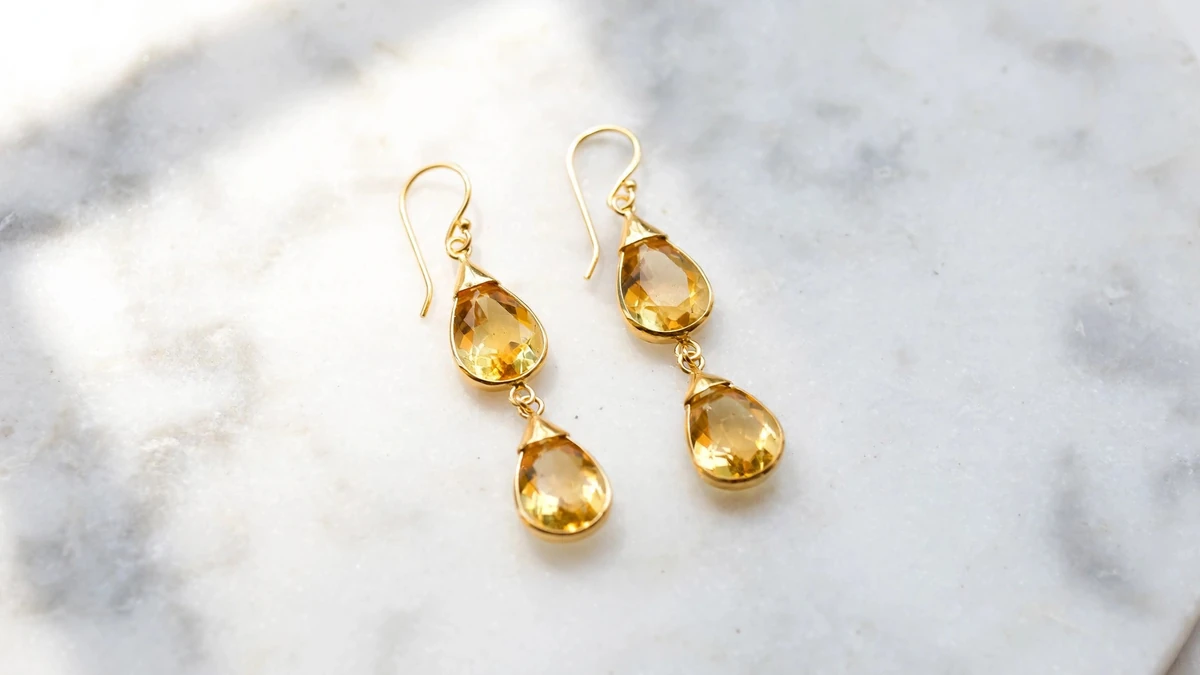

Citrine is the warmest stone in the jewellery box. Its honey and amber tones catch light the way a good golden hour does, and unlike many coloured gemstones it is hard enough, at 7 on the Mohs scale, to wear every day without worry. That combination is why citrine earrings have quietly become a favourite for people who want colour without the price, or the fuss, of a sapphire or an emerald. They suit warm skin tones beautifully, they work with gold in a way few stones do, and they look just as good in a simple stud as in a statement drop.
The problem is not finding citrine earrings. It is knowing what you are actually buying. Much of the citrine on the market is heat-treated amethyst, which is a legitimate and long-standing practice, but it changes the colour from pale yellow to a deeper burnt orange. Natural citrine is usually a softer, paler yellow. Neither is better in every case, but the difference matters for price, and for how the stone will look against your skin and your wardrobe.
Below are nine citrine earrings worth considering in 2027, at prices from under a hundred to several thousand. Each one is described by what it does well, what to watch for, and who it suits best.
Key takeaways
- Citrine is a quartz, hard enough for daily wear, and its warm yellow to amber tones suit gold settings and warm skin tones especially well.
- Most citrine sold today is heat-treated amethyst; the treatment is standard and stable, but it usually produces a deeper orange colour than natural citrine.
- Studs are the most versatile choice, while drops and chandeliers suit evening wear and special occasions.
- Check the setting as carefully as the stone: prongs should be secure, posts should be comfortable, and the backing should hold the earring flat against the ear.
- Citrine does not fade in normal daylight, but no gemstone is indestructible, and a stone with visible inclusions or a thin, shallow cut will look duller than its price suggests.
What citrine is and why it suits earrings
Citrine is a variety of quartz coloured by trace amounts of iron. It ranges from pale lemon yellow through honey gold to a deep, almost burnt orange. The pale stones are most often natural citrine. The deep orange stones are usually amethyst that has been heated, a treatment the trade has used for decades and that is permanent and stable. Both are genuine quartz, and both are durable, which is what matters in an everyday earring.
For earrings, citrine has two practical advantages. The first is hardness. At 7 on the Mohs scale it resists scratches far better than softer stones such as opal or pearl, so a citrine stud can be an everyday piece rather than an occasion piece. The second is colour. Warm yellow and amber tones sit naturally with yellow gold, and they bring warmth to the face in a way that cool blue or white stones do not. That is why citrine earrings are often recommended for people with warm undertones, though a pale lemon citrine can look striking on cool skin too, especially in white gold or platinum.
Cut matters more than most buyers expect. A well-cut citrine returns light from the centre of the stone, so it looks bright even in a small size. A shallow or poorly cut stone leaks light through the back and looks flat, no matter how good the colour is. In a stud, where the stone is small, a good cut is the difference between a pair that sparkles and a pair that looks like coloured glass.
How we chose these earrings and what to look for
Look first at the colour and the cut together. Hold the stone up to daylight, not shop lighting. A good citrine is evenly coloured, with no dark or washed-out patches, and it should sparkle when you move it. If the stone looks muddy or flat, the cut is the problem, and no setting will fix it. Our guide to the best diamond earrings uses the same test, because cut quality matters in every stone, not just in diamonds.
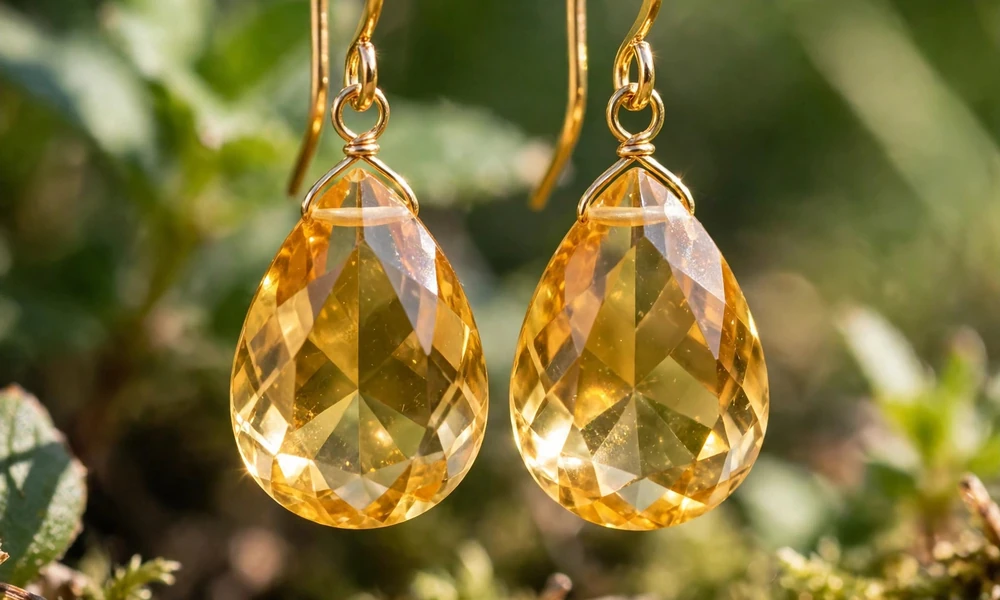
Look next at the setting and the fit. Prong settings show the most stone, but the prongs should be smooth and even, with no sharp edges that catch on hair or clothing. Bezel settings protect the stone better and suit active wearers, though they show slightly less of it. The post should be a comfortable length, and the backing should hold the earring upright rather than letting it droop forward, which is the most common complaint with heavier drop earrings.
Finally, consider the metal and the size. Yellow gold is the natural partner for citrine and warms the colour further. White gold and platinum give a cooler, more modern contrast. For everyday wear, a stud between 5 and 7 millimetres is usually the sweet spot: visible without being heavy. Drops can be larger, but check the weight. Anything over a few grams per earring will pull on the lobe by the end of a long day.
The 9 best citrine earrings of 2027
Tiffany & Co. Citrine Studs
What we like: A classic four-prong stud in 18k gold with a well-cut citrine, clean proportions, and the kind of finishing that makes a simple piece feel considered. What to consider: Premium price for the size, and the colour tends towards a pale honey rather than a deep amber. Stone: Citrine, round cut. Setting: 18k yellow gold, four-prong. Best for: Everyday wear and a first pair of fine citrine earrings. Price range: High.
This is the pair to choose if you want citrine earrings that will still look right in ten years. The design is deliberately quiet, so the stone and the gold do the work.
Cartier Citrine Earrings
What we like: Elegant, well-balanced proportions with a bright, even colour, set in a house style that is restrained rather than flashy. What to consider: High price, and the range is limited to a few styles, so choice is narrower than at other houses. Stone: Citrine, cushion or round cut. Setting: 18k gold. Best for: A luxury gift or a signature pair. Price range: High.
Cartier’s citrine pieces are for people who want the stone, not the statement. The quality of the cut is consistently good, which is where the money goes.
Bulgari Citrine Drop Earrings
What we like: A graceful drop with a warm, saturated colour, designed to move with the wearer and catch light from several angles. What to consider: Drops are heavier than studs, so they suit evenings better than all-day wear. Stone: Citrine, pear or oval cut. Setting: 18k gold. Best for: Evening wear and special occasions. Price range: High.
If you want citrine with presence, a drop is the way to do it. These are designed to be noticed, but the colour keeps them warm rather than loud.
Van Cleef & Arpels Citrine Earrings
What we like: Refined, jewellery-house craftsmanship with a soft, honeyed colour and a setting that frames the stone without overwhelming it. What to consider: Very high price, and the style is classic rather than modern. Stone: Citrine, round or oval cut. Setting: 18k gold. Best for: Collectors and milestone gifts. Price range: High.
These are the quietest luxury on this list, and the stone quality is consistently among the best available.
Harry Winston Citrine Stud Earrings
What we like: Exceptional stone selection, with a bright, clean colour and a cut that returns light well even in a smaller size. What to consider: The highest prices on this list, and the pieces are best bought in person so you can see the colour in daylight. Stone: Citrine, round brilliant cut. Setting: Platinum or 18k gold. Best for: A significant gift or a once-in-a-decade purchase. Price range: High.
Harry Winston’s strength is stone quality. If you want the brightest citrine you can find in a stud, this is where to look.
Monica Vinader Citrine Earrings
What we like: A modern, wearable design at a mid-range price, with a warm colour and a setting that works for everyday wear. What to consider: The stones are smaller than in fine-jewellery pieces, so the colour is subtler. Stone: Citrine, round or oval cut. Setting: 18k gold vermeil on sterling silver. Best for: Everyday colour and a first citrine purchase. Price range: Mid.
A sensible entry point into citrine. The design is current, the price is fair, and the pair is light enough to wear all day without thinking about it.
Mejuri Citrine Stud Earrings
What we like: A simple, well-made stud at an accessible price, with a clean colour and a comfortable post and backing. What to consider: The stone is modest in size, and the setting is minimal, so this is a quiet pair rather than a statement. Stone: Citrine, round cut. Setting: 14k gold. Best for: Daily wear and stacking with other earrings. Price range: Low to mid.
Mejuri’s studs are the kind of earring you put on in the morning and forget about, in the best sense. They add warmth to the face without demanding attention.
Brilliant Earth Citrine Earrings
What we like: A choice of cuts and settings, with responsibly sourced stones and a clear statement of where the citrine comes from. What to consider: Colour varies between stones, so ask to see the pair you will receive. Stone: Citrine, round, oval or cushion cut. Setting: 14k or 18k gold, recycled. Best for: Buyers who want provenance as well as beauty. Price range: Mid.
Brilliant Earth suits people who care about sourcing. The range of settings is wider than at most brands on this list, which makes it easier to find a shape that suits your face.
Missoma Citrine Earrings
What we like: A warm, golden colour in a contemporary design, light enough for all-day wear and priced for everyday buying. What to consider: Gold vermeil rather than solid gold, so the finish needs gentler care. Stone: Citrine, round or pear cut. Setting: 18k gold vermeil on sterling silver. Best for: Trend-led styling and gifting. Price range: Low to mid.
Missoma’s citrine earrings are a good way to try the colour before committing to a fine-jewellery price. They look more expensive than they are, which is a fair description of the brand’s appeal.
Which citrine earrings are right for you
Start with how you will wear them. If you want one pair for every day, choose a stud between 5 and 7 millimetres in yellow gold. It will go with almost everything, it will not pull on your ear, and it will not catch on scarves or collars. If you want a pair for evenings, a drop or a chandelier in a deeper amber citrine will give you more presence, and the movement will show off the stone far better than a static stud can.
Skin tone matters, but less than the colour of the stone itself. Pale lemon citrine suits cool undertones and looks fresh in white gold. Deep honey and burnt orange citrine suit warm undertones and look richest in yellow gold. If you are unsure, try a mid-honey colour in yellow gold. It is the most forgiving combination, and it is the one most people end up wearing most often. A diamond buying guide covers the same questions of cut, colour and setting in more depth, and the principles transfer directly to coloured stones.
Budget is a real guide here, because citrine is one of the few gemstones where a modest spend still buys a good stone. Under a hundred, look for a clean, well-cut stud from a reputable contemporary brand. In the mid-range, you can expect better gold, a larger stone, and a more considered setting. At fine-jewellery prices, you are paying for stone selection, cut quality, and the house’s finishing, which is worth it if the pair is meant to last decades.
The caveats that matter
Citrine is durable, but it is not a stone to buy blind. Heat treatment is standard and permanent, yet it should be disclosed, and a seller who will not say whether a stone is natural or heat-treated is a seller to avoid. Inclusions are normal in citrine, but a stone with a visible crack, a cloudy patch, or a colour that looks uneven in daylight will not improve with wear.
| Detail | What is known |
|---|---|
| Stone | Citrine, a quartz, 7 on the Mohs scale, hard enough for daily wear |
| Colour range | Pale lemon to deep amber; deep orange is usually heat-treated amethyst |
| Best setting | Prong for maximum light, bezel for protection, yellow gold for warmth |
| Best size for daily wear | Studs of 5 to 7 millimetres; drops can be larger but check the weight |
| Who should check the fit | Anyone with sensitive ears; check post length and backing security |
| What to avoid | Stones with visible cracks, cloudy patches, or uneven colour in daylight |
| Care | Warm soapy water and a soft brush; avoid ultrasonic cleaners for set stones |
| What it does not do | It does not hold value like a diamond, and vermeil finishes wear over time |
If you have sensitive ears, check the metal before you buy. Nickel in a post or backing is the usual cause of irritation, and a pair in solid gold or with a hypoallergenic post is worth the extra cost if your ears react easily. If you are buying a gift, keep the receipt and the certificate, because colour looks different in daylight than it does under shop lights, and a return policy matters more with coloured stones than with diamonds.
Checklist: choosing citrine earrings honestly
Use these checks before you buy, and again when the pair arrives.
- Check the colour in daylight: it should be even, with no dark or washed-out patches.
- Check the cut: the stone should sparkle when you move it, not look flat or glassy.
- Check the setting: prongs should be smooth and secure, with no sharp edges.
- Check the weight: drops should feel light on the ear, not pull on the lobe.
- Check the metal: solid gold for a lasting pair, vermeil if you are happy to replace it sooner.
- Ask about treatment: the seller should say whether the citrine is natural or heat-treated.
Frequently asked questions
Is citrine a real gemstone?
Yes. Citrine is a variety of quartz, coloured by iron, and it has been used in jewellery for centuries. Most citrine sold today is heat-treated amethyst, which is a standard, permanent treatment and still genuine quartz.
Can I wear citrine earrings every day?
Yes. At 7 on the Mohs scale, citrine is hard enough for daily wear. Choose a stud or a bezel setting for the most practical everyday pair, and take them off before swimming or using harsh cleaning products.
Does citrine fade in sunlight?
No, not in normal wear. Citrine is stable in daylight, unlike some stones that fade with prolonged sun exposure. Long-term storage in very strong heat is still best avoided, as it is for any fine jewellery.
Is citrine better in yellow gold or white gold?
Yellow gold is the classic pairing and warms the colour, which suits most citrine. White gold or platinum gives a cooler, more modern contrast and works well with pale lemon citrine. There is no wrong choice, only a matter of taste and skin tone.
How do I clean citrine earrings?
Warm water, a drop of mild soap, and a soft brush are enough. Rinse well and dry with a soft cloth. Avoid ultrasonic cleaners for set stones, and keep the earrings in a soft pouch so they do not scratch other jewellery.
Are citrine earrings a good gift?
Yes, especially for a November birthday, since citrine is the birthstone for November. A guide to citrine jewellery can help you match earrings with a necklace or a ring if you want a set.
The bottom line
The best citrine earrings in 2027 are not the most expensive. They are the pair with an even colour, a good cut, a secure setting, and a size you will actually wear. For everyday wear, a simple stud in yellow gold is hard to beat. For evenings, a drop in a deeper amber brings the stone to life.
Choose one pair, check it in daylight, and wear it for a week before deciding whether it is right. Citrine is a warm, forgiving stone, and a well-chosen pair will earn its place in your jewellery box far more often than a bolder, heavier piece ever will.