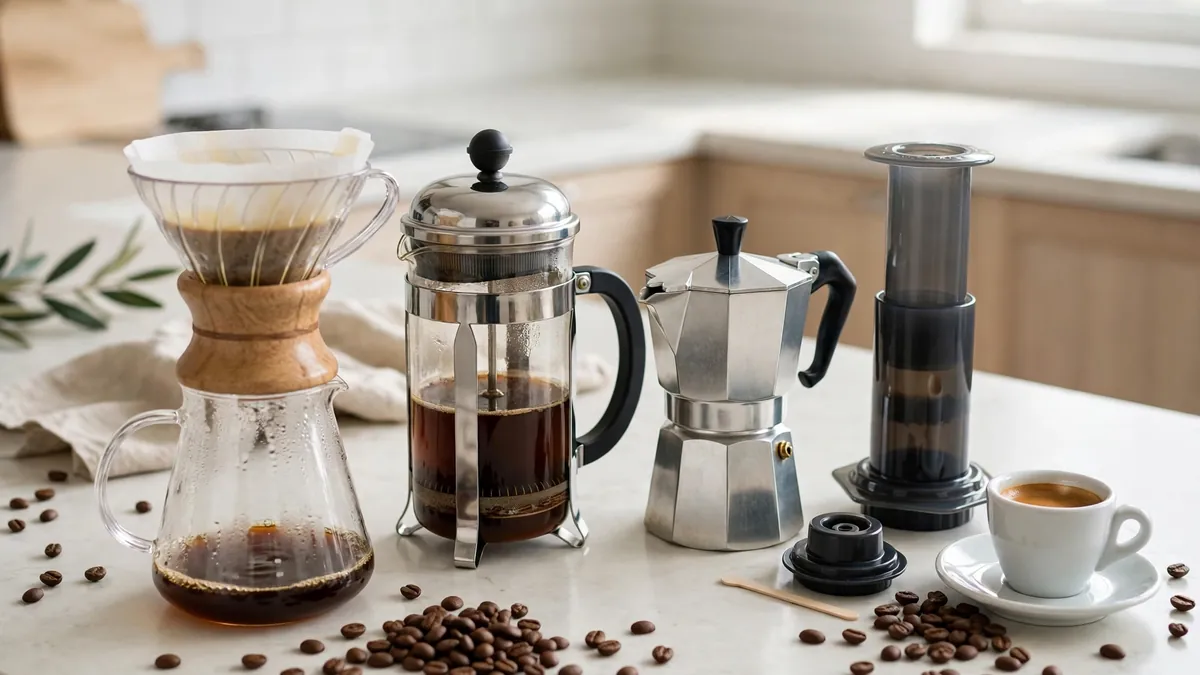
The best coffee brewing methods all start with the same two ingredients, yet they produce cups that taste nothing alike. The difference lies in how water meets the grounds, how long they stay together, and what filter stands between them and your cup.
So which method deserves a place on your counter? It depends on the cup you enjoy most and the time you are willing to spend. This guide walks through ten proven methods to help you match a brewer to your routine.
Key takeaways
- Pour over and Chemex give the cleanest, brightest cups; French press and Turkish coffee give the fullest.
- Espresso and the Moka pot make small, concentrated coffee for milk drinks, while cold brew is smooth over ice.
- Most guides suggest water just off the boil and a grind matched to brew time, then adjusting to taste.
- The best method is the one you will use every morning, not the one with the most impressive kit.
How to choose a coffee brewing method
Start with flavour. If you love bright, fruity notes and a clean finish, a paper-filtered method such as pour over will show them off best. If you prefer a heavy, full-bodied cup, try an immersion method such as French press.
Next, think about time and numbers. An AeroPress or a drip machine can have coffee ready in a few minutes. A drip machine or a large Chemex suits a household that drinks several mugs before work.
Finally, be honest about effort. Some methods ask you to weigh beans, time the pour and watch the water temperature. Others ask only that you press a button.
Both can make excellent coffee, and the method you use every day will always beat the one that gathers dust.
Grind size matters with every method here. Most guides suggest matching the grind to contact time: finer for short brews, coarser for long steeps.
The 10 Best Coffee Brewing Methods in 2027
These ten methods cover the full range of coffee styles, from bright and delicate to dark and intense.
1. Pour Over
Hot water is poured slowly over grounds in a paper filter, and the coffee drips into a carafe below. The paper catches oils and fine particles, so the cup comes out clean and bright, with fruity or floral notes easy to pick out.
Most guides suggest a medium-fine grind and a slow spiral pour, with brew times of around two to four minutes. Small changes to the pour change the flavour.
Best for: drinkers who love bright, aromatic coffee and a short morning ritual.
2. French Press
Coarse grounds steep in hot water for several minutes, then a metal mesh plunger presses them down. Nothing is filtered out except the grounds, so the oils stay in the cup.
The result tastes full, round and rich, with a heavier body than any paper-filtered method. Most guides suggest a coarse grind and a steep of around four minutes.
Best for: anyone who wants a rich, full-bodied cup with no technique to learn.
3. Espresso
Hot water is forced through a tightly packed puck of finely ground coffee under high pressure, producing a small, intense shot topped with golden crema. Most guides put the extraction at around half a minute.
The shot is strong and syrupy, and it is also the base for lattes, flat whites, cappuccinos and americanos. The equipment asks for more care, but the reward is a cafe-style cup.
Best for: milk-drink lovers and fans of a short, intense shot.
4. AeroPress
Grounds and hot water sit together briefly, then you press the coffee through a small paper filter. The whole process takes a couple of minutes, and most guides suggest a medium-fine grind.
The cup is clean yet full, sitting between pour over and French press. It is light, tough and easy to clean, which makes it a favourite for travel.
Best for: travellers, small kitchens and keen experimenters.
5. Cold Brew
Cold brew is coffee steeped in cold or room-temperature water for many hours; most guides suggest around twelve to eighteen. The long, gentle extraction produces a smooth, sweet cup.
It is usually served over ice, often diluted with water or milk. Most people brew a large batch and keep it in the fridge for several days.
Best for: iced-coffee lovers and anyone who prefers a smooth, low-bite cup.
6. Moka Pot
The Moka pot is a stovetop classic found in kitchens across Italy. Water in the lower chamber heats until steam pressure pushes it up through the grounds.
Most guides suggest a medium-fine grind and a gentle heat, taking the pot off as soon as the coffee starts to sputter. The result sits between filter coffee and espresso: concentrated enough for milk, yet made with no pump.
Best for: strong coffee on a budget and fans of Italian-style brewing.
7. Chemex
The Chemex is a pour over brewer with an hourglass flask and unusually thick paper filters. Those heavy filters hold back more oils and fines than standard paper, so the coffee comes out exceptionally clean.
Most guides suggest a medium to medium-coarse grind and around four to six minutes for a full pot. It makes several cups at once, which suits slow weekend mornings.
Best for: light-roast lovers and slow shared mornings.
8. Drip Machine
The automatic drip machine is the workhorse of home coffee. You add water and grounds, press a button, and the machine showers hot water over the bed. Most guides put a full pot at five to eight minutes.
The cup is clean and balanced, close in style to pour over but with none of the hands-on work. If you need several mugs before work, this is the method to beat.
Best for: busy households that want several good cups with minimal effort.
9. Siphon Brewer
The siphon, also called a vacuum pot, is the most theatrical method on this list. Heat pushes water into an upper chamber, where it steeps with the grounds. When the heat is removed, a vacuum draws the coffee back down through a cloth filter.
The cup is aromatic and clean, with a delicate, tea-like clarity. Most guides put the whole process at five to ten minutes, including heating.
Best for: enthusiasts who enjoy ritual and a delicate, aromatic cup.
10. Turkish Coffee
Turkish coffee is one of the oldest brewing methods still in daily use. Very finely ground coffee and water are heated together in a small pot called a cezve, just until the coffee foams. There is no filter, so the fine grounds settle in the cup.
The result is dense, intense and sweetly aromatic, served in small cups and sipped slowly. Most guides suggest watching the pot closely so it does not boil over.
Best for: anyone who loves intense, aromatic coffee and old ritual.
What Pour Over Tastes Like
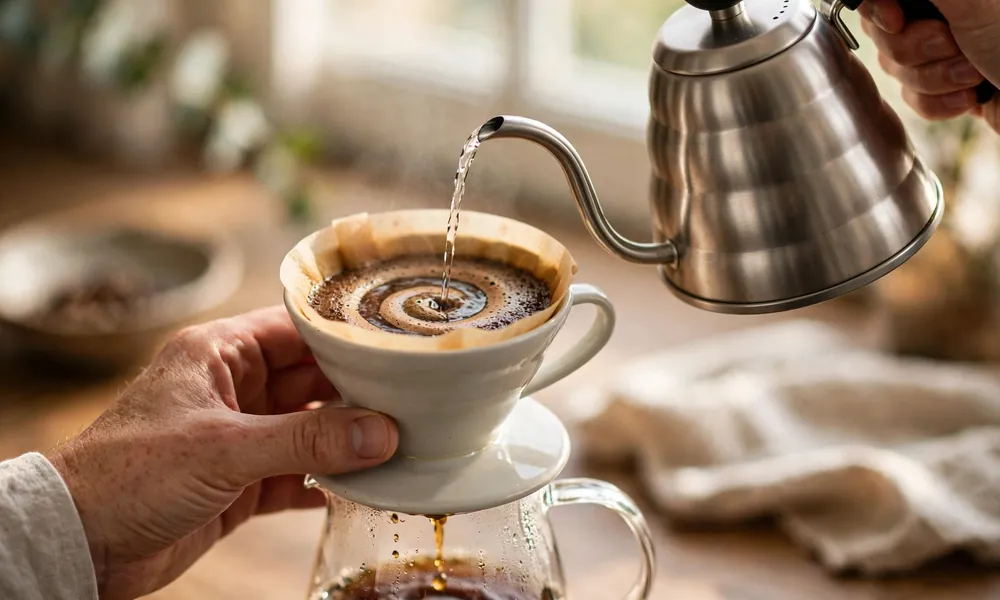
Pour over is the clearest window into a coffee’s character. The paper filter strips away oils and sediment, leaving a cup that feels light and bright. Fruity and floral notes step forward, and the finish is clean rather than lingering.
Technique matters, but it is easy to learn. A steady spiral pour, water just off the boil and a medium-fine grind will get you close on the first try. Pair it with a good cup from our guide to the best coffee mugs, and the ritual feels complete.
How do the best coffee brewing methods compare?
The table below sums up the ten methods at a glance. Use it to narrow the list, then let flavour decide.
| Method | How it works | Flavour | Hands-on time |
|---|---|---|---|
| Pour Over | Water poured through grounds in a paper filter | Clean, bright, aromatic | 2 to 4 minutes |
| French Press | Grounds steep, then mesh plunger presses down | Full, rich, heavy-bodied | About 4 minutes |
| Espresso | Hot water forced through fine grounds under pressure | Intense, syrupy, concentrated | About half a minute |
| AeroPress | Short steep, then hand pressure through paper | Clean yet full, flexible | 1 to 3 minutes |
| Cold Brew | Grounds steep in cold water for many hours | Smooth, sweet, mellow | 12 to 18 hours |
| Moka Pot | Steam pressure pushes hot water through grounds | Strong, dark, robust | 4 to 8 minutes |
| Chemex | Pour over through extra-thick paper filters | Very clean, light, delicate | 4 to 6 minutes |
| Drip Machine | Machine showers hot water over grounds | Clean, balanced | 5 to 8 minutes |
| Siphon Brewer | Vapour lifts water, vacuum draws coffee down | Aromatic, clean, tea-like | 5 to 10 minutes |
| Turkish Coffee | Very fine grounds heated with water in a pot | Dense, intense, aromatic | 2 to 3 minutes |
What to Check Before You Buy
Check the build before you buy. Glass brewers look lovely but chip easily, while steel and sturdy plastic survive daily use. A brewer you trust on a busy morning is worth more than a fragile showpiece.
Check the ongoing costs as well. Paper filters, replacement screens and descaling all add up over a year. A French press or a Moka pot asks for almost nothing beyond the beans.
Check how much counter space you really have. A drip machine and a siphon brewer both claim a permanent spot, while a dripper or an AeroPress tucks into a cupboard. If your kitchen is small, a compact brewer will get used far more often.
Finally, check that the beans match the method. Light roasts shine through paper filters, dark roasts suit immersion and pressure, and an all-rounder works everywhere. Our guide to the best coffee maker options can help if you want one machine to do the work, and our round-up of the best luxury coffee brands is a good place to start.
Coffee Brewing Method Checklist
- Decide the flavour you want first: bright and clean, or rich and full-bodied.
- Match the grind to the method, finer for short brews and coarser for long steeps.
- Use fresh beans and clean water, since both shape the cup.
- Start with the published times, then adjust one thing at a time.
- Keep the brewer clean, as old oils turn even good coffee bitter.
- Give a new method a week of mornings before judging it.
Frequently Asked Questions
Which coffee brewing method is best for beginners?
The French press and the drip machine are the easiest places to start. The French press needs only coarse grounds, hot water and four minutes, while a drip machine asks even less.
Which method makes the strongest coffee?
Espresso makes the most concentrated cup, with the Moka pot and Turkish coffee close behind. Strength here means concentration: a small shot holds a lot of coffee in very little water.
Is cold brew less acidic than hot coffee?
Cold brew usually tastes less sharp and less bitter than hot-brewed coffee, which is why many people call it smoother. The long, cool steep extracts fewer harsh-tasting compounds.
Do I need a special grinder for pour over?
You do not need a special grinder, but a consistent one helps a great deal. Uneven grounds extract at different rates, which can make a pour over taste sour and bitter.
Can I use the same beans for every method?
Yes, the same beans work across all ten methods, though each brings out a different side of them. The grind is what changes, not the bean.
The Bottom Line
The best coffee brewing methods in 2027 have stood the test of time: pour over for clarity, French press for body, espresso for intensity, cold brew for smoothness. None suits everyone.
Start with the cup you love, then choose the method that makes it with the least friction in your mornings. Buy good beans and keep your kit clean.