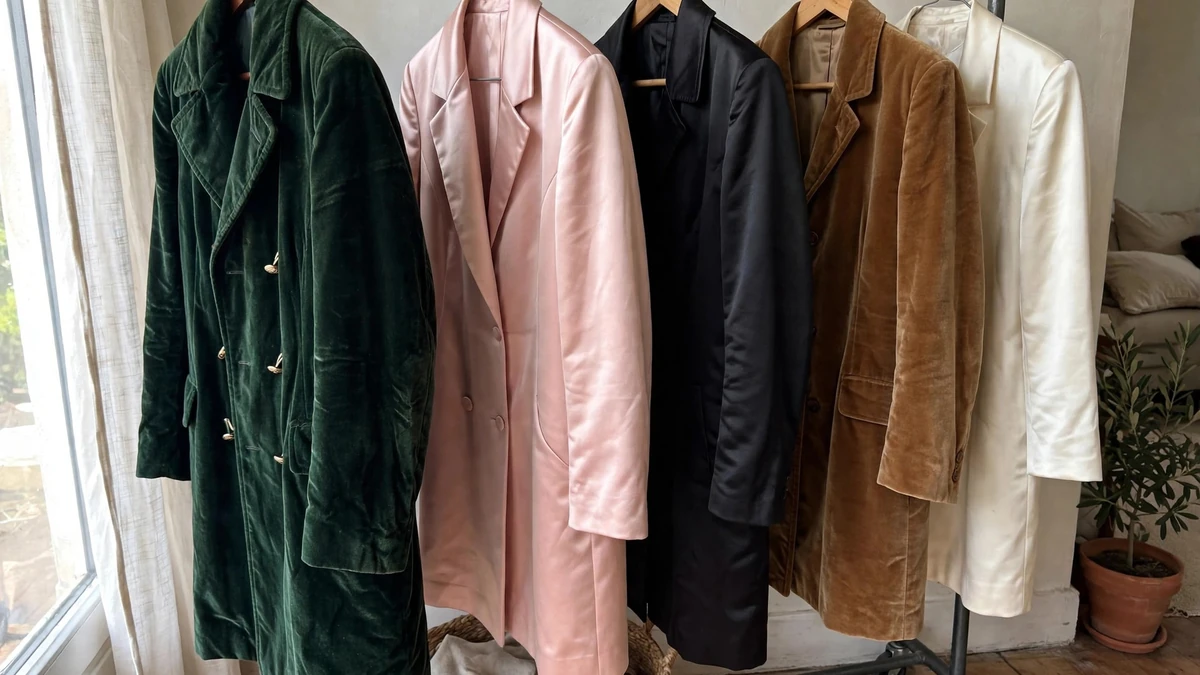

Velvet and satin coats both promise drama, but they deliver it in very different ways. A velvet coat feels soft and dense, catches light in soft patches, and reads as warm, rich and a little old-fashioned in the best sense. A satin coat is smooth, fluid and reflective, with a shine that moves as you walk, and it reads as sleek, polished and modern.
The confusion usually starts with the names. Velvet is a woven pile fabric, made by cutting loops of thread so the surface stands up in a soft, dense nap. Satin is not a fibre at all, but a weave, a way of floating threads across the surface so the cloth is smooth and glossy on one side.
Below are nine comparisons that matter in 2027, from warmth and durability to care, price and how each coat actually looks when you wear it. Each one is described by what it does well, what to watch for, and who it suits best, so you can choose the fabric that fits your winter, your budget and your wardrobe, rather than the one that photographs best.
Key takeaways
- Velvet is a pile fabric that absorbs light and holds structure; satin is a smooth weave that reflects light and drapes in fluid folds.
- Velvet is the warmer, more forgiving choice for cold evenings, while satin suits milder weather and dressier occasions.
- Satin shows water spots, creases and snags more readily than velvet, and it usually needs more careful handling.
- A well-made velvet coat is easier to care for at home, while most satin coats need dry cleaning and gentle storage.
- Neither fabric is a financial investment, and a cheap version of either will look tired far faster than a good wool coat would.
What velvet and satin coats actually are
A velvet coat is made from a fabric whose surface is a dense field of tiny cut fibres standing upright. That pile is what gives velvet its soft hand, its depth of colour, and its habit of looking lighter where the nap is brushed one way and darker where it is brushed the other. Traditional velvet was silk, but most velvet coats in 2027 are cotton velvet, wool velvet or a viscose blend.
A satin coat is made from satin weave, most often in silk, polyester or a viscose blend. The weave floats long threads across the face of the cloth, which is what creates the smooth, glossy surface and the fluid drape. A silk satin coat feels cool and light and moves like water. A polyester satin coat is cheaper, shinier and often stiffer, and it can look plasticky in bright light. The fibre matters as much as the weave, and a good satin coat is usually silk or a high-quality viscose, not the cheapest polyester.
Both fabrics are statement fabrics. Neither is a quiet, everyday neutral in the way a camel wool coat is. The question is not which fabric is better in general, but which one fits the weather, the occasion and the amount of care you are willing to give it.
How we chose these comparisons and what to look for
Look first at the fibre, not the shine. A cotton velvet coat will feel substantial and hold a tailored shape, which suits a structured, knee-length coat. A silk velvet coat is softer and more fluid, which suits a looser, wrap-style coat. For satin, a silk or viscose satin will drape and move, while a cheap polyester satin will stand away from the body and catch light in a hard, flat way.

Look next at the construction. A good velvet coat has a lining that lets it slide on easily, seams that sit flat despite the bulk of the pile, and a collar that does not crush when you sit down. A good satin coat has a lining too, because unlined satin clings, and it has seams finished so the slippery fabric does not fray.
Finally, think about when you will actually wear it. A velvet coat earns its place in cold weather, evening events and winter weddings. A satin coat earns its place in spring, at parties, and as a light layer over a dress. Our guide to velvet versus satin dresses makes the same point for dresses, because the fabrics behave the same way whatever the garment, and a coat is simply a bigger commitment to the same choice.
The 9 comparisons that matter in 2027
Warmth and insulation
What we like: Velvet is genuinely warm. The dense pile traps air, and a lined velvet coat is a proper winter coat, comfortable on a cold evening without a heavy layer underneath. What to consider: Satin is a thin, smooth fabric with almost no insulation on its own. A satin coat is a light layer, not a winter coat, and it needs a warm layer beneath it in cold weather. Best for: Velvet for cold evenings and winter events; satin for mild spring evenings. Fabric: Cotton or wool velvet; silk or viscose satin. Price range: Velvet coats from around £120 to £600; satin coats from around £90 to £500. Standout feature: Velvet’s pile traps warmth in a way satin simply cannot match.
Softness against the skin
What we like: Velvet feels soft and plush against the neck and wrists, and the pile gives it a gentle, cushioned hand. What to consider: Satin feels smooth and cool, which some people love, but it can feel slippery and cold against bare skin, and it clings when you are warm. Best for: Velvet for comfort and a soft feel; satin for a cool, smooth layer over a dress. Fabric: Silk velvet for the softest hand; silk satin for the coolest feel. Price range: Silk velvet from around £250; silk satin from around £200. Standout feature: Velvet’s pile is the softest surface of the two, while satin’s smoothness is its own kind of luxury.
Drape and movement
What we like: Satin drapes beautifully. It falls in clean, fluid folds, moves as you walk, and catches light in a way that makes a simple coat look deliberate. What to consider: Velvet is heavier and holds its shape, so it drapes less and can look stiff in a very long, unstructured coat. Best for: Satin for fluid, elegant movement; velvet for structured, architectural shapes. Fabric: Viscose satin for the best drape; cotton velvet for the best structure. Price range: Viscose satin coats from around £150; cotton velvet coats from around £140. Standout feature: Satin’s liquid drape is the single most glamorous quality in this comparison.
How each fabric handles light
What we like: Velvet absorbs light, which gives it depth and a rich, almost glowing colour, especially in dark green, burgundy and navy. What to consider: Satin reflects light, which can be stunning in soft evening light and harsh in bright daylight, where every crease and fold shows. Best for: Velvet for rich, deep colour in winter light; satin for a luminous, polished look in the evening. Fabric: Silk velvet for the deepest colour; silk satin for the most luminous shine. Price range: Silk velvet from around £250; silk satin from around £200. Standout feature: Velvet’s depth of colour is unmatched, while satin’s shine is its signature.
Durability and ageing
What we like: A good velvet coat ages well. The pile softens slightly and the colour stays deep, and a cotton velvet coat can last for years. What to consider: Satin is more delicate. It snags, it pulls, and the glossy surface shows wear quickly, especially at the cuffs and pockets. Best for: Velvet for a coat you will wear for years; satin for a special-occasion coat. Fabric: Cotton velvet for the longest life; silk satin for the most delicate finish. Price range: Cotton velvet from around £140; silk satin from around £200. Standout feature: Velvet’s pile hides small marks, while satin’s smooth surface shows them.
Care and cleaning
What we like: Cotton velvet can often be brushed clean, aired out, and spot-cleaned at home, and many velvet coats need only an occasional professional clean. What to consider: Satin almost always needs dry cleaning, and water spots, perfume and deodorant can mark the glossy surface permanently. Best for: Velvet for easier, cheaper care; satin for those happy to dry-clean after every few wears. Fabric: Cotton velvet for the simplest care; silk satin for the most demanding. Price range: Dry cleaning from around £15 a visit; a velvet brush costs a few pounds. Standout feature: A velvet brush and a good airing will keep a velvet coat fresh for a long time.
Water and weather resistance
What we like: Velvet handles a light drizzle reasonably well, and the pile sheds water for a while before it soaks through. What to consider: Satin shows water spots immediately, and rain can leave permanent marks on silk satin, while a heavy shower will soak a satin coat through in minutes. Best for: Velvet for changeable winter weather; satin for dry evenings only. Fabric: Wool velvet for the best weather resistance; silk satin for dry weather only. Price range: Wool velvet coats from around £200; silk satin coats from around £200. Standout feature: Velvet’s pile gives it a small but real advantage in damp weather.
Price and value
What we like: Both fabrics are available at a wide range of prices, and a good cotton velvet coat is often better value than a cheap silk satin coat, because it lasts longer and needs less care. What to consider: Cheap satin looks cheap. A low-priced polyester satin coat is shiny in the wrong way, and it will not age well, while a low-priced velvet coat can still look good if the pile is dense and even. Best for: Velvet for value at a lower price; satin only if you can afford a good silk or viscose. Fabric: Cotton velvet from around £120; good silk satin from around £200. Price range: Velvet £120 to £600; satin £90 to £500, with the best satin at the higher end. Standout feature: Velvet is more forgiving at a lower price, which makes it the better value for most people.
Versatility and styling
What we like: A velvet coat works with jeans, a knit and boots, or over a dress for the evening, and it suits a wide range of outfits without looking overdressed. What to consider: A satin coat is harder to dress down. It suits dresses and evening looks, but it can look out of place with casual clothes, and it needs the rest of the outfit to be polished. Best for: Velvet for everyday versatility; satin for evening and occasion dressing. Fabric: Cotton velvet in a dark neutral for the most versatile coat; satin in a soft neutral for evening. Price range: Dark velvet coats from around £140; neutral satin coats from around £150. Standout feature: Velvet’s ability to dress up or down is what makes it the more useful coat in a real wardrobe.
Which coat is right for you
Choose velvet if you want a warm, versatile winter coat that you will wear often, that handles cold weather and casual outfits, and that does not need constant dry cleaning. A dark green, burgundy or navy velvet coat in cotton or wool velvet is the most useful version, and it will work with jeans, knits and dresses alike.
Choose satin if you want a light, glamorous layer for evenings, parties and spring occasions, and you are happy to dry-clean it and to save it for dry weather. A silk or viscose satin coat in a soft neutral, champagne or pale grey is the most flattering version, and it will make a simple dress look finished in seconds.
If you are choosing between the two for a single purchase, velvet is the safer choice for most people, because it is warmer, tougher and more versatile. Satin is the better choice if you know exactly when you will wear it, and you love the way it moves. Our roundup of the best winter coats for women is a useful next step, because it shows how velvet and satin sit alongside wool and cashmere in a full winter wardrobe.
The caveats that matter
Velvet is not perfect. The pile can crush where you sit, and a velvet coat can show a shiny patch on the seat after a long dinner. Light-coloured velvet marks easily, and a pale velvet coat will show every splash of rain and every touch of makeup.
| Detail | What is known |
|---|---|
| Warmer fabric | Velvet, by a clear margin; the pile traps air and insulates |
| More fluid drape | Satin; it falls in clean, liquid folds and moves as you walk |
| Easier to care for | Velvet; brush and air it, with occasional professional cleaning |
| More durable | Velvet; the pile hides small marks and wears more slowly |
| Better in rain | Velvet, slightly; satin shows water spots immediately |
| More versatile | Velvet; it dresses up or down, while satin suits evenings best |
| Best value at a lower price | Velvet; cheap satin looks cheap, while dense velvet still looks good |
| What neither is | Neither is a financial investment, and neither replaces a good wool coat for everyday wear |
Satin has its own caveats. It snags on jewellery, rough skin and bag straps, and a single pull can run across the glossy surface. It creases when you sit, and the creases are more visible on satin than on almost any other fabric. It clings when you are warm, and it shows perspiration. The comparison with velvet versus satin scarves is worth reading too, because the same fabric behaviours show up on a smaller scale, and a scarf is a cheaper way to test which fabric you actually enjoy wearing.
Checklist: choosing between velvet and satin coats honestly
Use these checks before you buy, and again before you wear either coat out for the first time.
- Check the fibre: cotton or wool velvet for warmth and durability, silk or viscose satin for drape and a genuine sheen.
- Check the weather: velvet for cold and changeable days, satin for dry, mild evenings only.
- Check the care label: satin almost always needs dry cleaning, so budget for it before you buy.
- Check the lining: both fabrics need a lining to slide on well and to stop satin clinging.
- Check the finish: satin shows every uneven stitch, so inspect the seams, hem and buttons closely.
- Check how often you will wear it: velvet earns its place with regular wear, while satin is an occasion coat.
Frequently asked questions
Which is warmer, a velvet coat or a satin coat?
Velvet, by a clear margin. The dense pile traps air and insulates, and a lined velvet coat is a proper winter coat.
Can I wear a satin coat in winter?
You can, but only as a light layer over a knit, and only in dry weather. Satin shows water spots immediately, and it will not keep you warm on its own. A velvet coat is the better winter choice.
Does velvet crush easily?
It can, especially where you sit, and a velvet coat may show a shiny patch on the seat after a long evening. A cotton velvet coat recovers better than a silk velvet one, and hanging it up promptly helps.
Is a satin coat hard to care for?
Yes, more so than velvet. Most satin coats need dry cleaning, and water, perfume and deodorant can mark the glossy surface.
Which fabric looks more expensive?
Both can look expensive, in different ways. Velvet looks rich because its colour has depth, and satin looks expensive because it shines. Cheap satin looks cheap more quickly than cheap velvet does, because a thin, plasticky shine is hard to disguise.
Can I wear a velvet coat every day?
Yes, a dark velvet coat in cotton or wool velvet is versatile enough for everyday wear, with jeans, knits and boots, as well as over a dress.
The bottom line
Velvet and satin coats are both beautiful, but they are built for different jobs. Velvet is the warmer, tougher, more versatile coat, the one you will reach for on cold evenings, in changeable weather, and with a wide range of outfits. Satin is the lighter, more glamorous coat, the one that moves beautifully, shines in evening light, and turns a simple dress into an occasion.
Choose velvet if you want one statement coat for the whole winter. Choose satin if you already have a warm coat and want something purely for dressing up. Either way, buy the best fibre you can afford and be honest about how often you will actually wear it, because the best coat is the one that leaves the wardrobe.