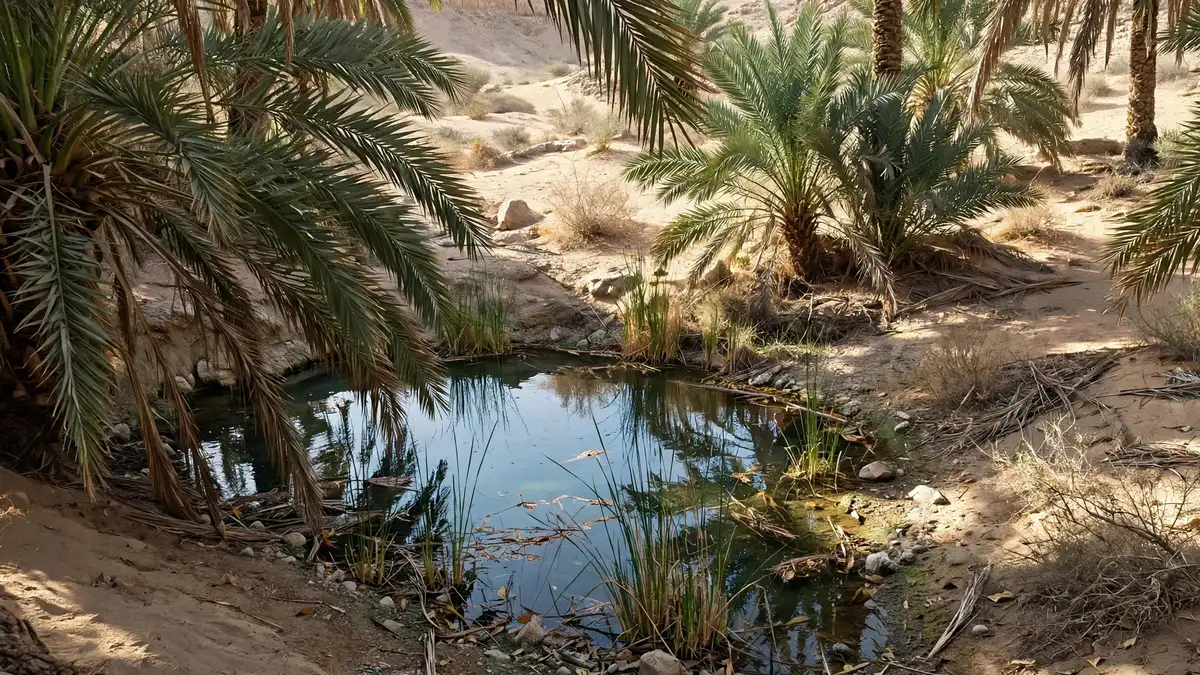

A date palm escape is not a normal holiday. It is a trip to an oasis, and oases have their own rules. They are hot by day and cool at night, they are far from airports, they live by the harvest, and they reward travellers who plan around the grove rather than against it.
The good news is that planning a date palm escape is mostly a matter of order. Pick the region first, then the season, then the stay. Sort the transport before you book the room, because the drive to an oasis is part of the trip, not an afterthought. And leave gaps in the day, because the best part of a grove is often the slow hour under the palms, with nothing planned at all.
This guide walks through the nine steps that matter, from choosing your oasis to packing for it, so you can plan a date palm escape that works in the heat, in the harvest, and in the quiet hours in between.
Key takeaways
- Pick the region first, because the oasis decides the season, the drive, the heat and the harvest, not the other way round.
- Time the trip with the harvest, roughly late summer to early autumn, or choose the cooler months for walking and comfort.
- Book the stay early, especially for the harvest weeks, and confirm the transfer time and the road before you pay.
- Set a total budget, not just a room price, because transfers, guides, tastings and farm visits add up quickly.
- No plan can guarantee a harvest, a particular date variety, or a full grove on a given date, because the crop depends on the weather.
What planning a date palm escape actually involves
Planning a date palm escape means planning around three things: the oasis, the season and the heat. The oasis decides how far you travel and how you get there. The season decides whether the dates are ripening, whether the grove is busy, and whether the walking is pleasant. The heat decides when you do things, and when you rest.
Most people plan a holiday around the hotel. For a date palm escape, plan around the grove. Find out which varieties grow in the oasis, when they ripen, and whether guests can walk through the grove. Then choose a stay that sits inside that landscape, rather than one that happens to have palms by the pool. The difference is the difference between a trip and a holiday.
The other thing to know is that oases are small places. They have few hotels, few guides and few vehicles, and the best weeks sell out early.
How to plan in the right order and what to check first
Start with the region, not the hotel. The region decides the flight, the drive, the heat and the harvest. Palm Springs is an easy weekend from the United States. Marrakech and Tozeur are easy from Europe. AlUla, Siwa and Liwa are longer journeys, and they need more time. Choose the distance you are happy with, and the rest of the plan follows.
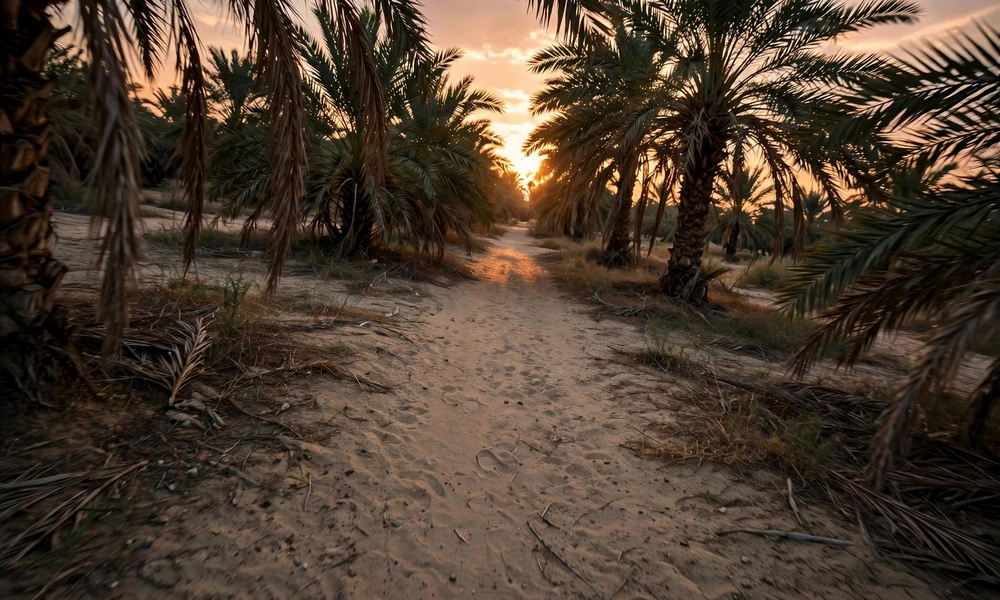
Then check the season. The harvest, from late summer into early autumn, is the most interesting time, but also the hottest. Spring and late autumn are cooler and quieter, and the groves are still green and beautiful. Winter is the most comfortable in the Arabian and North African oases, and the best time for long walks. Our guide on how to plan a desert escape covers the same seasonal thinking in more detail, because a palm grove trip is a desert trip with a green heart.
Finally, check the stay itself. Ask whether the grove is open to guests, whether the retreat runs its own transfers, and what is included in the price.
The 9 steps to planning a date palm escape
Pick your region first
What to do: Choose the oasis before the hotel, based on the flight, the drive, the heat and the harvest. Compare two or three regions on those four points, then pick one.
What to avoid: Do not pick a hotel first and then discover the oasis is a five-hour drive from the airport, or that the harvest is months away. Best for: Every traveller, because the region decides everything else. Time needed: An evening of research. Standout tip: Shortlist regions by flight time, then by harvest dates, and only then by hotel.
This is the step that saves the trip. A region you can reach easily, in the right season, with a grove you can walk through, is worth more than a famous hotel in the wrong place at the wrong time.
Time it with the fig harvest
What to do: Aim for the harvest, roughly late summer to early autumn, when the dates are ripening and the groves are busy, and ask the retreat for the expected harvest weeks.
What to avoid: Do not assume the harvest happens on the same dates every year. Weather shifts it, and a variety can ripen weeks apart. Best for: Travellers who want the grove at its liveliest. Time needed: A week of checking dates with the retreat. Standout tip: Book a few days either side of the expected harvest, so a shift in the crop does not miss you.
Decide between a working estate and a village inn
What to do: Choose a working grove stay if you want the harvest, the farm and the hands-on experience, or a village inn or resort if you want comfort, a pool and an easy base.
What to avoid: Do not book a working estate expecting resort service, or a resort expecting a farm tour. The two are different trips. Best for: Travellers who know whether they want the farm or the comfort first. Time needed: An hour of reading reviews and asking questions. Standout tip: Ask what a typical day looks like, and you will know which kind of stay it is.
There is no wrong choice here, only a wrong expectation. A working estate is a farm with guests. A resort is a hotel with a grove. Both are good, if you know which one you booked.
Book the stay early, and check the details
What to do: Book the room as soon as the region and the dates are set, especially for the harvest weeks, and confirm the room type, the view and the cancellation terms in writing.
What to avoid: Do not assume the room you saw online is the room you will get, or that the grove view is guaranteed. Ask, and get it in writing. Best for: Harvest-week travellers and anyone with fixed dates. Time needed: An hour to book and confirm. Standout tip: Book a room with shade and a view of the grove, not just a room in the hotel.
Sort transport before you arrive
What to do: Confirm the transfer from the airport, the time, the road and the vehicle, and book it through the retreat if you can, because they know the roads.
What to avoid: Do not leave the transfer to arrival day, and do not assume a hire car is a good idea on a rough oasis road. Best for: Everyone, because the drive is part of the trip. Time needed: Half an hour to confirm. Standout tip: Ask for the drive time in the heat, not just the distance, because a slow road in the sun feels much longer.
The drive to an oasis is often the most memorable part of the journey, and the most stressful if it is unplanned. Sort it early, and the arrival becomes a pleasure instead of a problem.
Set a total budget, not just a room price
What to do: Add up the room, the transfer, the guide, the tastings, the farm visits and the meals, and set a total for the trip, not just a nightly rate.
What to avoid: Do not budget for the room alone and then discover the transfer costs as much as a night, or that the guide is extra. Best for: Travellers who want no surprises. Time needed: An hour of adding up the extras. Standout tip: Ask the retreat for a full list of what is included, and what is not, before you book.
Book tastings and farm visits in advance
What to do: Book the date tasting, the grove walk and any farm visit before you travel, because guides and farms have limited places, especially in harvest season.
What to avoid: Do not assume you can walk into a working farm unannounced, or that a tasting is running every day. Ask, and book it. Best for: Harvest-season travellers and anyone who wants the farm. Time needed: Half an hour to book. Standout tip: Book the tasting for the morning, when the dates are fresh and the grove is cool.
The tasting is the moment the trip makes sense. Fresh dates, straight from the grove, taste nothing like the ones in a packet, and a good guide will show you why.
Pack for the grove, not the hotel
What to do: Pack light clothes, a hat, sunscreen, good walking shoes and a warm layer for cool desert nights, and a bag you can carry through a grove.
What to avoid: Do not pack for the hotel lobby. Heels, heavy bags and dark clothes are a mistake in a palm grove. Best for: Everyone, because the grove is where the trip happens. Time needed: An evening of packing. Standout tip: Pack a light scarf as well. It is shade, warmth and dust protection in one piece.
You will spend more time in the grove than in the hotel, so pack for the grove. Comfortable shoes and a hat matter more than a second outfit.
Leave gaps in the day on purpose
What to do: Plan one thing in the morning and one in the evening, and leave the middle of the day free for rest, shade and the pool.
What to avoid: Do not fill every hour. A packed day in the heat is miserable, and the grove is best enjoyed slowly. Best for: Travellers who want to actually enjoy the oasis. Time needed: No time, just restraint. Standout tip: Treat the long midday rest as part of the trip, not a waste of it. It is how the oasis works.
The best hour of a date palm escape is often the one with nothing planned. Sitting under the palms, with a book and a glass of mint tea, is not doing nothing. It is the trip.
What a date palm escape costs, in practice
The room is usually the biggest cost, and it varies widely. A boutique hotel in Palm Springs or a resort in Tozeur can be a few hundred dollars a night. A tented retreat in AlUla or a palace in Marrakech can be over a thousand.
The extras are the next cost. Transfers to a remote oasis can be a hundred dollars or more each way. A guide for a day can be a similar amount. Tastings and farm visits are usually modest, but they add up if you book several. Meals at the retreat are often good value, because the dates, the bread and the produce are local, but drinks and spa treatments are usually extra.
The cheapest way to do it well is to pick a region you can reach easily, stay in a smaller inn or a boutique hotel, and spend your money on the guide and the tastings rather than the room. Our guide on how to plan a fig grove escape makes the same point, because a grove trip is always cheaper when the grove is the plan, not the afterthought.
The caveats that matter
A date palm escape is a wonderful trip, but it is not a simple one. The heat is real, the oases are remote, and the harvest is seasonal. A plan that works in October can be punishing in July, and a grove that is full of fruit in September can be quiet in January.
| Detail | What is known |
|---|---|
| Best time to visit | Late summer to early autumn for the harvest; spring and late autumn for cooler walking |
| How far ahead to book | Three to six months for harvest weeks; less for the quieter months |
| Getting there | Oases are rarely near an airport; confirm transfer times and road conditions first |
| What to budget for | Room, transfer, guide, tastings, farm visits and meals, not just the nightly rate |
| Heat | Hot by day and cool at night; plan around shade and early starts |
| What to pack | Light clothes, a hat, sunscreen, walking shoes and a warm layer for the night |
| Who should take care | Anyone sensitive to heat should avoid midday walking and stay hydrated |
| What it does not do | No plan can guarantee a harvest, a particular variety, or a full grove on a given date |
Checklist: planning a date palm escape honestly
Use these checks before you book, and again before you travel.
- Check the region: confirm the flight, the drive, the heat and the harvest dates before you book anything.
- Check the stay: confirm the grove is open to guests, the room has shade, and the transfer is arranged.
- Check the budget: add up the room, the transfer, the guide, the tastings and the meals, not just the nightly rate.
- Check the bookings: reserve the tasting, the grove walk and any farm visit before you travel.
- Check the packing: light clothes, a hat, sunscreen, walking shoes and a warm layer for the night.
- Check the day plan: one thing in the morning, one in the evening, and a long rest in the middle.
Frequently asked questions
How far ahead should I book a date palm escape?
Three to six months ahead for the harvest weeks, when the best rooms and guides sell out. For the quieter months, a few weeks is usually enough, but the transfer and the tasting should still be booked in advance.
Can I plan a date palm escape on a budget?
Yes. Pick a region you can reach easily, stay in a smaller inn or boutique hotel, and spend on the guide and the tastings rather than the room. A forest escape planned the same way costs about the same, because the logic is the same: the place first, the room second.
Do I need a guide in a date palm grove?
Not always, but a guide makes the visit much better. A good guide can show you the varieties, explain the irrigation, and take you to the parts of the grove you would miss on your own. For a working farm, a guide is usually required.
What if the harvest is late or early?
It happens, because the harvest depends on the weather. Book a few days either side of the expected harvest, and ask the retreat what else is worth doing if the dates are not yet ripe. A good grove is worth visiting even outside the harvest.
Is a date palm escape good for a honeymoon?
Often yes, especially in Marrakech, AlUla or Liwa, where the retreats are private, the evenings are beautiful, and the grove gives the trip a sense of place.
Can I combine a date palm escape with another trip?
Yes, and it works well. Marrakech pairs with the Atlas Mountains or the coast. Palm Springs pairs with Joshua Tree or Los Angeles. AlUla pairs with the Red Sea. Add a few days either side, and the oasis becomes the quiet heart of a longer trip.
The bottom line
Planning a date palm escape is mostly a matter of order. Pick the region first, time it with the harvest or the cooler months, book the stay early, sort the transport, and leave gaps in the day. Do those things, and the oasis will do the rest.
Choose the grove, not just the hotel, and let the season set the pace. Walk the palms in the early morning, taste the dates where they grow, and rest in the shade at midday. That is how a date palm escape works, and why it stays with you long after you leave.