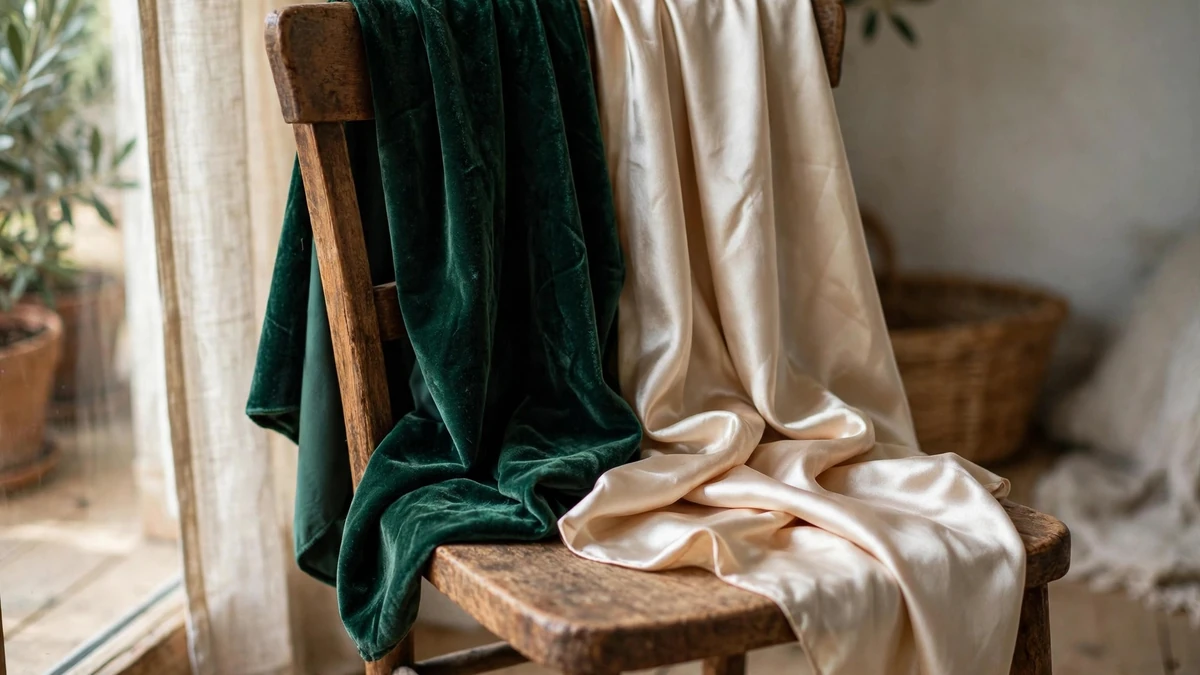

Velvet and satin scarves look like they belong in the same drawer. Both are smooth, both catch the light, and both turn a plain coat into an outfit. Wear them for a week, though, and the differences show up quickly. Velvet is warm, plush and quietly dramatic. Satin is cool, fluid and bright. One forgives a windy day and the other does not. One survives a crowded commute and the other snags on the first rough edge.
Choosing between them is less about which fabric is better in general and more about what you need the scarf to do. A velvet scarf is an evening and winter piece that adds weight, warmth and texture. A satin scarf is a lighter, more versatile piece that works across seasons, dresses up a simple neckline, and folds into almost nothing in a bag. Both can look expensive. Only one of them will look expensive on you, in your climate, with your coat, on an ordinary Tuesday.
Below are nine comparisons that matter in 2027, from warmth and drape to care, cost and how each fabric ages. Each one is judged honestly, so you can pick the scarf you will actually reach for, not the one that photographs best on a shelf.
Key takeaways
- Velvet is warmer, heavier and more dramatic; satin is cooler, lighter and more versatile across seasons.
- Satin drapes and slips beautifully but wrinkles, slips off the shoulder and snags more easily than velvet.
- Velvet hides creases and holds its shape, but it shows dust, crush marks and water spots if it is not stored well.
- Real silk satin and cotton or silk velvet last for years; cheap polyester versions of either fabric look tired within a season.
- Neither fabric is a financial investment, and a scarf that loses its shape, pills or pulls within months was a poor buy at any price.
What velvet and satin scarves actually are
Velvet is a pile fabric. Short, dense fibres stand upright from a woven base, which is what gives it that soft, almost liquid surface and the way its colour deepens and lightens as it moves. A velvet scarf can be made from silk, cotton, or a blend, and the fibre changes everything. Silk velvet is lighter and more fluid. Cotton velvet is sturdier and easier to care for. Most affordable velvet scarves are polyester, which looks convincing in a shop and flattens with wear.
Satin is not a fibre at all. It is a weave, a way of floating long threads across the surface so the fabric shines. A satin scarf can be silk, polyester, or a blend, and again the fibre decides the quality. Silk satin is cool to the touch, drapes in soft folds and has a depth of colour that synthetics struggle to copy. Polyester satin is shinier, stiffer and more likely to catch the light in a cheap, plasticky way.
The practical difference is simple. Velvet is a winter fabric that adds warmth and weight. Satin is a year-round fabric that adds shine and movement. Knowing which one you are actually holding, fibre and weave, matters more than the label on the tag.
How we chose these comparisons and what to look for
We judged each fabric on the things that decide whether a scarf gets worn or stays in a drawer: warmth, softness, drape, wrinkling, care, price, colour, ageing and versatility. A scarf that looks beautiful folded and disappoints on the neck is not a good scarf, whatever it cost.

Look first at the fibre content on the label, not the price. Silk satin and cotton velvet are the safest buys. A polyester scarf can be fine if it is well made, but check the edges, the weight and the way it falls. If it feels stiff, crackles when you fold it, or shines like plastic under shop lights, it will look worse in daylight. Our guide to wool versus cashmere scarves uses the same test, because fibre quality decides how any scarf behaves long before the brand name does.
Look next at the size and the finish. A scarf that is too narrow will not wrap properly. A scarf with raw, curling edges will fray. A good scarf, in either fabric, has finished edges, a sensible length for wrapping twice, and enough weight to sit still on the shoulders without constant adjusting.
The 9 comparisons that matter in 2027
Warmth and insulation
What we like: Velvet is genuinely warm. The pile traps air, so a velvet scarf feels like an extra layer around the neck, and it is the better choice for cold mornings, winter evenings and anyone who feels the cold. What to consider: That warmth is a drawback in spring or indoors, where velvet can feel heavy and over-warm. Best for: Winter and cold evenings. Fabric: Silk or cotton velvet. Price range: $40 to $250. Standout feature: Real insulation, not just the look of it.
Softness against skin
What we like: Both fabrics feel soft, but in different ways. Velvet is plush and cushioned, the kind of softness that feels comforting against the chin and neck. Satin is smooth and cool, gliding over skin without friction. What to consider: Cheap polyester velvet can feel scratchy once the pile flattens, and cheap satin can feel clammy against warm skin. Best for: Sensitive skin that dislikes scratchy wool. Fabric: Silk velvet or silk satin. Price range: $50 to $300. Standout feature: Two kinds of softness, neither of them itchy.
If your skin is reactive, silk in either form is the safer choice. Cotton velvet is a close second. Polyester versions of both fabrics are the ones most likely to irritate, especially when worn directly against the neck all day.
Drape and movement
What we like: Satin wins on drape. It falls in long, fluid folds, moves when you move, and knots into elegant shapes that hold their line. A satin scarf looks alive on the body. What to consider: That same fluidity means satin slips. It slides off the shoulder, loosens its knot, and needs tucking back into place more often than velvet. Best for: Evening looks and fluid, elegant styling. Fabric: Silk satin. Price range: $60 to $350. Standout feature: Movement that photographs beautifully.
Wrinkling and creasing
What we like: Velvet hides creases well. The pile disguises folds, so a velvet scarf can be folded in a bag and shaken out looking much the same as when it went in. What to consider: Velvet does crush. Press it under something heavy and the pile flattens into a visible mark that is hard to lift out. Best for: Travel and bags, where folding is unavoidable. Fabric: Cotton velvet. Price range: $40 to $200. Standout feature: Forgiving of folds, unforgiving of crushing.
Care and washing
What we like: Cotton velvet is the easiest of the four to care for. It can usually be hand-washed gently and air-dried, and it tolerates normal wear without special treatment. What to consider: Silk velvet and silk satin both need gentle hand-washing or dry cleaning, and satin in particular hates rough handling, hot water and harsh detergent. Best for: People who want low-maintenance accessories. Fabric: Cotton velvet. Price range: $35 to $180. Standout feature: The only genuinely easy-care option here.
Price and value
What we like: Both fabrics are available at every price, and a well-chosen mid-priced scarf is usually the best value. Silk satin starts higher than polyester satin, but it lasts longer and looks better for longer. What to consider: The cheapest versions of both fabrics are false economy. Polyester velvet flattens and polyester satin snags, and neither recovers. Best for: Buyers who want cost per wear, not the lowest ticket price. Fabric: Silk satin or cotton velvet. Price range: $40 to $300. Standout feature: Mid-price quality beats bargain fabric every time.
Colour and pattern
What we like: Velvet takes colour with a depth no other fabric matches. Deep greens, burgundies and navies look richer in velvet because the pile catches light and shadow at once. Satin takes colour brightly and evenly, which suits bold prints and jewel tones. What to consider: Velvet can look dusty in pale colours, and satin can look garish in very bright ones. Best for: Rich, dark colours in velvet; prints and jewel tones in satin. Fabric: Silk velvet or silk satin. Price range: $50 to $300. Standout feature: Colour depth in velvet, colour clarity in satin.
When choosing a colour, hold the scarf against your face in daylight, not under shop lights. Velvet changes colour as it moves, so turn it in your hands. Satin reflects light straight back, so check it from more than one angle.
Ageing and durability
What we like: A good velvet scarf ages gracefully if it is stored properly. The pile softens slightly and the colour stays rich. A good silk satin scarf can last for years with gentle care and still look new. What to consider: Velvet shows wear at the folds, where the pile crushes, and satin shows wear as snags, pulls and a dull, tired sheen. Best for: Long-term keepers, if you store them well. Fabric: Silk velvet or silk satin. Price range: $60 to $350. Standout feature: Both can last, but they age in different places.
Storage matters more than wear. Hang velvet scarves or roll them loosely, never fold them under weight. Roll satin scarves and keep them away from jewellery, zips and rough surfaces that snag.
Versatility and styling
What we like: Satin is the more versatile of the two. It works as a neck scarf, a hair scarf, a bag tie and a belt, across spring, summer and autumn, with casual and formal outfits alike. What to consider: Velvet is narrower in range. It suits winter, evening and formal looks, and it can look out of place with light summer clothes or very casual outfits. Best for: Everyday versatility in satin; winter and evening drama in velvet. Fabric: Silk satin for range, silk velvet for drama. Price range: $40 to $300. Standout feature: Satin does more jobs; velvet does one job beautifully.
If you can only buy one scarf this year, satin is the practical choice. If you already own versatile basics and want one piece with presence, velvet is the better buy.
Which scarf is right for you
Choose velvet if your winters are cold, your wardrobe leans dark and tailored, and you want a scarf that adds warmth and drama without effort. It pairs naturally with wool coats, leather jackets and evening dresses, and it suits people who dress up in winter rather than dressing down. A deep green or burgundy velvet scarf over a black coat is one of the simplest elegant looks there is.
Choose satin if you want a scarf you can wear most of the year, in more outfits, in more ways. It works with a blazer, a silk blouse, a simple dress or a linen shirt, and it travels well if you roll it properly. Our roundup of the best winter scarves for women shows how both fabrics sit alongside wool and cashmere, and it is worth reading before you decide, because the right scarf often depends on the coat it has to work with.
If you are torn, buy the fabric that matches your climate first. A warm climate makes velvet a two-month fabric. A cold climate makes satin a decorative extra rather than a daily essential. The scarf you wear is always the right one.
The caveats that matter
Neither fabric is hard to love, but both have honest limits. Velvet shows dust, pet hair and lint, and it marks easily if it gets wet. A velvet scarf caught in rain can dry with visible water spots, so it is not the best choice for a wet commute. Satin snags on rings, zips, rough bag clasps and even dry skin, and a single pull can run across the fabric.
| Detail | What is known |
|---|---|
| Warmth | Velvet is warm and insulating; satin offers almost no warmth |
| Best season | Velvet for winter and evening; satin for spring, summer and autumn |
| Drape | Satin flows and moves; velvet holds folds and stays put |
| Wrinkling | Velvet hides creases but crushes under weight; satin creases easily |
| Care | Cotton velvet is easiest; silk versions of both need gentle hand-washing or dry cleaning |
| Main weakness | Velvet shows dust and water spots; satin snags and pulls |
| Best fibre to buy | Silk or cotton in either fabric; avoid cheap polyester versions |
| What neither is | Neither is a financial investment, and neither replaces a warm wool or cashmere scarf in deep cold |
Allergy and sensitivity are rarely an issue with either fabric, but the fibre matters. Silk and cotton are usually well tolerated. Polyester can feel clammy and irritating on reactive skin, especially when worn all day. If you have sensitive skin, choose silk or cotton, and try the scarf against your neck in the shop before you buy. For more ideas on how silk behaves as a fabric, our guide to the best silk scarves for women covers the silk side of this comparison in more detail.
Checklist: choosing between velvet and satin
Use these checks before you buy, and again after a week of wearing.
- Check the fibre on the label: silk or cotton in either fabric beats polyester at the same price.
- Check the weight in your hands: velvet should feel plush, satin should feel cool and fluid, never stiff or plasticky.
- Check the edges: finished, even edges that do not curl or fray.
- Check the length: long enough to wrap twice around the neck with ends to spare.
- Check it against your coat: velvet with wool and leather, satin with lighter jackets and dresses.
- Check the care label honestly: if you will not hand-wash or dry-clean it, do not buy a silk version.
Frequently asked questions
Which is warmer, velvet or satin?
Velvet, by a clear margin. The pile traps air and insulates, while satin is a thin, smooth weave with almost no insulating power. For a cold day, velvet is the practical choice. For a mild day, satin is more comfortable.
Can I wear a velvet scarf in spring?
You can, but it is usually too warm. Velvet suits autumn and winter best. In spring, a light silk velvet in a pale colour can work on a cool evening, but for most spring days a satin or cotton scarf is more comfortable.
Does satin snag easily?
Yes, more easily than velvet. Rings, zips, bag clasps and rough surfaces can pull a thread, and a pull can run. Handle a satin scarf gently, keep it away from jewellery when you put it on, and store it rolled rather than folded under other things.
How do I remove crush marks from velvet?
Hold the scarf over steam, from a kettle or a steamer, and brush the pile gently with a soft clothes brush while it is warm. Do not press it with an iron, which will flatten the pile further. For stubborn marks, a professional clean is safer than home remedies.
Is silk satin worth the higher price?
Usually yes, if you will wear it often. Silk satin drapes better, feels cooler, holds colour more deeply and lasts longer than polyester satin. Polyester satin is fine for an occasional accessory, but for a scarf you wear weekly, silk is the better cost per wear.
Can I wear both fabrics together?
Yes, and it can look very good. A velvet coat or jacket with a satin scarf is a classic contrast of texture, and a satin dress with a velvet wrap works for evening. The trick is to let one fabric lead and the other support, rather than competing textures in the same colour.
The bottom line
Velvet and satin are not rivals so much as answers to different questions. Velvet is the answer when you want warmth, weight, drama and a fabric that holds its shape through a winter evening. Satin is the answer when you want lightness, movement, versatility and a scarf that works in more outfits across more of the year.
Choose by climate, by coat and by habit, not by which one looks richer on a shelf. Buy the best fibre you can afford, check the edges and the length, and be honest about the care you will actually do. The right scarf, in either fabric, is the one you reach for without thinking, season after season.