

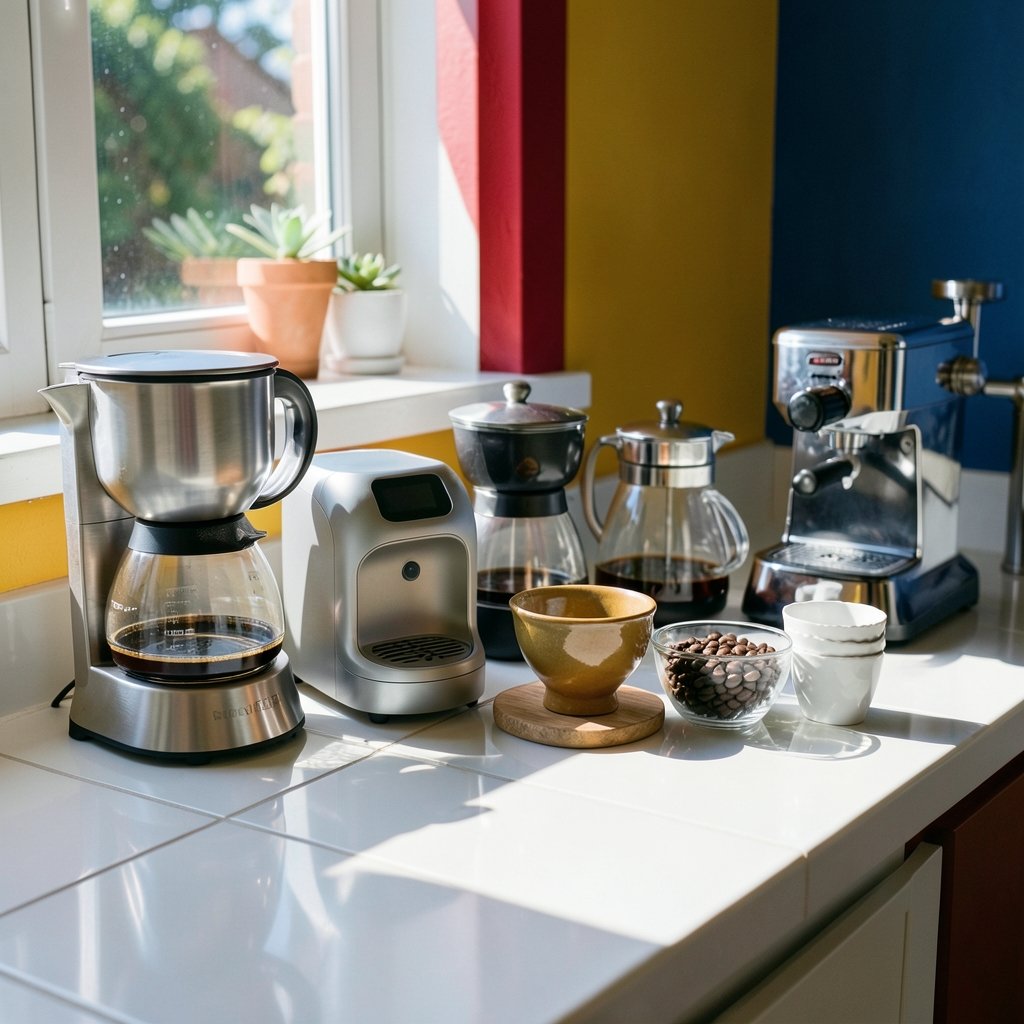
What if the biggest factor in your morning cup isn’t the beans, the roast date, or even your grinding technique, but the machine sitting on your counter? That question is worth asking before you spend money on any brewer this year. The market is crowded, the marketing is loud, and every box promises cafe-quality coffee. The truth is more practical: the best coffee maker for you depends on how you brew, how much you brew, and how much fuss you’re willing to tolerate at 6 a.m.
This guide skips the hype and focuses on what testing labs, brewing standards, and everyday users actually agree on. You’ll learn which machine types suit which drinkers, where cheap models cut corners, and which mistakes quietly ruin good coffee no matter what you buy.
The Brewing Standard That Separates Good Machines From Bad
Before comparing models, it helps to know the benchmark. The Specialty Coffee Association’s Golden Cup Standard sets clear targets for a proper brew: roughly 55 grams of coffee per liter of water, water between 92 and 96 degrees Celsius at the point it contacts the grounds, and a brew time of one to four minutes depending on the method.
That temperature range is the detail most budget machines get wrong. Plenty of inexpensive drip brewers historically struggled to reach the 92-degree floor, which leaves coffee sour and under-extracted. The SCA created a certified home brewer program specifically to test machines against the standard, and it remains the single most useful filter when shopping. A machine that carries that certification has been measured rather than only marketed.
One honest caveat: the 92 to 96 range is a benchmark, not a universal law. Some specialty roasters argue for different temperature profiles depending on the bean. But as a screening tool, it works. If a brewer can’t hit the floor, it can’t make consistently good coffee.
Match the Machine to the Drinker

The single most common buying mistake is choosing a machine by brand or price instead of by habit. A pod machine bought by someone who wants to brew a pot for four people is a bad fit. A $300 precision brewer bought by someone who drinks one rushed cup on the way out the door is also a bad fit. Here’s how the main categories shake out.
| Machine type | Best for | Strengths | Watch-outs |
|---|---|---|---|
| Drip with thermal carafe | Households brewing daily pots | Even extraction, no hotplate energy draw, keeps coffee hot for hours | Carafe cleaning takes effort; pre-heating helps |
| Drip with glass carafe and hotplate | Casual drinkers, small budgets | Cheap, simple, familiar | Hotplate scorches coffee after 20 to 30 minutes |
| Single-serve pod machine | Speed-focused, one-cup drinkers | Fast, consistent, minimal cleanup | Capsule waste; limited dose control |
| Pour-over setup | Hands-on hobbyists | Full control over ratio, temperature, and pour | Requires a good kettle and some patience |
| Espresso machine | Milk-drink and shot lovers | Concentrated shots, milk drinks | Steep learning curve; grinder matters enormously |
| French press | Low-tech, full-bodied coffee fans | Inexpensive, no paper filters, rich texture | Sediment in the cup; needs a coarse grind |
A useful rule of thumb: buy for the drink you make most often, not the drink you make on weekends. If 80 percent of your cups are plain black coffee, a certified drip brewer will outperform an espresso machine you never master.
Why the Grinder Quietly Decides Your Results
Here’s the uncomfortable truth many buyers learn too late: a great brewer paired with a bad grinder makes worse coffee than a decent brewer paired with a good grinder. Research on coffee particle size shows that extraction yield varies with the grind distribution. Uneven particles mean some grounds over-extract and turn bitter while others under-extract and stay sour, all in the same cup.
Burr grinders generally produce more uniform particles than blade grinders, which chop inconsistently. If your budget is fixed, many experienced brewers will tell you to spend more on the grinder and less on the machine. The same logic applies to coffee storage and preparation. If you’re curious how spent grounds can be reused rather than tossed, there’s a practical guide to coffee ground medium use spent grounds growing plants that covers the gardening side well.
Common grinder mistakes
- Grinding too fine for drip, which slows the brew and pushes extraction bitter.
- Grinding too coarse for pour-over, which leaves the cup thin and sour.
- Grinding the whole bag at the store, which sacrifices freshness within days.
- Never cleaning the burrs, which leaves stale oils in every subsequent cup.
Water: The Ingredient Nobody Thinks About
Coffee is roughly 98 percent water, yet most people never consider it. Water chemistry affects both taste and machine longevity. The SCA’s water-quality guidance recommends specific ranges for alkalinity, hardness, pH, and total dissolved solids to avoid scale buildup and off-flavors.
In practice, this means two things. First, very hard water will scale your machine’s heating element and shorten its life, especially in areas with mineral-heavy tap water. Second, heavily chlorinated water flattens flavor. A simple carbon filter pitcher solves most of this for a modest cost. If you already care enough to filter your water, you’re ahead of most buyers.
A practical tip
Descale on schedule, not when the machine starts complaining. The manual’s interval exists for a reason, and a $10 descaling solution protects a $200 machine. Also, run a water-only brew cycle after descaling to flush residue before your next pot.
Caffeine, Dose, and the Numbers That Surprise People
Caffeine per serving depends mainly on how much coffee you dose and how much you extract, not solely on the brew method. Espresso servings are small but concentrated, which is why a single shot can contain less caffeine than a large mug of drip coffee. USDA FoodData Central publishes average caffeine values for brewed coffee and espresso, and those figures are averages, not guarantees. Actual content shifts with dose, roast, and brew time.
That variability matters for anyone watching intake. If you’re trying to cut back, the easiest lever isn’t switching methods; it’s measuring your dose. A kitchen scale removes the guesswork that scoops introduce. And if you’re curious how much caffeine actually survives in a quick cup, the answer often surprises people: actually makes best instant coffee worth drinking digs into what’s really in the jar.
Energy, Waste, and the Cost of Convenience
Two hidden costs deserve attention. The first is energy. Drip machines with thermal carafes avoid the hotplate energy draw of glass-carafe models, and standby power varies widely across models. If a machine stays plugged in and warm all day, that adds up. Programs like ENERGY STAR publish standby and appliance data worth checking before purchase.
The second is waste. Studies and reviews have quantified the plastic and aluminum mass of single-serve capsules and documented the recyclability challenges. Pod machines are genuinely convenient, and convenience has real value. But if sustainability matters to you, a drip brewer with a reusable filter or a pour-over setup produces far less waste per cup. Neither choice is wrong; just make it consciously.
What Testing Labs and Real Users Disagree On
Consumer testing organizations like Which? and Consumer Reports publish category-specific results with test dates, and rankings change annually. The lesson: any “best of” claim is only as good as the test year behind it. A model that topped a 2022 list may have been discontinued or outpaced since. When you read a review, check the test date before you trust the verdict.
Real users add context labs can’t measure. They notice whether the carafe pours without dripping, whether the water reservoir is easy to fill under a low cabinet, and whether the display is readable at dawn. Those small frictions determine whether a machine gets used or collects dust. A brewer you actually enjoy operating will beat a higher-scoring one you dread cleaning.
Mistakes buyers make in practice
- Buying for the maximum number of features rather than the minimum you’ll use.
- Ignoring counter depth and cabinet clearance, then discovering the reservoir won’t fit.
- Skipping the descaling schedule until the machine dies early.
- Assuming a higher price guarantees better coffee; dose and grind matter more.
- Trusting a review without checking its publication date.
How to Choose in Five Practical Steps
- Name your default drink. Black drip, espresso, milk drinks, or cold brew. Everything follows from this.
- Set a realistic budget split. If the total is limited, favor the grinder and fresh beans over machine features.
- Check for certification. A brewer tested against the SCA standard removes guesswork about temperature and extraction.
- Measure your counter space. Include clearance for filling the reservoir and opening the lid.
- Read the cleaning manual first. If the maintenance routine sounds unbearable, pick a different machine.
That last step is underrated. The best coffee maker 2025 buyers can choose is the one that survives daily use for years, and daily use depends on how pleasant the upkeep is.
Beyond the Counter: Coffee and Everyday Life
Coffee culture bleeds into everything else, which is part of why the machine choice feels so personal. The same instinct that makes people fuss over brew ratios shows up in how they approach hobbies and purchases generally. Whether it’s the care that goes into blind woodworking blind makers cut measure build confidence or the attention behind a well-made product like the makers mark bourbon whisky makes red wax bottle different, craft and consistency tend to travel together. Coffee is no different. The ritual is the point.
Conclusion
The best coffee maker for 2025 isn’t a single model; it’s a match between a machine and a drinker. Start with the brewing standard: a machine that reaches the right temperature and extracts evenly will beat a fancier one that doesn’t. Spend on the grinder before the bells and whistles. Filter your water. Measure your dose. Descale on schedule. And check the date on every review you read, because rankings age fast.
Do those things, and the machine on your counter stops being a gadget and becomes the most reliable part of your morning. The beans, the water, and the grind do the heavy lifting. The brewer’s job is simply to stay out of their way.
FAQ
What is the best coffee maker for most households in 2025?
For most households, a drip brewer with a thermal carafe and SCA certification is the safest choice. It brews a full pot evenly, avoids the scorching that hotplates cause, and uses less energy than glass-carafe models that stay warm all day.
How much should I spend on a coffee maker?
A sensible approach is to split your total budget between the brewer and the grinder rather than spending everything on the machine. A mid-range certified brewer paired with a decent burr grinder generally outperforms a premium brewer paired with a blade grinder.
Do pod machines make worse coffee than drip machines?
Not necessarily worse, but different. Pod machines deliver speed and consistency with minimal cleanup, while drip brewers offer more control over dose and volume. The main trade-off is capsule waste and less flexibility with grind and ratio.
How often should I clean and descale my coffee maker?
Follow the manufacturer’s descaling interval, which typically depends on water hardness. Filtering your water and descaling on schedule prevents scale buildup that shortens machine life and dulls flavor. Daily rinsing of the carafe and reservoir is also worth the minute it takes.
Does water temperature really change how coffee tastes?
Yes. Water that’s too cool under-extracts the grounds and leaves coffee sour, while water that’s too hot can push extraction bitter. Brewing standards set a target range of roughly 92 to 96 degrees Celsius at the point of contact with the coffee.
Are expensive coffee makers worth it?
They can be, but only if the extras match how you brew. Precision temperature control, better build quality, and programmable settings add real value for daily users. For occasional drinkers, a simpler certified brewer plus fresh beans and a good grinder often delivers better results per dollar.














