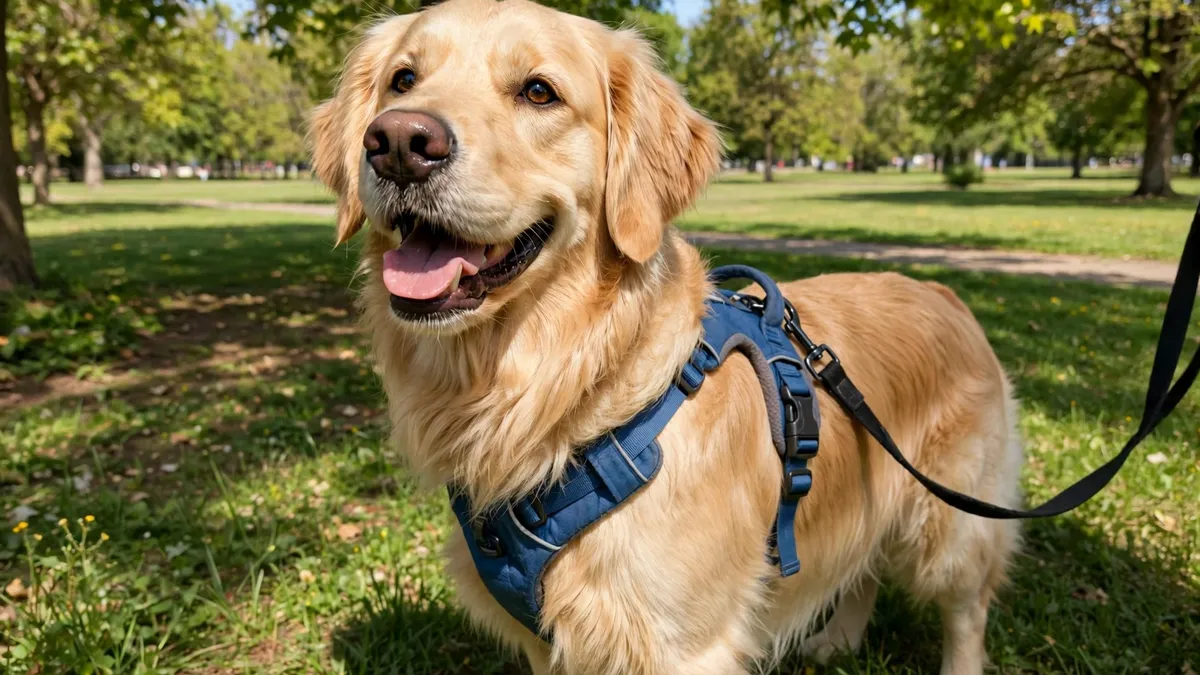

The best dog harness in 2027 fits your dog, spreads pressure across the chest and makes walks easier for you both. The best dog harnesses share the same strengths, whether they clip at the front, the back or both.
So which harness suits your dog? The answer depends on size, shape, coat and how your dog walks on a lead. This guide compares ten harness types, from simple step-in designs to escape-proof and car-safety styles, and our guide to the best dog breeds in 2027 shows how build and coat shape the choice.
Key takeaways
- Fit comes first: two fingers should slide snugly under every strap.
- Front-clip designs help with pulling; back-clip designs suit relaxed walkers.
- Padded straps protect the skin on long walks and strong dogs.
- Check the fit monthly, and replace a harness that frays or slips.
How to Choose the Best Dog Harness
Start with fit, not fashion. Measure around the chest just behind the front legs, and around the neck where the harness will sit. A loose harness can twist or slip, while a tight one can rub under the legs.
Think about how your dog walks too. A strong puller needs a front clip or a no-pull design, a calm walker is happy with a simple back clip, and a nervous dog may prefer a step-in style.
Finally, look at the straps, buckles and stitching. Wide straps spread pressure better than narrow ones, buckles should close with a clear click, and stitching should be tight and even. A harness is safety kit, so it is worth a close look.
The 10 Best Dog Harnesses in 2027
Step-In Harness
Best for: dogs that dislike anything passing over the head.
A step-in harness lies flat on the ground, the dog steps in with both front paws, and the straps lift up and clip over the back. Nothing passes over the ears, which suits nervous dogs and owners with stiff hands.
Look for adjustable straps on both sides, so you can fine-tune the fit. It suits calm walkers best, and it is a gentle first harness for a dog new to wearing one.
No-Pull Front-Clip Harness
Best for: strong dogs that pull hard on the lead.
A no-pull harness clips the lead at the front of the chest, so when the dog pulls, the body turns gently back towards you. Makers say this steering effect discourages pulling without pressing on the throat.
Fit it carefully, since a front clip that sits too low can rub the front legs. With patient training, it can turn a tug-of-war walk into a pleasant one.
Back-Clip Everyday Harness
Best for: relaxed walkers and everyday trips out.
A back-clip harness fastens the lead to a ring between the shoulder blades, which is the simplest setup of all. It keeps the lead clear of the legs and suits dogs that already walk nicely. Most owners start here.
Choose wide, smooth straps and a solid D-ring. It is the harness to reach for on ordinary days, and it pairs well with a comfortable collar for the ID tag, as our guide to the best dog collars in 2027 explains.
Padded Comfort Harness
Best for: dogs with sensitive skin or a tender chest.
A padded harness adds a soft layer, often neoprene or fleece, between the strap and the skin. Makers say the padding spreads pressure across the chest, which can help dogs that cough or strain when the lead tightens.
These harnesses suit older dogs, small breeds and any dog that has rubbed sore. A padded harness is a small comfort a dog wears on every walk, so the softness is worth having.
Escape-Proof Harness
Best for: dogs that back out of a standard harness.
An escape-proof harness adds a third strap that sits further back around the waist, behind the ribcage. When a dog tries to reverse out, the extra strap holds the harness in place. Makers describe it as the safest option for narrow-waisted dogs and for rescue dogs that are still learning to trust the lead.
Fit matters even more here, since the waist strap must sit snugly without pressing on the belly. Check the fit again after a few walks, once the straps have settled.
Car-Safety Harness
Best for: dogs that travel in the car.
A car-safety harness is built to restrain a dog in a vehicle, with wide straps and a strong attachment that connects to a seatbelt. Makers say it keeps the dog secure on the seat and stops it from distracting the driver. Some designs are tested for crash safety, so check what the maker claims before you buy.
Use it only in the car, and swap to an everyday harness for the walk at the other end. A dog that travels safely arrives calm and walks better.
Puppy Harness
Best for: growing puppies learning to walk on a lead.
A puppy harness is light, soft and easy to fasten, which matters when a young dog is still learning to accept kit. It adjusts across a wide range, so it can grow with a puppy for several months. Makers usually suggest checking the fit every week while the puppy grows.
Start with the smallest size that fits, and loosen the straps as the puppy fills out. Expect to replace it once or twice before adulthood.
Small-Dog Harness
Best for: toy and small breeds with delicate frames.
A small-dog harness uses lighter straps, smaller buckles and finer adjustment, so it does not weigh down a little dog. Makers say the proportions matter: a harness made for a large dog and shrunk down will still sit wrong on a small chest. A proper small-dog design fits the shape, not just the size.
Look for soft edges and a buckle that is easy to work with one hand. For a small dog, comfort matters more than strength.
Large-Dog Harness
Best for: big, strong breeds that need sturdy kit.
A large-dog harness is built with wider straps, heavier buckles and reinforced stitching to handle real pulling power. Makers describe the hardware as the key difference: a buckle that holds a terrier will not hold a large breed that lunges. A sturdy harness gives the owner control without pressing on the throat.
Check the stitching before you buy, and test the buckles at home first. For a large dog, a harness is working equipment, and it should feel solid.
Reflective and Waterproof Harness
Best for: dark, wet walks in autumn and winter.
A reflective harness carries strips or stitching that catch headlights and street lamps, making a dog visible from a distance. A waterproof version is made from coated webbing that sheds rain instead of soaking it up, and makers say it dries in minutes and resists smells. Many designs combine both features.
Choose reflective parts that wrap right around, so the dog shows up from every angle. For winter walks in rain and low light, it is hard to beat.
What a Good Harness Feels Like

A good harness feels like nothing at all to the dog wearing it. It sits flat, moves with the chest and never digs in when the lead tightens. You can tell at once when a harness is right, because the dog forgets it is there.
The test is simple: slide two fingers under each strap. They should fit snugly without forcing, and the harness should stay put without sliding towards the throat.
Watch your dog on the first few walks with a new harness. A comfortable dog walks, sniffs and plays as usual, while a bothered dog paws at the straps or holds its body stiffly. Trust what you see, and swap the harness if the dog keeps telling you something is wrong.
Dog Harnesses Compared
| Harness | Best for | Clip position | Key feature |
|---|---|---|---|
| Step-in harness | Nervous dogs | Back | No over-head fitting |
| No-pull front-clip harness | Strong pullers | Front | Steering effect |
| Back-clip everyday harness | Relaxed walkers | Back | Simple and quick |
| Padded comfort harness | Sensitive skin | Back or front | Soft, pressure-spreading padding |
| Escape-proof harness | Escape artists | Back | Third waist strap |
| Car-safety harness | Car travel | Back | Seatbelt attachment |
| Puppy harness | Growing puppies | Back | Wide size range |
| Small-dog harness | Toy and small breeds | Back | Light, fine adjustment |
| Large-dog harness | Big, strong breeds | Back or front | Heavy-duty hardware |
| Reflective and waterproof harness | Dark, wet walks | Back | Visible and quick-drying |
What to Check Before You Buy
Measure the chest and neck before you order, and check the maker’s size chart rather than guessing. Sizes vary between brands, so a medium in one range may be a large in another. A tape measure takes a minute and saves a return.
Look at the stitching and the hardware next. Stitching should be tight and even, the buckles should feel solid, and the D-rings should be welded shut. Cheap hardware is the most common reason a harness fails.
Finally, think about washing and wear. A harness that cannot be washed will soon smell, and one that fades in the sun will look tired within weeks. A quick rinse after muddy walks keeps it fresh.
Your Dog Harness Checklist
- Measure the chest and neck with a soft tape before ordering.
- Check that two fingers fit snugly under every strap.
- Look for smooth edges and even stitching.
- Choose buckles and D-rings that feel solid.
- Match the clip position to how your dog walks.
- Inspect the harness monthly and replace it when it frays.
Frequently Asked Questions
Which is the best dog harness for a dog that pulls?
A no-pull front-clip harness is usually the best starting point for a dog that pulls, since the front clip turns the body gently when the lead tightens. It works best alongside patient training, not instead of it.
Should a dog wear a harness or a collar?
Many owners use both: a harness for the lead on walks, and a collar to hold the ID tag. A harness spreads pressure across the chest, while a collar is lighter for wearing around the house. Our guide to the best dog collars in 2027 covers collars in detail.
How tight should a dog harness be?
A harness should be snug enough to stay in place, with room for two fingers between the strap and the body. If you can fit three fingers easily, it is too loose, and if you cannot fit two, it is too tight. Check the fit again after the first few walks.
Can my dog wear a harness all day?
Most dogs can wear a harness for a walk or a trip out, but it is kinder to take it off at home. A harness left on all day can rub, trap damp fur and irritate the skin.
How often should I replace a dog harness?
Replace a harness when the straps fray, the stitching loosens or a buckle stops clicking firmly. For most dogs that means a new harness every year or two, and sooner for puppies or strong chewers. A crate-trained dog rests safely at home between walks, and our guide to the best dog crates in 2027 explains how to set one up.
The Bottom Line
The best dog harness is the one that fits your dog, suits how it walks, and feels so comfortable that the dog forgets it is wearing it. Start with a simple back-clip or step-in design, then add a specialist style when your dog’s needs call for one. Choose carefully, check the fit often, and the right harness will serve you both for years.
Once the harness is sorted, think about the rest of the daily routine. A comfortable harness, regular walks and good food all work together, and small choices add up to a happier dog.