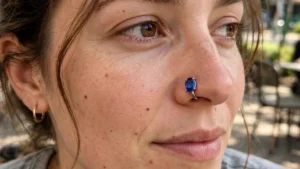
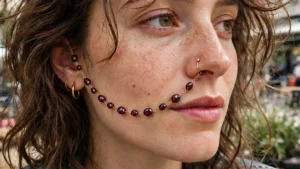
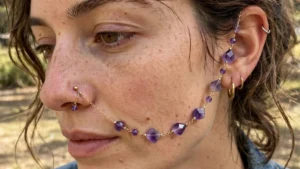
Amethyst Nose Hoops 2027: 9 Picks Worth Wearing
Amethyst nose hoops bring a deep purple to a small piece of jewellery, and that colour does a lot of work. Amethyst ranges from pale lilac to deep Siberian purple, and a hoop carries that colour right at the centre of the face in a way that feels rich rather than loud. It suits people who want a nose ring with character, but not a bright or flashy stone.
The hoop itself matters as much as the stone. A seamless ring sits flush and looks neat from every angle. A hinged hoop opens and closes with a click and is easier to change. A captive bead ring holds a small amethyst bead in the curve of the hoop, while a bezel-set hoop keeps the stone in a smooth metal cup. Each style changes how the amethyst catches the light, and each one suits a different piercing and a different daily routine.
Below are nine amethyst nose hoops worth considering in 2027, from a classic violet seamless hoop to a deep purple hoop with a diamond accent. Each one is described by what it is good at, what to watch for, and who it suits best.
Key takeaways
- Amethyst nose hoops range from pale lilac to deep purple, so the shade you choose changes the whole look.
- Seamless and hinged hoops sit neatest against the nostril, while captive bead and bezel-set hoops show the stone more clearly.
- Match the hoop diameter to your piercing: too small pulls, too large catches on clothing and hair.
- Choose implant-grade titanium or solid gold if your skin is sensitive, and check the gauge before you buy.
- Amethyst can fade in strong sunlight over time, and a hoop that spins freely will show the stone from the side as often as from the front.
What amethyst nose hoops actually are
An amethyst nose hoop is a thin ring worn through a nostril piercing, with an amethyst stone set into it or held by it. The hoop is usually made from titanium, solid gold, or gold-filled metal, and the stone is either a small faceted amethyst, a smooth cabochon, or a bead that sits in the curve of the ring. The gauge is most often 20 or 18, and the diameter usually falls between 6 and 10 millimetres.
Amethyst itself is a purple variety of quartz, with a hardness of 7 on the Mohs scale, which makes it hard enough for daily wear with reasonable care. Its colour comes from iron in the crystal, and the best stones are a deep, even purple with reddish flashes. Pale lilac amethyst is softer and more delicate, while deep Siberian-style amethyst is the most prized and the most expensive. Heat-treated amethyst can turn yellow or orange, so check the stone is genuinely purple before you buy.
What makes a hoop different from a stud or a pin is the way it moves. A hoop swings gently as you move, and that movement catches the light. It also means the stone is not always facing forward. If you want the amethyst visible all the time, a bezel-set hoop or a captive bead ring keeps the stone in a fixed position. If you like a softer, more relaxed look, a plain seamless hoop with a tiny amethyst bead is a good place to start.
How we chose these amethyst nose hoops and what to look for
Look first at the metal and the gauge. A hoop in implant-grade titanium is light, strong, and the safest choice for a healing or sensitive piercing. Solid gold in 14k is a good step up for everyday wear, because it does not tarnish and it suits most skin. Gold-filled hoops are a fair middle ground, but gold-plated hoops wear through with time. Check the gauge matches your piercing, because a 20-gauge hoop will feel loose in an 18-gauge piercing, and an 18-gauge hoop will not fit a 20-gauge hole without stretching it.

Look next at the colour and the setting. Amethyst varies more than most stones, so look at the actual stone rather than a stock photo. A deep, even purple with no pale patches is the sign of a good stone. A bezel setting wraps the amethyst in a smooth rim of metal, which protects the edges and feels comfortable against the skin. A prong setting shows more of the stone but can catch on fabric. Ask whether the stone is natural amethyst, because heat-treated stones can lose their purple. Our guide to diamond necklaces explains how to judge stone quality, because the same habits, even colour, a clean cut, and a secure setting, apply to a nose hoop as much as to a necklace.
Finally, look at the diameter and the closure. Measure the distance from your piercing to the edge of your nostril, and add a millimetre or two so the hoop does not pinch. A hoop that is too tight will press into the skin and irritate the piercing. A hinged closure is the easiest to open and close on your own, while a seamless hoop needs a gentle twist. If you change your jewellery often, a hinged hoop will save you time and frustration.
The 9 best amethyst nose hoops of 2027
The Classic Violet Amethyst Hoop
What we like: A medium violet amethyst in a slim seamless hoop, with an even purple that suits most skin tones. What to consider: The medium shade can look darker indoors than it does in daylight. Best for: Everyday wear and first-time hoop wearers. Material: Implant-grade titanium with a faceted violet amethyst. Price range: $25 to $45. Standout feature: A slim 20-gauge seamless hoop that sits flush against the nostril.
The Deep Purple Amethyst Hoop
What we like: A deep, saturated purple amethyst that holds its colour in any light, set in a polished hinged hoop. What to consider: The stronger colour draws more attention, so it suits confident wearers best. Best for: People who want their amethyst to be clearly visible. Material: 14k solid gold with a faceted deep purple amethyst. Price range: $120 to $180. Standout feature: A hinged closure that clicks open and shut without tools.
The Pale Lilac Amethyst Hoop
What we like: A soft pale lilac amethyst in a white gold hoop, delicate without being fragile-looking, with a gentle lavender colour. What to consider: The pale colour can look almost clear in flat indoor light. Best for: Fair skin and people who like a soft, understated look. Material: 14k white gold with a faceted pale lilac amethyst. Price range: $90 to $150. Standout feature: A soft lavender stone in a cool white gold hoop.
The Amethyst Bezel Hoop
What we like: A violet amethyst held in a smooth bezel cup, with no prongs to catch and a stone that always faces forward. What to consider: The bezel hides the edges of the stone, so it looks slightly smaller than a prong-set stone of the same size. Best for: Active lifestyles and people who want a secure, low-profile hoop. Material: 14k solid gold with a bezel-set violet amethyst. Price range: $100 to $160. Standout feature: A smooth bezel setting that keeps the stone fixed and protected.
The Rose Gold Amethyst Hoop
What we like: A medium violet amethyst in a rose gold hoop, with the warm metal softening the cool purple. What to consider: Rose gold suits warm skin best, and can look pink against very cool skin. Best for: Warm skin tones and people who wear rose gold jewellery. Material: 14k rose gold with a faceted violet amethyst. Price range: $110 to $170. Standout feature: A warm rose gold setting that softens the purple stone.
The Amethyst and Diamond Accent Hoop
What we like: A deep purple amethyst with a tiny diamond set beside it, adding a flash of white sparkle to the rich purple. What to consider: The most expensive hoop in this list, and the diamond adds a little weight. Best for: Special occasions and people who want one standout hoop. Material: 14k white gold with a deep purple amethyst and a small pavé diamond. Price range: $220 to $320. Standout feature: A small diamond accent that lifts the deep purple stone.
The Vintage-Style Amethyst Hoop
What we like: A small oval amethyst in a hoop with milgrain detail, giving an old-fashioned, handcrafted feel. What to consider: The decorative detail makes it slightly heavier than a plain hoop. Best for: Vintage lovers and people who like jewellery with character. Material: 14k yellow gold with an oval violet amethyst and milgrain edging. Price range: $150 to $220. Standout feature: Milgrain detail around the setting for a vintage finish.
The Oval Amethyst Hoop
What we like: An oval-cut amethyst in a slim gold hoop, with a longer stone that shows more colour than a round cut of the same weight. What to consider: The oval shape can spin in the setting if the hoop is loose. Best for: People who want a slightly different silhouette from the usual round stone. Material: 14k solid gold with an oval-cut violet amethyst. Price range: $110 to $170. Standout feature: An oval stone that shows more face-up colour than a round cut.
The Siberian-Style Amethyst Hoop
What we like: A deep Siberian-style amethyst with reddish flashes, the richest purple in this list, in a slim white gold hoop. What to consider: The deepest stones cost more, and the colour can look almost black in dim light. Best for: Evening wear and people who want the richest possible purple. Material: 14k white gold with a faceted deep Siberian-style amethyst. Price range: $160 to $240. Standout feature: A deep purple with red flashes, the most saturated amethyst here.
Which amethyst nose hoop is right for you
Start with your piercing. If it is fully healed and you change jewellery often, a hinged hoop is the easiest to live with, because it opens and closes with a click. If your piercing is newer or sensitive, a seamless hoop in implant-grade titanium is the gentlest option. If you want the stone visible all the time, choose a bezel-set hoop or a captive bead ring, because a free-spinning stone will turn away from the front more often than you expect.
Then think about shade and skin tone. Pale lilac amethyst suits fair skin and a soft, understated look. Medium violet suits almost everyone and is the safest all-round choice. Deep purple and Siberian-style amethyst suit people who want a clear statement of colour, and they look best against warm or olive skin. White gold settings cool the purple down, while yellow and rose gold warm it up. The best nose rings for women are a useful comparison here, because they show how the same amethyst shade looks across different styles and metals.
Finally, think about size. A 6-millimetre hoop hugs the nostril closely and looks neat, but it can feel tight if your piercing sits low. An 8-millimetre hoop is the most common choice, because it gives the stone room to show without hanging loose. A 10-millimetre hoop suits a larger nostril or a more relaxed look, but it is more likely to catch on clothing. If you are unsure, buy the middle size first and adjust from there.
The caveats that matter
Amethyst is hard enough for daily wear, but it is not unbreakable. A sharp knock against a hard surface can chip the edges of a faceted stone, and a bezel setting protects the stone better than prongs. Amethyst can also fade in strong sunlight, so store your hoop away from a sunny windowsill. Heat-treated amethyst can turn yellow or brown over time, so ask whether the stone is natural before you buy.
| Detail | What is known |
|---|---|
| Best shades for most people | Medium violet suits most skin tones; pale lilac is softest, deep purple makes the strongest statement |
| Best metal for sensitive skin | Implant-grade titanium or solid 14k gold; avoid gold-plated hoops for daily wear |
| Common gauge | 20 or 18 gauge; match the gauge to your piercing before buying |
| Common diameter | 6 to 10 millimetres; 8 millimetres is the most common choice |
| Most secure setting | Bezel-set, because the metal rim protects the stone and keeps it facing forward |
| Easiest closure to change | Hinged hoops, which open and close with a click and need no tools |
| What to avoid | A hoop that is too tight, gold plating that wears off, heat-treated stones, and long exposure to strong sunlight |
| What it does not do | An amethyst hoop does not suit a fresh piercing, and it will not stay perfectly still like a stud |
If your piercing is still healing, do not switch to a hoop yet. Hoops move more than studs, and that movement can slow healing and cause irritation bumps. Wait until the piercing is fully healed, usually at least six months, and change the jewellery with clean hands. If the piercing becomes red, sore, or swollen after a change, switch back to your original stud and give it time to settle.
Checklist: buying an amethyst nose hoop honestly
Use these checks before you buy, and again when the hoop arrives.
- Check the gauge and diameter: match your piercing gauge, and choose a diameter that sits close without pinching.
- Check the metal: implant-grade titanium or solid 14k gold for sensitive skin, not gold-plated.
- Check the stone: look for an even purple with no pale patches, and ask whether it is natural amethyst or heat-treated.
- Check the closure: hinged for easy changes, seamless for the neatest look, bezel-set if you want the stone fixed in place.
- Check the colour in daylight: amethyst looks different indoors and out, so look at it by a window before you decide.
- Check the fit after a day: if the hoop presses, spins constantly, or catches on clothing, the size or style is wrong.
Frequently asked questions
Is amethyst a good stone for a nose hoop?
Yes. Amethyst is hard enough for daily wear at 7 on the Mohs scale, it comes in a wide range of purples, and it is more affordable than sapphire or diamond. It is a good choice for a hoop you wear every day, as long as you protect it from knocks and strong sunlight.
What gauge should I choose for an amethyst nose hoop?
Most nostril piercings are 20 or 18 gauge, so match the hoop to your piercing. A 20-gauge hoop in an 18-gauge piercing will feel loose, and an 18-gauge hoop will not fit a 20-gauge hole without stretching it.
Can I wear an amethyst nose hoop while my piercing is healing?
No, not until it is fully healed. Hoops move more than studs, and that movement can irritate a healing piercing and slow it down. Wait at least six months, and change the jewellery with clean hands.
Does amethyst fade in sunlight?
It can, over time. Amethyst is sensitive to strong sunlight and heat, and prolonged exposure can lighten the colour. Store your hoop away from direct sun when you are not wearing it, and the colour should hold well for years.
How do I clean an amethyst nose hoop?
Warm water, a drop of mild soap, and a soft cloth are enough. Rinse well and dry it before you put it back in. Avoid ultrasonic cleaners and harsh chemicals. Our guide to amethyst nose rings covers the same cleaning routine, because the stone and the metal need the same care whatever the style.
Seamless or hinged: which amethyst hoop is better?
Seamless hoops look neater, because there is no visible hinge, but they are fiddlier to open and close. Hinged hoops are easier to change and just as secure once closed. If you change your jewellery often, choose hinged. If you leave one hoop in for months, seamless is fine.
The bottom line
The best amethyst nose hoop in 2027 is the one that fits your piercing, suits your skin tone, and stays comfortable all day. For most people, that means a medium violet amethyst in implant-grade titanium or solid gold, in an 8-millimetre hoop with a hinged or seamless closure. If you want the stone to stay visible, choose a bezel setting. If you want the richest colour, try a deep Siberian-style stone in white gold.
Choose one hoop, wear it for a few weeks, and judge it on how it feels at the end of the day, not just how it looks in the mirror. A hoop that fits well and suits your colouring is the one you will keep reaching for, and that is the honest test of whether it was the right choice.