Opal is the most changeable stone you can wear in a nose hoop. Turn your head and the flash moves with you, blue one moment, green or pink the next, and then gone again. That is why an opal nose hoop draws the eye in a way a plain gold hoop never quite does. It also needs more care than most stones: opal is soft, and a hoop worn every day is knocked and cleaned far more than a ring.
A well-made opal nose hoop is wearable every day, as long as you choose the right opal and the right setting. A solid white opal in a bezel is a different proposition from a thin doublet in open prongs, and a small seamless hoop suits a healed piercing very differently from a larger hinged hoop. The nine hoops below cover those differences, from a classic white opal to a dark opal, a pink opal, and a lab-created stone.
Each hoop is described by what it does well, what to watch for, and who it suits best. Read the caveats first: opal rewards gentle handling, and a hoop treated like a diamond will not last like one.
Key takeaways
- Opal nose hoops change colour as the light moves, which makes them eye-catching but harder to match to an outfit.
- Solid opal is soft, so a bezel or a protected setting lasts longer in a hoop worn every day.
- Hoop diameter matters: a small hoop sits close to the nostril, while a larger hoop swings and catches on clothing.
- Check the closure before you buy, because a seamless hoop, a hinged hoop, and a clicker all open and close differently.
- No opal hoop is indestructible, and a chipped, dried-out, or cloudy stone will not recover, so gentle care matters more than price.
What opal nose hoops actually are
A nose hoop is a thin ring that passes through a nostril piercing and closes in a circle, and an opal nose hoop carries an opal as its focal stone. The stone usually sits in a small mount on the front of the hoop, against the side of the nose, and catches the light when you move. Some hoops carry a single opal, others a small opal with tiny accent stones, and a few are a plain hoop with an opal bead threaded on it.
Opal is made of tiny silica spheres with water trapped between them, and that structure creates the play of colour. A white opal has a pale body with flashes of blue, green, and pink. A dark opal has a grey or black body that makes the colours look stronger. A fire opal is orange or red with little or no play of colour, and a pink opal is a soft, opaque pink with no flashing at all.
Most opal nose hoops are made in gold, either solid gold or gold over a sterling silver or titanium core. Gold suits opal well because it is warm, it does not tarnish quickly, and it holds a bezel securely. Titanium is the safer choice for a new or sensitive piercing, because it is light and rarely causes a reaction. Sterling silver is cheaper, but it tarnishes and can darken the skin around a fresh piercing.
How we chose these opal nose hoops and what to look for
We looked first at the type of opal, because that decides both the look and the durability. Solid white and dark opals are the most rewarding, but also the most delicate. Doublets, a thin slice of opal glued to a dark backing, show strong colour for less money, but the glue line can fail if the hoop is soaked or knocked. Lab-created opals look convincing and are tougher, a sensible everyday choice. Our guide to gold jewellery for everyday wear explains how to judge the metal around a stone, because a beautiful opal in a flimsy setting will not last.
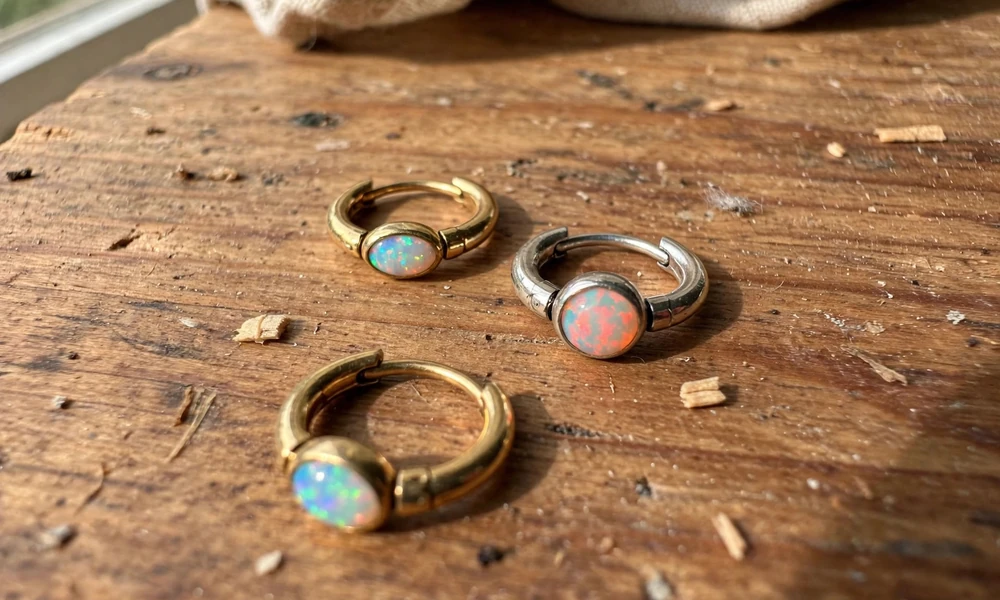
We looked next at the setting and the closure. A bezel, where the metal wraps around the edge of the stone, protects the opal far better than prongs, which leave the edges exposed. A hinged hoop clicks shut and is easy to open and close, which matters if you change your jewellery often. A seamless hoop has no visible break and looks cleaner, but it needs a small tool or a careful twist to open. A clicker, a hinged hoop with a small decorative front, is the easiest to handle.
Finally, we looked at size. A hoop of 8 millimetres sits close to the nostril and suits a small nose or a subtle look. A hoop of 10 millimetres is the most common choice, with a little swing without catching on everything. A hoop of 12 millimetres or more makes a statement, but it moves more and is more likely to snag on a scarf or a towel. Measure from your piercing to the edge of your nostril before you order, because a hoop that is too large will droop, and one that is too small will pull.
The 9 best opal nose hoops of 2027
The Classic White Opal Hoop
What we like: A solid white opal in a thin gold bezel, with a soft blue and green flash that suits almost every skin tone. What to consider: White opal is the softest of the solid opals, so it needs gentle handling. Best For: Everyday wear and a first opal hoop. Material: Solid white opal, 14k gold. Price Range: Mid-range. Standout Feature: The classic milky body with a lively play of colour.
This is the hoop to buy if you want the classic opal look.
The Dark Opal Hoop
What we like: A dark opal with a grey-black body that makes the blue and green flashes look much stronger. What to consider: Dark opal is usually more expensive, and a good stone is worth paying for. Best For: Evening wear and anyone who wants a bolder look. Material: Solid dark opal, 14k gold. Price Range: Higher. Standout Feature: The strong, vivid colour against the dark body.
Dark opal is the most dramatic stone here.
The Pink Opal Hoop
What we like: A soft, opaque pink opal with no flashing, which gives a calm, romantic look instead of a bright one. What to consider: Pink opal has no play of colour, so buy it for the colour, not the flash. Best For: A gentle, feminine look and pairing with rose gold. Material: Solid pink opal, rose gold. Price Range: Mid-range. Standout Feature: The soft, even pink that never looks harsh.
Pink opal is the quietest stone here, and that is its charm.
The Fire Opal Hoop
What we like: A warm orange fire opal that glows rather than flashes, with a colour that suits warm skin tones. What to consider: Fire opal is softer than most stones and can look cloudy if it dries out. Best For: Warm skin tones and summer outfits. Material: Solid fire opal, yellow gold. Price Range: Mid-range. Standout Feature: The warm, glowing orange that no other opal has.
Fire opal has little play of colour, but its warm orange body looks lit from inside.
The Lab-Created Opal Hoop
What we like: A lab-created opal with a strong, even flash, made to be tougher than a natural stone, at a lower price. What to consider: It is not a natural stone, so it will not hold the same value, and the colour can look a little too even. Best For: Everyday wear, active lifestyles, and a first opal hoop. Material: Lab-created opal, 14k gold. Price Range: Lower to mid-range. Standout Feature: A bright, reliable flash without the worry of a natural stone.
If you want the opal look without worrying about every knock, this is the sensible buy.
The Opal and Diamond Accent Hoop
What we like: A small opal with two tiny diamonds on either side, which add sparkle and make the opal look brighter. What to consider: The diamonds add cost and need the same gentle cleaning as the opal. Best For: Special occasions and anyone who wants a little extra sparkle. Material: Solid white opal, lab-created diamonds, 14k gold. Price Range: Higher. Standout Feature: The diamond accents that frame the opal and catch the light.
Choose this one for a wedding, a party, or any occasion when you want to be noticed.
The Bezel-Set Opal Hoop
What we like: A thick bezel that wraps fully around the opal, protecting it from every side, in a clean, modern design. What to consider: The bezel hides the edge of the stone, so the opal looks slightly smaller. Best For: Anyone who is rough on jewellery or wears a hoop every day. Material: Solid white opal, 14k gold bezel. Price Range: Mid-range. Standout Feature: The full protective bezel that keeps the stone safe.
A bezel is the single best thing you can do for an opal in a nose hoop.
The Tiny Opal Hoop
What we like: A very small hoop with a tiny opal, just 2 millimetres across, that reads as a glint of colour rather than a statement. What to consider: The stone is small, so the play of colour is subtle and easy to miss in dim light. Best For: Minimalist styling and a second piercing. Material: Solid white opal, 14k gold. Price Range: Lower. Standout Feature: The delicate size that suits a quiet, understated look.
This one is for people who want a hint of opal, and it suits a second nostril piercing.
The Vintage-Inspired Opal Hoop
What we like: An opal set in a milgrain-edged mount with a slightly antique finish, which gives the hoop a warm, old-fashioned feel. What to consider: The vintage detailing can trap dirt, so it needs a soft brush to clean. Best For: Vintage styling and pairing with other antique-looking jewellery. Material: Solid white opal, 14k gold with milgrain detail. Price Range: Mid-range. Standout Feature: The milgrain edge that makes the hoop look like a family piece.
This hoop looks like something passed down rather than bought new.
Which opal nose hoop is right for you
Start with your piercing. If it is fully healed and you change your jewellery often, a hinged hoop or a clicker is easiest, because you can open and close it without a tool. If your piercing is new or sensitive, choose titanium and leave the hoop in place for weeks, because every change irritates a healing piercing. The best nose hoops for women include several titanium options; the metal matters as much as the stone.
Next, think about how you wear jewellery. If you wear one piece every day, a solid white or dark opal in a bezel is the best investment, because it will look good for years with gentle care. If you like to swap hoops to match an outfit, a lab-created opal is cheaper to collect in several colours. If you want a hoop for special occasions, the opal and diamond accent hoop will be noticed.
Finally, match the stone to your skin. White opal suits almost everyone. Dark opal suits deeper skin tones and dark hair. Pink opal suits fair skin and rose gold. Fire opal suits warm, golden skin. If you are unsure, hold the hoop against your face in daylight before you buy, because a shop photo can mislead you.
The caveats that matter
Opal is a soft stone, and that is the honest centre of this guide. On the Mohs scale it sits at 5.5 to 6.5, while a diamond sits at 10 and a sapphire at 9. That means an opal nose hoop will scratch, chip, and cloud if it is treated like a harder stone. Never clean it with an ultrasonic cleaner, scrub it with a hard brush, or leave it in a drawer with harder jewellery.
| Detail | What is known |
|---|---|
| Hardness | 5.5 to 6.5 on the Mohs scale, softer than diamond, sapphire, and ruby |
| Water content | Opal holds 3 to 21 percent water, and a stone that dries out can crack or turn cloudy |
| Best setting | A bezel protects the stone far better than prongs |
| Best metal for healing | Titanium is safest for a new or sensitive piercing |
| Common hoop size | 10 millimetres is most common; 8 is subtle, 12 is a statement |
| Cleaning | Warm water and a soft cloth only; no ultrasonic cleaner or harsh chemicals |
| What to avoid | Soaking, chlorinated water, and storing opal with harder jewellery |
| What it does not do | A chipped or dried-out stone will not recover |
Opal also holds water, between 3 and 21 percent of its weight, and a stone that dries out can crack or go cloudy. Do not soak it, leave it in a hot, dry place, or wear it in a chlorinated pool or a hot tub. A quick rinse in warm water and a wipe with a soft cloth is enough.
Checklist: buying an opal nose hoop honestly
Use these checks before you buy, and again when the hoop arrives.
- Check the type of opal: solid, doublet, or lab-created, and ask the seller to confirm it.
- Check the setting: a bezel protects the stone far better than prongs.
- Check the metal: titanium for a new or sensitive piercing, solid gold for a healed one.
- Check the size: measure from your piercing to the edge of your nostril; 10 millimetres is the most common fit.
- Check the closure: a hinged hoop or clicker is easiest to open and close.
- Check the return policy: buy from a seller who accepts returns, because opal looks different in daylight.
Frequently asked questions
Can I wear an opal nose hoop every day?
Yes, if it is a solid or lab-created opal in a bezel setting, and you treat it gently. Avoid knocking it, do not wear it swimming, and clean it with warm water and a soft cloth.
Is opal safe for a new piercing?
Opal itself is not the problem; the metal is. A new piercing should be fitted with implant-grade titanium, and the stone should be set securely. Wait until it is fully healed before switching to gold.
Why does my opal look dull sometimes?
Opal changes with the light, so a stone that flashes brightly in sunlight can look milky indoors. Dirt and skin oils also dull the surface, so a gentle wipe with a soft, damp cloth usually restores the colour.
Can I clean an opal nose hoop with soap?
A little mild soap and warm water is fine, as long as you rinse it well and dry it with a soft cloth. Do not use an ultrasonic cleaner or any harsh chemical.
What is the difference between a doublet and a solid opal?
A solid opal is one piece of stone all the way through. A doublet is a thin slice of opal glued to a dark backing, which makes the colour look stronger for less money, but the glue can fail if it is soaked or knocked.
Does opal go with other jewellery?
Yes, because white opal is neutral enough to sit next to gold, silver, and diamonds. A pink opal pairs well with rose gold, and a dark opal looks striking next to black onyx. Our guide to opal nose rings shows how the same stone works in a different style.
The bottom line
The best opal nose hoop in 2027 is the one that matches your piercing, your lifestyle, and your patience for gentle care. For most people, that is a solid white opal in a gold bezel, in a 10-millimetre hoop, because it is versatile, protected, and shows the play of colour that makes opal special. If you want something bolder, a dark opal is the most dramatic choice, and a lab-created opal is the sensible one.
Buy the stone you love, check the setting and the closure before you order, and clean it gently with warm water and a soft cloth, and store it away from harder jewellery. Do that, and an opal nose hoop will reward you every time the light catches it.