

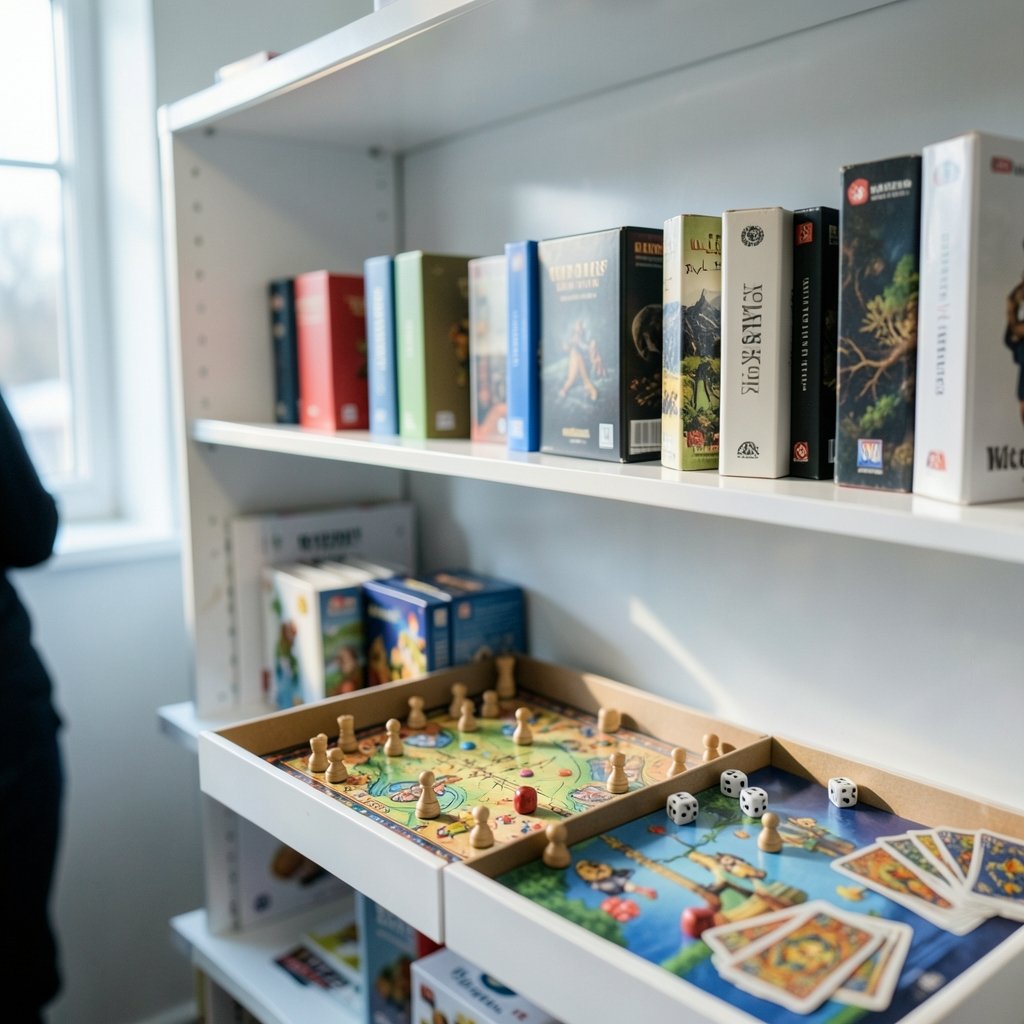
What if the biggest obstacle to family game night isn’t finding a game everyone likes, but finding one that doesn’t end with a seven-year-old in tears or a grandparent quietly checking their phone? That’s the real test. The best family board games aren’t just popular. They keep a table of wildly different people engaged for forty-five minutes without a meltdown. (Common japanese family names)
The good news is that the hobby has never offered more options. The tricky part is that “family game” isn’t a formal category. There’s no official stamp that says a box works for a mixed-age table. Publishers print age ratings, and the BoardGameGeek community tracks a complexity score called weight on a 1-to-5 scale. Those two numbers, plus honest playtime data, do most of the work. Everything else comes down to knowing what kind of table you’re actually hosting.
Why Most Family Game Recommendations Fall Short
Walk through any big-box store and you’ll see shelves stacked with licensed tie-in games. They sell well and disappoint often. The problem usually isn’t the theme. It’s the design underneath: too much luck, too little decision-making, or rules that collapse when a younger player joins.
Three things separate games that genuinely work at a family table from ones that collect dust:
- Rules overhead. If teaching takes longer than playing, the game loses. A good family game explains itself in five minutes.
- Meaningful choices for everyone. Kids don’t want a watered-down version of an adult game. They want to make real decisions that matter.
- A forgiving catch-up mechanism. Games where one player runs away with the lead create tension that younger players feel acutely.
The complexity scale matters here. A game sitting around a 2.0 to 2.5 on the five-point weight scale tends to hit the sweet spot: enough strategy to satisfy adults, enough clarity to keep kids in the game. Anything below 1.5 can feel thin for older players. Anything above 3.0 often needs a dedicated game group rather than a Tuesday night with the family.
The First Board Games That Earn Their Reputation
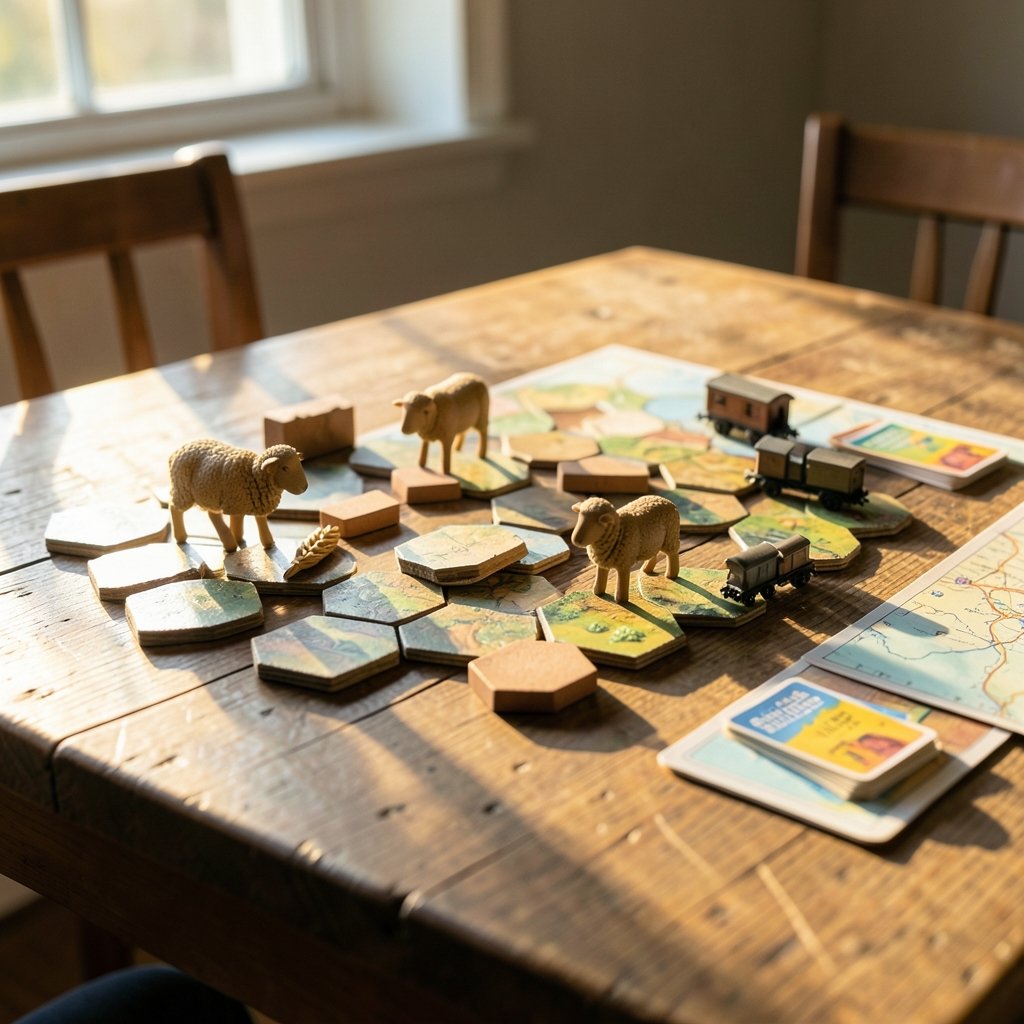
Some titles have survived decades of family tables for a reason. These are the ones that keep coming back out of the box.
Catan
Klaus Teuber’s trading and settlement game won the Spiel des Jahres in 1995, and it remains the most common entry point into modern board gaming. Players collect resources, trade with each other, and race to ten victory points. The trading element is the secret weapon. It forces conversation, negotiation, and the occasional dramatic plea for sheep. The downside is that Catan rewards experienced players heavily, and a bad starting position can feel punishing. It works best when adults deliberately play a little softer with younger players.
Ticket to Ride
Alan R. Moon’s train-route game, which won the Spiel des Jahres in 2004, is arguably the most reliable family game ever published. The rules take three minutes to teach. Players collect colored cards and claim routes across a map. The tension comes from blocking opponents’ routes, which creates the kind of friendly rivalry that makes game night memorable. It plays well at two players and scales cleanly to five.
Carcassonne
Klaus-Jürgen Wrede’s tile-laying game from 2000, which also won the Spiel des Jahres, has a near-perfect quality for mixed-age play: everyone builds the board together. There’s no hidden information and no reading required. Younger players can place tiles and claim features without needing to plan three moves ahead. It’s also one of the easiest games to teach to a grandparent who hasn’t played a board game since the 1980s.
Cooperative Games: Where Nobody Loses Alone
For families with younger children or players who struggle with losing, cooperative games change the emotional math entirely. Everyone wins or loses as a team, which removes the sting of individual defeat.
Forbidden Island (Matt Leacock, 2010) is the standard recommendation here. Players work together to collect treasures and escape a sinking island. The rules are simple, the theme is dramatic, and the difficulty scales from easy to brutal. Pandemic (Leacock, 2008) is the more complex sibling, usually recommended at age eight and up, and it plays two to four. It’s excellent, but it demands more attention and can overwhelm younger players.
One practical warning: cooperative games have a known failure mode called quarterbacking, where one player starts directing everyone else’s moves. At a family table, that’s usually the oldest or most experienced player. The fix is simple but requires discipline. Let each player make their own choices, even bad ones. The game is more fun when it’s genuinely collaborative rather than one person playing four hands.
Party and Social Games That Get Everyone Talking
Sometimes the best family game is barely a game at all. Social games work because they generate conversation, laughter, and stories rather than deep strategy.
Codenames (Vlaada Chvátil, 2015) won the Spiel des Jahres in 2016 and remains one of the most versatile games available. Two teams compete to identify their agents using one-word clues. It works with readers, requires almost no setup, and players can join or leave mid-game. The catch is that younger children need to either read or have a partner who reads for them.
Just One (2018, Spiel des Jahres 2019) is even more accessible. Players write single-word clues to help someone guess a mystery word, but duplicate clues get cancelled out. It’s cooperative, requires writing, and generates genuinely funny moments. It’s the kind of game that gets pulled out at holidays and played by three generations.
Dixit (2008, Spiel des Jahres 2010) deserves a mention for its artwork alone. Players give clues about surreal illustrated cards, and the scoring rewards clues that are neither too obvious nor too obscure. It’s beautiful, quiet, and works with non-readers if someone helps with the clue-giving.
Matching the Game to Your Actual Family
Here’s where most buying advice goes wrong. It treats “family” as one thing. In practice, families differ enormously by age spread, attention span, and tolerance for competition.
| Family situation | Best fit | Why it works |
|---|---|---|
| Young kids (5-7) plus adults | Forbidden Island, Dixit | Cooperative or clue-based, minimal reading |
| Kids 8-11 who want strategy | Catan, Ticket to Ride | Real decisions, clear goals |
| Grandparents joining | Carcassonne, Just One | Low rules overhead, no hidden information |
| Mixed reading levels | Forbidden Island, Sushi Go! | Icons and pictures carry the game |
| Large groups (6+) | Codenames, Just One | Scales up without slowing down |
| Competitive teens and adults | Ticket to Ride, King of Tokyo | Tension and direct conflict |
Sushi Go! (Phil Walker-Harding, 2013) is a standout for younger players. It’s a card-drafting game where players pass hands around and collect sushi sets. The rules take two minutes, the artwork is charming, and there’s genuine strategy in deciding which cards to keep. King of Tokyo (Richard Garfield, 2011) is the pick for families who want dice-chucking chaos and monster battles, though the player elimination can frustrate younger kids.
Practical Tips That Save Game Night
A few habits separate families who play regularly from families whose games sit on a shelf.
Read the rules before game night. Not during. The single biggest cause of a bad first game is a fumbling rules explanation while everyone waits. Learn the game, then teach it in five minutes.
Play the first game open-handed. For younger players, play a practice round with cards face-up so everyone can see how decisions work. It costs ten minutes and saves an hour of frustration.
Check playtime honestly. Publisher estimates are often optimistic. A game listed at 45 minutes can run 70 with a family that’s learning. Budget extra time for the first few plays.
Watch the age rating, but don’t worship it. Age ratings on game boxes are publisher guidance, not tested standards. In the United States, toys including board games fall under Consumer Product Safety Commission oversight and the ASTM F963 toy-safety standard, which mainly governs small-parts choking hazards for children under three. Those rules protect toddlers. They say nothing about whether a nine-year-old can handle a game’s strategy. That judgment is yours.
Consider colorblind players early. Some games rely heavily on color matching, which can exclude a family member entirely. Check whether a game uses symbols alongside colors before committing.
Rotate rather than collect. A shelf of twenty games gets played less than a shelf of five. Keep the ones that actually hit the table and pass along the rest. If you’re curious how communities sustain long-running game nights, the Minds Eye Society larp community behind vampire games offers an interesting parallel in how shared storytelling keeps groups coming back.
Where Awards and Rankings Actually Help
The Spiel des Jahres, Germany’s game-of-the-year prize, has been awarded since 1979, with a separate expert-game category, the Kennerspiel des Jahres, added in 2011. It’s widely treated as the most influential award for family games, and for good reason: the jury explicitly favors games that work for families rather than hobbyists. Scanning the nominee and recommendation lists each year is one of the fastest ways to find games that suit mixed-age tables.
BoardGameGeek’s rankings and weight scores offer a second filter. A game with a weight around 2.0 and a strong family-friendly reputation is usually a safe bet. Just remember that the site’s user base skews toward dedicated hobbyists, so a game rated highly there may still be heavier than a casual family wants.
It’s also worth noting the market context. Hobby-game sales grew steadily through the early 2020s, which means the shelves are crowded with options. More choice is good, but it makes curation more important. Award shortlists do some of that curation for you.
Common Mistakes to Avoid
The most frequent error is buying for the theme rather than the mechanics. A game about dinosaurs or princesses will attract a child’s attention, but if the underlying design is thin, it won’t survive the second play.
The second mistake is underestimating how much a runaway leader ruins family games. Adults can shrug off a loss. A child who realizes they can’t win with thirty minutes left will disengage, and once that happens, the whole table feels it. Games with catch-up mechanics or hidden scoring keep everyone invested.
The third is ignoring the difference between a game that’s easy to learn and a game that’s easy to play well. Those aren’t the same thing. Ticket to Ride is easy to learn and rewards good play. That combination is what makes it endure.
Finally, don’t overlook the value of a game that plays well at two players. Many family games assume four or five, but plenty of households have an adult and one child looking for something to do on a rainy afternoon. Check the player count range carefully before buying.
If you’re building a broader entertainment shelf alongside your game collection, the same curation logic applies to video games. The best GameCube games worth playing today is a good example of how older titles with strong design outlast flashier releases.
Building a Family Game Collection That Lasts
Start with one introductory game, not five. Play it until it’s worn, then add a second that fills a different role: a cooperative game for low-stress nights, a party game for gatherings, a strategy game for when the kids get older.
The families who get the most out of board games aren’t the ones with the biggest collections. They’re the ones with a reliable rotation and a standing game night. A single well-chosen game played fifty times beats twenty games played once each.
And if a game doesn’t work for your family, that’s useful information, not a failure. Every table has its own chemistry. The right game is the one that gets requested again.
Frequently Asked Questions
What is the best family board game for beginners?
Ticket to Ride is the most reliable starting point. The rules take about three minutes to teach, the goals are clear, and it works from age eight upward. Carcassonne is a close second, especially for families that include grandparents or non-readers, since it requires no reading at all.
What age rating should I look for in a family board game?
Most family games are labeled 8+, which is a reasonable guide for games involving reading and moderate strategy. For younger children, look at cooperative games like Forbidden Island, which can work at age six with adult help. Treat age ratings as publisher guidance rather than a tested standard, and factor in your specific child’s reading level and patience.
How long should a family game night last?
Aim for 45 to 90 minutes total, including setup and rules explanation. Individual games running 30 to 45 minutes tend to work best, since they allow two or three rounds before attention fades. Publisher playtime estimates are often optimistic, so budget extra time for the first few plays of any new game.
Are cooperative board games better for families with young children?
They’re often better for families where losing causes distress, because everyone wins or loses together. Forbidden Island is the standard recommendation. The main risk is quarterbacking, where one player directs everyone else’s moves. Prevent it by letting each player make their own decisions, even suboptimal ones.
What is the Spiel des Jahres and why does it matter?
It’s a German game-of-the-year award given annually since 1979, with a separate expert-game prize, the Kennerspiel des Jahres, added in 2011. The jury favors games that work well for families rather than dedicated hobbyists, which makes its nominee lists a practical buying guide for mixed-age tables.
How many board games should a family own?
Fewer than most people think. A rotation of three to five games covering different moods, one cooperative, one competitive, one party game, tends to get more play than a large collection. The goal is a reliable rotation, not a shelf full of unopened boxes.
Conclusion
The best family board games share a quiet quality: they get out of the way. They don’t demand a rulebook study session or reward the person who’s played longest. They put everyone at the table on roughly equal footing and let the conversation do the rest.
Start with one game that fits your actual family, not an idealized version of it. Play it until the box softens at the corners. Then add a second that fills a gap. That’s how game night becomes a habit rather than a novelty, and how a shelf of boxes turns into years of Tuesday evenings that everyone actually looks forward to.














