Where do you start when your search bar says “best haggis with neeps and tatties near me” and the results are a mix of tourist traps, pub menus that look identical, and one chip shop that deep-fries everything? The answer is less mysterious than it seems. Finding a genuinely good plate of Scotland’s national dish comes down to a handful of signals you can check before you leave the house, plus a little knowledge about what you are actually ordering.
This guide walks through what makes a haggis plate good, how to read a menu like a local, the mistakes that lead people to a disappointing dinner, and how to use search tools properly so “near me” actually returns something worth eating.
What Is Actually on the Plate
Haggis is a savoury pudding made from sheep’s offal, specifically heart, liver and lungs, mixed with oatmeal, suet, onion and spices. Traditionally it is boiled inside a sheep’s stomach, though most modern butchers and producers use a synthetic casing. The texture is coarse and crumbly, the flavour peppery and earthy, and it sits somewhere between a sausage and a stuffing in consistency.
Neeps and tatties are the supporting act, and they matter more than people expect. “Neeps” in Scotland means swede, also called rutabaga, not the small white turnip. It is boiled and mashed, often with butter and pepper, and it brings a sweet, slightly bitter edge that cuts through the richness of the haggis. “Tatties” are simply mashed potato, and the quality of that mash tells you a lot about the kitchen. Lumpy, watery, gluey mash is a warning sign. Smooth mash with real butter and enough salt is a good omen.
The plate is usually finished with a whisky or peppercorn sauce, and that sauce is where chefs show off. A thin, floury gravy is a disappointment. A sauce with actual whisky bite and cream body is the mark of a kitchen that cares.
Why This Dish Is Harder to Find Than You Think
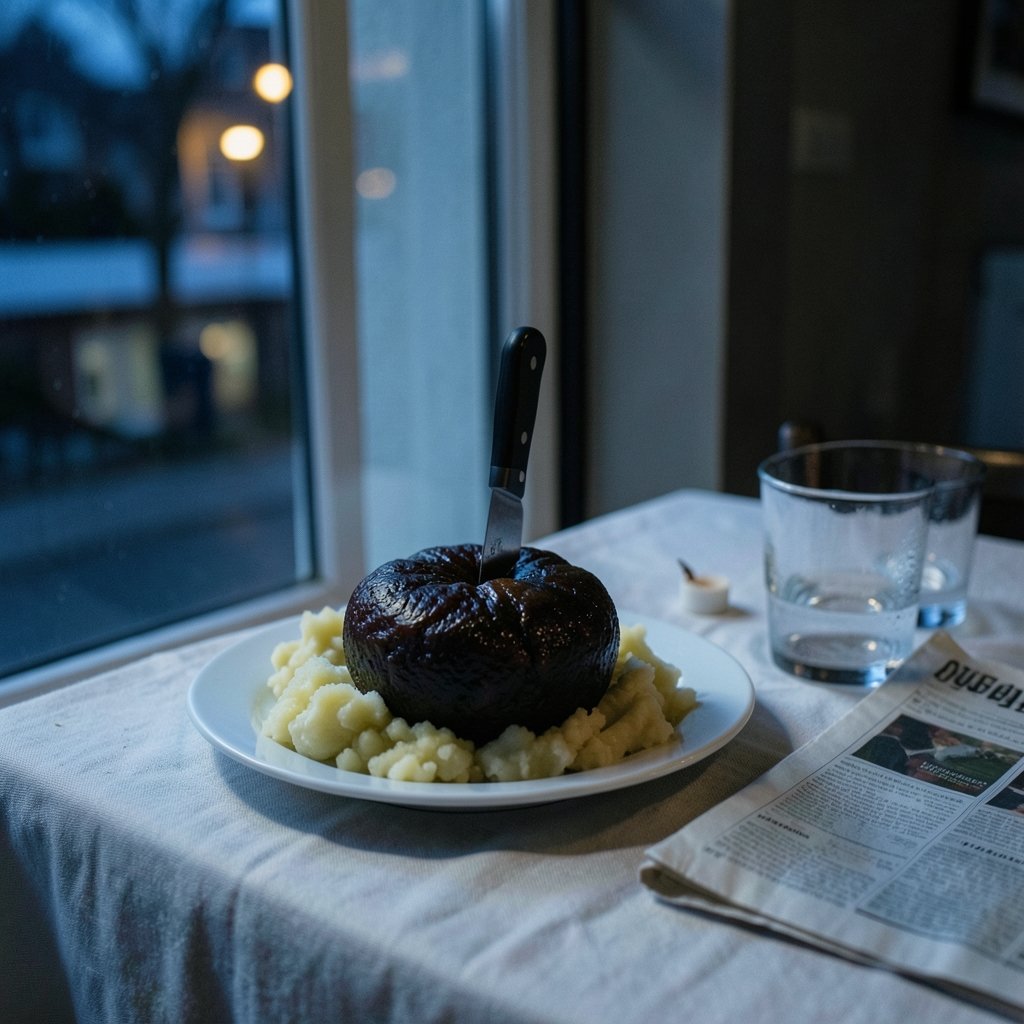
Haggis is not a everyday menu item everywhere, even in Scotland. It appears heavily around Burns Night on 25 January, the birthday of Robert Burns, born in 1759. That evening, tables across the country serve haggis with a recitation of his 1786 poem “Address to a Haggis,” usually with a knife plunged into the pudding first. Outside that window, availability drops sharply.
There is a protected-name angle too. Scottish haggis has held Protected Geographical Indication status since 2006, which means a product sold under that name has to meet defined criteria and be made in Scotland. That does not guarantee a restaurant plate is good, but it does mean the haggis itself is the real thing rather than a generic imitation.
One more practical wrinkle for visitors from abroad: haggis containing sheep’s lung has long been barred from the United States, because US rules prohibit lung in food for human consumption. So if you are an American reader planning a trip, you genuinely cannot buy the traditional version at home. You have to eat it here, which is a decent excuse for a holiday.
How to Read a Haggis Menu Like Someone Who Knows
Most menus give you three or four clues without saying anything directly. Here is what to look for.
| Menu signal | What it usually means | Verdict |
|---|---|---|
| Named producer on the menu | The kitchen is proud of its supplier, often a proper butcher | Strong positive |
| “Vegetarian haggis available” | Wider menu, usually a decent kitchen, but check it is made in-house or by a named brand | Neutral to positive |
| Haggis as a starter only, tiny portion | Often a tourist-facing garnish rather than a proper plate | Weak signal |
| Haggis with a generic “peppercorn sauce” | Standard pub fare, could be fine, could be from a packet | Neutral |
| Haggis, neeps and tatties as a main with a named whisky sauce | Someone in the kitchen has thought about it | Strong positive |
| Haggis bon bons or haggis pakora on the menu | Modern Scottish cooking, usually a good sign of confidence | Positive |
The single best indicator is whether the haggis is described as coming from a specific butcher or producer. A kitchen that names its supplier has usually tasted the product and chosen it deliberately.
The Mistakes People Make When Searching
Most disappointing haggis meals trace back to one of these errors.
Searching only in city centres. Tourist districts in Edinburgh and Glasgow have plenty of haggis on menus and plenty of it is mediocre, priced for people who will never return. Walk twenty minutes out of the centre, or take a bus to a residential neighbourhood, and the odds improve dramatically.
Ignoring the pub. The best haggis is often not in a restaurant with a website and a booking system. It is in a village pub with a chalkboard. Pubs serving a local community cannot afford to serve bad haggis twice.
Not checking the day. Many places only serve haggis on Burns Night, or as a weekend special. Call ahead. A two-minute phone call saves a wasted journey.
Judging by the photo. Haggis photographs badly. It is brown on brown on brown. A beautiful photo often means a stylised, deconstructed version that misses the point. A terrible photo can hide an excellent plate.
Skipping the sauce question. Ask what the sauce is. If the answer is vague, the plate probably is too.
Using “Near Me” Searches Properly
The “near me” search is powerful but easy to misuse. A few habits make it work.
Start with a map service rather than a review site, and search for “haggis” rather than “Scottish restaurant.” You will get a tighter list of places that actually list the dish. Then cross-check each candidate against its own menu, because map listings go stale fast.
Read reviews for the words people use when they are describing haggis specifically, not the general star rating. A four-star review that mentions “dry” or “mushy neeps” is more useful than a five-star review about the beer garden.
If you are chasing a particular style of venue, the same local-search logic applies across categories. The approach behind finding a good laser clinic near you, where you check credentials and read past the marketing, works the same way for food. You are filtering for substance over presentation. For a lighter comparison, this guide to finding a Chinese restaurant near you fast shows how to narrow a crowded local market down to two or three real candidates before you commit. (Laser Hair Removal Near Me: How to Choose a Clinic)
What a Good Plate Looks Like
When the plate arrives, you can judge it in about ten seconds.
The haggis should be coarse and crumbly, not a smooth paste. It should hold its shape when cut but fall apart under a fork. The pepper should be present and forward, not buried. If it tastes bland, it has been over-diluted with oatmeal.
The neeps should be a deep orange-yellow, sweet and buttery, with a little texture left. If they are watery or grey, they have been boiled too long or made from the wrong vegetable.
The tatties should taste of potato and butter, not of water. They should be smooth but not gluey.
The sauce should have a clear whisky note without being harsh, and it should be served warm, not scalding, so it does not split.
A good plate balances all four. A great one makes you understand why the dish survived for centuries.
Vegetarian and Dietary Options
Vegetarian haggis has been widely available since the 1980s, and one well-known brand launched a vegetarian version in 1984. The best versions use mushrooms, lentils, oats and spices to build a similar texture and pepper profile. It is genuinely good in the right hands, and many kitchens now serve it as standard rather than as an afterthought.
Be aware that haggis is high in fat and salt. It is rich food, and a full plate with buttered mash and cream sauce is a heavy meal. That is fine as an occasional treat, but it is not a light lunch. If you are watching your intake, ask for the sauce on the side and go easy on the butter.
Practical Tips Before You Go
Book ahead for Burns Night. Restaurants fill up weeks in advance, and the set menus are often fixed and pricier than usual.
Go for lunch if you want value. The same plate is frequently cheaper at midday.
Ask the server how the haggis is served. Some places bring it out in the casing, some slice it, some crumble it. Knowing what to expect avoids surprise.
If you are travelling with someone who is unsure, order one plate to share as a starter. It is a rich dish, and a shared portion is a low-risk introduction.
Check opening hours directly rather than trusting aggregator sites. Small kitchens close early and take odd days off.
A Note on Where to Look Regionally
Edinburgh and Glasgow get the attention, but the strongest haggis is often found outside the cities. Aberdeenshire, the Borders and the Highlands all have butchers with long-standing reputations, and the pubs near them tend to serve the local product. A village pub within a few miles of a good butcher is close to a guarantee.
If you are planning a food-focused trip, it helps to think about the whole itinerary rather than one meal. The same instinct that sends you to a specific neighbourhood for a specific dish applies elsewhere: you go where the locals go, not where the signage points. That logic holds whether you are hunting a plate of haggis or sorting out something as unrelated as a style decision, and it is the same principle behind knowing when to wear a skinny tie in 2026: context beats trend every time.
Conclusion
The best haggis with neeps and tatties near you is rarely the most photographed one. It is usually in a pub with a chalkboard, made with haggis from a named butcher, served with mash that tastes of butter and neeps that taste of swede. Search by dish rather than by cuisine, read reviews for the words people use about texture and sauce, call ahead, and be willing to leave the tourist centre. Do those four things and your odds of a genuinely memorable plate go up sharply. The dish has survived since the eighteenth century for a reason. It deserves a proper setting, and with a little homework, you will find one.
Frequently Asked Questions
What is haggis made of?
Haggis is a savoury pudding made from sheep’s heart, liver and lungs, mixed with oatmeal, suet, onion and spices, then traditionally boiled in a sheep’s stomach. Modern producers usually use a synthetic casing instead. The flavour is peppery and earthy, and the texture is coarse and crumbly rather than smooth.
Why is haggis banned in the United States?
Haggis containing sheep’s lung has long been barred from the US because American rules prohibit lung in food for human consumption. That means traditional haggis cannot legally be imported. Some US producers make haggis-style products without lung, but they are not the same thing.
When is the best time to eat haggis?
Burns Night, on 25 January, is the traditional occasion. It marks the birthday of Robert Burns, born in 1759, and involves reciting his 1786 poem “Address to a Haggis” before the meal. Outside that date, availability varies, so check menus and call ahead rather than assuming a pub will have it.
Is vegetarian haggis any good?
It can be very good. Vegetarian haggis has been widely available since the 1980s, with one commonly cited brand launching a version in 1984. The best ones use mushrooms, lentils, oats and spices to build a similar texture and pepper profile. Many kitchens now serve it as a standard menu item rather than a substitute.
What are neeps and tatties?
Neeps are mashed swede, known as rutabaga in North America, not the small white turnip. Tatties are mashed potato. Together they form the classic accompaniment to haggis, with the sweet, slightly bitter neeps balancing the richness of the pudding and the mash providing a soft base.
How do I find a good haggis near me?
Search for the dish rather than the cuisine on a map service, then check each candidate’s own menu because listings go stale. Look for a named butcher or producer on the menu, read reviews for comments about texture and sauce, and favour pubs outside city centres. Call ahead to confirm the dish is being served that day.