


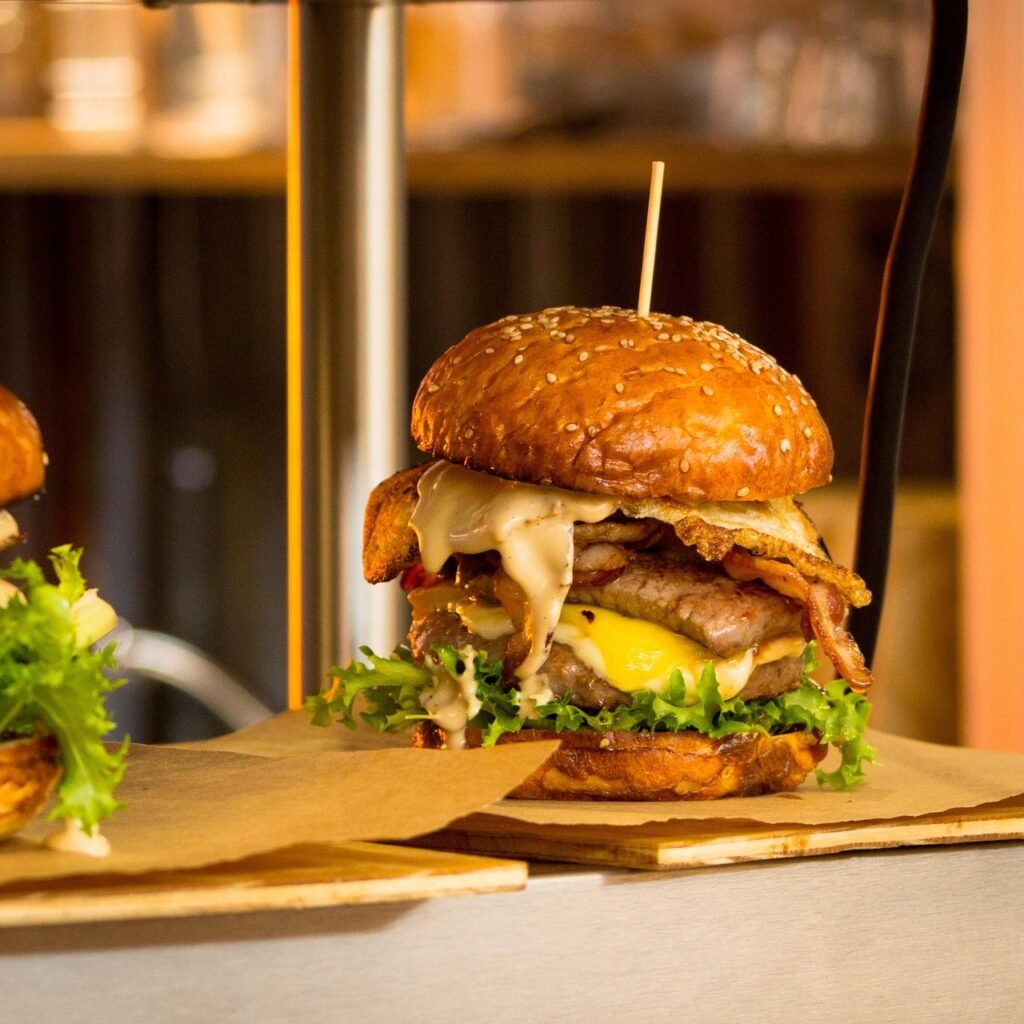
What if the best burger within walking distance is one you’ve passed a hundred times without noticing? That’s the strange thing about searching for “best burgers near me.” The phrase sounds simple, but it hides a messy reality. Two people standing on the same corner can type those four words and get completely different answers. One gets a smash-burger joint with a cult following; the other gets a chain that paid for attention.
This guide is about closing that gap. It covers how local search actually decides what to show you, which signals are worth trusting, what separates a genuinely great burger from a photogenic one, and the mistakes almost everyone makes when they hunt for a good patty. No hype, no sponsored picks, just a method you can reuse in any city.
Why “best burgers near me” gives everyone a different answer
The words “near me” are doing more work than most people realize. Search engines resolve that phrase using your approximate location, pulled from your device, your network, and your saved activity. That means the results are personalized, not universal. There is no master list of the best burgers in your area, only a list tailored to where you happen to be standing.
Local ranking systems typically weigh three things: relevance, distance, and prominence. Relevance is whether a place matches what you asked for. Distance is how far it sits from your location. Prominence is how well known and well regarded a business appears to be. Notice what’s missing from that trio: nothing about whether the fries are any good. A restaurant can rank well and still serve a forgettable burger. Ranking is a popularity and proximity contest, not a taste test.
This is why a search from your apartment and a search from your office two miles away can surface different winners. It’s also why the top result is often the place with the most reviews, not the best patty. Understanding that distinction is the first real skill in this hunt.
The signals that actually predict a good burger

Once you stop treating the map pack as gospel, you need your own filters. In practice, a handful of signals do most of the work.
Review volume versus review quality
A place with 40 reviews and a 4.7 average is a very different animal from a place with 4,000 reviews and a 4.3. The small-sample spot might be genuinely excellent or might just have a tight circle of loyalists. The high-volume spot has survived real scrutiny. The most useful move is to read the middle reviews, the three-star ones. Five-star raves and one-star rants are usually about mood, parking, or a single bad night. Three-star reviews tend to be specific and fair.
Recency matters more than people think
A burger joint can change hands, swap suppliers, or lose its head chef in a single season. Reviews from three years ago describe a restaurant that may no longer exist in any meaningful sense. Sort by newest and read the last two months before you commit.
The menu tells you what a kitchen cares about
A short menu is usually a confident menu. If a place sells burgers, wings, tacos, sushi, and pasta, the burger is one item among forty, and it will taste like it. A kitchen that grinds its own beef, bakes its own buns, or names its beef supplier is telling you where the effort goes. Look for a grind-to-order claim or a named farm. Those are choices someone made on purpose.
Photos reveal more than descriptions
User photos beat marketing shots every time. Look for a patty with a proper crust, cheese that has actually melted rather than been draped on at the last second, and a bun that isn’t collapsing under its own contents. A burger that looks soggy in a customer’s photo will be soggy in your hands.
Local search versus review platforms versus word of mouth
Each source has a bias, and knowing the bias is half the battle.
| Source | Strength | Weakness | Best used for |
|---|---|---|---|
| Map-based local results | Fast, location-aware, shows hours and distance | Ranks on prominence and distance, not taste | Quick shortlist of nearby options |
| Review aggregators | Large review pools, photos, price hints | Different rating formulas and review populations | Cross-checking a shortlist |
| Local food media and “best of” polls | Neighborhood depth, editorial judgment | Reader votes can be a popularity contest | Discovering places off your radar |
| Word of mouth | Honest, specific, no incentive | Small sample, personal taste | Confirming a final pick |
The trick is triangulation. Pull a shortlist from a map search, cross-check it against review platforms, then sanity-check it with a local publication or a friend who eats out a lot. When all three point at the same place, you’ve probably found something real. When they conflict, that conflict is information.
If you want a broader walkthrough of how to evaluate a local service business before you commit, the same logic that applies to choosing a clinic in laser hair removal near me applies here: check recency, read the middle reviews, and ignore the loudest voices. The browsing habits that help you find a good restaurant also help you find a good clinic, and the reverse is true. There’s a useful set of related tips filed under laser hair removal near me if you want to see how the same evaluation framework plays out in a completely different category. The underlying skill is identical: separate prominence from quality.
What separates a great burger from a fine one
Taste is personal, but craft isn’t mysterious. A few technical details reliably separate the memorable from the merely acceptable.
The grind and the fat ratio. Ground beef for burgers usually lands somewhere between 20 and 30 percent fat. Too lean and the patty turns dry and crumbly; too fatty and it shrinks into a grease puddle. A kitchen that controls its own grind controls this ratio, and it shows.
The sear. A proper crust comes from high heat and a dry surface. A patty that’s been pressed flat with a spatula repeatedly during cooking loses its juices. Watch for a smash-style burger with lacy, crispy edges versus a thick pub burger with a deep brown exterior. Both are valid. Neither should be gray.
The bun. A bun has one job: hold the burger together without turning to mush. Brioche is rich but can be too soft for a juicy patty. Potato rolls absorb well. A toasted cut surface adds a barrier against sogginess. If the bottom bun disintegrates halfway through, the kitchen wasn’t paying attention.
Seasoning timing. Salt added too early draws moisture out; salt added at the right moment seasons the crust. This is a small thing that separates careful cooks from rushed ones.
Doneness and safety. Ground beef should reach a safe minimum internal temperature of 160°F (71°C). Many restaurants serve burgers medium or medium-rare by choice, and some jurisdictions require a consumer advisory when they do. If you have a compromised immune system, are pregnant, or are feeding a young child, ordering fully cooked is the safer call. A great burger doesn’t need to be pink in the middle to be juicy.
Allergens. Burgers are a minefield for people with allergies. Sesame became a recognized major allergen in the United States in recent years, and buns are a common source. Wheat, milk, and egg show up in buns and sauces routinely. A good restaurant will answer allergen questions directly rather than vaguely. If the staff can’t tell you what’s in the bun, that’s your answer.
Practical tips that save time and disappointment
These are the habits that separate a smooth burger hunt from a wasted evening.
- Search from where you’ll actually be eating. Searching from home when you’re meeting friends across town gives you useless results. Search from the destination, or add the neighborhood name to your query.
- Filter by open now, then check the hours yourself. Hours listed online go stale, especially around holidays. A quick phone call beats a locked door.
- Read the newest reviews for operational clues. Repeated mentions of long waits, a closed dining room, or a changed menu are early warnings.
- Check whether the place is counter-service or table-service. It changes your timing, your tipping, and whether you can bring a group.
- Look at the price before you fall in love. A burger that costs as much as a nice dinner sets a higher bar. Judge it against that bar.
- Note the peak hours. A kitchen slammed at 8 p.m. on a Saturday cooks differently than the same kitchen at 3 p.m. on a Tuesday.
- Keep a running shortlist. The best burger hunt is cumulative. Save candidates as you encounter them, and you’ll never start from zero again.
The same discipline applies to any local search, whether you’re hunting for a patty or figuring out how to find a good Chinese restaurant fast when you’re hungry and impatient. The categories differ; the method doesn’t.
Common mistakes people make
Most bad burger experiences trace back to a predictable set of errors.
Trusting the top result blindly. Ranking reflects prominence and proximity, not flavor. The most-reviewed burger in town is often just the most-reviewed burger in town.
Ignoring the menu’s breadth. A vast menu is a warning sign, not a feature. Focus follows a short menu.
Judging on one visit during peak hours. A single crowded Saturday night isn’t a fair sample. If a place disappoints, consider a quieter time before writing it off.
Overweighting a single bad review. One angry review about parking says nothing about the food. Look for patterns across many reviews instead.
Forgetting about closures and turnover. Restaurants change hands constantly. A recommendation from two years ago may now describe a different kitchen entirely.
Skipping the allergen conversation. Asking about sesame, wheat, and dairy before you order takes thirty seconds and prevents a very bad night.
Chasing hype over hunger. The trendiest burger in the city isn’t automatically the one you’ll enjoy most. Sometimes the neighborhood spot with the worn booths and the perfect char is the actual answer.
How to build your own shortlist in fifteen minutes
Here’s a repeatable routine that works in any city.
Start with a map search from your actual location, filtered to open now. Collect five to eight candidates within a distance you’re willing to travel. Then cross-check each one on a review platform, sorting by newest, and read the three-star reviews specifically. Eliminate anything with repeated recent complaints about wait times, cleanliness, or a changed menu. From what’s left, check the menu for signs of focus: a short list, a named beef source, house-made buns, a specific grind. Pull up customer photos and look at the patty and the bun. Finally, verify hours directly and confirm whether you need a reservation or can walk in.
That’s it. Fifteen minutes, five filters, and a shortlist you can actually trust. Do it twice and it becomes automatic.
Conclusion
The search for the best burgers near me isn’t really a search at all. It’s a filtering problem. Local results are shaped by relevance, distance, and prominence, none of which measure whether a patty tastes good. The people who consistently eat well aren’t luckier; they’ve just learned to read the signals that matter. They check recency, they read the middle reviews, they notice a short menu, and they look at the crust in a stranger’s photo before they look at the star rating.
Start with proximity, filter with evidence, and finish with your own taste. The best burger near you is probably closer than you think, sitting a few blocks away with a modest review count and a very confident kitchen. The only way to know is to go.
FAQ
What does “near me” actually mean in a search?
It means the results are tailored to your approximate location, using signals like your device, network, and saved activity. Two people in different spots get different answers, and the same person searching from home versus work may see an entirely different list. There is no universal ranking of the best burgers in a city.
Are the top-rated burger places really the best?
Not necessarily. Local ranking weighs relevance, distance, and prominence, so a well-known place with thousands of reviews can outrank a small kitchen with a superior burger. High review volume signals popularity and longevity, which are useful but not the same as quality. Treat rankings as a starting point, not a verdict.
How many reviews should a good burger place have?
There’s no magic number, but context matters. A spot with 40 reviews and a 4.7 average might be a genuine find or a small circle of fans. A spot with thousands of reviews has survived real scrutiny. The more useful habit is reading recent three-star reviews, which tend to be specific and fair rather than emotional.
Should I order my burger medium-rare?
That’s a personal and safety decision. Ground beef should reach a safe minimum internal temperature of 160°F (71°C), and some jurisdictions require a consumer advisory when restaurants serve it less cooked. If you’re pregnant, immunocompromised, or feeding a young child, fully cooked is the safer choice. A well-made burger can be juicy without being pink.
How do I check a burger place for allergens?
Ask directly before you order. Buns commonly contain sesame, wheat, milk, and egg, and sauces can hide dairy or egg. A good restaurant answers allergen questions clearly rather than vaguely. If staff can’t tell you what’s in the bun, treat that as a warning sign and consider a lettuce wrap or another option.
Why do my favorite burger places keep disappearing?
Restaurant turnover is high, and ownership, suppliers, and chefs change frequently. A place that was excellent two years ago may now be a different kitchen entirely. This is why recency matters so much: sort reviews by newest, check the menu for changes, and verify hours before you make the trip.














